
Why Is the Arrhythmia Monitoring Devices Market Growing Rapidly? Trends, Innovations & Future Outlook 2025-2034
Author:
Intellectual Market Insights Research
Published Date:
10 Jun 2026
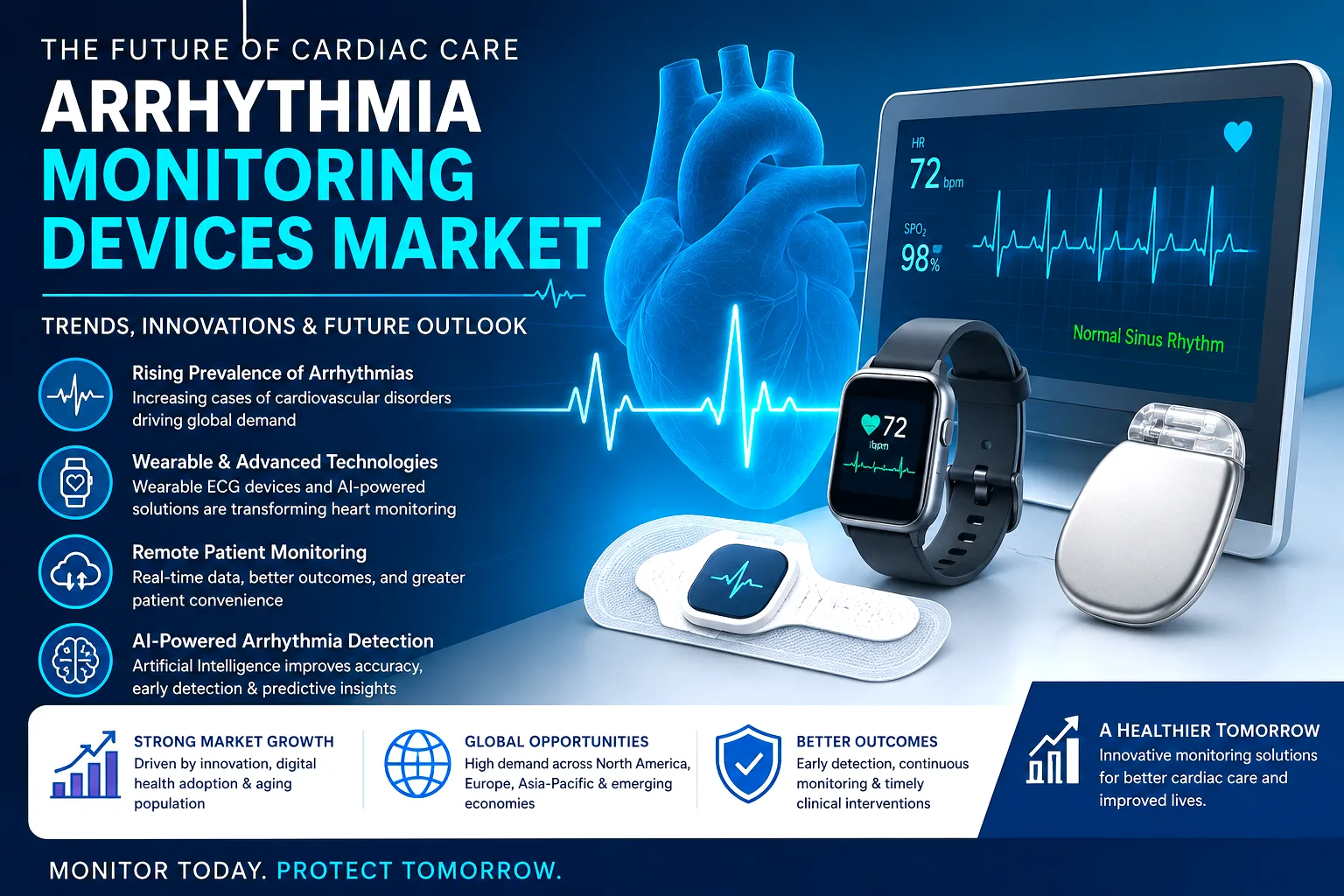
Why Is the Arrhythmia Monitoring Devices Market Growing Rapidly? Trends, Innovations & Future Outlook
Introduction
Cardiovascular diseases remain one of the leading causes of death worldwide, and among them, cardiac arrhythmias are becoming increasingly common across all age groups. As healthcare providers focus on early diagnosis, continuous monitoring, and preventive care, the demand for advanced arrhythmia monitoring devices is rising significantly.
From wearable ECG monitors and implantable loop recorders to AI-powered remote cardiac monitoring systems, technological innovation is transforming the way heart rhythm disorders are detected and managed.
According to recent industry analysis, the global Arrhythmia Monitoring Devices Market is expected to witness substantial growth over the coming decade, driven by increasing cardiovascular disease prevalence, aging populations, and the rapid adoption of digital healthcare solutions.
What Are Arrhythmia Monitoring Devices?
Arrhythmia monitoring devices are medical technologies designed to detect, record, and analyze irregular heart rhythms. These devices help physicians diagnose conditions such as:
- Atrial Fibrillation (AFib)
- Bradycardia
- Tachycardia
- Ventricular Arrhythmias
- Supraventricular Arrhythmias
The primary goal of these devices is to provide real-time cardiac data, enabling healthcare professionals to intervene before serious complications occur.
Common device categories include:
- Holter Monitors
- Event Recorders
- Implantable Loop Recorders
- Mobile Cardiac Telemetry Systems
- Wearable ECG Devices
- Remote Monitoring Platforms
Why Is the Arrhythmia Monitoring Devices Market Expanding?
Rising Burden of Cardiovascular Diseases
The growing prevalence of cardiovascular disorders globally remains one of the strongest growth drivers for the market.
Factors contributing to increased cardiac complications include:
- Sedentary lifestyles
- Obesity
- Diabetes
- Hypertension
- Smoking
- Aging populations
As more patients require continuous heart monitoring, healthcare systems are increasingly investing in advanced diagnostic technologies.
Growing Aging Population
Older adults are at significantly higher risk of developing arrhythmias.
With global life expectancy increasing, healthcare providers are witnessing rising demand for long-term cardiac monitoring solutions that support early detection and preventive treatment.
Shift Toward Preventive Healthcare
Healthcare systems worldwide are transitioning from reactive treatment models to preventive care approaches.
Continuous heart rhythm monitoring enables:
- Early diagnosis
- Reduced hospitalization
- Improved treatment outcomes
- Lower healthcare costs
This shift is accelerating adoption across hospitals, clinics, and home-care environments.
How Wearable Technology Is Transforming Cardiac Monitoring
One of the biggest trends shaping the market is the integration of wearable healthcare technologies.
Modern wearable cardiac devices offer:
- Real-time ECG monitoring
- Cloud-based reporting
- Smartphone connectivity
- AI-powered arrhythmia detection
- Continuous patient monitoring
Consumers are increasingly embracing wearable health technologies, allowing physicians to access long-term patient data without requiring hospital visits.
This trend is expected to significantly expand market opportunities over the next decade.
Role of Artificial Intelligence in Arrhythmia Detection
Artificial Intelligence (AI) is revolutionizing cardiovascular diagnostics.
Advanced AI algorithms can:
- Detect abnormal heart rhythms faster
- Analyze large ECG datasets
- Predict cardiovascular risks
- Reduce diagnostic errors
- Support clinical decision-making
AI-enabled monitoring platforms improve accuracy while reducing physician workload.
Healthcare providers are increasingly investing in intelligent cardiac monitoring ecosystems that combine AI, cloud computing, and remote diagnostics.
Remote Patient Monitoring Is Creating New Opportunities
The rise of telehealth and digital healthcare has accelerated adoption of remote cardiac monitoring solutions.
Benefits include:
For Patients
- Continuous monitoring from home
- Fewer hospital visits
- Improved convenience
- Faster diagnosis
For Healthcare Providers
- Better patient management
- Reduced operational burden
- Improved clinical outcomes
- Enhanced patient engagement
As healthcare systems continue embracing virtual care models, remote monitoring solutions are expected to become standard practice.
Key Market Trends Driving Future Growth
AI-Powered ECG Analytics
Machine learning algorithms are enabling faster and more accurate arrhythmia detection than traditional monitoring methods.
Cloud-Based Healthcare Platforms
Cloud integration allows secure data sharing between patients, physicians, and healthcare organizations.
Expansion of Wearable Cardiac Devices
Consumer-friendly devices are driving greater patient adoption and continuous health tracking.
Home-Based Monitoring Solutions
Patients increasingly prefer monitoring solutions that provide hospital-grade diagnostics from home.
Integration with Digital Health Ecosystems
Modern monitoring systems are being connected with:
- Electronic Health Records (EHRs)
- Telemedicine Platforms
- Mobile Health Applications
- Predictive Analytics Systems
Regional Outlook
North America
North America continues to dominate the Arrhythmia Monitoring Devices Market due to:
- Advanced healthcare infrastructure
- High healthcare spending
- Strong adoption of digital health technologies
- Presence of major medical device manufacturers
Europe
Europe is witnessing strong growth supported by:
- Aging populations
- Government healthcare initiatives
- Increased cardiovascular disease awareness
Asia-Pacific
Asia-Pacific is expected to emerge as the fastest-growing region due to:
- Rising healthcare investments
- Expanding middle-class population
- Growing cardiovascular disease burden
- Rapid digital health adoption
Countries such as China, India, Japan, and South Korea are expected to drive significant market expansion.
Competitive Landscape
Leading companies are focusing on:
- Product innovation
- AI integration
- Strategic partnerships
- Remote monitoring solutions
- Expansion into emerging markets
Manufacturers are investing heavily in research and development to create next-generation monitoring devices capable of delivering real-time, predictive cardiac insights.
Future Outlook: What Lies Ahead?
The future of the Arrhythmia Monitoring Devices Market appears highly promising.
Several factors will continue to fuel growth:
- Increasing cardiovascular disease prevalence
- Rising adoption of wearable health technologies
- Expansion of telemedicine services
- AI-driven diagnostic advancements
- Growing demand for personalized healthcare
As healthcare systems increasingly prioritize early diagnosis and preventive care, arrhythmia monitoring devices are expected to become essential components of modern cardiac management.
Conclusion
The Arrhythmia Monitoring Devices Market is entering a transformative growth phase driven by technological innovation, rising cardiovascular disease prevalence, and increasing adoption of digital healthcare solutions.
Wearable ECG monitors, AI-powered analytics, remote patient monitoring platforms, and cloud-connected healthcare ecosystems are reshaping cardiac care globally.
Organizations that invest early in advanced monitoring technologies, digital health integration, and AI-driven diagnostics will be best positioned to capitalize on the tremendous opportunities emerging within this rapidly evolving market.


