
Immunocytokines Market Size to Reach USD 2.92 Billion by 2034 Growth, Trends, and Competitive Analysis
Author:
Intellectual Market Insights Research
Published Date:
19 Jun 2026
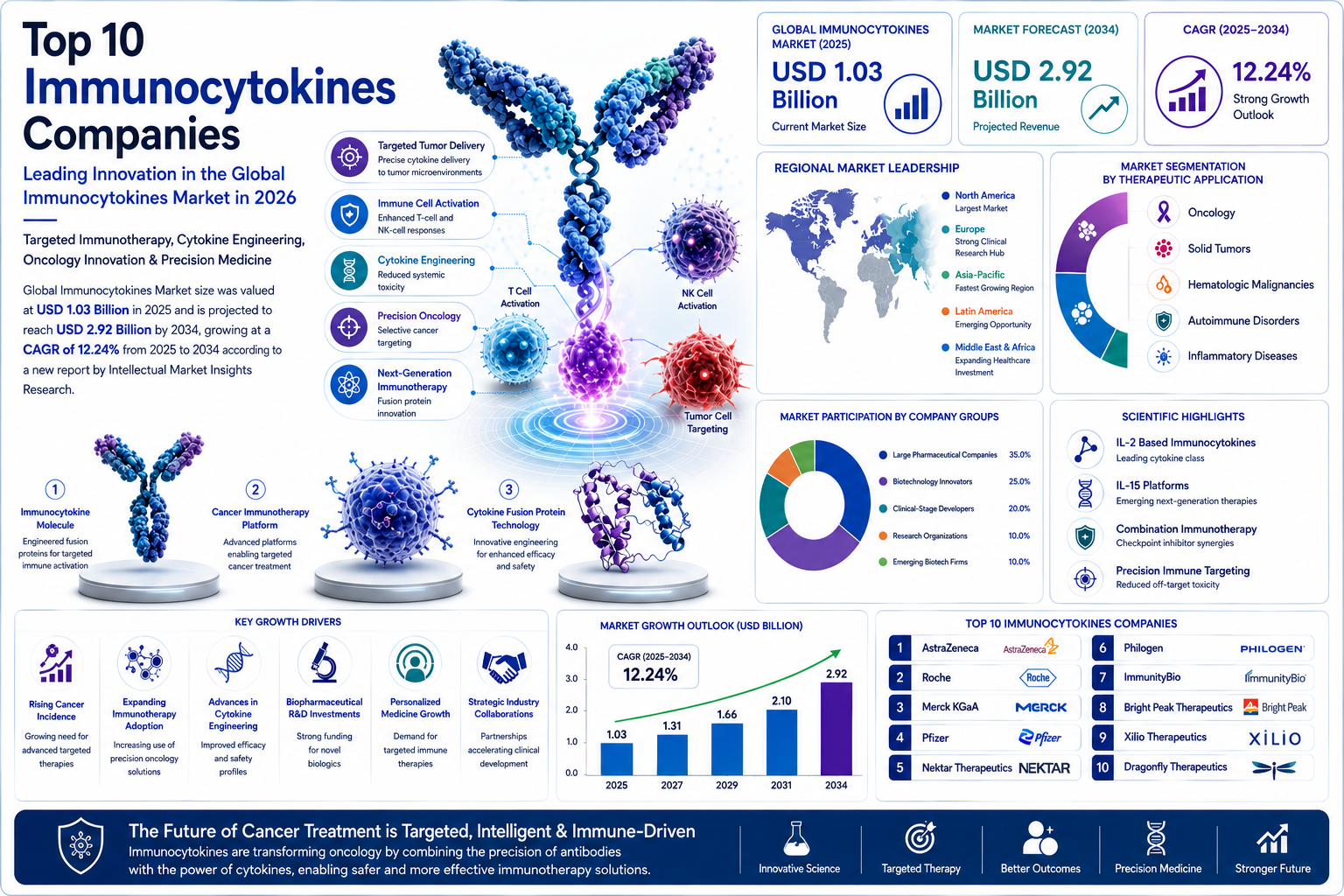
Top 10 Immunocytokines Companies Driving Innovation in Cancer Immunotherapy
The global Immunocytokines Market is rapidly emerging as one of the most promising segments within the broader immuno-oncology landscape. Immunocytokines are engineered fusion proteins that combine the disease-targeting capabilities of monoclonal antibodies with the immune-stimulating properties of cytokines. This innovative approach enables healthcare providers to direct powerful immune responses precisely toward cancer cells while minimizing systemic toxicity.
As cancer incidence continues to rise worldwide, researchers and pharmaceutical companies are increasingly focused on developing advanced immunotherapies capable of delivering improved clinical outcomes. Immunocytokines have attracted significant attention because they offer a highly targeted therapeutic strategy that enhances treatment efficacy while reducing adverse effects associated with traditional cytokine therapies.
Advancements in antibody engineering, molecular biology, precision medicine, and immune-oncology research have accelerated innovation across the market. Numerous clinical-stage candidates are currently being evaluated for solid tumors, hematological malignancies, autoimmune disorders, and inflammatory diseases.
Increasing investments from pharmaceutical companies, biotechnology firms, venture capital groups, and government-funded research organizations are supporting the development of next-generation immunocytokine platforms. Strategic partnerships, licensing agreements, and acquisitions continue to reshape the competitive landscape.
As healthcare systems increasingly prioritize personalized medicine and targeted therapies, immunocytokines are expected to play a crucial role in the future of cancer treatment and immune modulation. The market presents significant opportunities for innovators capable of delivering safer, more effective, and highly specific therapeutic solutions.
Market Snapshot: Immunocytokines Market
The global Immunocytokines Market continues to expand as pharmaceutical and biotechnology companies increasingly invest in precision immunotherapy platforms capable of improving treatment efficacy and patient outcomes.
Current Market Size (2021): USD 2.89 Billion
Forecast Market Value (2028): USD 4.08 Billion
Expected CAGR (2021–2028): 4.3%
Growth momentum is being supported by increasing cancer prevalence, growing adoption of targeted immunotherapies, advancements in biologics development, expanding clinical trial activity, and rising healthcare investments worldwide.
Major Growth Drivers Include:
- Rising global cancer incidence
- Increasing adoption of precision medicine
- Growing investment in immuno-oncology research
- Expansion of antibody engineering technologies
- Increasing clinical trial activity
- Strategic pharmaceutical-biotechnology partnerships
- Growing demand for targeted therapies
- Advancements in molecular biology and biotechnology
Industries Generating the Strongest Demand Include:
- Oncology
- Biotechnology
- Pharmaceutical Research
- Academic Research Institutes
- Precision Medicine
- Immunotherapy Development
- Healthcare Providers
- Clinical Research Organizations (CROs)
Key Takeaways
- Immunocytokines are becoming a critical component of next-generation cancer immunotherapy strategies.
- Targeted cytokine delivery significantly improves therapeutic precision while reducing systemic toxicity.
- Combination therapies involving immunocytokines and checkpoint inhibitors are gaining momentum.
- North America remains the leading regional market due to extensive oncology research investments.
- Emerging biotechnology companies continue to drive innovation through advanced cytokine engineering technologies.
Featured Snippet
What is driving the Immunocytokines Market?
The Immunocytokines Market is being driven by rising cancer incidence, increasing adoption of precision medicine, growing investment in immuno-oncology research, expanding clinical trial pipelines, and advancements in antibody engineering technologies. Pharmaceutical and biotechnology companies are increasingly developing targeted therapies that improve treatment effectiveness while minimizing adverse side effects, creating strong demand for immunocytokine-based solutions worldwide.
The 2026 Buyer Playbook: What Really Drives Purchase Decisions
Purchasing decisions in the immunotherapy market have evolved significantly.
Healthcare providers, pharmaceutical companies, researchers, and investors increasingly evaluate immunocytokine technologies based on clinical outcomes, scientific evidence, long-term value creation, and regulatory confidence rather than development costs alone.
Functional Benefits
Clinical effectiveness remains the top priority.
Stakeholders increasingly evaluate:
- Targeted therapeutic delivery
- Improved efficacy profiles
- Reduced systemic toxicity
- Enhanced patient outcomes
- Precision medicine compatibility
- Combination therapy potential
The most successful immunocytokine developers position their products around measurable clinical improvements and patient benefits.
Pricing Psychology
Decision-makers increasingly focus on value rather than upfront cost.
Organizations evaluate:
- Treatment effectiveness
- Long-term healthcare savings
- Patient quality of life improvements
- Reimbursement opportunities
- Clinical success rates
- Total healthcare economics
Innovative therapies that demonstrate superior outcomes can command premium pricing and stronger market adoption.
Trust Factors
Trust plays a critical role in therapeutic adoption.
Healthcare stakeholders prefer companies with:
- Successful clinical trial histories
- Regulatory expertise
- Strong safety profiles
- Scientific credibility
- Established manufacturing capabilities
- Peer-reviewed research publications
Strong scientific validation significantly influences purchasing and partnership decisions.
Convenience
Healthcare organizations increasingly prioritize operational efficiency.
Preferred providers offer:
- Reliable manufacturing capacity
- Consistent product availability
- Regulatory support
- Medical education programs
- Clinical implementation assistance
- Global distribution capabilities
Comprehensive support services improve adoption rates and long-term customer relationships.
Brand Perception
Industry reputation influences market success.
Leading immunotherapy developers are often associated with:
- Innovation leadership
- Clinical excellence
- Scientific expertise
- Regulatory reliability
- Strong oncology portfolios
- Proven commercialization capabilities
Strong brand perception creates competitive advantages throughout the product lifecycle.
Investment Opportunities in the Immunocytokines Market
Investors continue identifying significant growth opportunities across multiple segments:
- Next-generation cytokine engineering
- Precision oncology platforms
- AI-powered drug discovery
- Combination immunotherapy development
- Rare cancer therapeutics
- Autoimmune disease applications
- Personalized medicine solutions
- Emerging biotechnology startups
- Advanced biologics manufacturing
- Global market expansion initiatives
As clinical validation improves, investment activity is expected to accelerate across the sector.
Top 10 Immunocytokines Companies Driving Market Growth
1. AstraZeneca
Overview
AstraZeneca is one of the world's leading biopharmaceutical companies and a major innovator in oncology and immunotherapy. The company has built a strong presence in the cancer treatment landscape through substantial investments in biologics, targeted therapies, and precision medicine. AstraZeneca's extensive oncology portfolio and commitment to next-generation immune-based therapies position it as a significant participant in the evolving Immunocytokines Market.
The company continues to invest heavily in antibody engineering, tumor-targeted therapies, and combination immunotherapy approaches designed to improve patient outcomes. Through collaborations with academic institutions, biotechnology companies, and healthcare organizations, AstraZeneca is accelerating the development of innovative immuno-oncology solutions.
Recent Moves
- Expanded investment in oncology-focused biologics research.
- Advanced multiple immunotherapy clinical development programs.
- Strengthened precision medicine initiatives.
- Increased strategic collaborations in cancer research.
Competitive Edge
AstraZeneca benefits from a globally recognized oncology franchise, substantial R&D resources, and extensive commercialization capabilities. Its ability to integrate diagnostics, targeted therapies, and immunotherapy platforms provides a strong competitive advantage within the market.
Future Outlook
The company is expected to continue expanding its immuno-oncology portfolio while investing in advanced biologics and targeted immunotherapy technologies. Growing demand for precision medicine is likely to further strengthen AstraZeneca's market position.
2. Pfizer
Overview
Pfizer is a global pharmaceutical leader with extensive expertise in oncology, biologics, and innovative therapeutics. The company continues to pursue advanced cancer treatments through significant investments in immunotherapy research and development.
Pfizer's broad research infrastructure and strong global presence support the development of next-generation therapies designed to improve treatment effectiveness while reducing adverse effects. The company remains focused on expanding its precision medicine and oncology capabilities.
Recent Moves
- Expanded oncology research initiatives.
- Increased investment in biologics development.
- Advanced targeted therapy programs.
- Strengthened strategic partnerships within immunotherapy research.
Competitive Edge
Pfizer possesses one of the largest pharmaceutical research networks globally. Its financial strength, manufacturing expertise, and extensive clinical development capabilities support rapid innovation and commercialization.
Future Outlook
As demand for targeted cancer therapies grows, Pfizer is expected to continue strengthening its immunotherapy pipeline and expanding its role within the Immunocytokines Market.
3. Roche
Overview
Roche is widely recognized as one of the world's leading oncology companies. Through its strong focus on personalized healthcare, diagnostics, and biologics, Roche has become a major force in cancer treatment innovation.
The company continuously invests in targeted therapies, immune-based treatment platforms, and advanced molecular diagnostics to improve patient outcomes. Its integrated approach to precision medicine supports long-term growth opportunities.
Recent Moves
- Expanded oncology-focused research programs.
- Increased investment in precision medicine initiatives.
- Advanced biologics development capabilities.
- Strengthened clinical trial activities globally.
Competitive Edge
Roche's combination of diagnostics expertise and therapeutic development provides a unique competitive advantage. The company's leadership in oncology and personalized healthcare enhances its market position.
Future Outlook
Roche is expected to continue investing in innovative immunotherapies and biologics while leveraging its precision medicine capabilities to drive future growth.
4. Nektar Therapeutics
Overview
Nektar Therapeutics specializes in developing innovative immune-modulating therapies designed to improve treatment outcomes across oncology and autoimmune diseases. The company is recognized for its expertise in cytokine engineering and biologics innovation.
Its research efforts focus on enhancing immune system responses while minimizing toxicity, making it an important contributor to immunocytokine development.
Recent Moves
- Expanded cytokine engineering research.
- Advanced multiple oncology clinical programs.
- Increased investment in immunotherapy technologies.
- Strengthened development partnerships.
Competitive Edge
Nektar's specialized expertise in cytokine modification and immune activation technologies differentiates the company within the immunotherapy sector.
Future Outlook
The company is expected to continue advancing next-generation cytokine-based therapies and strengthening its clinical pipeline.
5. Merck KGaA
Overview
Merck KGaA is a global science and technology company with significant operations in healthcare, life sciences, and biotechnology. The company actively supports innovation across immuno-oncology and precision medicine.
Its broad scientific capabilities and research infrastructure contribute to the development of targeted therapeutic solutions.
Recent Moves
- Expanded immunotherapy research activities.
- Increased biologics development investment.
- Advanced precision medicine programs.
- Strengthened international research collaborations.
Competitive Edge
Merck KGaA benefits from diversified scientific expertise, strong research capabilities, and a global innovation network.
Future Outlook
The company is expected to expand its immuno-oncology activities and strengthen its position within advanced biologics development.
6. CytImmune Sciences
Overview
CytImmune Sciences focuses on targeted cancer therapies utilizing advanced nanotechnology and immune-based treatment approaches. The company is known for developing innovative therapeutic platforms designed to improve precision targeting.
Its research efforts support the growing demand for highly specific oncology treatments.
Recent Moves
- Expanded targeted therapy development programs.
- Increased investment in nanotechnology-based therapeutics.
- Advanced clinical research initiatives.
- Strengthened scientific collaborations.
Competitive Edge
CytImmune's specialized focus on targeted delivery systems and nanotechnology provides unique differentiation within the oncology sector.
Future Outlook
The company is expected to benefit from increasing demand for precision-targeted cancer therapies and innovative drug delivery platforms.
7. Apeiron Biologics
Overview
Apeiron Biologics is a biotechnology company focused on developing innovative immunotherapies for cancer and immune-related diseases. The company emphasizes advanced biologics research and targeted therapeutic solutions.
Its growing portfolio reflects strong commitment to addressing unmet medical needs.
Recent Moves
- Expanded oncology research programs.
- Advanced biologics development initiatives.
- Increased collaboration with research organizations.
- Strengthened clinical development activities.
Competitive Edge
Apeiron's focused biotechnology strategy and strong research expertise support its competitive position in the immunotherapy market.
Future Outlook
The company is expected to continue advancing innovative immunotherapy candidates and expanding strategic partnerships.
8. Immunomedics
Overview
Immunomedics has contributed significantly to the development of targeted cancer therapies and antibody-based treatment technologies. The company's scientific expertise has supported innovation across oncology and biologics development.
Its research continues to influence advancements in precision cancer treatment.
Recent Moves
- Expanded antibody-based therapeutic research.
- Increased oncology-focused development efforts.
- Advanced clinical-stage treatment candidates.
- Strengthened biologics innovation capabilities.
Competitive Edge
Immunomedics benefits from deep expertise in antibody technologies and targeted cancer therapy development.
Future Outlook
The company is expected to remain influential in advancing next-generation oncology therapeutics and precision medicine solutions.
9. Alkermes
Overview
Alkermes develops innovative medicines addressing complex medical conditions across multiple therapeutic areas. The company continues exploring opportunities in oncology and immune-related diseases through advanced research programs.
Its focus on innovative therapeutic platforms supports long-term growth.
Recent Moves
- Expanded biologics development capabilities.
- Increased oncology research investment.
- Advanced clinical development activities.
- Strengthened global research operations.
Competitive Edge
Alkermes benefits from diversified therapeutic expertise and strong product development capabilities.
Future Outlook
The company is expected to continue expanding its innovative therapy portfolio and pursuing opportunities within immunotherapy markets.
10. Targa Therapeutics
Overview
Targa Therapeutics focuses on precision-targeted therapeutic technologies designed to improve treatment effectiveness and patient outcomes. The company actively explores advanced approaches for targeted disease management.
Its innovation-driven strategy supports growth opportunities within emerging therapeutic markets.
Recent Moves
- Expanded targeted therapy research initiatives.
- Increased investment in precision medicine technologies.
- Advanced product development programs.
- Strengthened scientific research capabilities.
Competitive Edge
Targa Therapeutics benefits from its specialized focus on targeted treatment platforms and innovative research programs.
Future Outlook
The company is expected to pursue continued innovation in precision therapeutics and expand its presence within advanced immunotherapy markets.
Market Drivers
Several factors are contributing to the growth of the global Immunocytokines Market:
- Rising global cancer incidence and increasing oncology treatment demand.
- Growing adoption of precision medicine and targeted therapies.
- Expansion of immuno-oncology research programs worldwide.
- Increasing investment from pharmaceutical and biotechnology companies.
- Advancements in antibody engineering and cytokine modification technologies.
- Growing clinical trial activity for novel immunotherapies.
- Rising demand for combination treatment approaches.
- Expanding healthcare infrastructure and cancer care facilities globally.
Current Growth Trends
Precision Oncology Expansion
Healthcare providers are increasingly adopting personalized treatment strategies that improve therapeutic outcomes and reduce adverse effects.
Next-Generation Cytokine Engineering
Biotechnology companies are developing advanced cytokine fusion technologies designed to enhance efficacy and safety profiles.
Combination Immunotherapy Development
Immunocytokines are increasingly being combined with checkpoint inhibitors, CAR-T therapies, and targeted biologics to improve treatment effectiveness.
AI-Powered Drug Discovery
Artificial intelligence is accelerating target identification, molecule optimization, and clinical development processes.
Expansion Beyond Oncology
Researchers are exploring immunocytokine applications in autoimmune diseases, inflammatory disorders, and rare diseases.
Segmentation Analysis
By Product Type
Antibody-Cytokine Fusion Proteins
This segment dominates the market due to its ability to selectively deliver cytokines to tumor sites while minimizing systemic toxicity.
Recombinant Immunocytokines
Growing adoption of recombinant technologies continues to support segment expansion across clinical research and therapeutic applications.
Targeted Cytokine Therapeutics
This segment is gaining momentum due to advancements in precision medicine and targeted drug delivery systems.
By Application
Cancer Treatment
The largest application segment due to increasing use of targeted immunotherapies across multiple cancer indications.
Solid Tumors
Growing clinical research activity and increasing prevalence of solid tumors continue driving demand.
Hematological Malignancies
Immunocytokines are increasingly evaluated for leukemia, lymphoma, and multiple myeloma treatment.
Autoimmune Diseases
Emerging research is expanding potential applications beyond oncology.
Inflammatory Disorders
Advanced immune-modulating therapies are creating new treatment opportunities.
Research Applications
Academic institutions and biotechnology companies continue investing in immunocytokine development programs.
By End User
Pharmaceutical Companies
The largest end-user segment due to significant investment in biologics and oncology drug development.
Biotechnology Companies
Emerging biotech firms are driving innovation through advanced immunotherapy research.
Research Institutes
Academic organizations continue supporting fundamental immunology and oncology studies.
Hospitals and Cancer Centers
Specialized treatment facilities increasingly adopt advanced immunotherapeutic approaches.
Regional Analysis
North America
North America dominates the Immunocytokines Market due to strong biotechnology ecosystems, substantial oncology research funding, advanced healthcare infrastructure, and the presence of leading pharmaceutical companies.
Europe
Europe benefits from extensive clinical research activity, supportive regulatory frameworks, and strong investment in biologics development.
Asia-Pacific
Asia-Pacific is expected to witness the fastest growth due to increasing healthcare investments, rising cancer prevalence, expanding biotechnology industries, and growing clinical trial activity across China, India, Japan, and South Korea.
Latin America
Improving healthcare access and growing adoption of advanced cancer therapies are supporting market development throughout the region.
Middle East & Africa
Healthcare modernization initiatives and increasing investment in specialized oncology treatment facilities are creating new growth opportunities.
Competitive Landscape
The global Immunocytokines Market is moderately competitive, with leading companies focusing on:
- Clinical pipeline expansion
- Precision medicine innovation
- Cytokine engineering advancements
- Strategic collaborations and partnerships
- Research and development investment
- Oncology portfolio expansion
- Regulatory approvals and commercialization
- Global market penetration
Competition is expected to intensify as biotechnology companies accelerate development of next-generation immunotherapies and targeted biologics.
Investment Opportunities
Significant opportunities exist across several high-growth areas:
- Precision oncology platforms
- Antibody engineering technologies
- Next-generation cytokine therapeutics
- AI-driven drug discovery
- Combination immunotherapy development
- Rare cancer therapeutics
- Autoimmune disease applications
- Emerging biotechnology companies
- Personalized medicine solutions
- Advanced biologics manufacturing
SWOT Analysis
Strengths
- Highly targeted therapeutic approach.
- Strong alignment with precision medicine.
- Growing clinical validation.
- Significant oncology treatment potential.
Weaknesses
- High development costs.
- Complex manufacturing requirements.
- Lengthy clinical development timelines.
Opportunities
- Expansion into autoimmune disease treatment.
- Growth of combination immunotherapies.
- Increasing personalized medicine adoption.
- Expansion in emerging healthcare markets.
Threats
- Intense industry competition.
- Regulatory uncertainties.
- Clinical trial failure risks.
- Pricing and reimbursement pressures.
Frequently Asked Questions (FAQs)
What are immunocytokines?
Immunocytokines are fusion proteins that combine antibodies and cytokines to deliver immune-stimulating therapies directly to targeted disease sites.
What is driving the Immunocytokines Market?
Growing cancer incidence, advances in precision medicine, and increasing investment in immunotherapy research are major drivers.
Which region dominates the market?
North America currently leads the global market.
What is the forecast market value?
The market is projected to reach USD 4.08 billion by 2028.
What are the major applications?
Cancer treatment, autoimmune disorders, inflammatory diseases, and immunotherapy research.
Why are immunocytokines important?
They improve treatment precision while reducing systemic toxicity associated with traditional cytokine therapies.
What opportunities exist for investors?
Precision oncology, AI-driven drug discovery, cytokine engineering, and combination immunotherapies offer significant opportunities.
What challenges does the industry face?
High development costs, regulatory hurdles, and competitive pressures remain key challenges.
Which companies lead the market?
AstraZeneca, Pfizer, Roche, Nektar Therapeutics, Merck KGaA, CytImmune Sciences, Apeiron Biologics, Immunomedics, Alkermes, and Targa Therapeutics.
What trends will shape future growth?
AI-driven research, combination therapies, personalized medicine, and advanced biologics development will shape future growth.
Conclusion
The global Immunocytokines Market is positioned for sustained growth as healthcare systems increasingly adopt precision medicine and targeted immunotherapy approaches. The ability of immunocytokines to combine potent immune activation with highly specific disease targeting makes them one of the most promising innovations in modern oncology.
Growing cancer prevalence, expanding clinical research activity, advances in antibody engineering, and increasing investment in biologics development are creating a favorable environment for market expansion. As pharmaceutical companies continue to introduce innovative therapies and combination treatment strategies, demand for immunocytokine-based solutions is expected to accelerate.
Organizations capable of delivering clinically validated, safe, and highly targeted therapies will be best positioned to capitalize on the significant opportunities emerging within this rapidly evolving market.