
Smart Farming Market 2026: $33.69B Forecast, 12.86% CAGR & 15 Trends Reshaping Global Agriculture
Author:
Intellectual Market Insights Research
Published Date:
19 Jun 2026
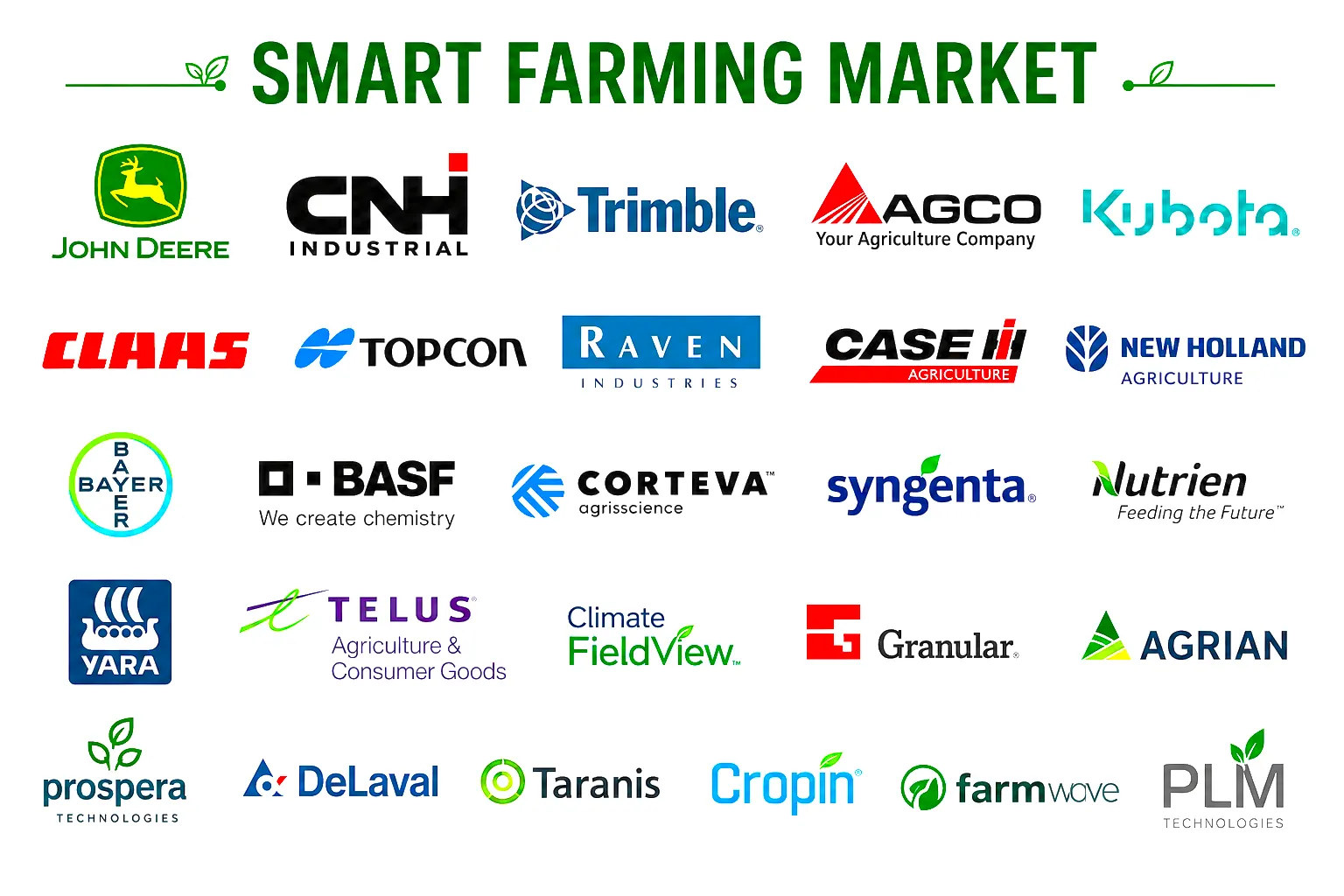
Smart Farming Market 2026: $33.69B Forecast, 12.86% CAGR & 15 Trends Reshaping Global Agriculture
Executive Summary
The global smart farming market is in the midst of a sustained, multi-decade transformation. Valued at USD 12.80 billion in 2022, the market is on a trajectory to reach USD 33.69 billion by 2031, expanding at a compound annual growth rate (CAGR) of 12.86%. By 2026 alone, independent market research from Mordor Intelligence estimates the sector will already surpass USD 20 billion — a milestone that underscores the speed at which digital technologies are reshaping global food production.
Smart farming sits at the intersection of five of the most powerful forces in the global economy: climate urgency, food security demands, AI-driven automation, IoT connectivity proliferation, and the intensifying pressure on natural resources. For investors, agribusinesses, policymakers, and technology providers, understanding this market is not optional — it is essential.
This article provides a definitive, data-driven analysis of the smart farming market: its size, growth drivers, key segments, regional dynamics, competitive landscape, investment trends, and the technologies shaping its next decade.
Introduction: Why Smart Farming Is the Most Consequential Shift in Agriculture Since the Green Revolution
For ten thousand years, farming changed slowly. Plows replaced digging sticks. Irrigation replaced rainfall dependence. Fertilizers replaced fallow fields. Each shift took generations.
Smart farming — the integration of digital sensors, artificial intelligence, satellite imagery, autonomous machinery, and connected platforms into agricultural operations — is happening in years, not generations, and it is happening because it has to.
The Food and Agriculture Organization (FAO) estimates that global food production must increase by 70% by 2050 to feed a projected population of 9.1 billion people. The problem: arable land per capita is declining, water scarcity is intensifying, agricultural labor is shrinking in developed countries, and climate change is making traditional farming methods increasingly unreliable.
Smart farming is not just a technology trend. It is the agricultural sector's structural response to an existential challenge.
This market matters because its success or failure will determine whether humanity can meet its food security needs without exhausting the planet's ecological capacity. It matters for investors because it is a rare sector where massive tailwinds — regulatory support, capital inflows, and urgent demand — align simultaneously. And it matters for technology providers because agriculture, historically one of the last sectors to digitalize, is now opening up at remarkable speed.
What Is the Smart Farming Market?
Smart farming (also called precision agriculture, digital agriculture, or connected farming) refers to the application of modern information and communication technologies in agriculture for the purpose of increasing the quantity and quality of products, while optimizing the use of human labor and natural resources.
In practice, this encompasses a broad spectrum of technologies and systems:
IoT Sensors and Connected Devices that measure soil moisture, temperature, humidity, crop health, livestock vital signs, and equipment status in real time. These sensors generate continuous data streams that feed into decision-support systems.
Drones and Unmanned Aerial Vehicles (UAVs) that survey fields with cameras, multispectral imaging, and LiDAR to create precise field maps, detect disease outbreaks, monitor irrigation coverage, and even apply fertilizers or pesticides with pinpoint accuracy.
AI and Machine Learning Platforms that process vast agricultural datasets to generate predictive insights — forecasting pest outbreaks, optimizing planting schedules, recommending fertilizer dosages, and projecting yield outcomes under different weather scenarios.
Farm Management Software (FMS) delivered via cloud or web-based platforms that integrate all these data streams into actionable dashboards, allowing farmers and agribusiness managers to make informed decisions across the entire agricultural value chain.
Autonomous and GPS-Guided Machinery including self-driving tractors, automated planters, robotic harvesters, and variable rate application equipment that apply inputs precisely where needed, eliminating waste and reducing costs.
Key Takeaways
- The global smart farming market was valued at USD 12.80 billion in 2022 and is projected to reach USD 33.69 billion by 2031 at a 12.86% CAGR.
- By 2026, the market is estimated to exceed USD 20 billion, per Mordor Intelligence data.
- North America holds the largest regional market share (approximately 34–35%), driven by large-scale farm operations and early technology adoption.
- Asia-Pacific is the fastest-growing region, expanding at 14.8% CAGR annually, led by India, China, Japan, and Australia.
- Precision farming is the largest application segment, commanding over 41% of market revenue.
- Smart greenhouses represent the fastest-growing agriculture type segment, expanding at 17.3% CAGR due to urban agriculture and controlled-environment farming demand.
- Hardware currently accounts for the largest revenue share (~52%), but the market is shifting toward software and services as subscription and outcome-based models gain adoption.
- Satellite IoT is forecast to grow at a 29.4% CAGR, threatening to displace cellular IoT's current market dominance.
- John Deere, Trimble Inc., AGCO, Deere & Company, and The Climate Corporation are among the leading global players.
- 22 major companies are profiled in the IMIR market research report, spanning the US, Canada, Japan, Norway, Italy, and Switzerland.
Market Snapshot Table
|
Parameter |
Detail |
|---|---|
|
Market Size (2022) |
USD 12.80 Billion |
|
Projected Market Size (2031) |
USD 33.69 Billion |
|
CAGR (2022–2031) |
12.86% |
|
Estimated Market Size (2026) |
~USD 20.42 Billion |
|
Base Year |
2022 |
|
Forecast Period |
2023–2031 |
|
Historical Analysis Period |
2018–2022 |
|
Largest Region |
North America (~34–35% revenue share) |
|
Fastest-Growing Region |
Asia-Pacific (~14.8% CAGR) |
|
Leading Agriculture Type |
Precision Farming (~41%+ share) |
|
Fastest-Growing Segment |
Smart Greenhouse (~17.3% CAGR) |
|
Dominant Connectivity |
Cellular IoT (~46.7% share) |
|
Fastest-Growing Connectivity |
Satellite IoT (~29.4% CAGR) |
|
Report Coverage |
60+ countries |
|
Key Players Analyzed |
22 major companies |
|
Data Source |
IMIR Market Research (Aug 2023); Supplemented by Mordor Intelligence, MarketsandMarkets, SNS Insider |
Why Is the Smart Farming Market Growing? The 5 Major Catalysts
1. Global Food Security Pressure
The most fundamental driver of smart farming adoption is the imperative to produce more food with fewer resources. The FAO's projection that global food production must increase 70% by 2050 is not a distant abstraction — it is the commercial mandate shaping billions of dollars in agricultural technology investment today. Smart farming's ability to raise yields 15–20% while simultaneously cutting input costs 25–30% (as demonstrated by John Deere's autonomous tractor trials) makes it the most compelling productivity solution available to the sector.
2. Shrinking Agricultural Labor Supply
Developed economies are experiencing structural agricultural labor shortages as rural-to-urban migration depletes farm workforces. In the United States, Europe, Japan, and Australia, the average age of a farmer now exceeds 55. Smart farming — through autonomous machinery, sensor-driven automation, and AI decision support — substitutes technology for labor, making larger-scale farming viable with smaller workforces.
3. Climate Change and Weather Volatility
Increasingly unpredictable weather patterns, droughts, floods, and shifting growing seasons are eroding the effectiveness of traditional planting calendars and agronomic practices. Smart farming technologies — especially satellite monitoring, AI-powered weather forecasting, and precision irrigation — allow farmers to respond dynamically to real-time and predictive climate data, maintaining productivity under increasingly difficult conditions.
4. Falling IoT Hardware Costs
The cost of IoT sensors, connectivity modules, and edge computing devices has declined dramatically over the past decade. What once required significant capital investment is now accessible to mid-sized farm operations. This democratization of the hardware layer is accelerating market adoption across farm size segments globally.
5. Government Incentives and Regulatory Support
Governments across North America, Europe, and Asia are actively subsidizing precision agriculture adoption. The US Farm Bill, the European Union's Farm to Fork Strategy under the European Green Deal, India's Digital Agriculture Mission, and China's agricultural modernization plans all provide financial incentives for technology adoption. These programs lower the effective cost of smart farming investment for farmers while generating sustained commercial demand for technology providers.
Top 10 Industry Trends in the Smart Farming Market
Trend 1: Autonomous Tractors and Machinery
Description: The development and commercial deployment of fully autonomous tractors — exemplified by John Deere's 16-camera, LiDAR-equipped autonomous system capable of operating 500 acres per day without human intervention — represents a landmark shift in farm mechanization.
Market Impact: Autonomous machinery is transforming the economics of large-scale farming, enabling continuous operation, eliminating human error, and allowing precise, data-driven input application. This segment is attracting significant R&D investment from John Deere, AGCO, CNH Industrial, and emerging startups.
Future Outlook: As AI capabilities improve and regulatory frameworks for autonomous agricultural equipment mature, autonomous machinery penetration across grain, row crop, and specialty crop sectors will accelerate through 2031 and beyond.
Trend 2: Satellite IoT Connectivity Disruption
Description: While cellular IoT currently commands approximately 46.7% of smart farming connectivity revenue, satellite IoT — led by providers leveraging low-Earth orbit (LEO) satellite constellations — is projected to grow at a 29.4% CAGR, extending digital agricultural tools to remote and rural areas previously unreachable by terrestrial networks.
Market Impact: Satellite IoT connectivity removes the largest single barrier to smart farming adoption in developing regions and remote agricultural areas — the absence of reliable broadband or cellular coverage. This is set to unlock previously unserved agricultural markets across Sub-Saharan Africa, Southeast Asia, and Latin America.
Future Outlook: By 2030, satellite IoT is expected to rival or exceed cellular IoT in smart farming connectivity market share, fundamentally reshaping the competitive landscape for connectivity providers serving the agricultural sector.
Trend 3: AI-Powered Crop Disease and Pest Detection
Description: AI vision systems, trained on vast agricultural image datasets, can now identify disease symptoms, nutrient deficiencies, and pest infestations from drone imagery or in-field cameras earlier and with greater accuracy than human scouts.
Market Impact: Early disease detection can prevent crop losses of 20–40% in susceptible crops. AI-powered crop scouting is replacing manual field scouting operations, reducing labor costs and improving response times from days to hours.
Future Outlook: Integration of AI disease detection with variable rate sprayer systems will enable targeted pesticide application — reducing chemical usage by up to 90% in some applications — creating a powerful intersection of economic and environmental benefit.
Trend 4: Smart Greenhouse Expansion for Urban and Year-Round Food Production
Description: Controlled environment agriculture (CEA) in smart greenhouses — equipped with automated HVAC, LED lighting, hydroponic nutrition systems, and IoT monitoring — is growing at a 17.3% CAGR, the fastest among smart farming agriculture types.
Market Impact: Smart greenhouses enable year-round production of high-value crops independent of external climate, in urban locations that minimize supply chain distance to consumers. This segment is attracting significant venture capital investment and commanding premium prices in fresh produce markets.
Future Outlook: As urbanization continues and consumer demand for locally grown, pesticide-minimized produce intensifies, smart greenhouse capacity is expected to expand substantially through 2031, particularly in North America, Europe, the Netherlands, China, and the Middle East.
Trend 5: Digital Twins for Farm Operations Management
Description: Digital twin technology — creating virtual replicas of physical farm systems using real-time sensor data — is emerging as a powerful tool for agricultural planning, irrigation modeling, and equipment maintenance prediction.
Market Impact: Farm digital twins allow operators to simulate interventions before implementing them, optimizing irrigation scheduling, crop rotation, and machinery deployment without real-world risk. Early adopters are reporting significant efficiency gains in farm resource allocation.
Future Outlook: Digital twin platforms will become core infrastructure for precision agriculture operations on large-scale farms by 2028, driving demand for real-time IoT sensor networks and advanced simulation software.
Trend 6: Blockchain-Enabled Agricultural Supply Chain Traceability
Description: Blockchain technology is being integrated into agricultural supply chains to create immutable, verifiable records of crop provenance, input usage, handling conditions, and transport history — from field to consumer.
Market Impact: Food safety incidents, consumer demand for transparency, and retailer sustainability mandates are accelerating blockchain adoption in food supply chains. Smart farming's sensor networks provide the field-level data inputs that make blockchain traceability commercially viable.
Future Outlook: Blockchain traceability will become standard in premium food supply chains by 2030, creating sustained demand for the IoT data collection infrastructure that feeds these systems.
Trend 7: Precision Livestock Farming and Animal Health Monitoring
Description: IoT-enabled ear tags, wearable sensors, automated milking systems, and AI health monitoring platforms are transforming livestock management — enabling continuous animal health tracking, early disease detection, optimized feeding, and automated milk harvesting.
Market Impact: Livestock monitoring reduces veterinary costs, improves animal welfare outcomes, increases milk and meat yield efficiency, and enables faster response to health events. These systems are proving strong ROI particularly in dairy and beef cattle operations.
Future Outlook: Global livestock monitoring market adoption is accelerating in North America, Europe, Australia, and increasingly in South America's growing beef export sector.
Trend 8: Variable Rate Technology (VRT) and Prescription Farming
Description: Variable rate technology enables farmers to apply seeds, fertilizers, pesticides, and water at precise, location-specific rates based on detailed field maps and soil data — as opposed to uniform broadcast application across entire fields.
Market Impact: VRT reduces input costs significantly (typical fertilizer savings of 15–25%), improves crop uniformity, and reduces environmental loading from excess chemical application. Yield monitoring combined with VRT creates a feedback loop of continuous agronomic improvement.
Future Outlook: VRT adoption is expanding beyond large North American and European farms into mid-sized operations globally as hardware costs fall and software accessibility improves.
Trend 9: Aquaculture Intelligence and Fish Farm Monitoring
Description: Smart aquaculture systems monitor water quality parameters (oxygen, pH, temperature, ammonia), track fish population health, manage feeding automation, and assist with fleet navigation for marine harvest operations.
Market Impact: With global fish consumption rising and wild catch fisheries under pressure, sustainable aquaculture is a critical food security strategy. Smart aquaculture technology improves feed conversion ratios, reduces disease outbreaks, and increases harvest predictability.
Future Outlook: The global aquaculture technology market is a high-growth niche within smart farming, particularly in Norway, Chile, China, Vietnam, and India.
Trend 10: Farm Management Software-as-a-Service (SaaS) Models
Description: The agricultural software market is transitioning from one-time licensed products to cloud-based SaaS subscription models, lowering entry costs, enabling continuous updates, and creating predictable recurring revenue streams for technology providers.
Market Impact: SaaS models are accelerating smart farming software adoption among medium-sized farm operations that previously could not afford large upfront software investments. Cloud delivery also enables AI capabilities that require significant computational resources.
Future Outlook: Cloud-based farm management software will represent the dominant commercial model for agricultural software delivery by 2028, driving significant consolidation as platform providers acquire point-solution vendors.
Market Dynamics
Drivers: Forces Accelerating Smart Farming Growth
Global population growth and food demand remain the fundamental economic driver. With the world population projected to reach 9.7 billion by 2050, the mathematical necessity of agricultural productivity improvement is the sector's most powerful commercial tailwind.
Government policy and funding are providing critical economic acceleration. The European Union's Common Agricultural Policy (CAP) reform has incorporated precision agriculture support as a core funding pillar. The US USDA's precision agriculture incentive programs under the most recent Farm Bill direct hundreds of millions in annual funding toward technology adoption. India's National Mission for Sustainable Agriculture and Digital Agriculture Mission provide subsidy frameworks for IoT and AI adoption across the country's 120 million farms.
Opportunities: High-Growth Areas for Investment and Expansion
Smallholder farm digitalization in Asia, Africa, and Latin America represents the largest untapped market opportunity. Affordable, mobile-first, satellite-connected tools designed for small-scale operations could expand the addressable smart farming market by orders of magnitude.
Aquaculture technology is a rapidly growing niche with relatively few established dominant players, representing an attractive opportunity for specialized technology providers.
Carbon credit and sustainability services layered onto existing precision agriculture platforms are creating new revenue streams that improve platform ROI for both providers and farmers.
Challenges: Industry Obstacles to Watch
Technology adoption lagging among aging farmer demographics represents a structural challenge, particularly in Japan, South Korea, parts of Europe, and North America.
Climate finance and sustainable agriculture investment alignment is still nascent, with inconsistent methodologies making it difficult for farmers to reliably monetize environmental benefits.
Regulatory fragmentation across national and regional markets — particularly regarding drone airspace regulation, data privacy laws, and autonomous vehicle operation — creates compliance complexity for global smart farming platform providers.
Supply chain disruptions in semiconductor and electronic component markets have created hardware delivery delays for smart farming equipment manufacturers, highlighting a structural vulnerability in the sector's supply chain.
Segment Analysis
By Agriculture Type
Precision Farming dominates the smart farming market with over 41% of global revenue, driven by the broad adoption of GPS-guided machinery, yield monitoring systems, field mapping, and soil analysis tools across North America and Europe. Precision farming delivers measurable ROI through input cost reduction and yield optimization, making it the most commercially mature segment. The US precision farming market alone exceeded USD 5.5 billion in 2023.
Livestock Monitoring is the fastest-growing agriculture type segment within the animal husbandry sector. IoT ear tags, wearable sensors, automated milking robots, and AI health monitoring platforms are transforming dairy, beef, and pig farming globally. This segment is particularly strong in Europe, North America, Australia, and New Zealand. It is also the most commercially proven smart farming subsector in terms of demonstrated ROI.
Smart Greenhouse is the fastest-growing agriculture type at 17.3% CAGR. Controlled environment agriculture is expanding rapidly as urban populations demand locally grown fresh produce and as climate variability makes traditional open-field horticulture riskier. The Netherlands, North America, Japan, and the Middle East are leading markets.
Fish Farming (Aquaculture) represents a high-growth niche segment, driven by global seafood demand, declining wild fisheries, and the commercial viability of smart aquaculture technologies in Norway, Chile, China, and Vietnam. Water quality monitoring, automated feeding, and fish health tracking are the primary application categories.
Others includes emerging smart farming applications in forestry management, beekeeping monitoring, and specialty crop cultivation.
By Software
Cloud-Based Software is the dominant and fastest-growing software delivery model in smart farming. Cloud platforms enable AI-powered analytics, continuous software updates, cross-device accessibility, and scalable data storage — advantages that are driving rapid migration from legacy on-premise systems. Major players including The Climate Corporation, Granular (Corteva), Farmers Edge, and Conservis have built their platform strategies around cloud delivery.
Web-Based Software (browser-accessed without full cloud infrastructure dependency) continues to serve segments with connectivity or data security concerns, as well as smaller providers offering specialized farm management tools. While cloud is the growth trajectory, web-based solutions maintain relevance in markets with connectivity constraints.
By Service
System Integration and Consulting services are the most commercially significant service category, as farm operators require substantial expertise to design, integrate, and optimize multi-vendor smart farming systems. The complexity of combining IoT hardware, connectivity infrastructure, cloud software, and machine learning analytics creates strong demand for professional integration services.
Support and Maintenance services generate recurring revenue for technology providers and are increasingly bundled into SaaS subscription models rather than sold separately.
Connectivity Services — encompassing cellular IoT, satellite connectivity, and private wireless network installation — are a high-growth service category as rural connectivity expansion accelerates.
Managed Services allow farm operators to outsource the operation of smart farming technology infrastructure, reducing internal technical skill requirements.
Professional Services including training, agronomic consulting, and data interpretation services are essential for maximizing the value of smart farming technology investments.
By Solution
Network Management solutions provide the connectivity infrastructure backbone for smart farming operations, managing IoT device networks, data transmission, and system integration.
Agriculture Asset Management platforms track equipment, machinery, and infrastructure assets across farm operations, optimizing utilization and maintenance scheduling.
Supervisory Control and Data Acquisition (SCADA) systems provide operational control and monitoring for complex farm operations including greenhouse automation, large irrigation networks, and integrated livestock facilities.
Logistics and Supply Chain Management solutions track product movement from harvest through processing and distribution, enabling traceability and cold chain monitoring.
Smart Water Management platforms optimize irrigation scheduling, monitor water usage, detect leakages, and ensure compliance with water usage regulations — a high-priority category given global water scarcity trends.
By Application
Yield Monitoring provides real-time measurement of crop yield during harvest, enabling field-level productivity mapping that informs future agronomic decisions.
Field Mapping creates detailed geospatial records of field boundaries, soil characteristics, topography, and historical yield data — the foundational data layer for all precision farming applications.
Crop Scouting applications, increasingly drone and AI-powered, enable systematic assessment of crop health, pest pressure, disease incidence, and growth stage across large field areas.
Weather Tracking and Forecasting integrations provide hyper-local weather data and predictive models that inform planting, spraying, irrigation, and harvest timing decisions.
Irrigation Management systems automate and optimize water delivery based on soil moisture sensors, weather forecasts, and crop demand models — the highest ROI application in water-scarce regions.
Farm Labor Management platforms track worker hours, task assignments, equipment usage, and labor cost allocation across farming operations.
Financial Management modules integrate agronomic data with cost accounting, providing crop-level profitability analysis and supporting loan applications and insurance claims.
Livestock Applications encompass Feeding Management, Milk Harvesting automation, Breeding Management, and animal health tracking.
Aquaculture Applications include Fish Tracking, Fleet Navigation, and Water Quality Management.
HVAC Management in smart greenhouse environments controls temperature, humidity, and CO2 levels to maintain optimal growing conditions.
Regional Analysis
North America: The Market Leader
North America commands approximately 34–35% of global smart farming market revenue, representing the largest regional market by value. The United States is the dominant country market, with the US smart agriculture sector generating approximately USD 5.6 billion in 2023 revenue and projected to nearly double to USD 11 billion by 2030.
The US market's strength is rooted in several structural advantages: large average farm sizes (typically 400+ acres) that generate strong ROI on precision agriculture investment; early adoption of GPS-guided machinery beginning in the 1990s; a dense ecosystem of smart farming technology providers headquartered domestically; strong USDA and state government support programs; and high digital literacy among commercial farming operations.
Government Initiatives: The USDA's Economic Research Service has documented widespread precision agriculture adoption among US corn and soybean farmers. Federal incentives for soil health practices, conservation programs, and climate-smart agriculture are channeling billions in annual funding toward technology-enabled sustainable farming.
Key Companies: John Deere, Trimble Inc., Ag Leader Technology, Raven Industries, The Climate Corporation, DICKEY-john, Ceres Imaging, Conservis, Granular, AgriData Incorporated, Mothive, and Iteris are all US-headquartered market participants.
Future Outlook: North America will maintain its leadership position through 2031, with growth driven by continued autonomous machinery adoption, carbon credit program development, and consolidation of cloud-based farm management platforms.
Europe: Sustainability Leadership Driving Adoption
Europe's smart farming market is the world's second-largest regional segment, driven by strong government policy through the EU's Farm to Fork Strategy (targeting 25% organic farming by 2030 and 50% pesticide reduction) and Common Agricultural Policy (CAP) funding for precision agriculture adoption.
European smart farming is characterized by high precision agriculture technology adoption in Western markets (Netherlands, Germany, France, UK, Denmark) and rapidly growing adoption in Eastern Europe and the Iberian Peninsula.
Government Initiatives: EU CAP reform allocates specific funding tiers for precision agriculture technology adoption. National programs in the Netherlands, Germany, and France provide additional support for smart greenhouse development, livestock monitoring, and field-level sensor deployment.
Key Players: AgJunction (Canada, active in Europe), GAMAYA (Switzerland), Auroras s.r.l. (Italy), Aker Solutions (Norway), and numerous European agri-tech startups operate across the continent.
Future Outlook: Regulatory-driven sustainability requirements under the European Green Deal will make precision agriculture adoption increasingly essential for commercial farm operations through 2031, sustaining strong market growth despite economic headwinds.
Asia-Pacific: The Fastest-Growing Region
Asia-Pacific is the most dynamic smart farming market globally, growing at 14.8% CAGR annually — significantly outpacing all other regions. This growth is driven by China's large-scale agricultural modernization programs, India's Digital Agriculture Mission and massive smallholder farm market, Japan's application of robotics to address severe agricultural labor shortages, South Korea's advanced technology adoption environment, and Australia's precision agriculture maturity.
China is investing heavily in agricultural AI, satellite farming systems, and drone-based crop management. State-sponsored agri-tech development programs and large domestic drone manufacturers are driving rapid adoption.
India represents perhaps the largest single market growth opportunity globally. With 120 million farming households, the Digital Agriculture Mission, and expanding mobile broadband coverage, India's smart farming market is in the early stages of exponential growth.
Japan is deploying agricultural robotics and AI-driven farm management as direct responses to an ageing agricultural workforce, with significant government support for technology-enabled farming.
Australia has one of the world's most mature precision agriculture markets on a per-farm basis, with high adoption of GPS guidance, yield monitoring, and data management platforms across its grain farming sector.
Future Outlook: Asia-Pacific will narrow North America's market share lead significantly through 2031, with China and India together likely representing the largest total national market for smart farming technology by the late 2030s.
Latin America: Agribusiness Giant Entering the Digital Era
Latin America's smart farming market is concentrated in Brazil and Argentina — the world's two largest soybean exporters and major corn, beef, and poultry producers. Large commercial farm operations in Brazil's Cerrado and Argentina's Pampas have historically been early adopters of precision agriculture technology, particularly GPS guidance and yield monitoring.
Brazil's agribusiness sector is one of the most productive in the world, with strong incentives to maintain cost competitiveness through technology adoption. The country's tropical agricultural research institution (Embrapa) actively develops and promotes precision agriculture practices.
Future Outlook: Latin America will continue as a significant regional growth market, with Brazil and Argentina leading adoption among large commercial operations, while Colombia, Peru, and Mexico show emerging market opportunity in specialty crops and medium-scale farming.
Middle East and Africa: Necessity-Driven Innovation
The Middle East's smart farming market is driven by severe water scarcity that makes precision irrigation technology economically compelling, combined with ambitious food security strategies in Saudi Arabia, UAE, Israel, and Egypt.
Sub-Saharan Africa represents a long-term growth opportunity driven by smallholder farm digitalization enabled by mobile technology and satellite connectivity. Current adoption remains limited by infrastructure constraints and financing barriers, but government programs and NGO-funded technology projects are beginning to establish foundations for broader market development.
Israel deserves particular recognition as a global precision irrigation and smart greenhouse technology innovator, with companies like Netafim exporting solutions globally.
Future Outlook: Middle Eastern markets will continue investing in controlled environment agriculture and smart irrigation as food security imperatives. Sub-Saharan African market development will accelerate as satellite connectivity expands and mobile-first farming applications reach smallholder scale.
Competitive Landscape
Major Players Profiled
Deere & Company (John Deere) — Moline, Illinois, USA The global leader in agricultural equipment, John Deere has invested billions in smart farming technology development and acquisition. Its Operations Center platform integrates precision agriculture data from all John Deere equipment. The company's autonomous tractor — demonstrated with 16 cameras and LiDAR capable of continuous 500-acre-per-day operation — represents the current frontier of farm automation. John Deere's technology strategy centers on an integrated ecosystem of connected equipment, agronomic data services, and AI-powered decision support.
Trimble Inc. — Westminster, Colorado, USA Trimble is one of the world's leading precision agriculture technology companies, offering GPS guidance, field computers, drone systems, and farm management software. Its Trimble Agriculture portfolio encompasses hardware and software solutions spanning precision planting, application, and harvest operations. Trimble's Farmers Core platform provides a cloud-based hub for integrating data from multiple field operations.
The Climate Corporation — San Francisco, California, USA A subsidiary of Bayer AG, The Climate Corporation operates the Climate FieldView platform — one of North America's leading digital farming platforms. FieldView integrates satellite and drone imagery, soil data, weather modeling, and agronomic analytics to provide field-level decision support for corn, soybean, and other row crop farmers.
Ag Leader Technology — Ames, Iowa, USA Ag Leader is a leading US precision agriculture company specializing in yield monitoring, planting control, application control, and field mapping solutions. Known for strong agronomic accuracy and farmer-centric product design.
AgEagle Aerial Systems Inc. — Wichita, Kansas, USA AgEagle focuses on drone systems for agricultural remote sensing, providing platforms and software for multispectral and RGB crop imaging used in precision agriculture applications.
Farmers Edge Inc. — Winnipeg, Canada Farmers Edge offers a comprehensive digital farming platform combining field-level weather data, soil sampling, satellite imagery, and precision agronomics. The company operates across North America and internationally.
TOPCON CORPORATION — Tokyo, Japan Topcon provides precision agriculture positioning and guidance solutions, including GPS/GNSS receivers, automated steering, and field management software. A major player in the Japanese and Asia-Pacific precision agriculture markets.
CropX Inc. — San Francisco, California, USA CropX is a cloud-based agricultural analytics company specializing in soil monitoring and irrigation management. Its sensor-based platform provides real-time soil data to optimize irrigation scheduling and reduce water usage.
Raven Industries, Inc. — Sioux Falls, South Dakota, USA A precision agriculture pioneer acquired by CNH Industrial, Raven develops autonomous vehicle systems, application control, and field intelligence solutions for large-scale farming operations.
AgJunction — Hiawatha, Kansas, USA (Canada-based) AgJunction provides precision guidance and automated steering systems, as well as IoT-based fleet telematics for agricultural equipment management.
GAMAYA — Lausanne, Switzerland GAMAYA provides hyperspectral imaging and AI-driven crop intelligence platforms, with strong positioning in sugar cane and precision crop management markets.
Conservis — Minneapolis, Minnesota, USA Conservis offers cloud-based farm management software designed for complex commercial farming operations, covering field planning, work orders, input tracking, and financial management.
Granular, Inc. — San Francisco, California, USA Granular (now part of Corteva Agriscience) offers a leading cloud-based farm management software platform designed for large-scale commercial farming operations, integrating crop planning, input tracking, and financial analytics.
Emerging Startups and Disruptive Innovators to Watch
The smart farming sector's venture capital ecosystem has produced a wave of specialized startups addressing niche gaps in the precision agriculture value chain. Key areas of startup innovation include:
Carbon credit integration platforms connecting farm IoT data to voluntary carbon markets; AI-powered pest and disease prediction services delivered on a subscription basis to farmers; autonomous robotic harvesting systems for high-value horticultural crops; satellite-first crop monitoring platforms requiring no in-field infrastructure; and blockchain supply chain traceability solutions for premium agricultural products.
Market Forecast Scenarios (2026–2031)
Best Case Scenario
A combination of accelerated AI capability development, rapid rural satellite connectivity expansion, supportive government policy globally, and strong commodity price incentives for precision agriculture investment drives smart farming market growth above 14% CAGR — potentially reaching USD 38–40 billion by 2031. Satellite IoT connectivity disruption opens large previously unserved markets in Sub-Saharan Africa and South Asia on an accelerated timeline.
Moderate Scenario (Base Case)
IMIR's projected CAGR of 12.86% holds, delivering a market of USD 33.69 billion by 2031 from a 2022 base of USD 12.80 billion. North America maintains leadership, Asia-Pacific grows fastest, and cloud-based software becomes the dominant delivery model by 2028. This scenario reflects current adoption trajectories without major positive or negative disruptions.
Risk Scenario
Economic headwinds including low commodity prices, high interest rates limiting farm capital investment, rural connectivity rollout delays, and trade policy disruptions suppress adoption below 10% CAGR — resulting in a market of approximately USD 28–30 billion by 2031. This scenario is most likely to materialize if smallholder farm digitalization in Asia moves significantly more slowly than anticipated.
FAQs — Smart Farming Market
Q1: What is the global smart farming market size in 2026? Based on IMIR data (USD 12.80B in 2022, growing at 12.86% CAGR), the smart farming market is estimated at approximately USD 20 billion in 2026. Mordor Intelligence independently places the figure at USD 20.42 billion for 2026.
Q2: What is the smart farming market CAGR? The smart farming market is growing at a CAGR of 12.86% over the 2022–2031 period per IMIR Market Research. Independent estimates from various research firms range from 10.2% to 14.8%, depending on segment scope.
Q3: What will the smart farming market be worth by 2031? The smart farming market is projected to reach USD 33.69 billion by 2031, per IMIR Market Research. Mordor Intelligence projects USD 36.22 billion by 2031, reflecting slightly different methodology and scope.
Q4: Which region holds the largest smart farming market share? North America holds the largest regional market share, approximately 34–35% of global smart farming revenue, driven by large commercial farm sizes, early technology adoption, and major domestic technology providers.
Q5: Which region is growing fastest in smart farming? Asia-Pacific is the fastest-growing region, expanding at approximately 14.8% CAGR annually, led by China, India, Japan, and Australia.
Conclusion: Smart Farming as the Defining Agricultural Opportunity of the Decade
The smart farming market's trajectory to USD 33.69 billion by 2031 is not simply a market opportunity — it is a reflection of a fundamental necessity. As the global food system faces simultaneous pressures from population growth, climate change, resource scarcity, and labor constraints, the digitalization of agricultural operations is shifting from a competitive advantage to a survival imperative.
For technology investors, the smart farming market presents one of the most compelling multi-decade growth narratives available — a sector where governmental, commercial, and environmental incentives align to drive sustained adoption, where barriers to entry are rising through consolidation and ecosystem development, and where the total addressable market remains largely underpenetrated in the world's most populous agricultural regions.
The farmers, companies, and governments that move decisively to embrace smart farming's transformative potential in the 2026–2031 window will be best positioned to lead — and benefit from — the most consequential agricultural transformation in a century.