
The Omalizumab Market: Navigating Patent Expiry and the Biosimilar Revolution
Author:
Intellectual Market Insights Research
Published Date:
19 May 2026
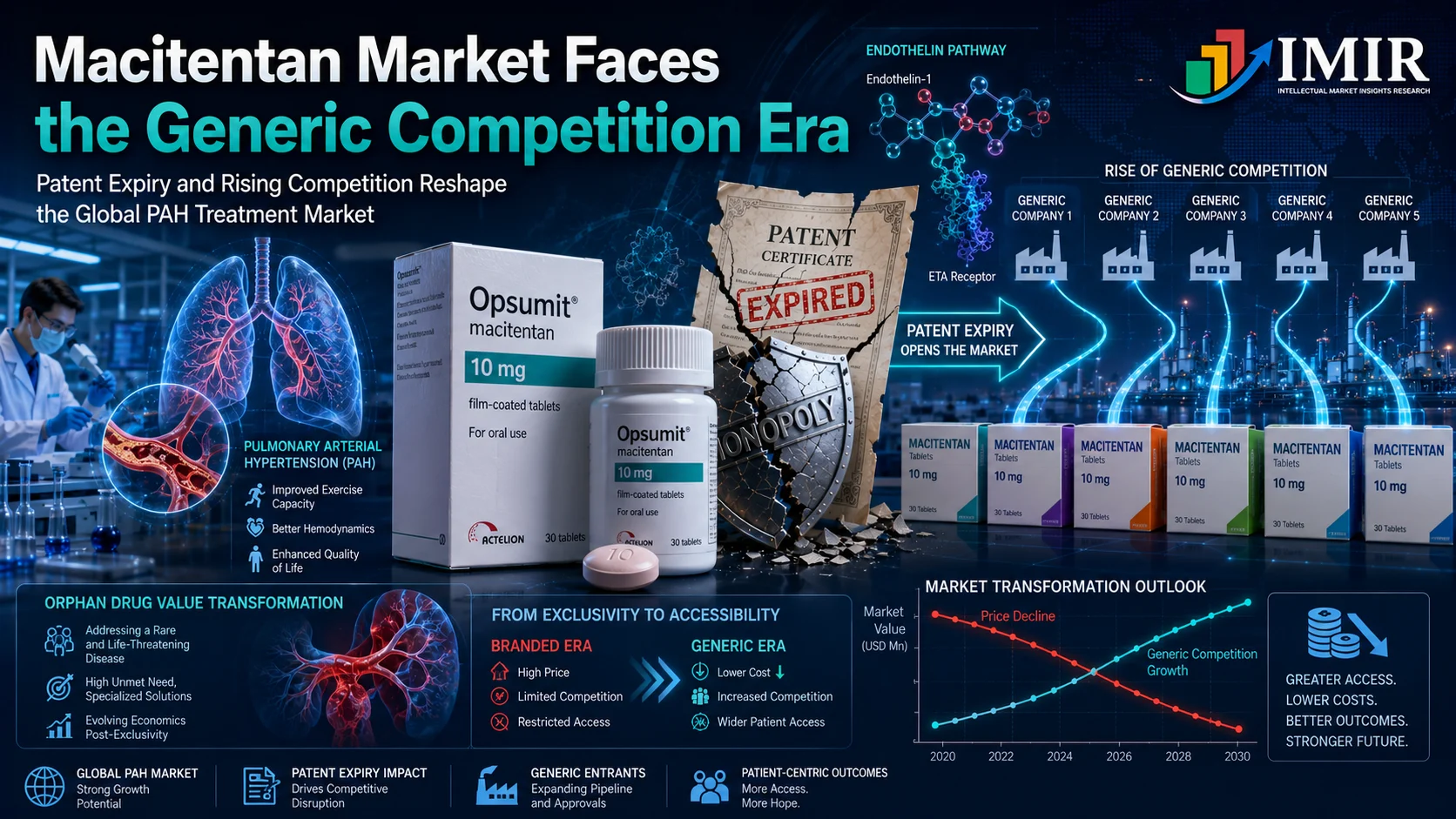
The Global Omalizumab Market Enters a New Era Amid Patent Expiry and Biosimilar Competition
The global market for omalizumab has reached a major turning point where one of the most successful blockbusters within biotechnology faces the inevitable consequence of the loss of its patent protection. The product was initially discovered by Genentech and Novartis and marketed under the trade name of Xolair. Since then, omalizumab has been the leading drug for treating severe cases of allergic asthma and chronic spontaneous urticaria caused by the action of IgE antibodies. But now, with the loss of its patents coming up, a period of fierce competition is just around the corner.
Current Competitive Landscape: From Monopoly to Market Fragmentation
Xolair has been almost monopolistic within the anti-IgE class due to its first-to-market strategy and subsequent additions to the indication and label, providing it with an unparalleled competitive advantage. Originators have further reinforced their position by way of life-cycle management actions, such as obtaining pediatric approval, making pre-filled syringes available, and expanding the label to include nasal polyps and food allergies.
The competition has become far more complex than mere biosimilars. In addition to facing other biologicals that have different mechanisms of action, there is now stiff competition for the same market from other biologicals that target alternative inflammatory pathways. The drugs in question are dupilumab (Dupixent), mepolizumab (Nucala), and benralizumab (Fasenra). These are used to treat severe asthma, which is another major indication where omalizumab enjoys a market presence.
Patent Expiry and the Approaching Cliff
The notion of “patent cliff” fits like a glove to the case of omalizumab now. Core composition-of-matter patents and manufacturing patents have either expired or are about to expire in all major markets, such as the U.S. and EU. While secondary patents covering a particular formulation, dose, or route of administration may give temporary shelter to the drug in certain countries, exclusive protections that kept Xolair safe for 20 years are eroding.
This situation is much more than just a patent expiration event; it is a whole new stage of market transformation. In addition to the manufacturing complexities faced by biologics as opposed to generics, this development can be perceived as an inevitable process.
Impact of Patent Expiry: Transforming Market Economics
The expiry of the patents for omalizumab is expected to bring about many transformations within the entire healthcare setting. The first transformation will be price erosion. There are usually discounts ranging from twenty percent to forty percent on the drug prices after its entry into the market by competing biosimilar brands. Payers will greatly appreciate this transformation as it will lead to an increase in cost-effectiveness.
There is immense room for volume expansion since lower-priced biosimilar products may enhance patient access in emerging economies and underprivileged patient populations, resulting in a reduction in individual product sales but increasing overall omalizumab sales. This calls for a change of strategy for originator pharmaceutical firms.
In terms of the clinical effects of the biosimilar version of omalizumab, it should be shown to have comparable efficacy and safety in comparison with the originator product. Although there is no doubt that there will not be any changes in the effects of the drug, physicians and patients may develop a preference for the brand name.
Upcoming Companies: The Biosimilar Pipeline
Many pharmaceutical companies are actively involved in the development of omalizumab biosimilars, indicating future competitive pressure in this area. The Korean biotech company Samsung Bioepis, owing to its experience in the development of biosimilars, will present stiff competition for omalizumab. Cipla, Hetero Biopharma, and Lupin of India plan to sell omalizumab biosimilars in highly regulated countries as well as growth markets at low prices.
The world’s largest manufacturer of biosimilars, Celltrion, has already received many regulatory approvals for its omalizumab biosimilar project. Teva Pharmaceuticals offers omalizumab biosimilar with huge commercial capabilities. Alvotech has chosen a partnership strategy to enter all possible markets; Kashiv Biosciences and Glenmark Pharmaceuticals are developing omalizumab biosimilars of their own.
Manufacturers in some Asian and European countries are also planning to develop omalizumab biosimilars tailored for their markets.
Market Outlook: A New Competitive Era
Market evolution is a challenge and an opportunity at the same time. Even though the revenues of the originators will surely decrease, there can be growth within the whole market in terms of accessibility and affordability. Companies which effectively manage to combine competitiveness in prices, manufacturing quality, and their commercialization activities will gain most in this scenario.
Such a transition contributes to the development of global healthcare, because it makes one clinically tested product available for more people, and at the same time, creates room for innovations due to competition.