
Top 25 Leading Companies in the Global Traditional Chinese Medicine Market Size, Growth Forecast- Industry Outlook to 2034
Author:
Intellectual Market Insights Research
Published Date:
09 Jul 2026
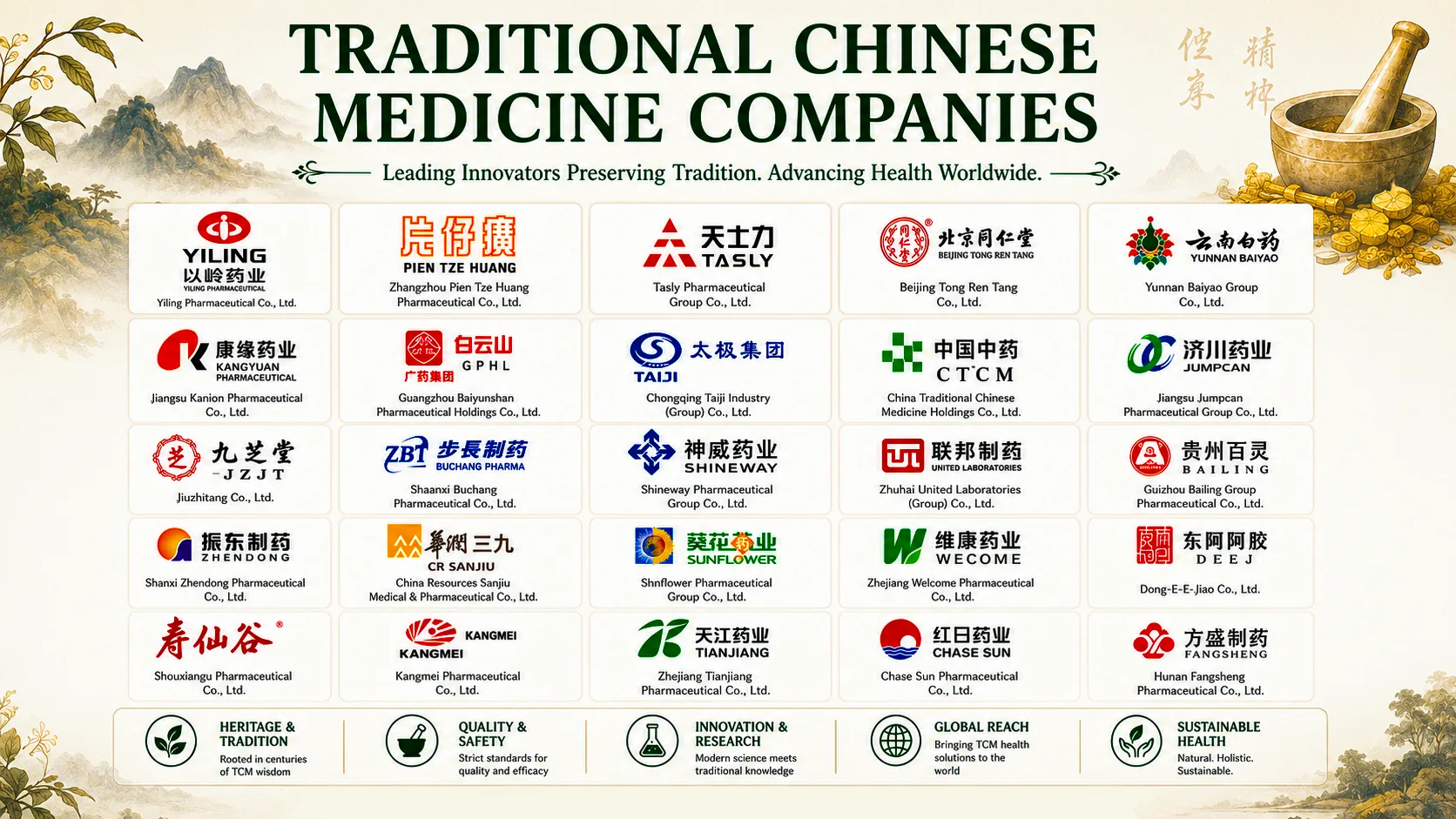
Top 25 Traditional Chinese Medicine Companies Leading Global Market Growth
Introduction
The global Traditional Chinese Medicine (TCM) market — spanning herbal medicine, acupuncture, cupping, Tui Na, and moxibustion — has moved from a niche wellness category into a mainstream pillar of integrative healthcare. Independent market research firms put current market size estimates anywhere from roughly USD 29 billion to over USD 90 billion depending on scope (pharmaceutical-grade TCM only versus the broader complementary-medicine category including practitioner services), with most forecasts converging on high-single-digit compound annual growth through the early 2030s
That growth is not accidental. China's "Healthy China 2030" policy has formally embedded TCM into the national healthcare agenda, and the country's Basic Medical Insurance Drug Directory now covers thousands of formulations, effectively subsidizing demand at the point of care. Outside China, momentum is building for different reasons: aging populations in North America and Europe are driving interest in complementary approaches to chronic pain, insurers in select European and Asian markets are beginning to reimburse acupuncture, and e-commerce has made herbal products more accessible to Western consumers than at any point in the industry's history.
Market size and growth potential. Asia-Pacific remains the demand center, commanding roughly half of global revenue on the strength of China's domestic hospital and clinic network, where the overwhelming majority of public hospitals now offer TCM services alongside conventional care. North America and Europe, while smaller in absolute terms, are growing quickly as licensing frameworks mature and insurance coverage expands.
Technology landscape. The industry is no longer defined solely by tradition. Companies are investing in standardized extraction technology, AI-assisted diagnostic tools that analyze tongue images, pulse data, and facial features against classical TCM theory, and blockchain-based traceability systems that address longstanding concerns about herb quality and adulteration. China's drug regulator, the NMPA, approved a wave of new TCM formulations in 2024, including several Class 1 "innovative TCM" designations — a signal that the industry is shifting from folk-remedy positioning toward evidence-based, clinically validated products.
Demand drivers. Three forces are converging: rising chronic disease burden (diabetes, cardiovascular disease, cancer-related supportive care) that pushes patients toward complementary, lower-side-effect therapies; a broader consumer shift toward natural and preventive wellness; and government-level institutional support that lowers cost barriers through insurance inclusion.
Future opportunities lie in oncology supportive care (one of the fastest-growing application segments), e-commerce and online-pharmacy distribution, cross-border regulatory harmonization that could open new Western markets, and consolidation among mid-tier manufacturers seeking the scale needed to fund clinical validation.
Growth Drivers
Government policy and insurance inclusion. China's expansion of its national insurance drug catalog to include thousands of TCM formulations has had an outsized effect on producer revenue, effectively converting discretionary wellness spending into reimbursed healthcare spending. South Korea has pursued a parallel reimbursement strategy for acupuncture, and momentum is building in parts of Europe to fold TCM services into national health structures.
Rising chronic disease burden. Diabetes, cardiovascular disease, and cancer incidence are climbing globally alongside aging populations, and health systems are increasingly looking for preventive, multi-modal therapies that reduce hospital admission rates. Oncology supportive care — using TCM to manage chemotherapy side effects — is one of the market's fastest-growing application areas.
Digital transformation and AI adoption. TCM diagnosis has traditionally depended on subjective practitioner judgment (pulse-reading, tongue inspection). AI-assisted diagnostic systems that standardize these assessments are improving consistency and building clinical credibility, while telemedicine platforms are extending TCM consultation access into markets that lack a dense practitioner network.
Standardization and traceability. Digital traceability programs tracking herbs from farm to formulation are addressing longstanding adulteration and quality-consistency concerns — a prerequisite for TCM to gain broader acceptance among Western regulators and clinicians.
Consumer demand for natural healthcare. A majority of surveyed consumers across major markets now cite a preference for natural, non-pharmaceutical therapies for pain management and chronic condition support, and e-commerce has made herbal formulations, supplements, and TCM-adjacent wellness products far easier to discover and purchase outside Asia.
Investment and consolidation. Strategic moves such as take-private bids for smaller TCM holding companies point to investor appetite for scale — larger, vertically integrated players can better absorb the cost of clinical trials and regulatory approval.
Market Challenges
Regulatory fragmentation. TCM products face inconsistent regulatory treatment outside China — classified in some Western markets as dietary supplements, in others as unlicensed drugs — which limits formal market entry and clinical positioning.
Quality and standardization gaps. Variability in raw herb sourcing, extraction methods, and formulation practices continues to affect product consistency, and the absence of universal manufacturing protocols makes it harder for international healthcare providers to evaluate reliability.
Supply chain and raw material availability. TCM manufacturing depends on agricultural inputs — often sourced from tens of thousands of small farming partners — that are exposed to weather variability, land-use pressure, and quality inconsistency at the point of harvest.
Pricing pressure. Insurance-driven procurement in China has expanded volume but also compressed per-unit pricing for many standardized formulations, squeezing margins for manufacturers without differentiated, patent-protected products.
Evidence and efficacy skepticism. Outside markets with a cultural history of TCM use, clinicians and regulators often demand randomized-trial-grade evidence that much of the traditional pharmacopoeia has not yet generated, slowing adoption in evidence-based Western health systems.
Competitive intensity. The top players collectively hold a meaningful but not dominant share of the global market, meaning competition remains fragmented across thousands of smaller regional manufacturers — a dynamic that pressures branding, distribution reach, and R&D investment for mid-tier companies.
Top 25 Leading Companies in the Global Traditional Chinese Medicine Market
- Yiling Pharmaceutical Co., Ltd.
- Zhangzhou Pien Tze Huang Pharmaceutical Co., Ltd.
- Tasly Pharmaceutical Group Co., Ltd.
- Beijing Tong Ren Tang Co., Ltd.
- Yunnan Baiyao Group Co., Ltd.
- Jiangsu Kanion Pharmaceutical Co., Ltd.
- Guangzhou Baiyunshan Pharmaceutical Holdings Co., Ltd. (GPHL)
- Chongqing Taiji Industry (Group) Co., Ltd.
- China Traditional Chinese Medicine Holdings Co., Ltd. (CTCM)
- Jiangsu Jumpcan Pharmaceutical Group Co., Ltd.
- Jiuzhitang Co., Ltd.
- Shaanxi Buchang Pharmaceutical Co., Ltd.
- Shineway Pharmaceutical Group Co., Ltd.
- Zhuhai United Laboratories (Group) Co., Ltd.
- Guizhou Bailing Group Pharmaceutical Co., Ltd.
- Shanxi Zhendong Pharmaceutical Co., Ltd.
- China Resources Sanjiu Medical & Pharmaceutical Co., Ltd. (CR Sanjiu)
- Sunflower Pharmaceutical Group Co., Ltd.
- Zhejiang Welcome Pharmaceutical Co., Ltd.
- Dong-E-E-Jiao Co., Ltd.
- Shouxiangu Pharmaceutical Co., Ltd.
- Kangmei Pharmaceutical Co., Ltd.
- Zhejiang Tianjiang Pharmaceutical Co., Ltd.
- Chase Sun Pharmaceutical Co., Ltd.
- Hunan Fangsheng Pharmaceutical Co., Ltd.
1. Yiling Pharmaceutical Co., Ltd.
Headquarters: Shijiazhuang, Hebei, China
Founded: 1992
Yiling Pharmaceutical Co., Ltd. is one of China's largest Traditional Chinese Medicine (TCM) manufacturers, recognized for integrating modern pharmaceutical research with centuries-old herbal medicine practices. The company is widely known for products targeting cardiovascular diseases, respiratory disorders, influenza, and chronic illnesses. Its innovative research platform combines evidence-based medicine with TCM theory, enabling the development of internationally recognized herbal formulations.
Why Yiling Pharmaceutical Leads the TCM Industry
- Strong R&D capabilities in modernized TCM.
- Extensive portfolio of patented herbal medicines.
- Large-scale manufacturing facilities.
- International market expansion.
- Continuous investment in clinical validation.
Company Snapshot
|
Attribute |
Details |
|---|---|
|
Company |
Yiling Pharmaceutical Co., Ltd. |
|
Founded |
1992 |
|
Headquarters |
Shijiazhuang, Hebei, China |
|
Industry |
Traditional Chinese Medicine |
|
Core Products |
Herbal Medicines, Cardiovascular & Respiratory Therapies |
|
Key Markets |
China, Asia-Pacific, International |
|
Competitive Advantage |
Modern scientific validation of TCM |
|
Growth Drivers |
Aging population, chronic disease management |
|
Why It Stands Out |
Innovation-driven TCM pharmaceutical leader |
2. Zhangzhou Pien Tze Huang Pharmaceutical Co., Ltd.
Headquarters: Zhangzhou, Fujian, China
Founded: 1999 (public company; brand history dates back to 1555)
Zhangzhou Pien Tze Huang Pharmaceutical is globally renowned for its flagship Pien Tze Huang formulation, one of China's most prestigious TCM products. The company specializes in liver health, anti-inflammatory therapies, and premium herbal medicines while maintaining strong heritage branding and international recognition.
Why Zhangzhou Pien Tze Huang Leads
- Iconic heritage brand.
- Premium TCM formulations.
- Strong export business.
- High consumer trust.
- Continuous product innovation.
Company Snapshot
|
Attribute |
Details |
|---|---|
|
Company |
Zhangzhou Pien Tze Huang Pharmaceutical Co., Ltd. |
|
Founded |
1999 |
|
Headquarters |
Zhangzhou, Fujian, China |
|
Industry |
Traditional Chinese Medicine |
|
Core Products |
Pien Tze Huang, Liver Care Medicines |
|
Key Markets |
China, Southeast Asia |
|
Competitive Advantage |
Heritage premium herbal medicines |
|
Growth Drivers |
Premium healthcare demand |
|
Why It Stands Out |
One of China's oldest TCM brands |
3. Tasly Pharmaceutical Group Co., Ltd.
Headquarters: Tianjin, China
Founded: 1994
Tasly Pharmaceutical Group is a leading innovator in modern Traditional Chinese Medicine, combining AI-driven research, precision medicine, and digital healthcare. The company develops cardiovascular, oncology, metabolic disease, and herbal medicine solutions supported by advanced pharmaceutical technologies.
Why Tasly Leads
- Advanced TCM research platform.
- Digital healthcare ecosystem.
- Global clinical research.
- Strong intellectual property portfolio.
- Modern pharmaceutical manufacturing.
Company Snapshot
|
Attribute |
Details |
|---|---|
|
Company |
Tasly Pharmaceutical Group Co., Ltd. |
|
Founded |
1994 |
|
Headquarters |
Tianjin, China |
|
Industry |
Traditional Chinese Medicine |
|
Core Products |
Herbal Medicines, Cardiovascular Drugs |
|
Key Markets |
China, Global |
|
Competitive Advantage |
AI-enabled TCM innovation |
|
Growth Drivers |
Digital healthcare integration |
|
Why It Stands Out |
Pioneer in smart TCM healthcare |
4. Beijing Tong Ren Tang Co., Ltd.
Headquarters: Beijing, China
Founded: 1669
Beijing Tong Ren Tang is arguably the world's most famous Traditional Chinese Medicine company with over 350 years of history. It produces thousands of herbal medicines, health supplements, and wellness products distributed across more than 40 countries.
Why Tong Ren Tang Leads
- World's oldest TCM brand.
- Premium product quality.
- Extensive international presence.
- Strong retail pharmacy network.
- Exceptional brand reputation.
Company Snapshot
|
Attribute |
Details |
|---|---|
|
Company |
Beijing Tong Ren Tang Co., Ltd. |
|
Founded |
1669 |
|
Headquarters |
Beijing, China |
|
Industry |
Traditional Chinese Medicine |
|
Core Products |
Herbal Medicines, Health Supplements |
|
Key Markets |
Global |
|
Competitive Advantage |
Heritage and trusted quality |
|
Growth Drivers |
Global wellness demand |
|
Why It Stands Out |
Historic leader in TCM |
5. Yunnan Baiyao Group Co., Ltd.
Headquarters: Kunming, Yunnan, China
Founded: 1971
Yunnan Baiyao is internationally recognized for its proprietary herbal formulations used in wound care, oral healthcare, trauma treatment, and wellness products. The company combines traditional herbal medicine with consumer healthcare innovation.
Why Yunnan Baiyao Leads
- Famous proprietary herbal formula.
- Strong consumer healthcare portfolio.
- Extensive distribution channels.
- High R&D investment.
- Trusted global brand.
Company Snapshot
|
Attribute |
Details |
|---|---|
|
Company |
Yunnan Baiyao Group Co., Ltd. |
|
Founded |
1971 |
|
Headquarters |
Kunming, Yunnan, China |
|
Industry |
Traditional Chinese Medicine |
|
Core Products |
Trauma Medicines, Oral Care |
|
Key Markets |
China, International |
|
Competitive Advantage |
Proprietary herbal formulations |
|
Growth Drivers |
Consumer healthcare expansion |
|
Why It Stands Out |
Global leader in herbal wound care |
Key Industry Trends
Artificial intelligence and machine learning are being applied to TCM diagnosis — analyzing tongue images, pulse waveforms, and facial characteristics against classical TCM diagnostic theory to standardize what has historically been a highly subjective, practitioner-dependent process.
Digitalization and telemedicine are extending access to TCM consultation beyond markets with a dense practitioner network, particularly benefiting overseas Chinese communities and Western consumers curious about TCM but lacking local clinic access.
Blockchain-based traceability is being deployed to track herbs from cultivation through formulation, directly addressing the adulteration and quality-consistency concerns that have historically limited TCM's credibility with Western regulators and clinicians.
Industry 4.0 manufacturing — automated extraction, standardized dosing, and computer-vision-based quality inspection — is helping larger manufacturers meet the GMP standards required for both domestic insurance procurement and export market entry.
ESG and sustainability considerations are becoming more prominent as companies address the sustainability of wild-harvested herb sourcing, with growing investment in cultivated (rather than wild-collected) medicinal plant supply chains to reduce ecological pressure on vulnerable species.
Evidence-based validation and clinical research represent perhaps the most significant long-term trend: companies like Tasly and Yiling are increasingly running Western-style randomized controlled trials to build an evidence base that can support regulatory approval and insurance reimbursement outside China's existing institutional framework.
Cybersecurity and data protection are growing considerations as TCM diagnosis and telemedicine platforms collect sensitive patient health data, particularly as companies expand digital consultation services across borders with varying data protection regimes.
Segment Analysis
By Therapy Type
- Herbal Medicine. The largest segment by revenue share, herbal medicine encompasses patented Chinese medicines, herbal formulas, and standardized extracts used across both prevention and active treatment. Its scale advantage comes from centuries of formulary knowledge combined with modern extraction and quality-control technology, and it remains the anchor product category for nearly every major TCM manufacturer.
- Acupuncture. The fastest-growing therapy type by CAGR in several forecasts, acupuncture benefits from a comparatively strong (by TCM standards) evidence base for pain management, which has helped it gain insurance reimbursement and licensing recognition in Western markets faster than herbal products.
- Cupping Therapy. A smaller but culturally visible segment, boosted in the West by athlete and celebrity endorsement, cupping is used primarily for musculoskeletal relief and is increasingly offered as an add-on service within wellness centers and spas rather than as a standalone clinical treatment.
- Tui Na (Therapeutic Massage). Combining massage, acupressure, and joint manipulation, Tui Na is widely used in rehabilitative settings and is often bundled with acupuncture or herbal treatment as part of a comprehensive care plan.
- Moxibustion and Others. Smaller specialty segments including moxibustion, aromatherapy, and magneto-therapy round out the category, generally positioned as complementary add-ons rather than primary revenue drivers for major manufacturers.
By Application
- Pain Management. The single largest application segment, driven by rising chronic pain prevalence and growing consumer wariness of pharmaceutical dependency risk associated with conventional painkillers.
- Oncology Supportive Care. One of the fastest-growing application areas, used to manage chemotherapy side effects and improve patient-reported quality of life during cancer treatment — a segment attracting particular attention from hospital-based TCM programs. [INTERNAL LINK: Oncology Supportive Care Market report]
- Chronic Disease Management. Covers diabetes, cardiovascular conditions, and other long-term conditions where TCM is used adjunctively alongside conventional treatment.
- Preventive Wellness. A high-volume, lower-margin segment built around tonics, supplements, and lifestyle-integrated therapies aimed at general health maintenance rather than disease treatment.
By Distribution Channel
- Hospitals and TCM Clinics. The dominant distribution channel in China, where the vast majority of public hospitals now offer TCM services, reflecting deep institutional integration.
- E-commerce and Online Pharmacies. The fastest-growing distribution channel, expanding access to TCM products in markets that lack a dense network of licensed practitioners and clinics.
- Retail Pharmacy and Wellness Centers. A steady, mature channel particularly important for over-the-counter herbal products and lower-intensity therapies like cupping.
Regional Analysis
Asia-Pacific
Asia-Pacific is the clear demand center for the global TCM market, commanding the largest regional revenue share on the back of China's deep institutional integration of TCM into public healthcare, alongside meaningful demand from Japan (Kampo medicine), South Korea, and other Southeast Asian markets with historical TCM adoption. China's insurance-driven reimbursement expansion and its "Healthy China 2030" policy framework are the region's primary growth catalysts, and the region also posts the fastest regional CAGR in most forecasts
North America
North America represents a smaller but fast-growing share of the global market, led by the United States, where licensing recognition for acupuncturists, rising chronic disease prevalence, and growing consumer interest in natural and alternative healthcare are the primary demand drivers. Insurance coverage for acupuncture remains partial but is expanding, and TCM products increasingly reach U.S. consumers through wellness retail and e-commerce channels rather than dedicated TCM clinics.
Europe
Europe is seeing steady growth in TCM adoption, particularly in the United Kingdom, Germany, and Austria, where interest in complementary and alternative medicine is well established and pharmacovigilance frameworks are gradually adapting to accommodate herbal traditions. Regulatory harmonization across EU member states remains a key swing factor for how quickly TCM products can scale in the region.
Latin America
Latin America is a comparatively small but emerging market, with growth tied to rising consumer interest in natural health products and expanding retail distribution of herbal supplements, though formal clinical integration of TCM remains limited compared to Asia-Pacific.
Middle East & Africa
The Middle East and Africa represent the smallest current regional share of the global TCM market, but government-level interest in traditional and complementary medicine frameworks — often paired with broader wellness-tourism strategies in Gulf states — points to gradual long-term growth potential.
Frequently Asked Questions
1. What is the current size of the global Traditional Chinese Medicine market? Estimates vary significantly by methodology and scope, ranging from roughly USD 29 billion to over USD 90 billion depending on whether the figure includes practitioner services, OTC products, or pharmaceutical-grade TCM only. Most forecasts project continued growth at a mid-to-high single-digit CAGR through the early-to-mid 2030s.
2. Who are the leading companies in the Traditional Chinese Medicine market? Leading companies include Beijing Tongrentang, China Resources Sanjiu, Yunnan Baiyao, Tasly Pharmaceutical, Guangzhou Baiyunshan, Yiling Pharmaceutical, Jiangsu Kanion, Zhejiang Conba, Zhangzhou Pien Tze Huang, and Hutchison China MediTech, most of which are publicly listed on Chinese or Hong Kong exchanges.
3. Which region dominates the global TCM market? Asia-Pacific, led by China, dominates the market by revenue share, driven by deep institutional integration of TCM into public hospitals and strong government policy support.
4. What is driving growth in the TCM market outside China? Rising chronic disease prevalence, growing consumer interest in natural and preventive healthcare, expanding acupuncture licensing and partial insurance coverage, and e-commerce access to herbal products are the primary growth drivers in North America and Europe.
5. What are the biggest challenges facing TCM companies? Regulatory fragmentation outside China, quality and standardization gaps across a highly fragmented supply base, raw material sourcing sustainability, pricing pressure from insurance-driven procurement, and skepticism from evidence-based Western clinical systems.
6. Which TCM therapy type generates the most revenue? Herbal medicine is consistently the largest segment by revenue share across most market research estimates, though acupuncture is frequently cited as the fastest-growing segment by CAGR.
7. Is Traditional Chinese Medicine covered by health insurance? Coverage varies significantly by country. China has expanded its national insurance drug catalog to cover thousands of TCM formulations. Acupuncture has partial insurance recognition in parts of the U.S., UK, and other Western markets, while broader herbal medicine coverage outside Asia remains limited.
8. What role is AI playing in the TCM industry? AI is increasingly used for diagnostic standardization — analyzing tongue images, pulse data, and facial features against classical TCM theory — as well as in drug discovery research applied to botanical compounds.
9. Are TCM companies investing in clinical trials? Yes, a growing number of leading companies, including Tasly and Yiling, are running randomized controlled trials designed to meet international evidentiary standards, partly to support eventual entry into regulated Western pharmaceutical markets.
10. What is the fastest-growing application segment in the TCM market? Oncology supportive care — using TCM to manage chemotherapy side effects and improve patient quality of life — is frequently cited as one of the fastest-growing application areas.
11. How is e-commerce changing TCM distribution? E-commerce and online pharmacies are the fastest-growing distribution channel for TCM products, extending access into markets that lack a dense network of licensed practitioners and physical clinics.
12. What is the difference between TCM and "New TCM"? "New TCM" refers to the modern evolution of classical TCM that blends traditional formulations and practices with contemporary scientific research, clinical validation, and pharmaceutical development methods, as pursued by companies like Yiling and Tasly.
13. Which TCM companies are expanding internationally? Beijing Tongrentang has expanded its retail pharmacy footprint internationally, Tasly has pursued clinical development and partnerships aimed at Western regulatory markets, and Hutchison China MediTech operates as a dual-listed, internationally regulated biopharmaceutical company.
14. What sustainability issues affect the TCM industry? Wild-harvesting pressure on certain medicinal plant species, supply chain traceability, and quality-control consistency across tens of thousands of small farming partners are key sustainability concerns the industry is addressing through cultivation programs and digital traceability.
Conclusion
The global Traditional Chinese Medicine market sits at an inflection point. For most of its modern history, TCM has grown primarily on the strength of cultural continuity within China and Chinese diaspora communities abroad. That is changing. Government-level policy support, insurance-driven reimbursement expansion, and a genuine push toward clinical evidence generation are repositioning TCM from a heritage practice into a more clinically integrated, internationally credible healthcare category — even as significant regulatory fragmentation and evidence gaps remain outside its core Asian markets.
The ten companies profiled in this article represent the range of strategies being deployed to capture that opportunity. Heritage brands like Beijing Tongrentang and Yunnan Baiyao are leveraging centuries of trust and, in some cases, legally protected proprietary formulas to defend premium pricing and brand loyalty. Diversified groups like China Resources Sanjiu and Guangzhou Baiyunshan are using scale and portfolio breadth to weather pricing pressure in any single category. R&D-forward players like Tasly and Yiling are betting that clinical validation is the path to genuine international market access rather than continued confinement to supplement classifications. And Hutchison China MediTech shows what a fully internationalized, patent-protected evolution of TCM-adjacent drug development can look like.
Looking ahead, three dynamics will likely define the competitive landscape through 2035. First, consolidation: companies with the balance-sheet strength to fund both GMP-standard manufacturing upgrades and Western-style clinical trials will be better positioned than fragmented regional manufacturers, and further M&A activity among mid-tier players is likely. Second, evidence generation: as randomized trial data accumulates for flagship formulations, expect faster movement on insurance reimbursement decisions in markets outside China, particularly for pain management and oncology supportive care applications. Third, digital infrastructure: AI-assisted diagnostics and blockchain traceability are moving from pilot programs to standard practice, and companies that invest early will have a credibility advantage as TCM continues its push into more regulated, evidence-demanding healthcare systems.
For investors, healthcare strategists, and industry participants tracking this space, the companies leading today's market are not simply the largest by revenue — they are the ones most successfully translating centuries of traditional knowledge into a form that modern regulators, insurers, and clinicians can trust.