
Top 20 Companies in the Global Infertility Treatment Market Driving Industry Growth in 2026
Author:
Intellectual Market Insights Research
Published Date:
23 Jun 2026
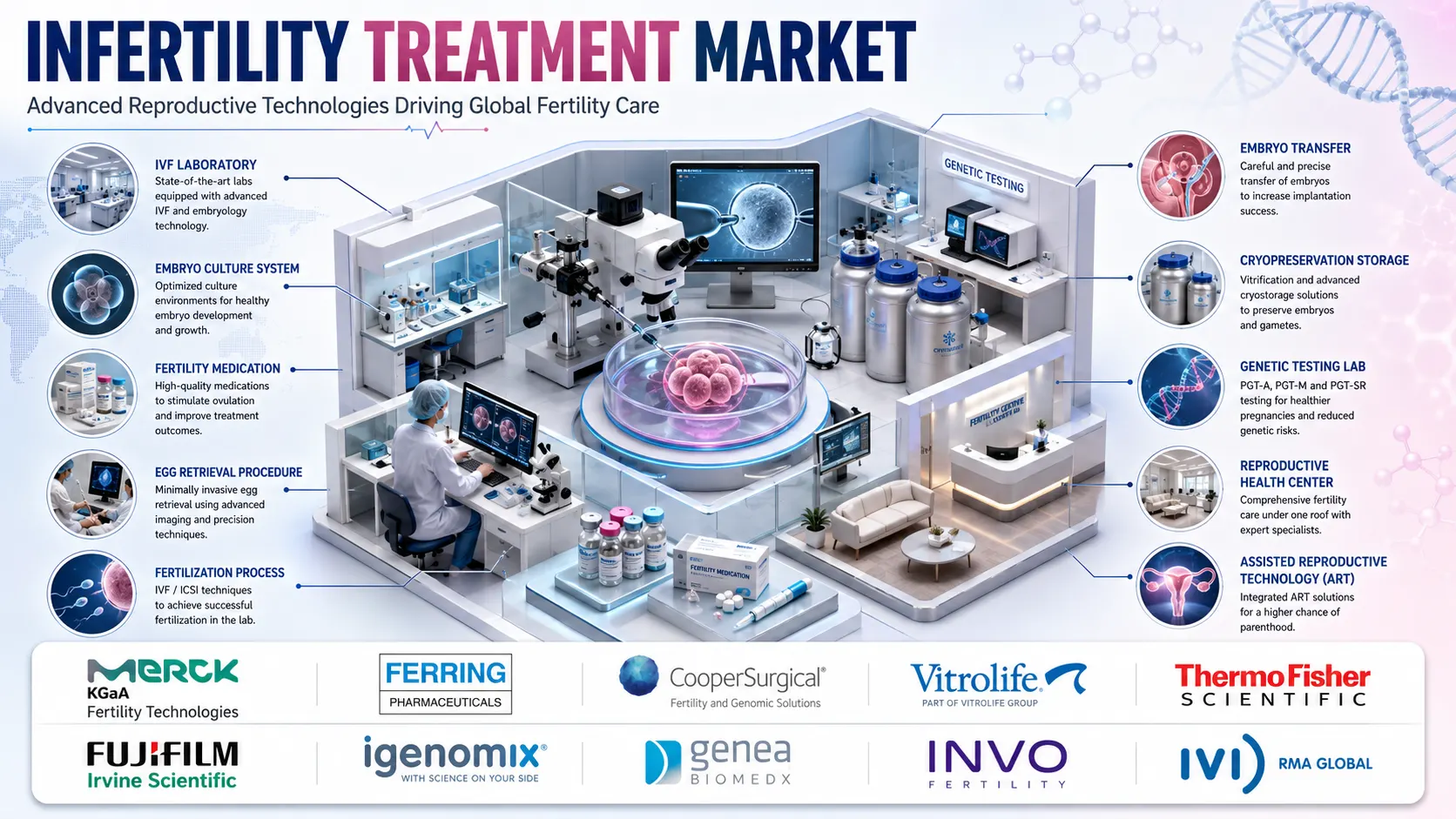
Top 20 Companies in the Global Infertility Treatment Market Driving Industry Growth in 2026
Introduction
Infertility is no longer a silent, peripheral healthcare issue. Today, it stands at the forefront of global reproductive medicine — a condition affecting an estimated 17.5% of the adult population worldwide, according to the World Health Organization. For millions of couples and individuals navigating the emotionally and financially demanding path to parenthood, access to effective, science-backed treatment is not a luxury but a necessity. This has catalyzed the emergence of a robust, multi-billion-dollar infertility treatment market that spans pharmaceuticals, medical devices, fertility clinics, and next-generation biotechnology.
The global infertility treatment market was valued at USD 2.40 billion in 2024 and is expected to grow at a compound annual growth rate (CAGR) of 9.2% from 2025 to 2034, ultimately reaching USD 3.65 billion by 2034. According to the Intellectual Market Insights Research (IMIR) report, this growth trajectory is underpinned by several powerful and converging forces: rising cases of infertility attributable to lifestyle changes, environmental stressors, and the global trend of delayed parenthood; expanding regulatory support for ART procedures; rapid technological advancements in in vitro fertilization (IVF), intrauterine insemination (IUI), and cryopreservation; and growing consumer awareness and willingness to invest in reproductive healthcare.
From a procedural standpoint, Assisted Reproductive Technology (ART) — particularly IVF — dominates the global market, accounting for nearly 70% of infertility treatment procedures performed worldwide. North America leads regional consumption, while Asia-Pacific emerges as the fastest-growing region, driven by medical tourism, expanding clinic networks in India and China, and rising per capita incomes.
For pharmaceutical companies, medical device manufacturers, fertility clinic operators, and biotech innovators, the infertility treatment market represents one of the most dynamic and opportunity-rich sectors in global healthcare. Understanding the key players — their strategies, product portfolios, market positions, and competitive moves — is essential for stakeholders navigating this landscape.
This article provides a comprehensive, research-driven analysis of the top 20 companies in the global infertility treatment market in 2026, offering insights into their capabilities, market strategies, and contributions to the broader industry, alongside regional analysis, emerging trends, future outlook, and an authoritative FAQ section.
Market Overview
|
Parameter |
Details |
|---|---|
|
Market Size (2024) |
USD 2.40 Billion |
|
Market Size (2034) |
USD 3.65 Billion |
|
CAGR (2025–2034) |
9.2% |
|
Forecast Period |
2025–2034 |
|
Base Year |
2024 |
|
Historical Period |
2020–2023 |
|
Leading Region |
North America (~38% share) |
|
Fastest-Growing Region |
Asia-Pacific |
|
Dominant Procedure |
In Vitro Fertilization (IVF) – ~70% share |
|
Key End-Users |
Fertility Centers, Hospitals, Cryobanks, Research Institutes |
|
Leading Segment by Patient Type |
Female Infertility (61.62% share) |
|
Key Drivers |
Rising infertility prevalence, delayed parenthood, ART advancements, AI integration |
|
Key Challenges |
High treatment costs, limited insurance coverage, cultural stigma |
|
Major Players |
Merck, Ferring, Bayer, Abbott, CooperSurgical, Vitrolife, Pfizer, Sanofi |
Why the Infertility Treatment Market Is Growing
1. Rising Incidence of Infertility
Infertility is a growing global health challenge. According to the WHO, approximately 1 in 6 people of reproductive age experience infertility. In North America alone, about 7% of childless adults are medically unable to conceive. The American Society for Reproductive Medicine reports that more than 5 million Americans are living with infertility. Globally, infertility rates have risen by approximately 9% over the past decade, driven by lifestyle factors, environmental exposures, and shifting reproductive timing.
2. Delayed Parenthood and Declining Fertility Rates
One of the most significant demand generators is the global trend toward delayed parenthood. Women are born with a finite number of eggs, and fertility declines markedly after age 35. As more women pursue higher education, career advancement, and financial stability before starting families, the average age of first pregnancy has risen substantially across developed and developing economies alike. This biological reality ensures sustained demand for fertility interventions.
3. Technology Advancements in ART
The infertility treatment market is experiencing a technological renaissance. Advances in IVF protocols, genetic testing (particularly preimplantation genetic testing or PGT), cryopreservation technology, and laboratory automation have dramatically improved success rates. Modern fertility drugs show 15–20% better outcomes than previous generations. AI-driven embryo selection tools are now deployed by more than 50% of top fertility centers globally, enabling more accurate and consistent embryo grading and significantly improving live birth rates per cycle.
4. AI and Digital Health Integration
Artificial intelligence is revolutionizing reproductive medicine. AI platforms can analyze embryo morphology with greater precision than the human eye, optimize stimulation protocols, predict patient response to medications, and personalize treatment pathways. Digital health solutions, including telemedicine fertility consultations and mobile fertility tracking apps, are broadening access and reducing diagnostic delays — particularly for male infertility, where early identification remains underserved.
5. Regulatory Support and Insurance Expansion
Regulatory environments across North America and Europe increasingly support access to fertility treatments. Several U.S. states have mandated insurance coverage for IVF, while European countries with universal healthcare systems provide publicly funded fertility treatment cycles. These policy changes are expanding the addressable patient pool and driving market volume.
6. Investment Trends and Private Equity Activity
The fertility sector has attracted significant private equity and venture capital investment. Private-equity-backed clinic chains now manage over 40% of IVF cycles in North America. In 2024, India IVF raised $1.25 million in pre-Series A funding, Berlin-based Ovom Care closed a €4.8 million seed round for AI-enabled fertility care, and Jindal IVF announced a strategic hospital partnership to expand access in northern India.
7. Medical Tourism
Emerging economies — particularly India, Thailand, and Mexico — are attracting fertility patients from high-cost healthcare markets like the US and UK. Lower operational costs, international-standard care, and ancillary medical tourism services make these markets increasingly competitive, boosting global treatment volumes.
Top 20 Companies in the Global Infertility Treatment Market
- Merck KGaA (EMD Serono)
- Ferring Pharmaceuticals A/S
- Bayer AG
- Abbott Laboratories
- CooperSurgical, Inc. (A CooperCompanies Company)
- Pfizer, Inc.
- Johnson & Johnson Services, Inc.
- Sanofi S.A.
- Vitrolife AB
- Thermo Fisher Scientific Inc.
- Organon & Co.
- Cook Medical Inc.
- Hamilton Thorne, Inc.
- Theramex HQ Limited
- Livzon Pharmaceutical Group Inc.
- Zydus Pharma (Zydus Lifesciences)
- IBSA Institut Biochimique SA
- Gedeon Richter Plc.
- Monash IVF Group Limited
- Invitae Corporation
1. Merck KGaA (EMD Serono)
Headquarters: Darmstadt, Germany Founded: 1668 Industry Focus: Pharmaceuticals, Life Sciences, Fertility Medicine Global Presence: 66+ countries
Merck KGaA, operating as EMD Serono in North America, stands as arguably the most prominent single player in the global infertility drugs and treatment market. The company's fertility portfolio is anchored by Gonal-f (follitropin alfa), the world's most widely prescribed recombinant FSH ovulation stimulant, and Elonva (corifollitropin alfa), a long-acting FSH designed to simplify IVF stimulation protocols by reducing injection frequency. Merck also markets Ovidrel (choriogonadotropin alfa) for ovulation triggering.
Beyond pharmaceuticals, Merck's fertility ecosystem spans laboratory solutions for IVF labs, digital health platforms, and strategic partnerships with fertility clinics worldwide. The company invests heavily in R&D to enhance the efficacy and safety profiles of hormone-based therapies and is at the forefront of personalizing fertility treatment protocols through biomarker-driven approaches.
Merck's fertility business has been a consistent growth driver, benefiting from geographic diversification across Europe, North America, and Asia-Pacific. The company's strategic focus on personalized medicine, patient support programs, and next-generation genetic testing positions it firmly as the market leader in the infertility treatment pharmaceutical segment. Together with Ferring Pharmaceuticals, Merck collectively holds over 45% of global infertility drug market share.
2. Ferring Pharmaceuticals A/S
Headquarters: Saint-Prex, Switzerland Founded: 1950 Industry Focus: Reproductive Medicine, Maternal Health Global Presence: 60+ countries
Ferring Pharmaceuticals is a global pioneer in reproductive medicine, with a heritage and scientific depth that makes it Merck's closest competitor in the fertility drug space. The company's flagship products include Menopur (menotropins for injection), a widely used combination FSH/LH gonadotropin, and Rekovelle (follitropin delta), the world's first individualized recombinant FSH dosed based on serum AMH levels and body weight — a landmark innovation in personalized IVF stimulation.
Ferring is deeply committed to advancing fertility preservation research, improving IVF outcomes, and addressing emerging therapeutic areas such as male infertility. The company's partnership with Posterity Health on a digital Male Fertility program exemplifies its holistic approach to reproductive health. Ferring also maintains collaborative relationships with leading fertility clinics globally to accelerate clinical research and product adoption.
The company commands a strong position in Europe and is rapidly expanding in Asia-Pacific through partnerships and strategic market entries. With continuous investments in hormone therapy innovations and patient-centric support programs, Ferring's market leadership in the fertility drugs segment remains unchallenged outside of Merck.
3. Bayer AG
- Headquarters :
- Founded:
- Parent:
- Global Market Share :
- Regions:
- Industry Focus:
- Company Overview:
- Key Products & Services:
- Strategic Advantages:
4. Abbott Laboratories
- Headquarters :
- Founded:
- Parent:
- Global Market Share :
- Regions:
- Industry Focus:
- Company Overview:
- Key Products & Services:
- Strategic Advantages:
5. CooperSurgical, Inc. (A CooperCompanies Company)
- Headquarters :
- Founded:
- Parent:
- Global Market Share :
- Regions:
- Industry Focus:
- Company Overview:
- Key Products & Services:
- Strategic Advantages:
Competitive Landscape
The global infertility treatment market exhibits a moderately concentrated competitive structure across pharmaceutical, device, and service segments, with distinct dynamics in each.
In the pharmaceutical segment, the market is effectively oligopolistic — with Merck KGaA and Ferring Pharmaceuticals collectively holding over 45% of global infertility drug market share, primarily through their dominant gonadotropin franchises (Gonal-f, Elonva, Menopur, Rekovelle). These two companies set industry standards for ART stimulation protocols globally. Organon, Bayer, and Theramex occupy the next competitive tier, while regional players such as Livzon (China) and Zydus (India) are gaining ground through cost-effective biosimilar offerings.
In the medical devices and laboratory products segment, CooperSurgical, Vitrolife, Hamilton Thorne, and Cook Medical lead. Thermo Fisher Scientific plays an important enabling role as a laboratory infrastructure provider. Private-equity-backed clinic consolidation has accelerated in North America and Western Europe, where scale and software talent increasingly dictate competitive positioning. More than 40% of IVF cycles in North America are now managed by PE-backed clinic chains.
Key competitive dynamics include:
- Mergers and Acquisitions: Vitrolife's acquisition of Igenomix significantly enhanced its genetics capabilities. CooperSurgical's historical acquisitions (LifeGlobal, Origio, Repromedix) consolidated its device and media leadership. This M&A trend continues, with smaller biotechs and telemedicine fertility platforms increasingly targeted by larger players.
- Partnerships and Collaborations: Ferring-Posterity Health digital fertility partnership; Cook Medical-clinic collaborations for device co-development; Invitae partnerships with fertility providers for genetic testing integration.
- Innovation Strategies: AI-driven embryo selection (Vitrolife's EmbryoScope+, Hamilton Thorne's imaging systems); biosimilar gonadotropin development (Gedeon Richter, Zydus, IBSA); novel drug delivery (IBSA progesterone gel, Organon's advanced formulations).
Regional Analysis
North America
North America is the dominant regional market, accounting for approximately 38% of global infertility treatment revenue in 2025. The United States leads with advanced healthcare infrastructure, a high concentration of specialty fertility clinics, and growing insurance mandates for fertility treatment coverage. IVF costs in the US range from $12,000 to $30,000 per cycle, with the majority of patients self-funding. The market benefits from strong R&D investment, FDA regulatory pathways for new fertility drugs, and a high concentration of biotech and pharmaceutical companies. Canada contributes meaningfully through provincial IVF funding programs and regulatory frameworks that support novel drug adoption.
Europe
Europe is the second-largest market, capturing approximately 33% of global share. European IVF monitoring data shows that 60–65% of all IVF procedures performed worldwide are conducted in Europe and North America combined. The UK, Germany, France, Spain, and the Nordic countries lead European fertility treatment volumes. Universal healthcare systems in Nordic countries ensure exceptional ART accessibility. The European market benefits from centralized EMA regulatory approvals and strong quality standards for fertility medications. Biosimilar versions of major fertility drugs are gaining traction as payers seek to reduce treatment costs, opening opportunities for Gedeon Richter, IBSA, and other biosimilar specialists.
Asia-Pacific
Asia-Pacific is the fastest-growing regional market, advancing at an estimated 8.12–9.23% CAGR through 2031 across treatment and device segments respectively. China and India are the primary growth engines, driven by massive populations, rising disposable incomes, increased awareness of infertility, expanding IVF clinic networks in major cities, and government healthcare infrastructure investment. India's market is additionally supported by medical tourism — attracting patients from the Middle East, Africa, and even Europe seeking affordable, high-quality IVF care. Japan, Australia, South Korea, and Singapore represent mature, high-value markets within the region. Cultural stigma around infertility remains a challenge in some Asian markets, though urban populations are demonstrating rapidly shifting attitudes.
Latin America
Latin America represents an emerging growth market, with Brazil and Mexico leading regional fertility treatment adoption. Rising awareness, increasing disposable incomes, and growing acceptance of ART procedures are expanding the patient base. However, limited insurance coverage and relatively high treatment costs relative to local incomes constrain penetration. International clinic chains and pharmaceutical companies are increasingly targeting Brazil as a strategic market given its large population and growing middle class.
Middle East and Africa
The Middle East and Africa market for infertility treatment is at an earlier stage of development but holds substantial long-term potential. The UAE and Saudi Arabia lead the Middle Eastern segment, driven by high per capita incomes, advanced healthcare infrastructure, and government investments in medical tourism. Africa's large, underserved population represents a significant unmet need, with international NGOs and pharmaceutical companies beginning to address reproductive health access across the continent.
Emerging Trends in the Infertility Treatment Market
AI and Machine Learning in Embryo Selection: AI-powered time-lapse imaging systems (such as Vitrolife's EmbryoScope with integrated AI) are being adopted by over 50% of top fertility centers globally, enabling more objective, consistent embryo grading and improving live birth rates per IVF cycle.
Automation in IVF Laboratories: Robotics and automation are streamlining IVF workflows — from sperm sorting and egg denudation to embryo culture monitoring and cryopreservation — reducing per-cycle labor costs and improving laboratory throughput. Microfluidic sperm-sorting chips are advancing at a remarkable 11.78% CAGR as clinics prioritize precision sperm selection.
Preimplantation Genetic Testing Expansion: PGT for aneuploidy screening (PGT-A) and monogenic disorders (PGT-M) is becoming standard in IVF protocols, driven by improvements in next-generation sequencing technology and growing evidence for improved implantation rates. This trend directly benefits companies like Vitrolife/Igenomix, Invitae, and CooperSurgical.
Telemedicine and Digital Fertility Platforms: Tele-fertility services — offering remote consultations, digital monitoring, and AI-driven protocol management — are growing at a 10.15% CAGR and are expanding access for patients in rural and underserved areas. This trend also reduces patient burden and improves treatment adherence.
Male Fertility Innovation: Historically overlooked, male infertility now receives growing clinical attention. AI-driven sperm analysis, smartphone-based semen testing, microfluidic sperm sorting, and stem cell-based male fertility therapies are emerging areas of innovation. Male infertility is projected to be the fastest-growing patient segment through 2031.
Sustainability in IVF Laboratories: Fertility centers are increasingly adopting more energy-efficient incubators, reduced-waste culture media systems, and environmentally responsible supply chain practices. Vitrolife, in particular, has published sustainability commitments aligned with European ESG standards.
Biosimilar Gonadotropin Growth: As patents on major branded fertility drugs expire, biosimilar versions of FSH and hCG products are gaining market share — particularly in cost-sensitive markets. This trend is democratizing access to fertility treatment globally while intensifying price competition among pharmaceutical players.
Future Outlook (2026–2035)
The global infertility treatment market stands at an inflection point. With a confirmed CAGR of 9.2% through 2034 (per IMIR data), the market is transitioning from a niche specialty into a mainstream healthcare domain attracting diversified investment and innovation.
Growth Projections: The market is set to reach USD 3.65 billion by 2034 from USD 2.40 billion in 2024, with the broader fertility market (including services and devices across all categories) potentially exceeding USD 63 billion over the same period according to some broader market estimates. IVF will remain the dominant treatment modality, with ICSI growing at a faster rate (~9.63% CAGR).
Investment Opportunities: The highest-growth investment opportunities lie in AI-powered diagnostic and treatment optimization platforms, genetic testing services, telemedicine fertility platforms, and emerging market clinic expansion — particularly in India, China, Southeast Asia, and Brazil.
Industry Transformation: The industry is moving from a highly manual, experience-dependent practice to a data-driven, technology-augmented discipline. AI, automation, and genomics will redefine the embryologist's role and dramatically improve success rates across all IVF centers — not just elite academic programs.
Future Technologies: Artificial womb technology, in vitro gametogenesis (IVG) — producing eggs and sperm from stem cells — mitochondrial replacement therapy, and uterine microbiome profiling represent the next frontier of reproductive medicine research, with commercial implications beginning to emerge in the 2030s.
Policy Drivers: Expansion of insurance mandates in the US, continued public funding of IVF in Europe, and regulatory evolution in Asia-Pacific will shape market growth. Corporate employee benefits increasingly include fertility treatment coverage, expanding the insured patient base significantly.
Frequently Asked Questions (FAQ)
1. What is the global infertility treatment market size in 2024? The global infertility treatment market was valued at USD 2.40 billion in 2024, according to data from Intellectual Market Insights Research (IMIR). The broader fertility market (including services, devices, and drugs across all categories) is estimated at significantly higher values in certain aggregations.
2. What is the projected CAGR for the infertility treatment market? The market is projected to grow at a CAGR of 9.2% during the forecast period from 2025 to 2034, reaching USD 3.65 billion by 2034.
3. Who are the leading companies in the infertility treatment market? The leading companies include Merck KGaA (EMD Serono), Ferring Pharmaceuticals, Bayer AG, Abbott Laboratories, Johnson & Johnson, Pfizer, Sanofi, CooperSurgical, Vitrolife, Thermo Fisher Scientific, Organon & Co., Cook Medical, Hamilton Thorne, Theramex, Livzon Pharmaceutical, Zydus Pharma, IBSA, Gedeon Richter, Monash IVF Group, and Invitae Corporation.
4. Which company has the largest market share in the infertility treatment market? In the pharmaceutical segment, Merck KGaA (with Gonal-f and Elonva) holds the largest individual market share. Together, Merck and Ferring Pharmaceuticals collectively command over 45% of global infertility drug market share. In devices, CooperSurgical and Vitrolife are co-leaders.
5. Which region dominates the infertility treatment market? North America is the dominant region, holding approximately 38% of global infertility treatment market revenue in 2025. The US leads with advanced infrastructure, growing insurance coverage, and the highest density of fertility specialists.
6. Which region is the fastest growing in the infertility treatment market? Asia-Pacific is the fastest-growing region, projected to advance at a CAGR of 8–9%+ through 2031, driven by large populations, rising incomes, expanding clinic infrastructure, and growing medical tourism in India and China.
7. What are the main growth drivers of the infertility treatment market? Key drivers include rising infertility prevalence (affecting ~1 in 6 adults globally), delayed parenthood, advances in ART technology (especially IVF and ICSI), growing AI adoption in embryo selection, expanding insurance coverage, government regulatory support, and medical tourism growth in emerging markets.
8. What procedures dominate the infertility treatment market?
9. What are the main challenges facing the infertility treatment market?
10. What is the role of AI in the infertility treatment market
11. What is Preimplantation Genetic Testing (PGT) and why is it growing?
12. How is male infertility being addressed in the market?
13. What is the market size for infertility treatment devices specifically
14. Which end-user segment dominates the infertility treatment market?
15. What investment opportunities exist in the infertility treatment market through 2035?
Conclusion
The global infertility treatment market is one of the most dynamic and emotionally resonant sectors in modern healthcare — where scientific advancement directly translates into life-changing outcomes for millions of families worldwide. Valued at USD 2.40 billion in 2024 and poised to reach USD 3.65 billion by 2034 at a 9.2% CAGR, the market offers exceptional opportunities for pharmaceutical companies, medical device manufacturers, biotech innovators, fertility clinic operators, and healthcare investors alike.
The competitive landscape is defined by well-capitalized pharmaceutical giants such as Merck KGaA and Ferring Pharmaceuticals who dominate the fertility drug space, alongside specialized device and laboratory technology leaders like CooperSurgical, Vitrolife, and Hamilton Thorne. Emerging regional champions like Livzon and Zydus are democratizing access through biosimilar drug offerings, while genetic testing innovators like Invitae and Vitrolife/Igenomix are reshaping the diagnostic layer of IVF care.
Technology — particularly AI, automation, and genomics — is the defining transformative force, elevating treatment success rates, improving patient experience, and broadening access. Asia-Pacific's explosive growth trajectory ensures that the market's center of gravity will continue to shift eastward through the decade ahead.
For industry stakeholders, investors, and healthcare professionals seeking to navigate this high-growth landscape, understanding the strategies, strengths, and trajectories of these top 20 companies in the infertility treatment market is an essential foundation for informed decision-making in 2026 and beyond.