Top 20 Companies in the Global Oncology Pharmaceuticals Market Driving Industry Growth
Author:
Intellectual Market Insights Research
Published Date:
24 Jun 2026
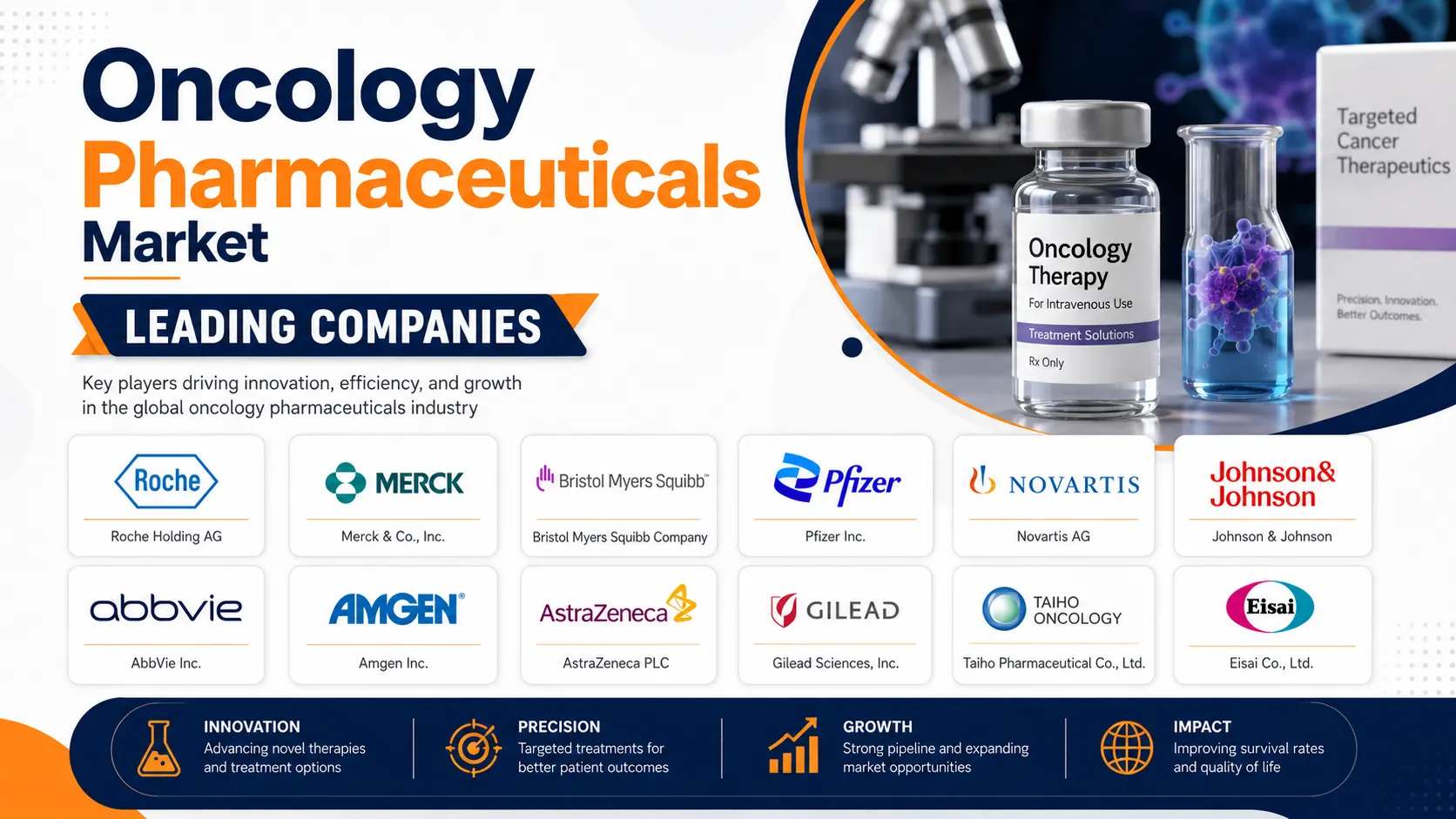
Top 20 Companies in the Global Oncology Pharmaceuticals Market Driving Industry Growth
The Fight Against Cancer Is Reshaping Global Pharma
Cancer remains one of the most formidable health challenges of our time. New cancer cases worldwide are estimated at roughly 20 million a year, a figure expected to climb substantially over the next two decades as populations age and risk factors such as obesity and tobacco use persist in developing regions. Against this backdrop, the oncology pharmaceuticals industry has become one of the most dynamic, capital-intensive, and closely watched segments of global healthcare a sector where scientific breakthroughs, regulatory change, and enormous unmet patient need all collide.
the global oncology pharmaceuticals market is currently valued at an estimated $225–345 billion globally (figures vary by scope across research firms), with projections pointing toward $668–750 billion by 2034
The rapid advance of targeted therapy, immune checkpoint inhibition, antibody-drug conjugates (ADCs), CAR-T cell therapy, and radioligand therapy has enabled companies to move far beyond traditional chemotherapy toward precision treatments tailored to a tumor's specific biology. From PD-1/PD-L1 inhibitors that unleash the immune system on tumors to engineered T-cells that hunt cancer cells directly, technology is transforming what a cancer diagnosis means for patients.
This article highlights the Top 20 Leading Companies in the Global Oncology Pharmaceuticals Market, profiling the organizations driving innovation, expanding treatment access, and shaping the future of cancer care.
What is the Oncology Pharmaceuticals Market?
The oncology pharmaceuticals market encompasses the drugs, biologics, and cell-based therapies used to diagnose-adjacent treat and manage cancer. It spans a broad range of treatment modalities, including cytotoxic chemotherapy, hormonal therapy, targeted small-molecule inhibitors, monoclonal antibodies, immune checkpoint inhibitors, antibody-drug conjugates, CAR-T and other cell therapies, and radioligand therapies.
The industry includes global pharmaceutical majors with decades-old oncology franchises, specialist biopharmaceutical companies built around a single breakthrough mechanism, and an expanding cohort of Asian innovators bringing new molecules to global markets. These companies invest heavily in clinical trials, regulatory strategy, and commercial infrastructure to bring therapies from the laboratory to the bedside.
As precision medicine accelerates, oncology is increasingly defined not by a tumor's location but by its underlying genetic and molecular drivers. This shift is encouraging biomarker-driven drug development, companion diagnostics, and increasingly personalized treatment regimens that improve outcomes while expanding the addressable patient population for premium-priced therapies.
Global Oncology Pharmaceuticals Market Overview
The global oncology pharmaceuticals market has expanded rapidly over the past decade, propelled by rising cancer incidence, an aging population, and a wave of scientific breakthroughs in immuno-oncology and precision medicine. The market was valued at approximately USD 225 billion in 2024 and is projected to grow to roughly USD 345 billion by 2025, reaching an estimated USD 668–750 billion by 2034, at a compound annual growth rate (CAGR) of approximately 11.5%.
|
Metric |
Detail |
|---|---|
|
Market Value (2024) |
USD ~225 Billion |
|
Market Value (2025) |
USD ~251–345 Billion (various estimates) |
|
Forecast Value (2032) |
USD ~365–518 Billion |
|
Forecast Value (2034–2035) |
USD ~668–748 Billion |
|
CAGR (2025–2034) |
~11.5% |
|
Largest Region |
North America (~43% share) |
|
Fastest Growing Region |
Asia-Pacific (CAGR ~11%+) |
|
Dominant Drug Class |
Targeted Therapy (33–45% share) |
|
Fastest Growing Segment |
Immunotherapy / CAR-T Cell Therapy |
|
Leading Indication |
Breast Cancer; Lung Cancer (fastest growing) |
Modern oncology drugs increasingly combine multiple technologies companion diagnostics, biomarker-driven patient selection, and AI-assisted target discovery to improve efficacy while reducing systemic toxicity. Immune checkpoint inhibitors such as pembrolizumab have redefined the standard of care across dozens of tumor types, while antibody-drug conjugates have emerged as the fastest-growing new drug class of the decade.
The market is also witnessing substantial investment from venture capital, private equity, and strategic acquirers. Landmark deals such as Pfizer's USD 43 billion acquisition of Seagen and Amgen's USD 27.8 billion acquisition of Horizon Therapeutics illustrate the urgency with which large pharmaceutical companies are moving to acquire transformative oncology technologies.
North America currently represents the largest oncology pharmaceuticals market, supported by high per-capita healthcare spending, an aggressive FDA approval pace, and dense clinical trial infrastructure. Europe follows as the second-largest market, while Asia-Pacific is expected to register the fastest growth as regional healthcare infrastructure and domestic drug innovation expand.
Key Market Drivers
Several factors are contributing to the rapid growth of the global oncology pharmaceuticals market:
Rising Global Cancer Burden
Aging populations, urbanization, and lifestyle-related risk factors are driving a steady rise in global cancer incidence, creating sustained demand for treatment across every major tumor type.
Breakthroughs in Precision Medicine and Immunotherapy
The shift from cytotoxic chemotherapy toward genetically targeted treatments and immune checkpoint inhibitors has redefined standard-of-care protocols across dozens of cancers.
Expansion of Antibody-Drug Conjugates (ADCs)
ADCs combine the targeting precision of monoclonal antibodies with the cytotoxic power of chemotherapy, and have become the most closely watched new drug class in oncology R&D pipelines.
Growth of CAR-T and Cell Therapy
Chimeric antigen receptor T-cell therapies, which reprogram a patient's own immune cells to target cancer, are expanding beyond blood cancers and growing at over 25% CAGR.
Regulatory Tailwinds
Accelerated approval pathways and breakthrough therapy designations from agencies such as the U.S. FDA and EMA have shortened development timelines and encouraged sustained R&D investment.
Emerging Trends Shaping the Industry
The oncology pharmaceuticals industry is evolving rapidly with continuous scientific advancement. Some of the most significant trends include:
- Antibody-drug conjugates (ADCs) as the dominant innovation wave
- Immune checkpoint inhibitors expanding into new tumor types
- CAR-T and next-generation cell therapy platforms
- Radioligand therapies combining targeting ligands with radioactive isotopes
- Personalized mRNA cancer vaccines
- AI-driven drug discovery and target identification
- Bispecific antibodies and protein degraders (PROTACs)
- Biosimilar competition for first-generation biologics
- Companion diagnostics and biomarker-driven patient selection
- Expansion of oncology innovation in Asia-Pacific markets
These innovations are enabling more precise, durable, and increasingly personalized cancer treatment while creating new competitive battlegrounds for pharmaceutical companies worldwide.
Top 20 Companies in the Global Oncology Pharmaceuticals Market
- Merck & Co. (MSD)
- Bristol-Myers Squibb (BMS)
- AstraZeneca
- Johnson & Johnson
- Roche (Genentech)
- Pfizer
- Novartis
- Eli Lilly
- Amgen
- Astellas Pharma
- AbbVie
- BeOne Medicines (formerly BeiGene)
- Incyte Corporation
- Takeda Pharmaceutical
- Gilead Sciences
- Daiichi Sankyo
- Bayer AG
- GSK (GlaxoSmithKline)
- Sanofi
- Biogen
Company Profile
1. Merck & Co. (MSD)
|
Category |
Details |
|---|---|
|
Company Name |
Merck & Co. (known as MSD outside the United States) |
|
Headquarters |
Rahway, New Jersey, United States |
|
Founded |
1891 |
|
Industry Focus |
Immuno-Oncology, Targeted Therapy, Vaccines |
|
Global Presence |
Operations across North America, Europe, Asia-Pacific, and Latin America |
|
Company Overview |
Merck holds the #1 position in global oncology revenue, driven almost entirely by the extraordinary commercial success of Keytruda (pembrolizumab), the world's best-selling drug across any category. Keytruda is a PD-1 immune checkpoint inhibitor approved across more than 40 tumor types, making it the most comprehensively approved cancer drug in history. Merck continues to invest heavily in next-generation immunotherapy, subcutaneous reformulations, and personalized mRNA cancer vaccines developed with Moderna, ahead of Keytruda's 2028 U.S. patent expiration. |
|
Key Products & Services |
Keytruda, Lynparza, Lenvima, Reblozyl, Welireg, Gardasil |
|
Market Position |
The largest oncology pharmaceutical company globally by revenue, anchored by the industry's most broadly approved cancer drug. |
|
Recent Developments |
Continued indication expansion for Keytruda, development of a subcutaneous Keytruda formulation (Qvantig), and advancement of an individualized mRNA cancer vaccine program with Moderna. |
|
Strategic Advantages |
Unmatched breadth of Keytruda approvals, global commercial infrastructure, and deep pipeline investment in next-generation immuno-oncology mechanisms. |
2. Bristol-Myers Squibb (BMS)
|
Category |
Details |
|---|---|
|
Company Name |
Bristol-Myers Squibb |
|
Headquarters |
Princeton, New Jersey, United States |
|
Founded |
1989 (merger) |
|
Industry Focus |
Immuno-Oncology, Cell Therapy, Hematology |
|
Global Presence |
Operations across North America, Europe, Asia-Pacific, and Latin America |
|
Company Overview |
BMS is one of the founding architects of the immuno-oncology revolution, having pioneered immune checkpoint inhibition with Yervoy and Opdivo. The company is transitioning from its legacy hematology franchise toward a fast-growing portfolio led by Breyanzi (CAR-T) and Opdualag, a first-in-class LAG-3/PD-1 combination therapy. |
|
Key Products & Services |
Opdivo, Yervoy, Revlimid, Pomalyst, Breyanzi, Opdualag, Reblozyl |
|
Market Position |
A top-three global oncology company and a pioneer of immune checkpoint inhibition, with a deepening CAR-T and cell-therapy franchise. |
|
Recent Developments |
Growth Portfolio products including Breyanzi and Opdualag each surpassed USD 1 billion in annual revenue; formed a new immunology-focused biopharma venture with Bain Capital. |
|
Strategic Advantages |
Pioneer status in immuno-oncology, strong blood-cancer franchise, and an accelerating transition toward durable long-lifecycle growth assets. |
3. AstraZeneca
|
Category |
Details |
|---|---|
|
Company Name |
AstraZeneca |
|
Headquarters |
Cambridge, United Kingdom |
|
Founded |
1999 (merger of Astra AB and Zeneca Group) |
|
Industry Focus |
Targeted Therapy, ADCs, Immunotherapy, Radioligand Therapy |
|
Global Presence |
Operations in more than 100 countries across North America, Europe, and Asia-Pacific |
|
Company Overview |
AstraZeneca has established itself as a global oncology powerhouse through a combination of internally developed targeted therapies and one of the industry's most closely watched ADC partnerships. Its collaboration with Daiichi Sankyo on Enhertu has set new efficacy benchmarks in HER2-driven cancers, while Tagrisso and Imfinzi anchor its lung cancer franchise. The 2024 acquisition of Fusion Pharmaceuticals expanded the company's radioligand therapy capabilities. |
|
Key Products & Services |
Tagrisso, Imfinzi, Enhertu, Lynparza, Calquence, Fusion radioligand pipeline |
|
Market Position |
A top-three global oncology company, recognized as an industry leader in lung cancer treatment and antibody-drug conjugates. |
|
Recent Developments |
Continued global indication expansion for Enhertu, integration of Fusion Pharmaceuticals' radioligand pipeline, and ongoing investment in AI-assisted genomic profiling. |
|
Strategic Advantages |
Strong lung cancer and ADC franchises, a deep oncology pipeline, and strategic partnerships spanning ADCs, radioligand therapy, and precision oncology. |
4. Johnson & Johnson
|
Category |
Details |
|---|---|
|
Company Name |
Johnson & Johnson (Janssen Oncology) |
|
Headquarters |
New Brunswick, New Jersey, United States |
|
Founded |
1886 |
|
Industry Focus |
Hematology, Prostate Cancer, Bispecific Antibodies |
|
Global Presence |
Operations across more than 175 countries |
|
Company Overview |
Johnson & Johnson's oncology business, operated through Janssen, holds a dominant position in multiple myeloma and prostate cancer treatment. Darzalex has become one of the best-selling oncology drugs globally, while the company's expanding bispecific antibody portfolio, including Tecvayli and Talvey, reflects a strategic push into next-generation immune-engaging therapies. |
|
Key Products & Services |
Darzalex, Erleada, Imbruvica, Tecvayli, Talvey, Rybrevant, Carvykti |
|
Market Position |
A leading global oncology company with particular strength in multiple myeloma, prostate cancer, and bispecific antibody innovation. |
|
Recent Developments |
Continued expansion of the bispecific antibody portfolio and growth of Carvykti, its CAR-T therapy for multiple myeloma developed with Legend Biotech. |
|
Strategic Advantages |
Category leadership in multiple myeloma and prostate cancer, a broadening cell-therapy and bispecific antibody pipeline, and extensive global commercial reach. |
5. Roche (Genentech)
|
Category |
Details |
|---|---|
|
Company Name |
Roche (Genentech) |
|
Headquarters |
Basel, Switzerland |
|
Founded |
1896 |
|
Industry Focus |
Monoclonal Antibodies, Targeted Therapy, Companion Diagnostics |
|
Global Presence |
Operations across more than 100 countries |
|
Company Overview |
Roche, through its Genentech subsidiary, built the modern monoclonal antibody oncology market with Rituxan, Herceptin, and Avastin. While these legacy biologics now face growing biosimilar competition, Roche has transitioned toward next-generation assets including Kadcyla, an antibody-drug conjugate, and a growing companion-diagnostics business that pairs its drugs with precision biomarker testing. |
|
Key Products & Services |
Herceptin, Avastin, Rituxan, Kadcyla, Polivy, Tecentriq, Columbi companion diagnostics |
|
Market Position |
A top-five global oncology company and pioneer of the monoclonal antibody era, now navigating biosimilar erosion of its legacy franchise. |
|
Recent Developments |
Accelerated pipeline transition toward next-generation ADCs and diagnostics-linked precision oncology, alongside continued global biosimilar defense strategies. |
|
Strategic Advantages |
Deep monoclonal antibody expertise, an integrated diagnostics business, and a long track record of oncology innovation. |
6. Pfizer
|
Category |
Details |
|---|---|
|
Company Name |
Pfizer |
|
Headquarters |
New York, New York, United States |
|
Founded |
1849 |
|
Industry Focus |
Antibody-Drug Conjugates, Breast Cancer, Hematology |
|
Global Presence |
Operations across more than 125 countries |
|
Company Overview |
Pfizer significantly expanded its oncology footprint through its landmark USD 43 billion acquisition of Seagen in 2023, instantly establishing the company as a leader in antibody-drug conjugates. Combined with its existing breast cancer franchise led by Ibrance, Pfizer now fields one of the broadest oncology portfolios among global pharmaceutical majors. |
|
Key Products & Services |
Ibrance, Xtandi, Padcev, Adcetris, Tukysa, Elrexfio |
|
Market Position |
A top-tier global oncology company with a rapidly expanding ADC franchise following the Seagen acquisition. |
|
Recent Developments |
Integration of Seagen's ADC portfolio and pipeline, continued indication expansion for Padcev in bladder cancer, and ongoing hematology pipeline development. |
|
Strategic Advantages |
A newly strengthened ADC franchise, an established breast cancer portfolio, and significant financial resources for continued oncology M&A. |
Competitive Landscape
The global oncology pharmaceuticals market is moderately consolidated, with the top five companies Merck & Co., Bristol-Myers Squibb, AstraZeneca, Johnson & Johnson, and Roche collectively accounting for approximately 55% of total market share. This concentration reflects the enormous barriers to entry in oncology drug development, including substantial R&D investment, complex regulatory pathways, long clinical trial timelines, and sophisticated commercial infrastructure.
Market participants are increasingly investing in ADCs, cell therapy, radioligand therapy, and AI-driven drug discovery to strengthen their pipelines and defend against biosimilar erosion of legacy biologics. Strategic mergers and acquisitions including Pfizer-Seagen, AstraZeneca-Fusion Pharmaceuticals, Amgen-Horizon Therapeutics, and AbbVie-ImmunoGen reflect the urgency with which large pharmaceutical companies are acquiring transformative technologies at scale.
Emerging entrants such as BeOne Medicines exemplify the rise of innovative Asian biotechs challenging Western incumbents with differentiated products and rapidly expanding global commercial ambitions.
Market Segmentation
By Drug Class
- Targeted Therapy
- Immunotherapy (Checkpoint Inhibitors)
- Antibody-Drug Conjugates (ADCs)
- Chemotherapy
- Hormonal Therapy
- CAR-T and Cell Therapy
- Radioligand Therapy
By Cancer Type
- Breast Cancer
- Lung Cancer
- Blood Cancers (Leukemia, Lymphoma, Myeloma)
- Colorectal Cancer
- Prostate Cancer
- Others
By Technology
- Monoclonal Antibodies
- Bispecific Antibodies
- Small-Molecule Inhibitors
- Cell and Gene Therapy
- Companion Diagnostics
- Artificial Intelligence in Drug Discovery
By Distribution Channel
- Hospital Pharmacies
- Retail Pharmacies
- Specialty Pharmacies
- Online Pharmacies
Regional Analysis
North America
North America is the dominant region in the global oncology pharmaceuticals market, commanding approximately 43% of total revenues. This leadership reflects world-class healthcare infrastructure, high per-capita healthcare spending, an aggressive FDA approval pace, and the highest density of clinical trial activity globally.
Europe
Europe represents the second-largest oncology market, supported by Germany, France, the United Kingdom, and Italy as the largest country markets. Regulatory oversight from the EMA remains rigorous but is increasingly aligned with accelerated approval for breakthrough oncology agents.
Asia-Pacific
Asia-Pacific is the fastest-growing regional market, supported by China, Japan, South Korea, and India. Rapidly expanding healthcare infrastructure, rising cancer screening rates, and the emergence of domestic oncology innovators such as BeOne Medicines and Daiichi Sankyo are reshaping the regional competitive landscape.
Latin America
Latin America represents a growing but still underserved oncology market, led by Brazil, Mexico, and Colombia. Rising cancer prevalence and expanding healthcare access are gradually increasing demand for both generic and branded oncology therapies.
Middle East & Africa
The Middle East and Africa region shows significant variation, with Gulf Cooperation Council countries investing heavily in modern cancer treatment infrastructure while access remains limited across much of Sub-Saharan Africa.
Key Market Trends
- Antibody-drug conjugates as the dominant innovation wave
- Immune checkpoint inhibitors expanding into new indications
- CAR-T and cell therapy moving toward solid tumors
- Radioligand therapy commercialization
- Personalized mRNA cancer vaccines
- AI-driven oncology drug discovery
- Biosimilar competition for legacy biologics
- Bispecific antibody development
- Companion diagnostics-linked precision oncology
- Rising Asian biopharma innovation
Future Outlook
The global oncology pharmaceuticals market is expected to witness sustained, substantial growth over the coming decade as precision medicine, immunotherapy, and cell-based therapies continue transforming cancer care. From a base of approximately USD 225 billion in 2024, the market is projected to reach USD 668–750 billion by 2034, representing a near tripling in market size.
Pipeline depth remains a key structural driver, with more than 1,000 oncology drugs currently in clinical development worldwide. Emerging mechanisms including bispecific antibodies, next-generation CAR-T, KRAS inhibitors, and protein degraders represent successive waves of future innovation. At the same time, drug affordability and biosimilar competition will continue to reshape the revenue landscape for established products, even as new innovations command premium pricing.
Frequently Asked Questions (FAQs)
1. What is the oncology pharmaceuticals market?
The oncology pharmaceuticals market covers the drugs, biologics, and cell-based therapies used to treat cancer, spanning chemotherapy, targeted therapy, immunotherapy, ADCs, CAR-T, and radioligand therapy.
2. Which companies are leading the global oncology pharmaceuticals market?
Leading companies include Merck & Co., Bristol-Myers Squibb, AstraZeneca, Johnson & Johnson, Roche, Pfizer, Novartis, Eli Lilly, Amgen, and BeOne Medicines, among others.
3. What factors are driving market growth?
Rising global cancer incidence, breakthroughs in immunotherapy and targeted therapy, growth of ADCs and CAR-T cell therapies, and accelerated regulatory approvals are major growth drivers.
4. Which region dominates the oncology pharmaceuticals market?
North America currently dominates the market, while Asia-Pacific is projected to experience the fastest growth.
5. What are the major drug classes in the oncology pharmaceuticals market?
Major drug classes include targeted therapy, immunotherapy, antibody-drug conjugates, chemotherapy, hormonal therapy, CAR-T cell therapy, and radioligand therapy.
6. Who is the #1 company in the global oncology pharmaceuticals market?
Merck & Co. (MSD) holds the top position, driven primarily by Keytruda, the world's best-selling drug across any category.
7. What is the CAGR of the oncology pharmaceuticals market?
The market is growing at an estimated CAGR of approximately 10.8–11.5% over the 2025–2034 forecast period.
8. Who are the top 5 oncology pharmaceutical companies?
The top five are Merck & Co., Bristol-Myers Squibb, AstraZeneca, Johnson & Johnson, and Roche, which together account for roughly 55% of global market share.
9. What is an antibody-drug conjugate (ADC)?
An ADC is a targeted cancer therapy that links a monoclonal antibody, which recognizes a specific tumor marker, to a cytotoxic payload, delivering chemotherapy directly to cancer cells while limiting damage to healthy tissue.
10. Which company had the fastest oncology revenue growth recently?
BeOne Medicines (formerly BeiGene) has recorded the fastest oncology revenue growth among major industry players, driven by global expansion of its BTK inhibitor Brukinsa.
Conclusion
The global oncology pharmaceuticals market stands at the intersection of scientific innovation, urgent patient need, and substantial economic opportunity. With the market valued at approximately USD 225 billion in 2024 and on a trajectory toward USD 668–750 billion by 2034, the industry's growth is supported by powerful, durable structural drivers.
The top 20 companies featured in this report from established U.S. and European pharmaceutical majors to fast-growing Asian innovators are collectively advancing the fight against cancer through investment in ADCs, immunotherapy, cell therapy, radioligand therapy, and AI-driven drug discovery. As consumer and clinical expectations continue to evolve, demand for more precise, personalized, and accessible cancer treatments will only accelerate, positioning the oncology pharmaceuticals market for sustained, long-term growth.