
GLP-1 Market Growth Explained: Size, Trends, Key Drivers & Forecast 2035
Author:
Intellectual Market Insights Research
Published Date:
09 Jun 2026
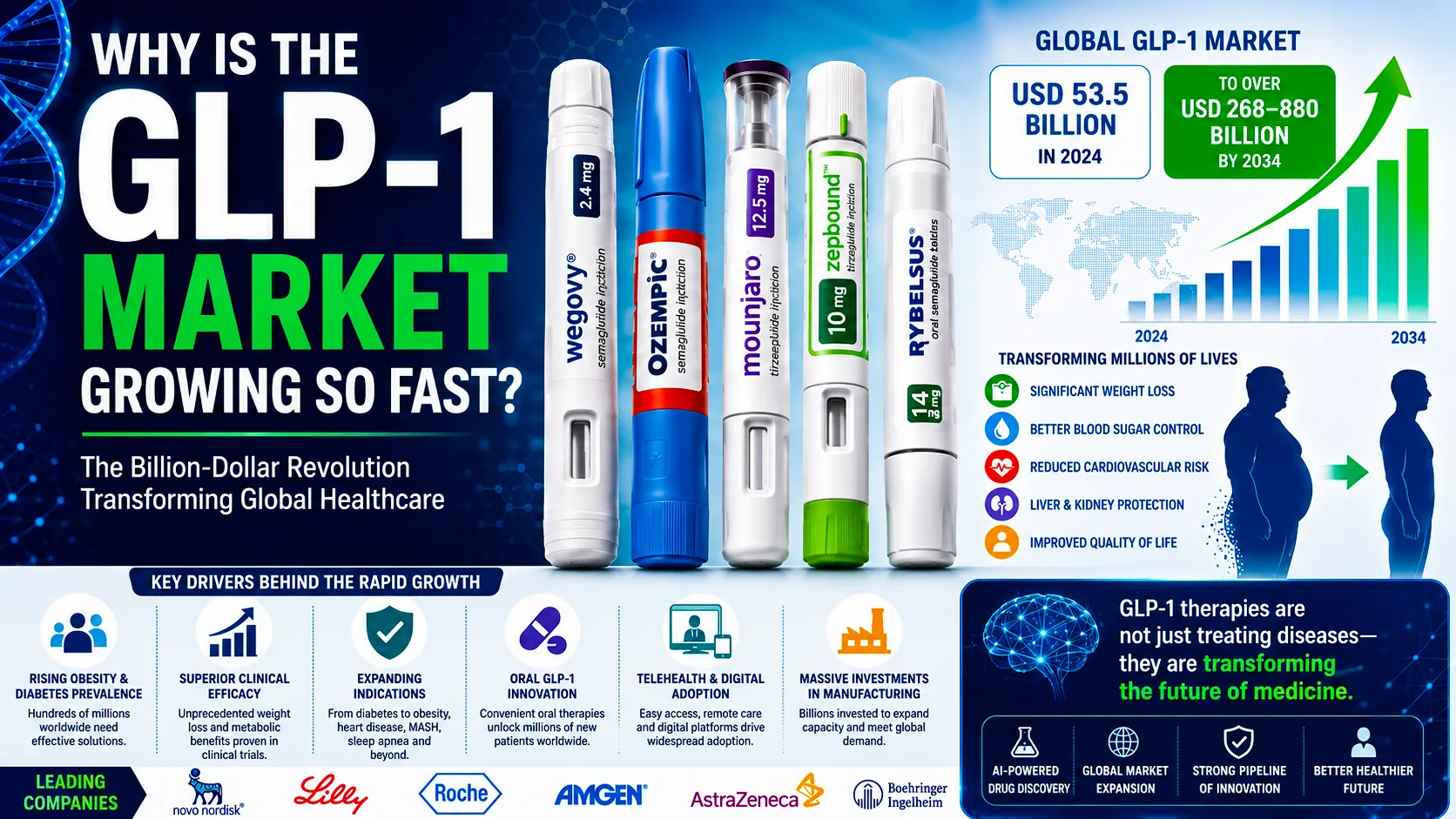
Why Is the GLP-1 Market Growing So Fast? The Billion-Dollar Healthcare Revolution Explained
Introduction
The global healthcare industry is witnessing one of the most significant pharmaceutical transformations in decades. GLP-1 receptor agonists, once primarily prescribed for Type 2 Diabetes, have evolved into a multi-billion-dollar therapeutic category reshaping obesity treatment, cardiovascular care, metabolic health, and potentially even neurological disorders.
According to recent industry analysis, the global GLP-1 market was valued at approximately USD 53.5 billion in 2024 and is projected to reach between USD 268 billion and USD 880 billion by 2034. Such extraordinary growth has attracted pharmaceutical giants, investors, healthcare providers, and policymakers worldwide.
But what exactly is driving this explosive expansion?
This article explores the key factors behind the rapid growth of the GLP-1 market and why many analysts consider it one of the most disruptive healthcare sectors of the decade.
What Are GLP-1 Receptor Agonists?
GLP-1 (Glucagon-Like Peptide-1) receptor agonists are medications that mimic the body's natural GLP-1 hormone. These therapies help regulate blood sugar levels, suppress appetite, slow gastric emptying, and improve insulin secretion.
Popular GLP-1 drugs include:
- Ozempic (Semaglutide)
- Wegovy (Semaglutide)
- Rybelsus (Oral Semaglutide)
- Mounjaro (Tirzepatide)
- Zepbound (Tirzepatide)
- Foundayo (Orforglipron)
Initially developed for diabetes management, these drugs have now become powerful tools for obesity treatment and cardiometabolic disease prevention.
1. The Global Obesity and Diabetes Epidemic
One of the biggest drivers behind GLP-1 market growth is the rapidly increasing prevalence of obesity and diabetes worldwide.
Today, hundreds of millions of people struggle with:
- Obesity
- Type 2 Diabetes
- Cardiovascular disease
- Metabolic syndrome
Healthcare systems are under growing pressure to find effective long-term solutions.
Traditional weight-loss medications often delivered limited results. GLP-1 therapies changed the landscape by demonstrating substantial weight reduction and improved metabolic outcomes.
As obesity rates continue to rise across North America, Europe, Asia-Pacific, and emerging markets, demand for effective treatment options is accelerating.
2. Exceptional Weight Loss Results
Perhaps the biggest reason behind the GLP-1 boom is clinical effectiveness.
Modern GLP-1 therapies have demonstrated weight-loss results that were previously difficult to achieve without bariatric surgery.
Clinical studies have shown:
- Significant body weight reduction
- Improved blood glucose control
- Reduced cardiovascular risk
- Better long-term metabolic outcomes
For many physicians and patients, GLP-1 therapies represent the first truly transformative pharmaceutical approach to obesity management.
This has dramatically increased physician confidence and patient adoption.
3. Expansion Beyond Diabetes
The GLP-1 market is no longer just a diabetes market.
Pharmaceutical companies are rapidly expanding approvals into new therapeutic areas, including:
Obesity Management
Weight-loss applications now represent one of the fastest-growing segments of the market.
Cardiovascular Disease
Research has demonstrated significant reductions in cardiovascular risk among eligible patients.
Chronic Kidney Disease
Several GLP-1 products are being evaluated or approved for kidney-related benefits.
Sleep Apnea
New approvals have expanded treatment opportunities for obesity-related sleep disorders.
Liver Disease (MASH/NASH)
The growing burden of metabolic liver disease is creating a massive new opportunity.
Neurological Disorders
Researchers are investigating potential applications in:
- Alzheimer's Disease
- Parkinson's Disease
- Addiction Treatment
- Cognitive Health
Every new indication significantly expands the addressable patient population.
4. The Rise of Oral GLP-1 Drugs
One of the most important market developments is the transition from injectable therapies to oral formulations.
Many patients avoid injections despite potential health benefits.
Oral GLP-1 products offer:
- Greater convenience
- Better patient acceptance
- Easier prescribing
- Improved access through retail pharmacies
- Reduced treatment barriers
The approval of oral GLP-1 therapies is expected to unlock millions of additional patients globally.
This shift could become one of the most important growth catalysts over the next decade.
5. Massive Pharmaceutical Investments
The world's largest pharmaceutical companies are investing billions of dollars into GLP-1 development and manufacturing.
Key players include:
- Novo Nordisk
- Eli Lilly
- Pfizer
- Roche
- AstraZeneca
- Amgen
- Boehringer Ingelheim
These companies are aggressively expanding:
- Manufacturing facilities
- Research programs
- Clinical trials
- Global distribution networks
Billions in capital expenditures are being directed toward meeting unprecedented demand.
6. Supply Chain Expansion Is Unlocking Growth
Demand for GLP-1 medications surged so rapidly that supply shortages emerged in several markets.
To address these challenges, manufacturers are investing heavily in:
- Production facilities
- Fill-finish operations
- Cold-chain logistics
- Drug delivery technologies
As manufacturing capacity expands, more patients gain access to therapy, further accelerating market growth.
7. Telehealth Is Fueling Adoption
The digital healthcare revolution has become a major catalyst for GLP-1 adoption.
Telehealth platforms now enable:
- Online consultations
- Prescription management
- Lifestyle coaching
- Remote monitoring
- Digital adherence support
This ecosystem has dramatically simplified patient access and increased treatment uptake.
The combination of GLP-1 medications with digital health platforms is creating an entirely new healthcare delivery model.
8. Growing Insurance and Reimbursement Support
Historically, obesity medications faced reimbursement challenges.
That is beginning to change.
Healthcare payers increasingly recognize that obesity contributes to:
- Diabetes
- Heart disease
- Kidney disease
- Sleep disorders
- Healthcare spending
As evidence accumulates, more insurers are expanding coverage for GLP-1 therapies.
Improved reimbursement is expected to be a major long-term growth driver.
9. Emerging Markets Offer Huge Untapped Potential
While North America currently dominates GLP-1 sales, future growth is likely to come from:
- China
- India
- Brazil
- Southeast Asia
- Middle East
- Latin America
These regions have enormous populations affected by obesity and diabetes but relatively low penetration of advanced GLP-1 therapies.
As affordability improves and biosimilar products enter the market, adoption is expected to accelerate significantly.
10. AI Is Accelerating Drug Innovation
Artificial Intelligence is helping pharmaceutical companies:
- Discover new molecules
- Optimize formulations
- Predict safety profiles
- Improve clinical trial design
- Develop next-generation therapies
AI-driven research could significantly shorten development timelines and accelerate innovation across the GLP-1 ecosystem.
This technological advancement is expected to introduce more effective and affordable therapies in the coming years.
Key Market Trends to Watch Through 2035
Several trends are expected to shape the future of the GLP-1 industry:
- Rapid growth of oral GLP-1 drugs
- Expansion into cardiovascular and neurological indications
- Development of triple-agonist therapies
- Increased use of AI-driven drug discovery
- Greater telehealth integration
- Growth of biosimilars in emerging markets
- Employer-sponsored weight management programs
- Personalized obesity treatment approaches
Together, these trends could redefine the future of chronic disease management.
Conclusion
The GLP-1 market is growing at an unprecedented pace because it sits at the intersection of several powerful healthcare trends: rising obesity rates, increasing diabetes prevalence, breakthrough clinical outcomes, expanding indications, digital health adoption, and pharmaceutical innovation.
What began as a diabetes treatment category has evolved into a comprehensive cardiometabolic platform with applications across obesity, cardiovascular health, kidney disease, sleep apnea, liver disease, and potentially neurological disorders.
As pharmaceutical companies continue investing billions into research, manufacturing, and commercialization, the GLP-1 sector is positioned to remain one of the fastest-growing healthcare markets throughout the next decade.
For investors, healthcare providers, pharmaceutical companies, and market researchers, the GLP-1 revolution is only just beginning.