Share this link via:

The global advanced insulating concrete forms market size was valued at USD 1.49 billion in 2025 and is projected to reach USD 1.61 billion in 2026, expanding to USD 2.89 billion by 2034, growing at a CAGR of 7.6% during the forecast period (2026-2034).
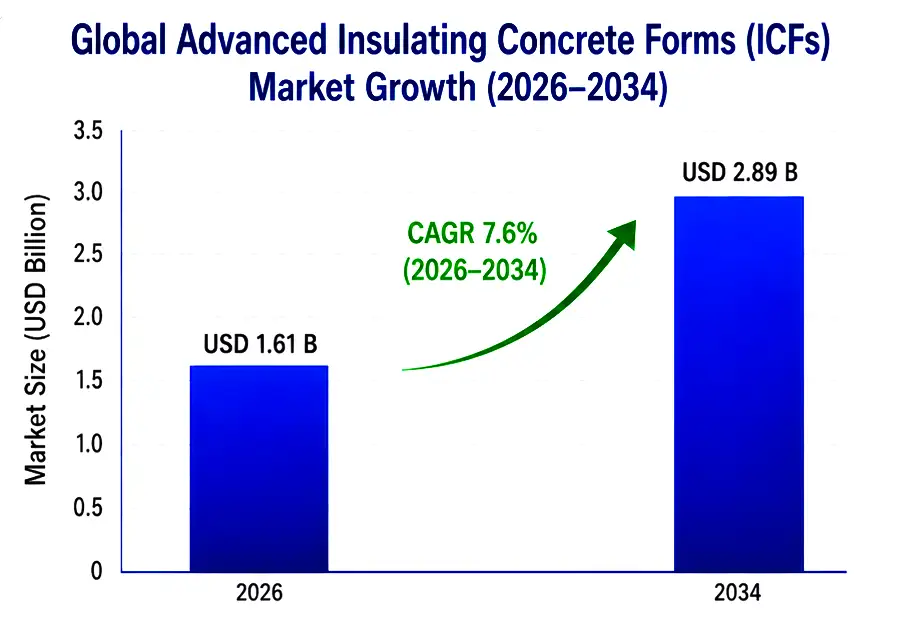
Among the most innovative advancements in building envelope technology are Advanced Insulating Concrete Forms (ICFs). which integrates structural strength, thermal insulation and construction efficiency in a single integrated system. Unlike traditional formwork for concrete construction, which is removed upon completion of the concrete curing process, ICF forms stay in place to form a composite wall system composed of a reinforced concrete wall core sandwiched between rigid insulation material. This design offers several performance advantages. It provides structural strength, thermal insulation, acoustic performance, moisture resistance and fire protection all at once.
Material engineering and manufacturing technology have also advanced considerably in the modern ICF system. Modern systems utilize high performance expanded polystyrene (EPS), insulation materials with graphite and polyurethane foam that enhance the insulation performance, and engineered connector systems that provide stability for walls while enhancing their ease of installation. They may also feature built-in fastening strips, utility channels, alignment guides and surface finishes to speed the installation process and offer versatility with interior and exterior finishes. Thus, ICF walls provide significantly higher R-values than conventional wood-frame or masonry walls while delivering outstanding structural performance.
This technology is being used with more frequency in buildings of varying sizes for residential, commercial, institutional and industrial structures, as the demand for energy-efficient and resilient buildings continues to rise. ICF structures provide significant savings on energy use for heating and cooling, helping builders meet increasingly stringent building energy codes and energy efficiency standards. Furthermore, the monolithic reinforced concrete core is resistant to natural hazards like hurricane, floods, earthquakes and harsh storms.
In addition to material performance, advanced ICF systems simplify construction by reducing the number of components used in building and the less cumbersome process involved. This helps to complete projects faster, reduce lifecycle costs and enhance building performance, making ICF technology an increasingly desirable option for contemporary high-performance building.
| Report Coverage | Details |
|---|---|
| Base Year | 2026 |
| Base Year Value | USD 1.49 Billion |
| Forecast Value | USD 2.89 Billion |
| CAGR | 7.6% |
| Forecast Period | 2025-2034 |
| Historical Data | 2022-2025 |
| Largest Market | North America |
| Fastest Growing Market | Asia Pacific |
| Segments Covered | By Product Type, Material, Application, End-User, Region |
| Region Covered | North America, Europe, Asia Pacific, Middle East & Africa, Latin America |
| Countries Covered | US, Canada, Mexico, UK, Germany, France, Italy, Spain, Poland, Netherlands, China, Japan, India, Australia, South Korea, Brazil, Argentina, UAE, Saudi Arabia, South Africa |
| Key Market Playes | Nudura Inc., Logix Insulated Concrete Forms, Fox Blocks, BuildBlock Building Systems, Amvic Inc., Quad-Lock Building Systems, Durisol International, Bautex Systems |
Get more details on this report - Request Free Sample
The adoption of strict building energy efficiency standards around the globe can be regarded as one of the key factors boosting the Insulating Concrete Forms (ICF) industry. Governments and regulatory authorities are imposing stricter energy-efficiency requirements on the construction industry to comply with strict regulations aimed at reducing energy usage in the sector. The construction industry contributes significantly to total energy consumption across the globe. Therefore, it is imperative that builders embrace advanced building envelope systems.
The continuous insulation offered by the ICF technology is incorporated into the building’s walls, thus not allowing for any thermal bridges that are common in the traditional building system. ICF systems enable buildings to achieve higher levels of thermal efficiency and consistency of indoor temperature. New generation ICF walls have the potential to offer high levels of insulation and airtightness.
Reinforced concrete cores contained in ICF building systems offer thermal mass advantages that help in absorbing heat to be released slowly. As nations adopt tougher sustainable building measures and implement more zero-energy building programs, the use of ICF building system technology is expected to increase because of the potential offered by these systems regarding cost-effectiveness, sustainability, and regulatory compliance all at once.
Natural disasters such as hurricanes, tornadoes, wildfires, floods, severe weather and earthquakes are occurring more often and with mounting intensity creating a significant opportunity for the Insulating Concrete Forms (ICF) market. Property owners, builders, and governments are taking an active interest in resilient construction solutions that meet the demands of the extreme environment, while reducing potential damage, repair costs and safety risks. The need for longer-lasting building materials with excellent structural properties is increasing with the increased frequency of climate-related events.
The reinforced concrete core of ICF systems makes them extremely wind, impact, and seismic resistant, giving them high strength and exceptional resistance to high winds, impact forces and seismic activity. Extreme weather can also be handled by these systems, and they can maintain structural integrity in severe storms and hurricanes. They have been found to be effective in disaster-prone areas which has boosted confidence among builders, insurance companies and regulators.
ICF walls offer excellent fire resistance due to their non-combustible concrete construction and fire-resistant insulation material. This makes them very applicable in areas that are prone to wildfire, and where building safety standards are increasing. ICF technology is a viable option for today's construction, thanks to its structural strength, resistance to fire, and durability. With the increased attention being paid to the development of disaster preparedness and resilient infrastructure, the use of ICF systems should be expected to increase in residential, commercial, and institutional building projects around the world.
The primary barrier to widespread ICF adoption is its higher upfront material cost over conventional wood-frame or masonry construction, which is dependent upon material costs in the various geographic regions, project size, contractor ICF experience levels and local labor costs, and ranges from 5-15% of total wall construction cost. This premium is always offset by lower mechanical system sizing requirements, no separate insulation contractor cost, lower air barrier and vapor control costs, and significant long-term operating energy savings, but the upfront cost difference makes the equation less attractive to cost-constrained buyers, volume builders and developers who opt to focus on initial construction budget optimization instead of lifecycle cost analysis.
Cost comparisons are further complicated by, by significant price and cost variations for lumber, concrete, labor and energy, particularly between regions, which influence the comparative economics of ICF versus conventional construction systems. With lumber prices going up as they did in 2020-2022 (200-400% increase in dimensional lumber costs), ICF systems proved to be cost competitive or advantageous. The reverse is true for periods of normal lumber pricing: a material premium for ICF justifies life cycle cost arguments that involve buyer sophistication and a longer time orientation that are not consistently found in all market segments in construction.
A significant market opportunity exists to expand ICF adoption beyond the single-family residential sector where ICF is currently most widely used to the multi-family residential and mid-rise construction sectors where these integrated properties of ICF (structural, acoustic, fire safety and energy performance) offer clear benefits over traditional building systems. Urban densification and the global affordable housing crisis are leading to significant multi-family residential development in major metro areas, as builders and city planners alike understand that superior quality up-front saves money in long-term maintenance, contributes to a better resident experience and retention, and helps achieve sustainable urban development goals.
Available in a range of concrete core thicknesses and configurations, ICF can attain Sound Transmission Class ratings of STC 50-72, as opposed to the STC 33-45 normally achieved by traditional wood-frame construction. In multi-family development in urban locations, traffic noise, neighbor noise and mechanical equipment noise are important quality of life issues for the apartment occupants and can be an important factor in achieving a high premium for the ability to provide superior acoustic privacy and comfort.
ICF construction offers significant fire resistance benefits in multi-family buildings with high levels of fire resistance required by the building code between dwelling units and common areas, as well as the greater magnitude of the consequences of a fire event due to the high-population-density nature of the building. The single-layer ICF wall system offers better fire ratings than multi-layer assemblies are necessary to achieve the same fire rating in wood-frame assemblies, making it easier to design a building to meet code requirements with the added benefit of providing better life safety results.
The ICF industry is rapidly integrating with digital construction workflows with the following capabilities: complete Building Information Modeling (BIM) object libraries, parametric design tools, automated manufacturing interfaces, and integrated structural-thermal performance modeling that allows for smooth transition from design intent to production optimization to construction execution. Leading manufacturers are creating advanced digital platforms that enable early-stage thermal and structural optimization, automated quantity takeoff and cutting optimization, real-time production scheduling coordination and quality control documentation that maximize the benefits of ICF's precision manufacturing capabilities while reducing material waste and construction complexity.
This digital integration allows architects and engineers to achieve optimal wall thickness, thermal performance goals, structural adequacy requirements, and utility integration options at early design stages while also providing support for design-for-manufacture-and-assembly methodologies that promote the most efficient and quality construction. The evolution of augmented reality installation guidance systems, digital quality control documentation platforms and automated progress monitoring technologies also advance the industry's march toward technology-driven construction delivery, which in turn minimizes installation mistakes, promotes productivity and enhances quality uniformity.
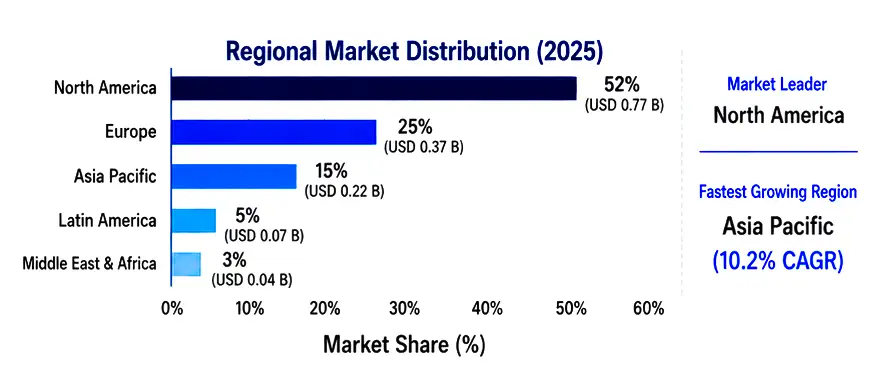
More than half of global demand for Insulating Concrete Forms (ICFs) is in North America due to the high percentage of new construction projects using ICFs.The high percentage of new construction projects using Insulating Concrete Forms (ICFs) has resulted in North America being the largest market for ICFs in the world. This is backed by an existing industry infrastructure in the region, which features a network of experienced contractors, broad distribution channels, clear product standards, and acceptance of building codes. The adoption of energy-efficient, sustainable, and disaster-resistant construction continues to rise on a variety of projects, including residential, commercial, and institutional.
The U.S. accounts for the largest regional market share, with strong demand in the hurricane prone coastal regions, tornado-prone regions and cold-climate areas where energy efficiency and building resilience are important factors. Even market drivers such as government policies for supporting resilient building and disaster-resistant construction further boost the market growth.
Canada is also a significant market, due to cold winters and high energy efficiency standards. ICF systems are used extensively in residential basements, and they are increasingly being used for above-grade walls in high-performance building projects. Energy sustainable construction, reduced energy usage and durability of buildings in the region are projected to drive ongoing growth in the ICF market during the forecast period.
The Asia Pacific region accounts for the fastest growing Insulating Concrete Forms (ICF) market owing to the high pace of urbanization and construction, along with advancements in energy-efficient construction technology. Several Asia-Pacific countries are witnessing increasing demand for ICFs due to their high-quality construction capabilities and efficient energy consumption.
In Australia, there has been a significant increase in the application of ICFs because of the increasing importance of making buildings fire-resistant. China’s market growth is driven by to the improved quality and energy requirements of constructions, as well as due to initiatives undertaken by the government to promote sustainable construction practices.
Europe represents a crucial market for ICFs, which accounts for around one-fourth of the global demand. Strict building energy efficiency regulations, high building standards, and increasing trends in sustainability define Europe's demand for ICFs. Germany, UK, Austria, Switzerland, Poland, and the Nordic countries represent some of the major countries because of the high-quality, energy-efficient construction practices in these countries.
Increased investment in ICF systems is observed in the United Kingdom because of the strict construction laws that mandate the use of efficient walling systems capable of saving carbon dioxide emission and improving energy savings. Germany represents a major ICF market due to its large number of Passive House projects.
ICF construction provides great insulation capabilities and saves energy through air-tight constructions. With continued investment in green buildings and renovation of older constructions, the European market can be considered one of the strongest markets for ICF technology.
Flat Wall Systems account for the largest share of the global ICF market. as they form the most popular ICFs. Flat Wall ICFs contain a common reinforced concrete core between two insulations. This type of ICF is known for its good quality performance in terms of their high strength, energy efficiency, and easy installation procedure. They find use in various types of buildings including residential, commercial, institutional, and basements.
Grid Wall Systems account for a major part of the market share and are meant to optimize concrete usage while still being structurally sound. The Grid Wall Systems consist of ribs made of concrete in an engineered grid pattern coupled with continuous insulation, thereby offering efficiency both from an economic and thermal perspective.
Post and Beam Systems have been devised to cater to specific purposes in construction and building designs that require better structural capacity. They are often applied in cases where there are very large openings and loads, which demand a particular kind of architecture. In terms of market share, they are less dominant than the Grid Wall Systems but have excellent flexibility in design.
Expanded Polystyrene (EPS) dominates the market among the materials used in ICFs, taking the biggest percentage of the global market. The preference for EPS is largely based on its ability to insulate well, its dimensional stability, its light weight, and its economic value. EPS gives good structural strength and energy saving in the long run. The advent of graphite reinforced EPS has seen an improvement in insulation where one can have better insulation in thinner walls.
Cement-bonded wood fiber is another emerging product category due to its increasing demand in the market for sustainability and environmentally friendly building products. This class includes materials made from the combination of recycled wood fibers and cement, which provide better acoustic insulation properties along with improved fire resistance and better compatibility with plastering materials like stucco.
Polyurethane and polyisocyanurate foam categories belong to the top-of-the-line material types. The major reason why this class has a higher value in comparison to other segments of insulating foam boards is the better thermal resistance per inch provided by the materials. In addition, improved stiffness and insulation properties make it an ideal choice for urban construction and space-saving projects.
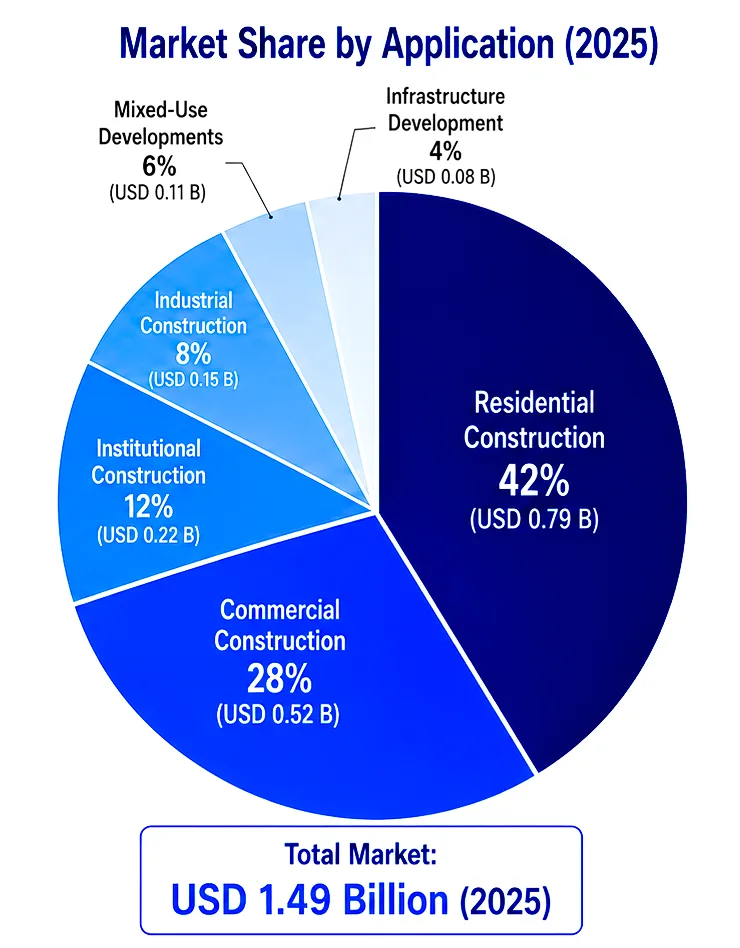
The residential construction segment is the leading end-user segment within the insulating concrete form (ICF) market. This segment encompasses residential construction of single family and multi-family units, as well as basement wall construction. Adoption of ICF technology by consumers and developers is rising owing to benefits such as better energy efficiency, noise insulation, strength, and resistance to harsh weather conditions.
Commercial construction is yet another major growth area in the market. In fact, the ICF construction technology can be employed in different forms of commercial construction, including schools, hospitals, hotels, offices, etc., where energy efficiency, high comfort levels, and excellent structural characteristics are essential considerations. The current trend in the commercial sector is to cut lifecycle costs and implement sustainable development goals, thus providing additional motivation to use ICF technology.
Industrial construction is another sector where the application of ICF technologies is widespread. Various types of warehouse facilities, cold storage, manufacturing facilities, logistics centers, etc., are built using this technology. Such construction has many advantages, including high energy savings, good insulation, and durable and strong structure. Thus, this technology is highly appreciated for industrial purposes.
Contractors and Builders represent the largest end-user segment. within the Insulating Concrete Forms (ICF). Such users are represented by general contractors, specialized contractors who are responsible for ICF installation, and builders who use such systems in the process of their construction work. Increasing preferences for more time-efficient construction processes have made this segment of users grow fast.
Real Estate Developers constitute a substantial portion of the demand in the market. Property developers, whether they are constructing residential buildings, commercial buildings, or a combination of both, are increasingly using ICF building structures owing to their energy-saving capabilities and their capacity to ensure a comfortable environment, thus making such buildings ideal for meeting sustainable construction goals.
The Individual Homeowners and Owner-Builders form another segment of consumers. Individual builders and homeowners prefer ICF construction due to its energy-saving capabilities, better insulation properties, greater indoor comfort levels, and structural strength. Such buildings are less likely to sustain damage during natural disasters and severe weather conditions. As a result, individual homeowners find the extra cost of constructing a building made from ICF materials worthwhile.
The global Advanced ICF market is moderately consolidated. Competition in the sector involves large established international companies and competent regional players. Some of the major companies active in the sector include Nudura, Logix ICF, Fox Blocks, BuildBlock, and Quad-Lock. These companies compete by offering high-quality products that provide high levels of insulation as well as technical expertise and other value-added services to installers. Players in the sector offer their customers integrated ICF solutions that include accessories and support services during installations. Growth in the need for energy-efficient and disaster-proof structures is spurring innovation and increased production capacity.
April 2026: Nudura Inc. released their new generation commercial ICF solution which uses brick ledge technology without any thermal bridge coupled with web spacing optimization, especially designed to facilitate construction schedules for mid-rise multi-family projects by ensuring superior thermal efficiency using graphite-based EPS formula that is 15-18% higher-priced than regular residential ICF solutions.
March 2026: BuildBlock Building Systems entered into an agreement with a large-scale builder in North America, who intends to install their ICF system in 2,800 single-family homes in the states of Oklahoma, Kansas, and Texas to ensure protection against tornadoes. This agreement amounts to approximately USD 22 million worth of ICF products over 30 months.
February 2026: Expansion at the Durisol International plant in Germany for manufacturing cement-bonded wood fiber ICF products was completed, adding 45% to annual production capacity to meet European demands for sustainable ICF building solutions with recycled wood fiber making up 68% of each product and having attained Environmental Product Declaration status in the expanded product line-up.
January 2026: International Building Code report approval was achieved by Quad-Lock Building Systems for use of their ICF system in mid-rise constructions, with application of the company's product now being made available for construction projects up to eight stories. The addressable market for Quad-Lock is now more valuable as it includes mid-rise constructions in addition to low-rise residential buildings.
December 2025: Bautex Systems introduced a prefab ICF panel system allowing reinforced wall panels to be assembled in a factory environment for delivery as fully constructed panels at construction sites, thereby cutting down the amount of ICF assembly work required at construction sites by around 50%, while offering superior quality consistency for commercial building construction.
November 2025: The International Code Council issued an update to the design code for ICF structures within the 2026 International Building Code, including performance-based design approaches that allow for ICF design and construction within highly seismic regions, opening up new markets for ICF use in earthquake-prone areas such as the western US, Japan, New Zealand, and other seismically active areas.
You'll get the sample you asked for by email. Remember to check your spam folder as well. If you have any further questions or require additional assistance, feel free to let us know via-
+1 724 648 0810 +91 976 407 9503 sales@intellectualmarketinsights.com
30 Jun 2026
Intellectual Market Insights Research © 2026. All rights reserved.


