Share this link via:

The global Alexander disease market was valued at USD 186.3 million in 2025 and is projected to reach USD 258.7 million by 2036, expanding at a compound annual growth rate of 2.94% during the forecast period (2026-2036).
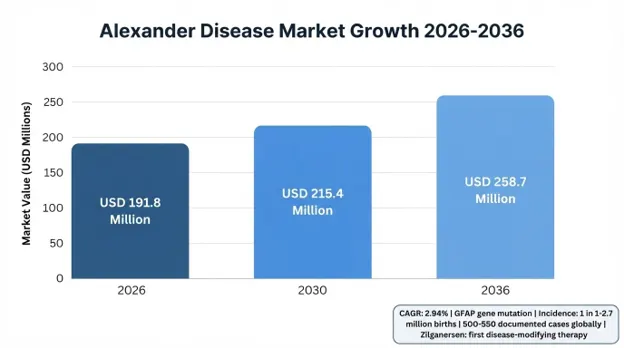
Alexander’s disease is an extremely rare condition that is progressive and deadly in nature, involving genetic mutations in the glial fibrillary acidic protein (GFAP) gene. These genetic mutations lead to the formation of Rosenthal fibers in the astrocytes of the body. The term Alexander’s disease comes from its description by W. Stewart Alexander in the year 1949. It is one of the types of primary astrocyte disorders and is different from classical leukodystrophy, which affects the myelin sheath of the brain.
Alexander’s disease is known to occur in about 1 out of 1 to 2.7 million live births worldwide and hence is an extremely rare disease without any apparent predilection to a particular race, ethnicity, gender, or geography. About 500-550 cases have been documented in medical literature until now following the first description of this disease, accounting for less than 2% of all leukodystrophies. This market includes treatment management for various clinical presentations from severe infantile disease occurring within the first two years of life to adult disease with different symptoms. There are primarily four types of clinical presentations of the disease, depending on the age of onset: neonatal, infantile (about 42% of total cases), juvenile (about 14% of total cases), and adult-onset disease (about 6% of total cases).
The economic value of the market of Alexander Disease goes well beyond mere sale of pharmaceutical products and includes disease management systems that utilize diagnostic tools, genetic testing services, symptom management approaches, neurology expertise, and even disease-modifying therapies. Indeed, the market is an answer to the major medical need, as until recently there were no disease-modifying medications available and the only available treatment was symptomatic, which involved the use of anticonvulsant therapy for seizure control, muscle relaxers for spasms, physiotherapy for mobility maintenance, assistance of dieticians for nutrition management, and respiratory support as the disease progresses. The costs of the care of leukodystrophy patients are estimated to be around USD 107,225 per patient per year.
| Report Coverage | Details |
|---|---|
| Base Year | 2025 |
| Base Year Value | USD 186.3 Million |
| Forecast Value | USD 258.7 Million |
| CAGR | 2.94% |
| Forecast Period | 2025-2034 |
| Historical Data | 2022-2025 |
| Largest Market | North America |
| Fastest Growing Market | Asia Pacific |
| Segments Covered | By Clinical Form, Therapeutic Approach, Disease Stage, End-User |
| Region Covered | North America, Europe, APAC, MENA, Latin America (Seven major markets: US, Canada, Germany, France, Italy, Spain, UK, Japan) |
| Countries Covered | United States, Canada, Germany, France, Italy, Spain, UK, Japan. |
| Key Market Playes | Ionis Pharmaceuticals, Academic research institutions, Emerging biotech companies |
Get more details on this report - Request Free Sample
The main structure that has been pushing the Alexander disease market growth forward is the significantly better access to cutting-edge genetic tests and molecular diagnostics making disease detection early and precise. In the past, Alexander disease could be confirmed only through brain biopsy, which showed the presence of Rosenthal fibers in patients, and this procedure involved risks and ambiguity because Rosenthal fibers can also be present in other diseases. The development of advanced MRI criteria for diagnosing, when four out of five imaging features should be identified, including white matter changes predominantly frontally, periventricular rim, abnormalities of basal ganglia and thalami, brain stem involvement, and contrast enhancement in certain areas, has made non-invasive disease confirmation possible.
The market has seen significant growth due to the advent of fast, efficient sequencing of the GFAP gene, which is available commercially and at research labs accessible to clinicians around the world. Analysis of DNA collected from blood samples or buccal swab samples provides conclusive diagnosis in about 95% of all suspected patients, unlike the former indirect and invasive methods used to diagnose the disorder. The expansion of neonatal screening programs together with an increased awareness on the part of neurologists and pediatricians has resulted in early detection of the disorder among infants and improved disease management through proper treatment procedures. Population-based screening programs, especially in developed countries, have enhanced the number of diagnosed patients that may be targeted with treatments.
Innovation in the market is triggered by the development of the first potential disease-modifying therapy against Alexander disease pathogenesis. Zilganersen (IONIS 373) is an experimental antisense oligonucleotide therapy for Alexander disease which has been developed by Ionis Pharmaceuticals. Zilganersen is the first disease mechanism-based drug for reducing pathogenic GFAP protein levels and for preventing the accumulation of Rosenthal fibers. In September 2025, Ionis announced positive Phase 1-3 trial results indicating that zilganersen demonstrated statistically significant disease stabilization compared to placebo in terms of the primary endpoints in 2–53-year-old patients. The pivotal study included 53 participants with Alexander disease, and the findings of the 60-week double-blind, randomized controlled phase indicated that zilganersen 50 mg intrathecal demonstrated disease stabilization compared to progressive neurological deterioration seen in the placebo group.
A significant step forward in the regulatory progress of zilganersen was achieved through the receipt of FDA Fast Track status in October 2024, which would help to accelerate the regulatory process as the first investigational therapy for Alexander disease in both pediatric and adult populations. This is essentially a paradigm change in terms of providing solely supportive care to the option of altering the course of disease through downregulating GFAP levels using antisense oligonucleotides. The therapeutic success of the GFAP reduction strategy has resulted in a significant investment of efforts into further research on developing novel treatments for targeting GFAP using different strategies.
The primary factor hampering the Alexander disease market growth is the extremely low prevalence rate of the disease and hence the extremely low patient population. Given that the estimated incidence rate is approximately 1 in 1 to 2.7 million live births and about 500-550 documented cases reported till date in medical literature throughout the world since 1949, the number of addressable patients will remain extremely low even in the developed countries, which have good health care facilities and diagnostic techniques. In the United States, which constitutes about 87% of the value of the seven-major-markets region, the number of living diagnosed Alexander disease patients is unlikely to be more than 200-400, with single digit annual diagnosis rates in most developed countries.
The market presents considerable potential with respect to the development and commercialization of other disease-modifying drugs aside from zilganersen, which are targeted towards the different pathophysiological mechanisms involved in the pathology of Alexander disease. Development efforts today include new versions of antisense oligonucleotides designed to provide increased CNS entry and effectiveness, small molecule GFAP inhibitors delivered via oral or intravenous routes, which could be more convenient compared to intrathecal delivery for current antisense drugs, and gene therapy techniques that will allow long-lasting or permanent disease modification by correcting GFAP expression and replacing astrocytes. The successful validation of GFAP inhibition with zilganersen provides a proven pathophysiological target with many opportunities for multiple therapeutic interventions against it and other potential pathophysiological mechanisms.
Research in the works concerning the mechanism of dysfunction of astrocytes, activation of microglia, malfunction of proteasomes, and inflammatory pathways resulting from the accumulation of GFAP provides more opportunities for the development of drugs. Firms that develop drugs against such complementary pathways can set up their market presence in the area of combination therapy which will enable them to modify disease in a better way with the help of multiple target mechanisms. The diversification of the pipeline from single drug therapy to combination therapy is market opportunity itself.
The Alexander Disease market is undergoing changes owing to advances in the intrathecal drug delivery technologies which allow for improved central nervous system (CNS) penetration and sustained efficacy of the drug. The latest developments in zilganersen involve direct intrathecal delivery through the lumbar puncture or via intrathecal catheter implants which avoid the issue of blood-brain barrier preventing access of systemically delivered drugs to CNS tissues. Innovations currently being explored include implantable intrathecal delivery devices allowing sustained antisense oligonucleotide delivery over an extended period of time (possibly monthly or quarterly) in comparison with the current schedule involving frequent intrathecal injections.
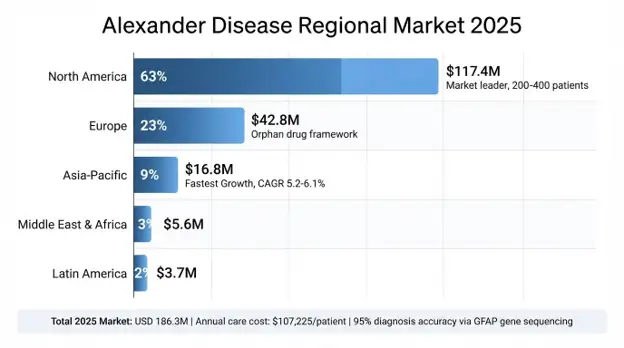
North America possesses the key market share that accounts for 60-65% of the total market value on the strength of healthcare facilities, insurance cover with Medicare, advanced specialty neurological network for rare neurological diseases and pharmaceutical R&D resources. The United States is the biggest country with an Alexander disease patient population among the developed countries accounting for 200-400 patients and backed by specialized neurological clinics, academic health centers and clinical trials, which make the patient identification process effective. Orphan drugs can be developed in such a market owing to regulatory policies under FDA programs like Orphan Drug status, Fast Track and Breakthrough Therapy status. These programs have been applied to the drug zilganersen.
The Medicare insurance system offers a basis for the acceptance of such therapies, especially for the older population that suffers from the disease in adulthood, while the commercial insurance systems have shown willingness to cover rare disease therapies which are clinically proven and cost-effective. The presence of the clinical research centers of excellence, the leaders of patient advocacy organizations, and the innovation hubs of pharmaceutical companies in North America has ensured the region its position as the center of Alexander disease therapy development and dominance in the market.
Europe is one of the leading regions in the global market for Alexander disease, accounting for around 20-25% of the market. Such aspects as advanced healthcare infrastructure, regulatory initiatives that encourage drug development, and effective patient care networks facilitate the process of making the region one of the most profitable markets for Alexander disease. The European Union initiative on orphan medicinal products provides some incentives for pharmaceutical companies that want to produce drugs for such rare diseases as Alexander disease. In Europe, there are various advances in terms of healthcare infrastructure, where Northern and Western Europe outperform Central and Eastern Europe.
The Asia Pacific region is expected to be the fastest-growing regional market and display CAGR of around 5.2-6.1% till 2036 due to the sheer size of the population leading to significant numbers of people affected even with low prevalence rates, better healthcare facilities in developed countries such as Japan and South Korea, increased availability of diagnoses through genetic testing, and increasing market growth within the pharmaceutical industry in the region. Japan and South Korea have created medical facilities and skills in the field of neurology that equal those of the developed Western countries and make diagnosis and treatment possible. India and China, the two most populous countries in the world, will see gradual growth of the market because of the increasing availability of healthcare and diagnostics.
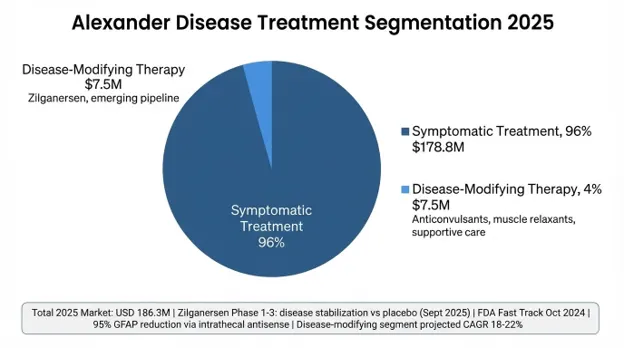
Symptomatic treatment market segments currently dominate market utilization while disease-modifying therapy market segments represent future market growth for the global Alexander disease market. Symptomatic treatments constituted about 95-98% of total market value in 2025 including anticonvulsant drugs, muscle relaxants, physical therapy services, nutritional treatment, respiratory treatments, and consultation from various specialties addressing individual symptoms of the disease. Historical market activity of the pharmaceutical market for this indication has been dominated by the symptomatic treatment segment due to high utilization rates of generic anticonvulsant drugs (valproic acid, levetiracetam, phenobarbital) and muscle relaxants (baclofen).
Anticipated future disease-modifying therapy market segments account for 2-5% of market value in 2025 and are poised for substantial growth as zilganersen advances toward commercialization and becomes clinically proven. Disease-modifying therapy market segments are projected to grow at significantly higher CAGR of 18-22% until 2036 due to the development of additional therapeutic indications.
Infantile-onset disease forms the most important segment of the market and constitutes about 42% of total Alexander disease patients, which entails considerable treatment load involving intense neurological care, seizures treatment, respiration support and nursing service provision. The severe nature and poor prognosis of infantile-onset disease form an important therapeutic market due to availability of disease modifying medications and parents’ efforts to prevent disease progression. The juvenile-onset disease segment (about 14% of patients) is characterized by variability in disease progression and slightly better prognosis, resulting in different market features with opportunities for longer-term involvement in therapy.
The largest end user sector comprises hospitals and neurology centers that hold around 55-60% of the market value share, where inpatient facilities, diagnosis, surgery procedures (e.g., insertion of ventriculoperitoneal shunts for hydrocephalus), and consultations are available. The second-largest sector comprises academic medical centers and neurology practices specializing in rare neurological diseases, who hold around 30-35% of market value through the provision of specialty care, diagnostic services, optimization of treatment plans, and involvement in clinical trials. Home healthcare and hospice care facilities constitute around 5-10% of market activity due to disease progression into terminal stages.
The Alexander disease market is moderately concentrated since there are not many players from the pharmaceutical industry due to the extremely rare incidence of the condition. Ionis Pharmaceuticals can be considered the major player in the market due to its most advanced disease modifying treatment (zilganersen) that is supposed to become commercially successful in the market after being approved and launched in 2026-2027. The research conducted in academic institutions such as the University of Wisconsin-Madison Waisman Center, Columbia University, and others becomes a major part of the market since it functions as virtual participants by cooperating with commercial manufacturers.
The emergence of biotech companies and contract research organizations is expected since more therapeutic possibilities appear, and patients get identified and included into clinical trials. Patient advocacy organizations such as United Leukodystrophy Foundation are engaged in market development by recruiting patients into clinical trials, funding research, and conducting awareness campaigns.
September 2025: Positive findings from Ionis’ Phase 1-3 trial of zilganersen have been recorded in 53 Alexander disease patients, showing disease stabilization versus placebo in patients between 2 to 53 years old in 60 weeks double-blind, randomized controlled phase with plans for filing regulatory approval in late 2025.
October 2024: Zilganersen received FDA’s Fast Track designation as the first potential treatment modality to modify the course of Alexander disease in patients of pediatric and adult age groups.
July 2024: Full enrollment for Ionis’ zilganersen Phase 1-3 trial was completed by Ionis Pharmaceuticals.
You'll get the sample you asked for by email. Remember to check your spam folder as well. If you have any further questions or require additional assistance, feel free to let us know via-
+1 724 648 0810 +91 976 407 9503 sales@intellectualmarketinsights.com
22 Aug 2026
Intellectual Market Insights Research © 2026. All rights reserved.