Share this link via:

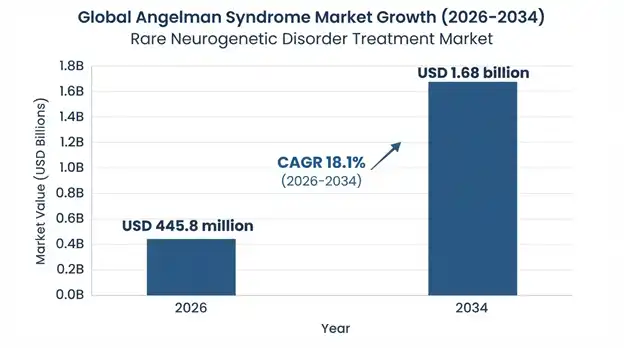
The global Angelman syndrome market size was valued at USD 385.2 million in 2025 and is projected to reach USD 445.8 million in 2026, expanding to USD 1.68 billion by 2034, growing at a CAGR of 18.1% during the forecast period (2026-2034).
Angelman syndrome is a rare neurogenetic disorder wherein the maternally inherited UBE3A gene is defective, leading to profound neurodevelopmental impairment with severe intellectual disability, absent or minimal speech development, characteristic movement disorders such as ataxia and tremor, epilepsy (80–90% of patients), characteristic behaviors including inappropriate laughter and excitability, and sleep disturbances. It is estimated that there are 500,000 – 1 million people worldwide who have the condition, although most are not diagnosed because they share clinical features with autism spectrum disorder, cerebral palsy, and other neurodevelopmental disorders. It is estimated that, worldwide, approximately 1 in 12,000 to 1 in 20,000 live births will result in the condition.
The molecular pathophysiology results from genomic imprinting, with only the maternal allele of UBE3A being expressed in neurons, and the paternal allele epigenetically silenced by expression of the antisense transcript of UBE3A. Complete loss of the UBE3A protein, essential for synaptic function, neuronal development and proteostasis in cells, occurs due to loss-of-function mutations, chromosomal deletions, uniparental disomy or imprinting defects affecting the maternal UBE3A allele. This mechanistic understanding has placed Angelman syndrome as a compelling target of precision genetic medicine and resulted in significant investments from biotechnology companies, academic institutions and patient advocacy groups in targeted therapeutic approaches that seek to restore the UBE3A protein function either by antisense oligonucleotide technology or by gene replacement therapy or epigenetic modulation.
The treatment paradigm for AS is shifting from purely symptomatic management to disease-modifying genetic therapies (antiepileptic drugs, behavioral interventions, and supportive care) to the disease-modifying genetic therapies is now in its infancy as it targets the molecular culprit. Historically, the only thing that has been used for clinical management is seizure control with antiepileptic drug (AED) regimens, physical and occupational therapy to maximize functional development, behavioral interventions and supportive care for feeding difficulties, sleep disorders and communication deficits. The introduction of genetically targeted therapies has also had significant commercial consequences as these new products are priced at a premium due to their ability to change the course of disease and the fact that there is a substantial unmet medical need and no disease modifying therapy for this patient population.
| Report Coverage | Details |
|---|---|
| Base Year | 2025 |
| Base Year Value | USD 385.2 Million |
| Forecast Value | USD 1.68 Billion |
| CAGR | 18.1% |
| Forecast Period | 2025-2034 |
| Historical Data | 2022-2025 |
| Largest Market | North America |
| Fastest Growing Market | Europe |
| Segments Covered | By Treatment Type, Mechanism of Action, Route of Administration, Patient Age Group, End-User |
| Region Covered | North America, Europe, Asia Pacific, Middle East & Africa, Latin America |
| Countries Covered | US, Canada, Mexico, UK, Germany, France, Italy, Spain, Netherlands, China, Japan, India, Australia, South Korea, Brazil, Argentina, UAE, Saudi Arabia, South Africa |
| Key Market Playes | Biogen Inc., Ionis Pharmaceuticals, Ultragenyx Pharmaceutical, Roche (Genentech), GeneTx Biotherapeutics, Ovid Therapeutics, Encoded Therapeutics |
Get more details on this report - Request Free Sample
The major factor driving the Angelman syndrome market is the fast development of novel genetically focused therapies designed to cure the condition through addressing its root causes, rather than treating the manifestations of the disease. The existence of an intact but epigenetically inactivated paternal UBE3A gene makes the treatment of Angelman syndrome especially susceptible to molecular therapy options, including antisense oligonucleotides and gene therapy approaches.
Antisense oligonucleotide programs have already shown promising advances through restoration of UBE3A protein expression that have been associated with improved neurological status, reduced seizure incidence and improved motor skills in preliminary trials. In addition, AAV-based gene therapy programs are being developed as a possible single-administration treatment modality enabling delivery of functional UBE3A genes to neurons. Robust Regulatory incentives in the form of orphan drug and rare disease designations, combined with pharmaceutical investments, are facilitating clinical development and are forecasted to bring about significant growth in the Angelman syndrome market in the coming years.
A marked rise in diagnostic accuracy and reduction in diagnostic time because of the extensive application of advanced technology of genetic testing and newborn screening is among the structural factors contributing to the market growth. Due to the presence of overlapping phenotypic symptoms and limitations on accessing genetic testing, many people suffering from Angelman syndrome were previously misdiagnosed with ASD, cerebral palsy, or Rett syndrome. The average diagnostic delay was three to six years following the manifestation of the first symptoms.
The use of chromosomal microarray analysis, methylation-specific multiplex ligation-dependent probe amplification and whole exome sequencing has made diagnostic timelines much shorter for children with unexplained developmental delay and seizures, with leading pediatric neurology centers making a diagnosis in 6-18 months from the onset of symptoms in an increasing number of cases. Newborn screening pilot programs that look at population-level methylation testing of UBE3A are a potentially game-changing initiative, as the earlier detection of presymptomatic levels would allow therapeutic intervention at key neurodevelopmental stages when the impact of treatment is most likely to be seen.
The Foundation for Angelman Syndrome Therapeutics and the Angelman Syndrome Foundation, and other patient advocacy groups, have contributed significantly to the international rare disease diagnostic movement, raising awareness among physicians, supporting the development of diagnostic algorithms and building patient registry infrastructure which advances epidemiological knowledge and patient recruitment for clinical trials. The expanding diagnostic capacity equals a wider market opportunity with every new diagnosed patient there will be greater demand for both existing therapies and emerging disease-modifying therapies.
The delivery of genetic drugs to the central nervous system, which requires either intrathecal or intracerebroventricular delivery in a patient population suffering from intellectual disability, hyperactivity, movement disorder, and high risks associated with anesthesia, is the major obstacle hindering product commercialization. To bypass the blood-brain barrier limitations, the currently investigated antisense oligonucleotides and gene therapy approaches require the drug to be delivered via the spinal canal or brain ventricles. This method requires general anesthesia or heavy sedation for every administration in children with cognitive and behavioral problems that hinder the application of conscious sedation approach.
The need for repeated doses via intrathecal administration, especially with antisense oligonucleotides that require intrathecal administration every 3 to 4 months forever, places a significant burden on patients and their families and creates a barrier to the widespread application of such drugs since this administration method is limited by the availability of specialized neurological centers with pediatric anesthesia services, advanced imaging and intensive monitoring capacities.
The expenses for developing the required clinical infrastructure for intrathecal delivery as well as for monitoring the long-term safety and assessing outcomes are extremely high and, therefore, so are the expected costs of treatments. The reimbursement process requires strong proof that the therapy provides objective improvements and lowers the healthcare use rate, which becomes difficult due to the severity of the condition and the lack of tools to detect incremental improvement.
Market transformation opportunity arises due to introduction of population-based newborn screening for Angelman syndrome, which will lead to a huge surge in the number of patients, treatment during the presymptomatic or early symptomatic stages when neurological plasticity is at its peak, and market dynamics will change because of large patient cohorts identified for preventive disease modification treatment. The protein, UBE3A, is important for the development of synapses and plasticity in the postnatal stage, there is scientific rationale for early intervention, as research in animals has repeatedly proven that early intervention is much more effective than late intervention.
Advances in testing technologies enable that allow detection of molecular subtypes of the disease using dried bloodspots obtained at the time of birth. At present, limitations preventing the use of screening include issues of cost-effectiveness, need for a follow-up system, ethics of prenatal diagnosis, and lack of therapeutic interventions to justify the cost of screening and parental distress. Approval of genetic treatment methods in the period from 2027 to 2030 will increase the likelihood of implementing screening programs because it may lead to a similar approach to spinal muscular atrophy.
Though antisense oligonucleotides dominate present-day clinical research, one of the latest trends is the development of single-dose gene-replacement therapies and epigenetic editing techniques promising permanent effects. Gene therapy using adeno-associated viruses intends to insert functional copies of the UBE3A gene into neurons, thus enabling the stable protein recovery via single intrathecal or intravenous administration of the drug. This technology solves one of the main drawbacks of antisense oligonucleotides lifelong repeated drug administration and corresponding procedure-related risks.
Catalytically inactive Cas9 protein combined with an epigenetic modifier is one of the most modern technologies used in epigenetic editing to eliminate methylation marks responsible for the silencing of the paternal allele. Such techniques can restore endogenous protein expression without applying viral vectors and any kind of lifelong medication. Biotechnology companies have started paying more attention to the use of such permanent techniques understanding that even though antisense oligonucleotides would probably be the first to hit the market, they will eventually become obsolete.
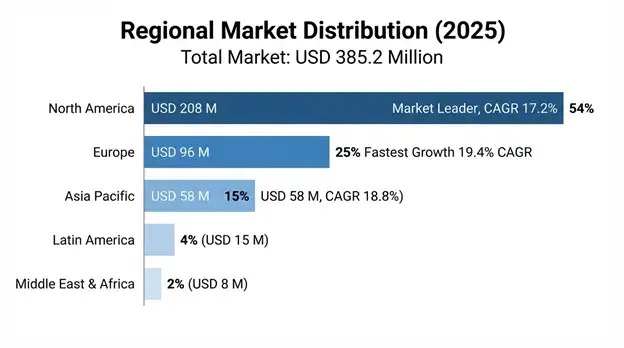
North America leads in the global Angelman syndrome market the market owing to its well-developed healthcare infrastructure, expertise in rare disease research, and extensive use of genetic screening tests. The United States constitutes most of the regional market because of the availability of renowned pediatric neurology clinics, clinical trials infrastructure, and biotech firms working on new gene and RNA therapies. Various supportive regulations like orphan drug development and approval procedures keep driving drug discovery and launch.
Well-developed reimbursement schemes and insurance cover for rare diseases are some more factors propelling market growth. Moreover, Canada is also making significant contributions in regional market growth via the development of rare disease strategies, higher financing of orphan drugs, and involvement in international clinical trials.
Europe constitutes the most rapidly expanding regional market, with a CAGR of 19.4% during 2022–2034 and an expected size of USD 94.8 million in 2025. This rapid expansion is supported by the centralized authorization process of the European Medicines Agency, rare disease reimbursement schemes through the health technology assessment process, and collaborative research programs organized by the European Joint Programme on Rare Diseases to conduct cross-border clinical trials and maintain patient registries.
The region is also characterized by the presence of European Reference Networks, which includes the ERN-ITHACA program providing a network for treating rare neurogenetic disorders and allowing patient access to multidisciplinary teams to administer complex gene therapies. Some European countries, such as Germany, the United Kingdom, France, and the Netherlands, have set up treatment centers with the capability of intrathecal administration.
Pharmacotherapy targeting symptoms still holds the position of the major treatment segment for Angelman syndrome due to the current focus of disease management on control of seizures, sleep issues, behavioral disorders, and other neurological complications. Antiepileptic drugs, sleep treatments, and other supporting pharmacotherapies are still considered the standard treatment and hold the leading market share.
The disease-modifying therapies segment is the fastest-growing due to the development of antisense oligonucleotides, gene replacement, and other technologies aimed at restoring UBE3A activity. With further development and regulatory approval, their market share is expected to increase significantly. Supporting interventions like physical, occupational, and speech therapies are still an important part of disease management. Increasing recognition of the advantages of early treatment and availability of multidisciplinary interventions contribute to the growing demand for these therapies.
Symptomatic Neurological Management holds the largest market share of 76% worth of USD 292.6 million in 2025, indicating present reliance on anticonvulsants, sleep aids, and behavioral pharmacology to control symptoms of the condition. The segment is facing competitive threat from novel disease-modifying strategies but holds relevance due to its efficiency and availability.
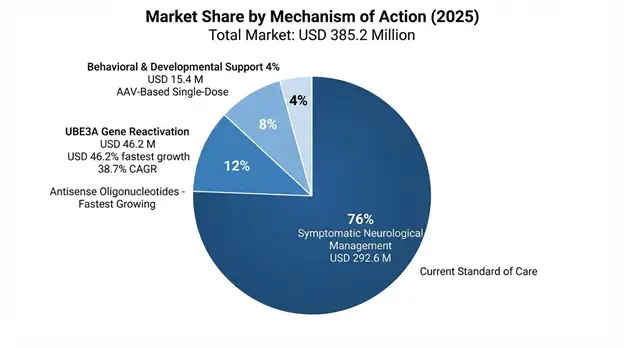
UBE3A Gene Reactivation is expected to account for 12% market share worth USD 46.2 million in 2025 with an estimated 38.7% CAGR growth rate up to 2034, including antisense oligonucleotide-based drug programs that target unsilencing of paternal alleles. The technology is considered the most developed among the disease-modifying strategies with several candidates undergoing late-stage clinical trials.
Gene Replacement Therapy is estimated to acquire 8% market share in 2025 worth USD 30.8 million with a forecasted CAGR growth rate of 35.4%, which includes adeno-associated viral delivery programs of functional copies of the gene. Technology provides an opportunity for single-dose therapy.
Oral administration is the most common mode at a market size of 82%, valued at USD 315.9 million in 2025. It is largely due to daily antiepileptics, sleep medication, and behavioral pharmacotherapy. Its use can be disrupted by future genetic treatments that may require other modes of administration.
The intrathecal mode of administration has 11% of the market share worth USD 42.4 million in 2025 and is expected to grow at 45.2% CAGR till 2034. The intrathecal route is expected to become the primary delivery method for first-generation antisense oligonucleotide therapies.
Intravenous administration mode has a market share of 5% worth USD 19.2 million in 2025 and is expected to grow at a CAGR of 32.8%. Intravenous mode will be used for systemic gene therapy that crosses the blood-brain barrier using a viral vector system.
Hospitals & Specialty Clinics represent the largest end-user segment comprising 58% market share of USD 223.4 million in 2025. Complex diseases that require interdisciplinary collaboration, special diagnostics, and intensive monitoring must be treated in hospitals with expertise in pediatric neurology.
The Pediatric Neurology Centers constitute 24% market share worth USD 92.4 million in 2025 with the highest expected growth rate of 21.7% CAGR up to 2034. Such centers show operational benefits owing to concentration of expertise, standard procedures, and research facilities enabling clinical trials and therapy use.
Rare Disease Centers hold 12% market share worth USD 46.2 million in 2025 with CAGR 19.8%. Rare disease centers are specialized healthcare institutions that treat rare diseases. and, frequently, act as referral centers for complicated genetic treatments with special delivery infrastructure.
The market for Angelman syndrome on a global basis is very concentrated due to the scientific and commercial viability of this condition by specialized biotech firms and large pharmaceutical companies. Competition primarily centers on clinical differentiators., such as UBE3A correction capability, safety with intrathecal administration, efficacy of treatment, and suitability for all molecular types. The predominant business model in this market space includes strategic collaborations between biotech firms and pharmaceutical firms due to capital needs and rare disease commercialization capabilities.
The market is characterized by intense pipeline competition. due to the first mover advantage playing a key role in the leadership of the market based on the small size of the patient base and high cost of treatments. The competition is on clinical endpoints like objective biomarkers, safety including neuroinflammation risk, and ease of dosing.
March 2026: Phase II/III clinical trial findings of BIIB080, an antisense oligonucleotide designed against the UBE3A antisense transcript, have been revealed to be promising with statistically significant improvement in language scores and 58% reduction in seizure rate along with favorable safety results after changes to the protocol to address early signs of peripheral neuropathy.
February 2026: Breakthrough Therapy designation by the FDA for UX701, which is adeno-associated virus 9-mediated delivery of UBE3A under neuron-specific promoters' control, has been granted based on preliminary data of the interim Phase I/II study reporting sustained expression of UBE3A protein in cerebrospinal fluid up to 18 months after dosing.
January 2026: ETX101 entered into phase I/II clinical trials by Encoded Therapeutics after investigation of new drug approval, and the first Angelman syndrome patient was dosed with the proprietary adeno-associated virus vector of the company designed for CNS delivery and UBE3A regulation.
December 2025: Roche signed a USD 520 million strategic collaboration deal with the top epigenetic editing firm to develop CRISPR-dCas9 platform designed to permanently unsilence paternal UBE3A gene with an investigational new drug filing expected by late 2026.
November 2025: GeneTx Biotherapeutics released data on the long-term safety and efficacy of GTX-102 antisense oligonucleotide treatment at 24-month follow-up, showing improvement in developmental parameters with good safety profile, paving the way for regulatory filing in 2026.
List of Key Players in Global Angelman Syndrome Market
You'll get the sample you asked for by email. Remember to check your spam folder as well. If you have any further questions or require additional assistance, feel free to let us know via-
+1 724 648 0810 +91 976 407 9503 sales@intellectualmarketinsights.com
22 Jul 2026
Intellectual Market Insights Research © 2026. All rights reserved.