Share this link via:

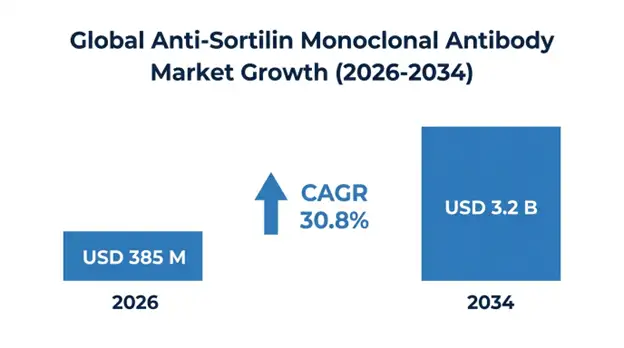
The Anti-Sortilin monoclonal antibody market was valued at USD 285 million in 2025 and is projected to reach USD 385 million in 2026, expanding to USD 3.2 billion by 2034, growing at a CAGR of 30.8% during the forecast period (2026–2034).
Anti-sortilin monoclonal antibodies constitute a novel treatment modality that targets Sortilin (SORT1), a key transmembrane protein that belongs to the vacuolar protein sorting 10 protein domain superfamily and .is a master regulator of intracellular protein transport and lysosomal function. Sortilin plays an essential role in the regulation of progranulin degradation through the binding and internalization of extracellular progranulin and its degradation via the lysosome, thus regulating the levels of functional progranulin in key target organs involved in the process of neuronal survival, microglia function, and synapse preservation.
The rationale for the use of anti-Sortilin antibodies as therapy stems from the inhibition of progranulin degradation by Sortilin that results in increased functional levels of progranulin in both the bloodstream and cerebral tissue compartments. This treatment modality targets the underlying pathophysiological cause of frontotemporal dementia resulting from heterozygous mutations in the progranulin gene, which are associated with up to a 50% decrease in progranulin levels and progressive neurodeg via lysosomal malfunction and activation of neuro-inflammatory pathways, and synapse clearing dysfunction.
In addition to treating the rare disease indication of GRN mutation frontotemporal dementia, anti-sortilin antibodies have therapeutic promise in several other neurodegenerative diseases that feature progranulin insufficiency or dysfunctional sortilin activity in their pathobiology. Progranulin protein deficiency occurs commonly in Alzheimer’s disease, leading to faster accumulation of amyloid-beta and tau proteins, whereas cardiovascular indications exploit sortilin-mediated secretion of PCSK9 from liver cells to regulate cholesterol metabolism and atherosclerosis development.
The market includes investigational drugs currently undergoing clinical trials, as well as commercial-stage drugs under development, with latozinemab being the most advanced candidate showing proof of concept in increasing progranulin levels in GRN mutation patients. The value proposition of the drug is further enhanced by orphan drug status, which grants seven years of exclusivity, breakthrough therapy designation expediting regulatory approval processes, and higher prices owing to treatment of untreatable genetic variants of dementia with highly debilitating manifestations.
| Report Coverage | Details |
|---|---|
| Base Year | 2026 |
| Base Year Value | USD 385 million |
| Forecast Value | USD 3.2 Billion |
| CAGR | 30.8% |
| Forecast Period | 2025-2034 |
| Historical Data | 2022-2025 |
| Largest Market | North America |
| Fastest Growing Market | Europe |
| Segments Covered | US, Canada, UK, Germany, France, Italy, Spain, Switzerland, Netherlands, Japan, China, South Korea, Australia, Brazil, UAE |
| Region Covered | North America, Europe, Asia Pacific, Middle East & Africa, Latin America |
| Countries Covered | US, Canada, Mexico, Germany, UK, France, Italy, Spain, Netherlands, China, Japan, India, South Korea, Australia, Brazil, Argentina, Saudi Arabia, UAE, South Africa |
| Key Market Playes | Alector Inc., AstraZeneca PLC, GSK plc, Denali Therapeutics, AC Immune SA, Arkuda Therapeutics, Prevail Therapeutics |
Get more details on this report - Request Free Sample
The primary factor driving growth in the anti-sortilin monoclonal antibody market is the significant unmet medical need associated with frontotemporal dementia caused by mutations in the progranulin gene, which accounts for one of the most frequent genetic causes of dementia onset in young patients, affecting approximately 15,000–25,000 patients worldwide, with no FDA-approved therapies capable of modifying the natural course of this progressive disease, which is characterized by symptoms including personality changes, loss of executive function, and language problems resulting in total patient dependency within 5-10 years since disease onset. GRN mutation patients have an approximately 50% decrease in progranulin levels in blood and CSF.
Because of the clear genetic basis of this patient population, precision medicine strategies can be employed, such as identifying prospective patients by genetic tests, biomarker-based clinical development using progranulin normalization as the pharmacodynamic endpoint, and streamlined regulatory processes tailored for rare diseases that have been elucidated molecularly. The readiness of the FDA to use biomarker-based surrogate endpoints, such as elevating progranulin and stabilizing neurofilament light chain, for approval is a great advantage to the shortened clinical trial process as opposed to standard programs for neurodegenerative disorders.
An additional market opportunity is represented by presymptomatic carriers of GRN mutations, which number between 40,000-60,000 people in developed countries, who could undergo treatment prior to irreversible neural cell death and thus become candidates for prevention of the disease rather than treatment of its symptoms.
Anti-sortilin therapies derive a major advantage from the overall evolution towards precision medicine in neurology because of the identification and classification of genetically distinct subpopulations of patients who show a marked response to therapy with greater efficacy than that offered by broad-spectrum treatments in heterogenous neurodegeneration heterogeneous neurodegenerative patient populations, where broad-spectrum treatments have repeatedly failed because of limited efficacy. Progranulin levels in cerebrospinal fluid and plasma serve both as inclusion criteria for clinical studies and as biomarkers of pharmacodynamic activity.
The development of diagnostic tools for progranulin testing allows identification of patients with neurodegenerative disorders that have sub-optimal levels of progranulin and may benefit from treatment with sortilin inhibitors, thus broadening the target population beyond GRN mutations to include other patients with lysosomal dysfunction due to progranulin deficiency. An additional opportunity exists in treating Alzheimer’s disease patients with low levels of progranulin, which may represent 25–35% of the total Alzheimer’s disease population, representing several million patients worldwide.
Next-generation biomarker studies based on neurofilament light chain measurements, neuroimaging, and multi-omics technologies allow close monitoring of treatment outcomes and dose optimization, enabling a value-based pricing model and providing assurance of treatment effectiveness to payers while minimizing clinical trials in the long term through surrogate markers.
Anti-sortilin monoclonal antibodies benefit from several regulatory advantages under the orphan drug designation, breakthrough therapy designation, and rare disease development programs, which include seven years of market exclusivity, priority review, increased guidance from the FDA, reduced regulatory costs, and other incentives designed to accelerate development and increase periods of market exclusivity. The genetic cause of frontotemporal dementia due to GRN mutations means that the authorities can rely on biomarker efficacy data for approvals, which is not always possible in other disease scenarios.
Regulatory confidence in the use of biomarkers, based on previous experiences in accelerating approvals of other rare neurological diseases such as Spinraza for spinal muscular atrophy and Zolgensma for genetic motor neuron disease, provides assurance with progranulin levels being the relevant endpoint for accelerated approval approaches that save on time and money while providing access to treatment early on.
Global harmonization of regulatory standards via EMA scientific advice, Health Canada orphan drug regulations, and PMDA consultations ensures simultaneous global marketing plans that maximize sales opportunities around the world.
The major constraint on the growth of the anti-sortilin monoclonal antibody market is that they are still at the early stages of clinical development, with with most candidates currently in Phase I or Phase II trials and the absence of data on their efficacy and safety for treating chronic neurodegenerative diseases over many years. The complexity of sortilin receptor biology, due to its interaction with multiple ligands, raises concerns about possible off-target effects of prolonged sortilin inhibition, which could result in alterations to neurotrophin signaling, lipid metabolism disturbances, etc.
Antibody penetration across the blood-brain barrier may present a significant challenge for their efficacy since their penetration into the CNS accounts only for 0.1-0.3% of plasma levels. Although there are pre-clinical data showing substantial increases in progranulin levels in the brain due to the systemic use of antibodies against sortilin, the relationship between elevated peripheral biomarkers and clinical efficacy needs further investigation.
GRN mutation frontotemporal dementia being a rare disease condition will necessarily limit the market potential due to the limited patient pool of 50,000-80,000 globally who suffer from this condition, and despite the high orphan drug prices, the patient base remains quite limited. Successful marketing of the sortilin antagonist’s hinges on extensive adoption of genetic and biomarker tests in neurology clinics, whose extent varies greatly by healthcare system and geographical locations.
Diagnostic challenges like the lack of availability of genetic counselors, cerebrospinal fluid markers analysis, and advanced neuroimaging could impede patient diagnosis and intervention, especially when most dementia cases are diagnosed and managed in a community healthcare setting.
Market growth potential is greatest in proving the efficacy of anti-sortilin therapy in more common neurological diseases such as Alzheimer’s disease, where progranulin deficiency results in lysosomal dysfunction, inflammation, and acceleration of amyloid beta and tau pathogenesis. Clinical development efforts focused on anti-sortilin therapies in Alzheimer’s disease may prove pivotal in expanding the market from the rare disease indication space to a billion-dollar neurology application impacting millions of individuals around the globe.
Parkinson’s disease, amyotrophic lateral sclerosis (ALS), and other neurodegenerative disorders (ALS), and other neurodegenerative disorders, and other neurodegenerative disorders, marked by the same lysosomal dysfunction and the activation of the neuro-inflammatory pathway, may present further indications for market growth through the mechanism of raising progranulin via sortilin inhibition.
Significant chances for designing new generation anti-sortilin antibody modalities with increased central nervous system permeability by means of receptor-mediated transcytosis, bispecific molecules that contain binding transferrin receptor for traversing the blood-brain barrier, as well as optimized Fc domains ensuring efficient brain delivery and decreased peripheral elimination. Such technological innovations would help overcome inherent drawbacks of first-generation antibodies, as well as provide for a more favorable dosage regimen.
Ab-conjugated strategies involving sortilin-mediated endocytosis for selective drug delivery might be considered potential options for oncological indications where sortilin upregulation is associated with aggressive phenotypes and resistance mechanisms in cancers such as breast, ovarian, and gastrointestinal tumors.
Development of the anti-sortilin space is leading the way in the use of biomarkers in clinical trials using plasma neurofilament light chain, cerebrospinal fluid progranulin, and neuroimaging as surrogates allowing more efficient studies in comparison to traditional cognitive measures that take years to show effects in slow-moving patient populations. This approach has become standard practice in rare neurological disorders and is even being considered for all types of neurodegeneration drug development programs within the pharmaceutical industry.
Evidence generation using patient registries, electronic health record data, and longitudinal observational studies is proved to be valuable for showing proof of benefit and developing health economic models for reimbursement negotiations.
Current investigational approaches include combining anti-sortilin antibodies with other disease-modifying therapies such as a tau-directed immunotherapy treatment, or neuroinflammation inhibitors, or lysosomal enhancers, and so forth, that together target several different pathological processes. Combining progranulin elevation therapy with neuroprotective therapies may create synergies that improve the effectiveness and possibly reduce the dosing requirements.
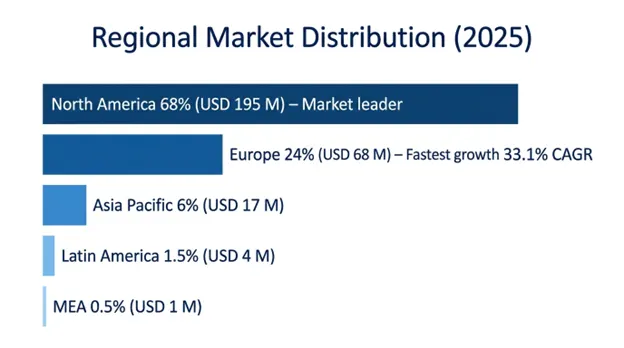
North America leads the market share with USD 195 million in 2025, along with a forecasted CAGR of 29.4% until 2034, backed by the presence of most clinical trials conducted in top academic medical institutes like UCSF Memory and Aging Center, Mayo Clinic, and Massachusetts General Hospital, rare disease reimbursement policies that ensure premium prices for orphan drugs, and well-established genetic testing networks facilitating easy patient recruitment and enrollment in clinical trials.
The US FDA’s leadership in the regulatory landscape for rare neurological diseases through breakthrough therapies and accelerated approvals based on biomarker endpoints is a significant advantage for anti-sortilin drug manufacturers while allowing them to reach patients quickly, unlike their counterparts in other parts of the world, operating in regions with more stringent regulatory pathways.
The European market, valued at USD 68 million in 2025, is anticipated to witness the highest growth rate, with a CAGR of 33.1% through 2034, backed by the presence of the Genetic Frontotemporal dementia Initiative consortium that comprises over 3,500 individuals with GRN mutations in 12 different countries, offering the world’s largest genetically characterized frontotemporal dementia patient population along with advanced rare diseases regulatory systems using EMA’s centralized process and healthcare systems facilitating access to novel therapies via health technology assessments.
GENFI Consortium offers unique research infrastructure with established biomarker measures, imaging, and natural history data for conducting effective clinical trials and regulatory submissions, whereas conditional approval pathways from the European Medicines Agency allow faster product entry based on biomarkers.
Fully Human Monoclonal Antibodies hold 74% of the market share and are estimated to reach $211 million in 2025, increasing by 31.2% CAGR between 2025 and 2034. This category includes latozinemab and other completely human antibodies with improved tolerance because of removal of immunogenic sequences as well as good pharmacokinetics for long-term use in the treatment of neurological conditions.
Bispecific Antibodies represent 15% of the market share and reached USD 43 million in 2025 with a 38.4% CAGR between 2025 and 2034, making it the fastest-growing segment due to advanced platforms such as sortilin targeting coupled with transferrin receptor binding to improve central nervous system (CNS) access or multiple pathway mechanisms.
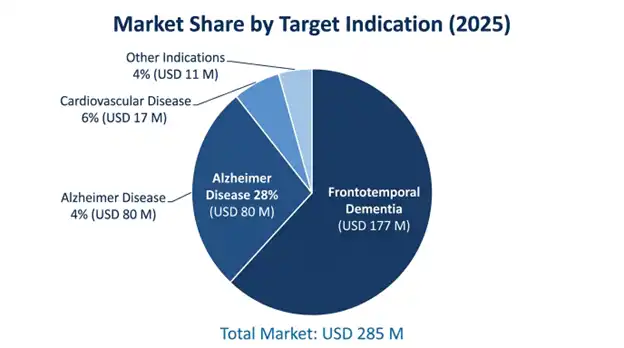
Frontotemporal Dementia is the largest indication segment with a market share of 62%, valued at USD 177 million in 2025, including GRN mutation carriers with symptomatic disease and presymptomatic patients for preventive treatments, enjoying orphan drug status, breakthrough therapy possibilities, and genetic stratification.
Alzheimer’s Disease is the second-largest indication, with 28% market share worth USD 80 million in 2025 and 35.7% CAGR through 2034, being the most lucrative growth opportunity through precision medicine stratification targeting patients suffering from progranulin-related lysosomal dysfunction amenable to sortilin blockade.
Academic Medical Centers constitute the biggest market segment, occupying a market share of 52%, equivalent to US$148 million by 2025, owing to their focus on specialized care in neurodegenerative diseases along with genetic analysis tools and multi-disciplinary staff that can handle such rare and complicated disorders.
Neurology Specialty Clinics occupy 31% of the market share, equivalent to US$88 million by 2025, growing at a CAGR of 32.8% through 2034. These clinics will increasingly become more accessible due to their expansion into commercial areas with facilities for genetic counseling and biomarker monitoring.
The global anti-sortilin monoclonal antibody market demonstrates significant concentration among a few specialized biotech firms and pharmaceuticals partnerships, where the leading five firms account for about 85-90% of the total market share via their proprietary antibody technologies, clinical development capabilities, and intellectual property portfolio for sortilin targeting techniques and diagnostic application.
Alector Inc. leads the market with its leading candidate latozinemab, which is the most clinically advanced anti-sortilin antibody that has entered Phase III trials for frontotemporal dementia, supported by its strategic partnership with AstraZeneca worth US$2.1 billion in milestone payments. With the ongoing progress made through clinical proof-of-concept studies, the competition in the market is heating up.
April 2026: Latozinemab showed positive interim analysis results in the Phase III INFRONT-3 study for the treatment of patients with symptomatic GRN mutation frontotemporal dementia, showing statistically significant efficacy in the primary endpoint, which included composite cognitive and functional measures. The FDA’s Breakthrough Therapy Designation supported an accelerated review process.
March 2026: Denali Therapeutics released results from Phase I study for a novel bispecific sortilin antagonist with dual targeting of sortilin and transferrin receptors, resulting in a 12-fold increase in progranulin levels in cerebrospinal fluid when compared to only 3-fold increase with monovalent structure; it is currently undergoing Phase II studies.
February 2026: AC Immune SA entered into a strategic collaboration worth USD 480 million to develop an anti-sortilin bispecific antibody to target Alzheimer's disease indications; its lead compound has shown superior pharmacological properties in preclinical studies compared to first-generation agents.
January 2026: Breakthrough Therapy Designation was received by latozinemab for presymptomatic GRN mutation carriers owing to progranulin normalization and neurofilament light chain stabilization in biomarker data, which enabled clinical development of a prophylactic indication in asymptomatic patients.
December 2025: The European Medicines Agency provided positive scientific advice regarding conditional marketing authorization strategy for anti-sortilin drug based on progranulin elevation as a primary endpoint in patients with GRN mutation frontotemporal dementia.
You'll get the sample you asked for by email. Remember to check your spam folder as well. If you have any further questions or require additional assistance, feel free to let us know via-
+1 724 648 0810 +91 976 407 9503 sales@intellectualmarketinsights.com
20 May 2026
Intellectual Market Insights Research © 2026. All rights reserved.