Share this link via:

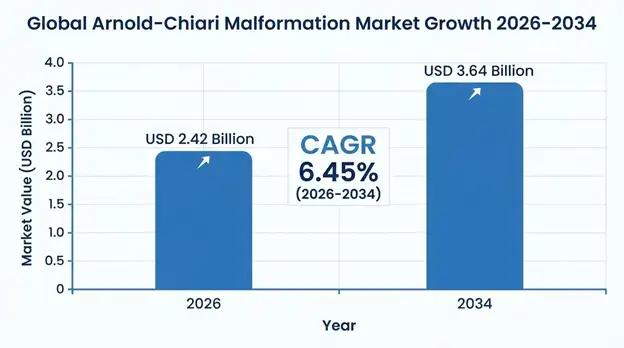
The global Arnold-Chiari Malformation Treatment Market was valued at USD 2.21 billion in 2025 and is projected to reach USD 2.42 billion in 2026, expanding to USD 3.64 billion by 2034, growing at a CAGR of 6.45% during the forecast period (2026-2034).
Arnold-Chiari malformation is a relatively uncommon congenital neurological disorder caused by a complex anatomic defect of the posterior cranial fossa and hindbrain, in which the cerebellum descends through the foramen magnum and into the spinal canal, which impairs normal CSF flow and results in a progressive neurologic disorder. This malformation presents with a spectrum of severity from asymptomatic anatomical abnormalities which are only picked up when imaging is performed to a highly symptomatic condition that can progress to neurological deterioration, necessitating a full spectrum of diagnostic investigation and complex management protocols to avoid permanent neurological consequences and ensure functional independence across a wide range of patient ages, from paediatric to geriatric.
The diagnosis and management of this condition present significant challenges., including high prevalence of asymptomatic cases with radiological evidence of tonsillar herniation > 5 mm below the foramen magnum, despite the absence of clinical symptoms (profound underdiagnosis); vast clinical presentation with intractable headaches provoked by Valsalva maneuvers, subtle cognitive impairment, and verbal fluency deficits complex genetic etiology involving multiple rare genetic variants in chromatin-remodeling genes, collagen genes, and bone mineral density associated genes; treatment response variability and persistent residual symptoms, even after technically successful surgical decompression procedures, in a significant proportion of patients; and heterogeneous surgical requirements, with the need for individualised posterior fossa decompression strategies adapted to the different anatomical variations.
The modern management of Arnold-Chiari malformation involves thorough diagnostic workup, using high-resolution magnetic resonance imaging, along with cerebrospinal fluid flow studies – typically using cine MRI – and advanced neuroimaging analysis, which then can be used by artificial intelligence algorithms and image interpretation for diagnosis. The treatment of Arnold-Chiari malformation also includes complex neurosurgical procedures such as posterior fossa decompression, with the use of different duraplasty techniques; the use of intra-operative neuromonitoring for evaluation of brain activity; neuropsychological evaluation procedures, and long-term multidisciplinary rehabilitation for residual cognitive, motor and sensory impairments. Beyond neurosurgical treatment, a therapeutic ecosystem that includes medical management of its associated symptoms, like headache management, muscle relaxant therapy, neuropathic pain control, psychiatric support for anxiety and depression disorders often accompanying this condition creates a comprehensive therapeutic landscape that optimizes clinical outcomes and addresses quality of life concerns and maintenance of functional independence while treating and managing associated symptoms.
| Report Coverage | Details |
|---|---|
| Base Year | 2025 |
| Base Year Value | USD 2.21 Billion |
| Forecast Value | USD 3.64 Billion 6.45% |
| CAGR | 6.45% |
| Forecast Period | 2025-2034 |
| Historical Data | 2022-2025 |
| Largest Market | North America |
| Fastest Growing Market | Asia Pacific |
| Segments Covered | By Type, Treatment Modality, Diagnostic Method, Age Group, End-User, Distribution Channel |
| Region Covered | US, Canada, Mexico, UK, Germany, France, Italy, Spain, Netherlands, China, Japan, India, Australia, South Korea, Brazil, Argentina, UAE, Saudi Arabia, South Africa |
| Countries Covered | US, Canada, Mexico, UK, Germany, France, Italy, Spain, Netherlands, China, Japan, India, Australia, South Korea, Brazil, Argentina, UAE, Saudi Arabia, South Africa |
| Key Market Playes | Abbott Laboratories, Medtronic plc, Johnson & Johnson, Stryker Corporation, Siemens Healthineers AG, GE HealthCare Technologies Inc., Boston Scientific Corporation, Integra LifeSciences, Brainlab AG, Zimmer Biomet |
Get more details on this report - Request Free Sample
Rising Prevalence of Arnold-Chiari Malformation Through Improved Diagnostic Accessibility and Enhanced Clinical Awareness
The primary driver of market growth is for Arnold-Chiari malformations is the increase in diagnosis due to availability of sophisticated neuroimaging tools, especially MRI systems of high resolution, along with an enhanced understanding among the physicians regarding diagnosis and treatment indications of this disease. While from an epidemiological perspective it may be seen that approximately 1 in every 1,000 people have Arnold-Chiari Malformation type 1, recent research has shown that 1 in 100 people has tonsillar herniations more than 5mm below the foramen magnum. This suggests that the disease remains substantially underdiagnosed. with prevalent numbers not truly representing the actual cases of the disease.
Epidemiologic studies carried out regionally give validated prevalence rates indicating the disease burden, with the findings from northeastern Italy revealing Chiari malformation to have a prevalence rate of 7.74 per 100,000 individuals with an incidence of 3.08 per 100,000 annually, while the syringomyelia that results from the Chiari malformation showed a prevalence of 4.84 per 100,000 with an incidence of 0.82 per 100,000 annually. There is a small female preponderance for the Arnold-Chiari malformation, which has a female to male ratio of about 1.3:1, where the maximum age for diagnosis occurs during teenage years and early adult years as symptoms arise.
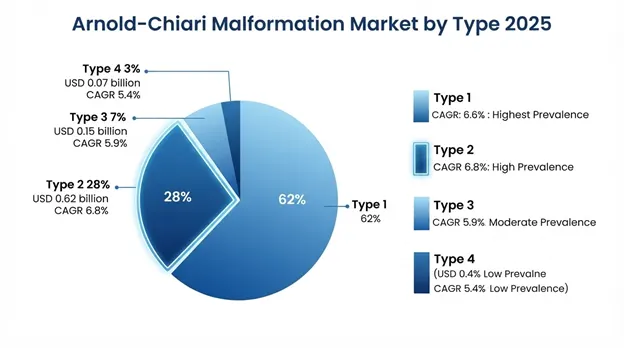
Arnold-Chiari malformation of Type 1 occurs predominantly and constitutes approximately 62.18% of total cases with symptoms of herniation of cerebellar tonsils generally greater than 5mm often with associated condition of syringomyelia which is present in about 60-80% of all symptomatic individuals, whereas Type 2 malformation shows strong correlation with myelomeningocele and pediatrics patients, Type 3 involves rare cases of severe manifestations in the form of hindbrain herniation, and Type 4 involves severe cases of cerebellar hypoplasia with high mortality and morbidity, particularly in pediatrics who have not received any treatment. Increased incidence of Arnold-Chiari malformation in the population of pediatrics can be attributed to better prenatal diagnosis, advanced imaging facilities for neonates, and increased awareness among clinicians to identify and treat the disease earlier.
Revolutionary breakthroughs in the fields of neuroimaging and artificial intelligence-driven diagnostic algorithms for medical problems have helped bring about a complete transformation in the detection of Arnold Chiari malformation in patients. This is possible due to the ability to detect the presence of the disease early on, accurate measurement of the dimensions of the posterior fossa and cerebrospinal fluid, disease progression risk prediction, and optimizing the process of surgical treatment by conducting a 3D reconstruction of cranial structures. Modern high field magnetic resonance imaging technologies, such as 3-tesla and 7-tesla MRI machines, have provided a great opportunity to visualize cerebellar tonsillar placement with sub-millimeter precision and evaluate the degree of spinal cord damage and syringomyelia development.
The use of artificial intelligence algorithms in neuroimaging analysis platforms used in clinical settings is becoming widespread for detecting and measuring tonsillar descent of cerebellar tonsillar herniation, identifying morphological changes, predicting the risk of developing syringomyelia, and determining the likelihood of favorable surgical outcomes through machine learning models developed using big data of clinical outcomes, significantly reducing the time required to interpret imaging studies. and improving diagnostic reliability across multiple imaging centers for better treatment decision-making. Intraoperative imaging techniques such as real-time intraoperative MRIs and three-dimensional neuronavigations are useful tools that can help plan surgery precisely within millimeters, determine the degree of posterior fossa decompression, guide surgeons during crucial surgeries, and assess the effectiveness of cerebrospinal fluid flow reconstruction.
Diagnostic Complexity and Asymptomatic Disease Prevalence Limiting Clinical Treatment Justification
One major challenge impeding the growth of the Arnold-Chiari malformation market is the significant diagnostic challenges that emanate due to high asymptomatic presence of radiological features in about 98-99% of cases where the cerebellar tonsils herniate by more than 5 mm below the foramen magnum. but lack neurological signs and evidence of any complications like syringomyelia or hydrocephalus. The approach to treatment of asymptomatic population is highly debatable in various neurosurgical centers since there are varied opinions about prophylactic surgery on asymptomatic population with anatomical abnormality but no neurological manifestations.
The diagnostic complexity is further complicated by diverse presentations of symptoms that include headaches, dizziness, imbalance, and other cognitive problems that have been associated with the existence of other alternative diagnoses such as tension headache, migraine, vertigo, and anxiety, and that delay the diagnosis of the Arnold-Chiari malformation for 5-8 years after the appearance of symptoms in pediatric patients. The lack of specific clinical presentation that necessitates neuroimaging to establish the diagnosis, coupled with variable presentation of symptoms, as neuroimaging findings often do not correlate with symptom severity. between cerebellar tonsillar herniation and symptoms severity, makes clinical decision-making difficult about the need for surgery.
An innovative market opportunity is the discovery of genetic treatments and therapies for the inherited cases of Arnold-Chiari malformations due to the rare genetic variants of chromatin-remodeling genes, including CHD3 and CHD8, collagen genes including COL7A1, COL6A5, and COL5A2, and bone mineral density associated genes contributing to the development of craniofacial and posterior fossa size defects that predispose to tonsillar herniation. Emerging genetic studies have discovered the presence of enrichment of rare non-synonymous variants and de novo loss-of-function variants of chromatin-remodeling chromodomain genes in Arnold-Chiari malformation, where mutations in the CHD8 gene have resulted in haploinsufficiency leading to macrocephaly and posterior brain displacement features typical of Chiari malformation. The discovery of genetic mutations causing Arnold-Chiari malformation presents great potential in the development of novel therapies, including gene replacement therapy and CRISPR gene-editing treatment methods.
Arnold-Chiari malformation syndromes due to inherited syndromes involving association of megalencephaly-capillary malformation and polygyria syndromes due to PIK3CA mutations and connective tissue disorders because of collagen gene mutation syndromes are some of the examples of patient groups that are good candidates for application of targeted genetic therapy. The development of gene therapy platforms by pharmaceutical and biotechnology companies specially tailored to treat Arnold-Chiari malformation syndromes based on posterior fossa disease pathologies using specialized delivery of treatment via surgery, optimization of vectors for transducing cerebellum tissues, and stringent safety monitoring programs represents a significant market opportunity. with the ability to command premium pricing owing to curative or disease modifying nature of the treatments.
Precision Neurosurgery with Artificial Intelligence-Guided Surgical Planning and Intraoperative Neuronavigation
The Arnold-Chiari malformation market is witnessing radical innovation via the integration of artificial intelligence-enabled surgical planning tools with intraoperative neuronavigation systems providing precision posterior fossa decompression tailored to the unique anatomical differences of each patient. Highly sophisticated AI models can analyze pre-operative MRI images to create 3D images of cranial anatomy, plan the best level of decompression, determine personalized surgical paths, and perform surgical simulations that would provide restoration of cerebrospinal fluid flow and reduce manipulation of spinal cords and risks of neurovascular injuries. Using intraoperative neuronavigation systems capable of registration of pre-operative imaging with intra-operative anatomy allows precise identification of anatomical references, bone resection levels, dura exposure, and decompression confirmation during surgery.
Intraoperative cine MRI and visualization using an endoscope for real-time evaluation of the cerebrospinal fluid flow dynamics during decompression surgery will ensure immediate assessment of adequate flow improvement or inadequate decompression needing further maneuvers. Electrophysiological intraoperative monitoring through assessment of somatosensory-evoked potentials and motor-evoked potentials will allow immediate detection of the risk of spinal cord manipulation and application of gentle surgical techniques. The integration of AI-assisted surgical planning, intraoperative neuronavigation, imaging guidance, and electrophysiological monitoring constitutes the implementation of precision medicine for posterior fossa decompression surgery.
North America: Market Leadership Through Advanced Healthcare Infrastructure and Specialized Neurosurgical Capacity
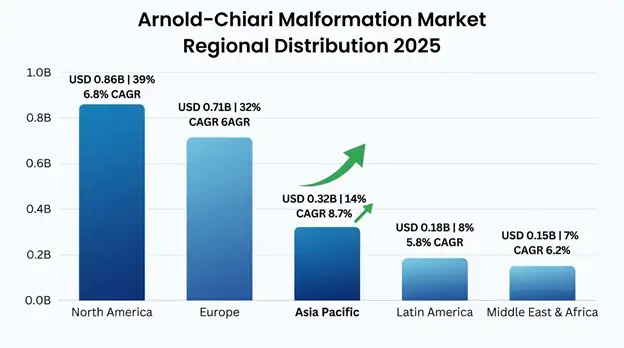
North America accounted for the largest market share. of USD 0.86 billion in 2025, and it will continue to hold a forecasted CAGR of 6.8% during 2034. The market is driven by its highly developed specialty care networks within neurosurgery with expertise in posterior fossa decompression procedures, strong insurance coverage for neurosurgical procedures through Medicare and commercial insurance providers, high incidence of diagnosed Arnold-Chiari malformation due to availability of imaging infrastructure and high clinical awareness, patient advocacy groups, and availability of clinical studies for developing optimum surgical techniques and treatments. In North America, the United States accounts for 78% of the market size as it has well-established capacity in neurosurgery, 2,400 neurosurgeons skilled in posterior fossa surgeries, and advanced neuroimaging facilities in academic institutions and community hospitals.
Healthcare in North America benefits from regulation that encourages innovation via breakthrough device designation, Humanitarian Use Device regulations, and accelerated approvals for new technologies that have met clinical needs. There is a robust healthcare research infrastructure, including large neurosurgical research centers in academic institutions, which makes huge investments into research to investigate best surgical techniques and outcomes. The ability of the healthcare system to consolidate for collaborative research makes it possible to conduct studies on best practices and protocols in surgery.
Asia Pacific: Fastest Growth Through Healthcare System Expansion and Rising Diagnostic Accessibility
Asia Pacific is the fastest-growing region. with an estimated CAGR of 8.7% till 2034 with a revenue of USD 0.32 billion forecast for 2025. The regional growth is supported by huge size of population base of 4.7 billion individuals, developing healthcare infrastructure, availability of advanced neuroimaging technologies including high-field MRI scanners, neurosurgeon education and specialty neurosurgery centers, higher expenditure on healthcare to invest in diagnostics and treatment technologies, and increasing size of middle-income population looking for access to specialty healthcare. The leading market of the region was China accounting for 38% share of total Asia-Pacific revenues owing to a population of 1.4 billion individuals, neuroimaging base, government initiatives for improving healthcare and neurosurgical facilities, and fast growth of tertiary neurosurgical centers.
India shows fast growth in terms of its market through various healthcare expansion programs such as providing healthcare insurance from the government that will cover about 500 million people, awareness creation for neurologic diseases, enhancement of neurosurgical capability in major teaching hospitals, and development of efficient and cheap means of delivery. Japan remains dominant in the market due to having an advanced healthcare system, presence of high-resolution neuroimaging, neurosurgical specialization, and insurance that facilitates the implementation of innovative technologies. South Korea shows fast growth in terms of the market due to having an advanced healthcare system, high neuroimaging presence, neurosurgical specialization, and efficiency in the healthcare system.
Type I Arnold Chiari Malformation is the largest clinical segment for the market owing to its high incidence rate, rising diagnostic rates using MRI scans and its efficient surgical treatment with the help of posterior fossa decompression. The condition is generally found among adolescents and adults and is usually accompanied by syringomyelia. Type II Arnold Chiari Malformation is the fastest growing market segment due to rising prenatal diagnoses, advances in pediatric neurosurgery, and strong link to myelomeningocele. Types III and IV account for a relatively smaller segment of the market but need more specialized neurosurgical care due to the severity of their neurological symptoms.
Surgical therapy holds the largest share of the Arnold-Chiari malformation market, backed by posterior fossa decompression that is considered the main intervention to treat the condition. Continuous innovations in minimally invasive procedures, intraoperative imaging, and neuromonitoring have positively impacted surgical treatment, have improved outcomes while minimizing procedural risks. Medical treatment is considered the second largest segment and is applied to treat individuals who suffer from minor symptoms of the condition or are not suitable candidates for surgical intervention. Medical treatment comprises pain therapy, muscle relaxants, anti-inflammatory agents, and imaging monitoring. The increasing adoption of multidisciplinary rehabilitation approaches also provides good opportunities in treating symptoms without surgery.
MRI is considered the preferred diagnostic tool for Arnold-Chiari malformation, owing to its ability to give good visualization of tonsillar herniation, spinal cord pathology, syringomyelia, and flow dynamics of CSF. Future developments of MRI, cine-MRI, and computerized interpretation of images by artificial intelligence will help enhance diagnostic performance and therapeutic decisions. CT remains the second imaging method used, especially in the evaluation of bone pathology of the brain and neck areas, as well as in emergencies. Other diagnostic tests include sleep studies, swallow study, and myelography in specific patients with complex neurological problems. New technology in the form of advanced neuroimaging biomarkers, artificial intelligence for diagnostics, and genomics is likely to offer even better early detection and management of the disorder.
Hospitals lead the end-user segment. with 54.92% market share worth USD 1.21 billion in 2025. Hospitals are known for neurosurgical operations, advanced neuro-imaging equipment, perioperative care that includes intensive care, and consultation by a multidisciplinary team of neurologists and neurosurgeons. Specialty Clinics are the second leading segment with 28.3% market share worth USD 0.62 billion and are expected to have the highest CAGR of 7.1%. These clinics provide advanced neurological consultation, diagnostic facilities, and outpatient treatment to alleviate the load from hospitals. Ambulatory Surgical Centers hold 12.2% market share worth USD 0.27 billion and provide minimally invasive surgery and diagnostic services at cost-effective outpatient facilities.
The global market for Arnold-Chiari malformations shows significant consolidation, where key players hold around 45-52% of the market share owing to their diverse range of products that include diagnostic imaging equipment, neurosurgical instruments, intraoperative monitoring technology, and treatment devices. Abbott Laboratories, Medtronic plc, Johnson & Johnson, Stryker Corporation, Siemens Healthineers, and GE Healthcare Technologies dominate the market through heavy investments in research and development, advanced technology platforms, strong partnerships with neurosurgical institutes, advanced manufacturing processes, and training programs. Increasing competitive advantage comes from the development of minimally invasive surgical devices, artificial intelligence-based diagnostic platforms, and neuronavigation technology.
Neurosurgical device companies such as Integra LifeSciences, BrainLab, and ClearPoint Neuro excel due to their specialization. in neurosurgery technology, technical prowess in treating posterior fossa pathology, relationship with specialized neurosurgical hospitals, and dedication to innovation in surgery techniques and technology. Early-stage biotechnology companies are researching genetic and novel molecular therapies are formidable disruptions that may revolutionize treatment approaches by disease modification as opposed to symptomatic surgical treatment.
September 2025: Medtronic plc reported FDA approval of next generation intraoperative neuronavigation system that integrates real-time imaging and utilizes AI for optimized surgical planning for posterior fossa decompression surgeries, resulting in increased surgical accuracy and broader availability of technology in community hospitals.
July 2025: Abbott Laboratories finalized the acquisition of a company dealing with neurosurgical devices for USD 280 million, which will provide Abbott with unique endoscopic technology for minimally invasive posterior fossa decompression procedures, increasing Abbott’s neurosurgery product line for Arnold-Chiari malformation surgeries.
May 2025: The Park-Reeves Chiari & Syringomyelia Research Consortium extended the number of enrolled patients in their multi-center clinical registry to over 12,000 at 45 academic neurosurgical centers, undertaking large scale outcome research that explores the predictive factors for surgery success, genetic predispositions and long-term prognosis.
March 2025: Siemens Healthineers introduced new artificial intelligence-based MRI analysis software module designed for automatic detection and evaluation of the Arnold-Chiari malformation using machine learning techniques trained on 25,000+ clinical cases with regulatory clearance for clinical use in imaging clinics.
January 2025: GE Healthcare Technologies introduced a new 7-tesla MRI system with improved cerebrospinal fluid flow imaging capabilities, which allows conducting a thorough examination of flow dynamics in the case of Arnold-Chiari malformation patients.
List of Key Players in Global Arnold-Chiari Malformation Market
You'll get the sample you asked for by email. Remember to check your spam folder as well. If you have any further questions or require additional assistance, feel free to let us know via-
+1 724 648 0810 +91 976 407 9503 sales@intellectualmarketinsights.com
22 Jul 2026
Intellectual Market Insights Research © 2026. All rights reserved.