Share this link via:

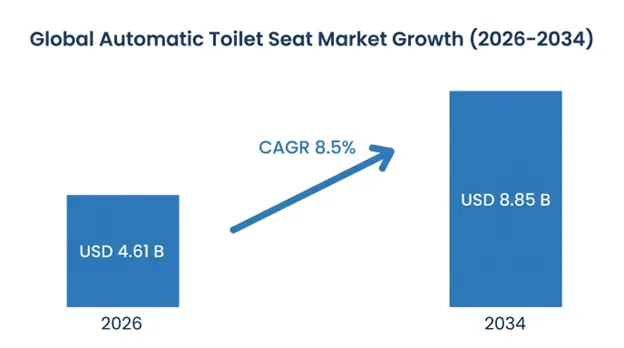
The global automatic toilet seat market size was valued at USD 4.15 billion in 2025 and is projected to reach USD 4.61 billion in 2026, expanding to USD 8.85 billion by 2034, growing at a CAGR of 8.5% during the forecast period (2026-2034).
Automatic toilet seats constitute an advanced class of bathroom hygiene equipment that employ complex sensory technology, precise temperature regulation of water, and electronic controls for facilitating convenient use, improving personal hygiene practices, and offering high levels of comfort as opposed to traditionally designed toilet seats. The advancement of these technologies has led to a progression from simple heating mechanisms in toilets to more elaborate personal hygiene devices which include warm water cleansing using pressurized jets and customizable angles, warm air drying systems, automatic lid mechanisms triggered by movement detection, instant water heating technology, self-cleaning mechanisms involving ultraviolet germicidal irradiation and electrolysis of water, deodorizing features, ambient lighting, and even health tracking through biometrics.
Engineering architecture consists of a variety of subsystems that work in perfect harmony to provide seamless user experience. Proximity and pressure sensors recognize when there is a user present and his/her level of occupancy, initiating automatic processes such as lid lifting, seat warming, and post-use cleaning processes. Automated heating systems ensure that the temperature of the wash water is maintained within therapeutic limits and is effective and comfortable for use. Electronic controls help in providing the user with an option to adjust their washing streams based on their personal preferences and body shape. The latest version of the toilet seats incorporates memory features which remember users' settings, UV disinfection for hygiene of nozzles between users, and wireless technology which allows users to operate through smartphones and voice commands.
Market dynamics in general stem from an underlying change in consumer culture regarding hygiene practices in the bathroom sector, influenced by the pandemic period’s experiences in which consumers realized the fragility of toilet paper supply chains while at the same time becoming more aware of their own personal hygienic needs and implementing more touchless hygiene measures. In addition, awareness about the environmental footprint left behind by toilet paper use and the increased familiarity with bathroom technologies through travel abroad and media exposure has created the conditions for automatic toilet seat acceptance.
| Report Coverage | Details |
|---|---|
| Base Year | 2025 |
| Base Year Value | USD 4.15 Billion |
| Forecast Value | USD 8.85 Billion |
| CAGR | 8.5% |
| Forecast Period | 2026–2034 |
| Historical Data | 2022–2025 |
| Largest Market | Asia Pacific |
| Fastest Growing Market | North America |
| Segments Covered | By Product Type, Technology, End-User, Distribution Channel |
| Region Covered | North America, Europe, Asia Pacific, Middle East & Africa, Latin America |
| Countries Covered | US, Canada, Mexico, UK, Germany, France, Italy, Spain, Netherlands, China, Japan, India, Australia, South Korea, Brazil, Argentina, UAE, Saudi Arabia, South Africa |
| Key Market Playes | TOTO Ltd., Panasonic Corporation, Kohler Co., LIXIL Group Corporation, Brondell Inc., Bio Bidet, Bemis Manufacturing Company |
Get more details on this report - Request Free Sample
In relation to the automatic toilet seats industry, the most radical force driving demand will be the revolution in the mindset of consumers regarding cleanliness brought on by the pandemic era. In effect, the period was characterized by an exposure of weaknesses in the supply chain of toilet papers coupled with heightened levels of cleanliness concerns for consumers, leading to a rapid embrace of touchless cleaning solutions in both residential and commercial spaces. This trend has seen the exposure of millions of consumers to the use of bidet and automatic toilets due to the shortage of toilet paper in the North American and European markets in 2020.
Market research findings on consumer behavior in North America during the period from 2021 -2025 reveal that 68% of households that bought automatic toilet seats while there was a shortage of toilet paper supplies opted to continue using them as their main source of hygiene even after supplies became available again. This shows that they have truly converted into their preferred choice instead of just substituting them when toilet paper was unavailable.
On the other hand, the pandemic hastened the adoption of touchless bathroom technologies in both business and institution settings since the management realized that hands-free restrooms were crucial for controlling infections. Hotels, corporate office buildings, hospitals, and public restrooms upgraded their automatic toilet seats to demonstrate their commitment to high hygiene standards not only during the pandemic but even after.
Key Performance Metrics:
Ageing is the foremost structural force responsible for the creation of persistent demand for automatic toilet seats as healthcare devices that ensure self-sufficiency when it comes to maintaining personal hygiene among senior citizens suffering from limited movement, arthritis, limitations following surgery, or any other physical constraints that prevent them from independently performing toilet hygiene-related tasks without caregiver assistance. The number of people in the world above the age of 65 was 771 million in 2025 and is expected to reach 1.6 billion by 2050, with older segments of the population being the most positively correlated with such devices.
There is a growing trend in the health profession among occupational therapists, geriatrics, and medical rehabilitation doctors to encourage the use of auto toilet seats as devices that enable people suffering from various ailments such as those recovering from a stroke, people recovering from hip replacements, multiple sclerosis, Parkinson’s disease, spinal cord injuries, and debilitating arthritis affecting the dexterity and range of movement to undertake their hygiene routines independently. Healthcare referrals by physicians acknowledging the efficacy and gentleness of warm water bidet cleaning compared to wiping with toilet paper among people suffering from anorectal sensitivity, surgical incisions, hemorrhoids, and inflammatory bowel diseases have made these sales medically driven.
There are numerous automatic toilet seats being installed in long-term care centers as well as assisted living facilities as means to improve quality and dignified health care along with increasing operational efficiency due to reduced caregiver involvement in personal hygiene activities. Economic evaluations of healthcare services indicate that a simple saving of five to ten minutes in daily caregiver time per resident will result in significant labor cost reductions that provide sufficient rationale for such investments in equipment improvements.
Aging Population Demand Indicators:
The emergence of smart homes has resulted in demand synergies, where there is greater demand for automatic toilet seats that can be incorporated into voice assistants, home automation systems, and even health tracking technologies, thus making premium smart toilet seats perfect additions to a home intelligence ecosystem, and not just another bathroom appliance. Customers who have already spent on a smart home ecosystem like Amazon Alexa, Google Home, Apple HomeKit, and Samsung SmartThings have much higher acceptance for smart bathroom devices.
Smart toilet seat manufacturers have responded to the whole connectivity demand, by rolling out models with Wi-Fi and Bluetooth integration enabling voice-activated operation and controlling it through a smartphone application. These systems enable remote preference configuration, sort of get usage pattern analytics, and even plug it into broader household health monitoring programs. The fact that you can adjust wash settings, water temperature, spray pressure, and seat heating via voice commands, provides a meaningful accessibility enhancement for elderly folks and for people with reduced mobility, while still being attractive to technology-enthusiast consumers who want a full home automation coverage, including in bathroom environments.
The new health tracking features found on high-end automatic toilet seats provide an especially promising offering of smart home functionality, such as the ability to examine waste for hydration, digestive, blood glucose, and metabolic data without the need for user interaction and additional device purchases can offer continual health data passively without further effort required by the user. Although the regulatory environment for health monitoring remains complicated and highly specific to individual markets, consumer interest in this application is fueling intense R&D efforts among both existing vendors and tech startups.
Smart Home Integration Metrics:
The key problem restricting the reach of automatic toilet seat products beyond the premium and upper middle consumer group is their relatively high prices in comparison with traditional seats, where entry-level automatic toilet seats costing between USD 200–500 are fifteen to thirty times more expensive than traditional toilet seats, while the most expensive smart toilet seat systems, costing between USD 1,200–3,500, are out of reach for the majority of global customers. Moreover, there is an issue with relatively high price sensitivity due to the necessity of installation, where it includes electrical installation in addition to the toilet fixtures, which is not available in most households, adding additional cost between USD 150-500.
Total ownership costs resulting from product price and installation costs make for an uphill task as far as return on investment is concerned for consumers who consider toilet seat products as commodity items that do not have any value to justify the costs incurred when purchased as they last for decades. Consumer enlightenment in terms of benefits provided by the toilet seat products as well as money saved through less use of toilet paper constitutes marketing efforts costing quite much that limit their uptake, especially where bidets are not part of the culture.
The complexities of installing the device go beyond merely the need for electricity to encompass factors such as whether the water pressure is suitable for the appliance, sufficient space within a small bathroom setting, and even possible changes that may be needed to the plumbing system for best results. The infrastructural demands made by the product make it difficult to install on one’s own and necessitate hiring professionals, which increases both the cost and complexity of use.
The issue of lack of familiarity with the concept of washing with bidet-type systems is a true barrier to adoption in North America and Northern Europe, where the use of toilet paper denotes long-rooted traditions regarding cleanliness that would require substantial investments in consumer education efforts to break through. The issues of marketing efforts include countering consumer beliefs that using water for cleansing purposes is either unhygienic or unnecessary, as well as dealing with issues of privacy.
The health care institution sector presents a lucrative opportunity within which automatic toilet seats offer significant clinical advantages such as decreased chances of healthcare-acquired infections, increased dignity and comfort for patients, decreased workload for caregivers, and faster recovery results among postoperative patients and people with mobility challenges. The adoption of automatic toilet seats in hospitals is associated with higher patient satisfaction levels, fewer calls for nursing assistance related to hygiene, and quicker attainment of independent mobility skills.
The rehabilitation hospital, skilled nursing facility, and home health care components of the post-acute care continuum, which require an automatic toilet seat as an adaptive device in discharge planning procedures, constitute a significant amount of the demand for the product, as occupational therapists become more likely to include suggestions for the products in home assessment tests conducted on patients who have had to seek hospitalization due to physical challenges. The increasing insurance coverage of automatic toilet seats, which qualify as durable medical equipment, presents revolutionary growth potential in the market.
There is an opportunity that is present in marketing automatic toilet seats as a solution to environmental sustainability, significantly lowering the use of toilet paper and hence reducing environmental effects such as deforestation, water use in toilet paper production processes, and wastewater management needs. Global toilet paper consumption results in the cutting down of about 27,000 trees per day, where American families use around 100 rolls every year, which creates a significant environmental impact.
Automatic toilet seat providers face the opportunity to measure and communicate how much their products can positively contribute in terms of reduced environmental impact from their adoption, such as calculating how reductions in household toilet paper usage by 75-80% after adopting bidet seats can result in certain tree-saving, water-saving, and carbon emissions-reduction figures. Opportunities for differentiating marketing communications efforts based on environmental certifications, carbon offsets, and integration with sustainable reporting that allows consumers to share their positive contributions help justify premium pricing strategies.
The most innovative emerging trend in the automatic toilet seat industry is the introduction of advanced health sensor monitoring technology that makes it possible to gather health data passively without the need for active user involvement other than routine toilet usage. Such prototypes have incorporated sensors that can detect the physiological status of the body by examining the features of the waste product such as its color, consistency, and chemical properties to determine whether the user is well hydrated, has healthy digestive activity, high or low blood sugar levels, and more.
Japanese companies such as TOTO and Panasonic have made significant investments in their research activities concerning advanced urine analysis capability on toilet seat platforms that can effectively measure glucose levels, protein, ketone bodies, and specific gravity indicators useful for diabetes, kidney function, and overall well-being monitoring. Although the approval processes for clinical diagnostics require a thorough understanding of market dynamics and are relatively complicated, health monitoring devices without clinical precision requirements are potential areas for near-term market penetration efforts attracting significant technological sector investment and healthcare partnerships.
The convergence of automatic toilet seat technology with artificial intelligence-powered health analysis opens opportunities for predictive health monitoring by recognizing patterns that show the presence of an emerging illness before any symptoms are manifest, allowing healthcare professionals to act at an early stage and introduce a preventive approach to maintain health and avoid rising costs within the healthcare system. With telemedicine technology, healthcare professionals can monitor patient health daily and not just during their visits to clinics using medical devices.
Environmental sustainability considerations are driving some serious innovation in automatic toilet seat materials, and manufacturing processes, where manufacturers are exploring bio-based polymers, the incorporation of recycled content, and product design optimization that cuts down material use while still holding up performance levels, and durability requirements. One of the more commercially advanced sustainable options is bio-based polypropylene that is derived from renewable feedstocks, it tends to deliver mechanical properties, and chemical resistance that are essentially equivalent. It also ends up substantially reducing lifecycle greenhouse gas emissions compared with petroleum-derived materials.
The principles of the circular economy have been adopted in the design of products through modular components which can be repaired and upgraded without having to replace the whole product, through warranty programs which encourage customers to keep their products for a longer period, and through return programs which recycle material back into new products. These environmental initiatives cater to increasing consumer awareness about the environment as well as regulatory requirements.
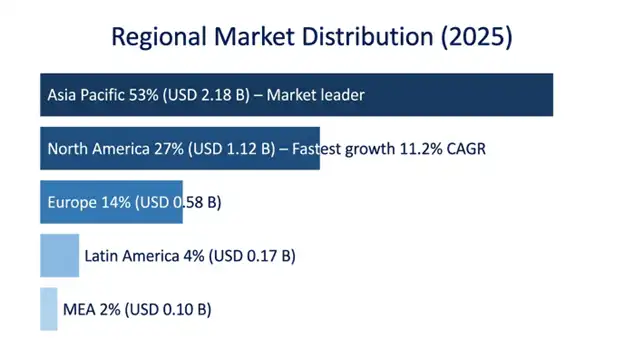
The Asia Pacific region was the leading segment by market share of USD 2.18 billion in 2025 and will maintain a projected CAGR of 7.8% until 2034, owing to the cultural acceptance of automatic toilet seats in Japan, South Korea, and even China, where such automatic toilets are considered basic fixtures for bathrooms, as opposed to being premium features. The penetration rate of automatic toilet seats in Japan stood at 81%, which is the highest globally, indicating that when products are culturally accepted, become affordable, and have compatible infrastructure.
Japan continues to be the world leader in automatic toilet seat innovation, where TOTO and Panasonic continue to bring innovative features such as artificial intelligence-driven user identification, health monitoring systems, energy-saving features, and compatibility with smart home environments setting technology standards that are later followed by other global producers. The mature Japanese market stimulates growth via product upgrades with premium features and product replacement processes, which occur every 8-12 years on average, thus ensuring consistent replacement demand and revenue streams.
South Korea shows sophisticated market development with 74% household penetration in 2025, and it stays strongly export oriented. Korean manufacturers including Coway manage to compete effectively in global markets, mainly by leaning on quality positioning, pricing that’s still competitive, and ongoing technological innovation, especially in smart connectivity and the user interface. China is one of the most dynamic growth markets in the region. Here automatic toilet seat adoption is rising about 28% each year from 2020 to 2025. That jump is tied to rising middle class incomes, fast urbanization, and people becoming more aware of Japanese bathroom culture. So, adoption is moving from a relatively low starting point toward the regional benchmarks.
Key Regional Performance Indicators:
North America Region is one of the dominant regions expected to exhibit a CAGR of 11.2% and achieve a market size of USD 1.12 billion by 2025. The growing knowledge about hygiene, sustainability, and innovations made in bathrooms played a significant role. The North American region is undergoing behavioral shifts resulting from the COVID-19 pandemic. The United States holds a share of about 89% in terms of value in the regional market, due to higher household penetration rates and adoption of smart bathroom products. Improved online sales channels, increasing presence through retailers in the home improvement sector, and effective use of digital and social media channels have increased adoption by consumers. Besides, the low penetration levels in comparison with the Asia Pacific region indicate great growth opportunities ahead.
Regional Growth Metrics:
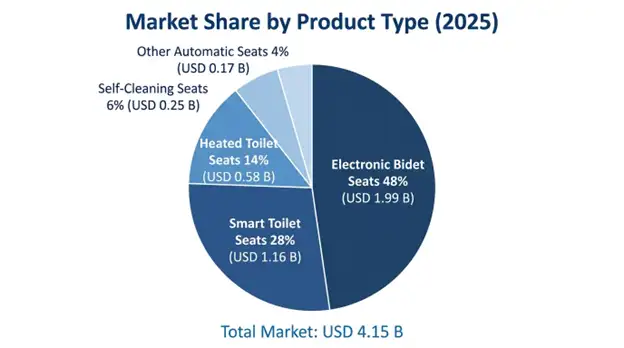
Electronic bidet seats constituted the largest market segment, holding 48% market share worth USD 1.99 billion in 2025, growing at a CAGR of 9.1%. The strong popularity of electronic bidet seats can be attributed to the availability of such features like warm water cleaning, heated seats, air dryer, and deodorizer, available in designs compatible for installation in regular toilets.
Smart toilet seats held the second-largest position with a market share of 28%, which was worth USD 1.16 billion in 2025, experiencing the fastest growth with a forecasted CAGR of 10.8%. Such growth can be attributed mainly to the rising popularity of such products in terms of their use in premium living spaces and their integration with health monitoring systems. Premium pricing is also an important reason for developing brand value and generating revenue. Heated toilet seats held a market share of 14%, which was valued at $581 million in 2025; these products gained popularity among cost-conscious customers owing to their inexpensive nature.
As far as the technology segment is concerned, the integrated bidets have taken the lead accounting for the largest market share of 42%, generating revenue worth USD 1.74 billion in 2025. This includes some basic requirements such as water heating, water pressure control, nozzle placement, and automatic cleaning mechanisms to make life easy for the users.
Ongoing innovations in these areas will further support segment growth. The sensor technology accounted for the second-highest market share of 26% worth USD 1.08 billion in 2025 and is expected to record a CAGR of 9.7% during the forecast period from 2026 to 2034. The increasing demand for contact-free and automated bathroom facilities like proximity sensors, occupancy sensors, and automated flush sensors are driving growth. The health monitoring sensors were the fastest-growing segment and held 8% market share in 2025 with a projected CAGR of 15.3%.
Residential end-users captured the majority market share with a value of USD 2.95 billion in 2025, representing 71% of the market, attributed to an upsurge in bathroom remodeling, rising income levels, and consumer knowledge on hygiene and comfort-based bathroom fixtures. Demand continues to be strong in single-family houses, apartments, and condominium buildings. Commercial and hospitality applications occupied 18% of the market share valued at USD 747 million in 2025 and are estimated to register a CAGR of 9.4% during the forecast period. Factors contributing to growth include the modernization of hotels, upscale restrooms, and wellness facility investments in companies.
There is an increase in the installation of automatic toilet seats by luxury hotels for improved guest experience. Market share was 11% valued at USD 456 million by hospitals and clinics in 2025 and is expected to witness significant growth in future owing to rising clinical recognition of automatic toilet seats as sanitization and health care equipment for senior patients and those suffering from movement-related disorders.
A moderate degree of consolidation characterizes the global automatic toilet seat industry, with major players occupying between 56-63% market share in terms of market value. Competitive advantage in the automatic toilet seats market is achieved through superior brand equity, diversified products range, innovative technology application, and effective global supply chain. Competitive edge in the automatic toilet seats market is gained by unique attributes including smart features, energy efficiency, premium design, capability of integrating into smart homes ecosystems, and superior after-sales services.
The technology leadership in this industry belongs to Japanese firms including TOTO and Panasonic through innovative approaches and premium product offerings. American companies such as Kohler and Brondell capitalize on their global retailer partnerships and brand equity in the Western world. In the Korean and Chinese markets, pricing strategies are prioritized to increase competitiveness, improve product quality and expand internationally. High-end positioning for market leaders comes about due to the incorporation of smart home features, sustainability certifications and health monitoring functionalities.
April 2026: The TOTO Ltd. company released the next iteration of the Washlet series of products with an advanced artificial intelligence-driven user recognition system providing personalized settings for up to six users and automatic adjustments based on the recognized user, along with built-in monitoring sensors tracking urine hydration levels and glucose levels, designated by the FDA as a Breakthrough Device for diabetic patients use.
March 2026: The Kohler Co. company revealed additional features for its Purewash line of automatic toilet seats, such as Apple HomeKit integration alongside existing Alexa and Google Home smart device integration options, along with health data tracking through Apple Health and Google Fit integrations.
February 2026: Brondell Inc. received the Breakthrough Device Designation from the FDA for its automatic toilet seat medical product which was designed for use by post-surgery and mobility-impaired patients, opening the way for development of insurance reimbursement pathway and channel expansion into the healthcare market with occupational therapists' recommendations.
January 2026: LIXIL Group Corporation introduced bio-based polymers automatic toilet seats made with at least 40 percent of natural plant components, certified by multiple sustainability standards agencies, including the Cradle to Cradle and FSC organizations, allowing the environmental sustainability positioning strategy.
December 2025: Strategic alliance announced by Panasonic Corporation with top Japanese health insurance provider for inclusion of automatic toilet seat health monitoring subscription as part of preventive care insurance benefits plans, creating world’s first-ever business model for insurance-based bathroom health monitoring system that could eventually go global.
November 2025: Bio Bidet strengthened its distribution agreement with Home Depot with provision for setting up 1,200 dedicated automatic toilet seat demo counters across USA, indicating huge commitment made by Bio Bidet to physical retail distribution network to enhance product awareness and usage.
List of Key Players in Global Automatic Toilet Seat Market
Global Automatic Toilet Seat Market Segments
By Product Type:
By Technology:
By End-User:
By Distribution Channel:
By Region:
You'll get the sample you asked for by email. Remember to check your spam folder as well. If you have any further questions or require additional assistance, feel free to let us know via-
+1 724 648 0810 +91 976 407 9503 sales@intellectualmarketinsights.com
16 May 2026
Intellectual Market Insights Research © 2026. All rights reserved.