Share this link via:

The global Bardet-Biedl syndrome market size was valued at USD 293.5 million in 2025 and is projected to reach USD 312.8 million in 2026, expanding to USD 478.6 million by 2035, growing at a CAGR of 5.3% during the forecast period (2026-2035).
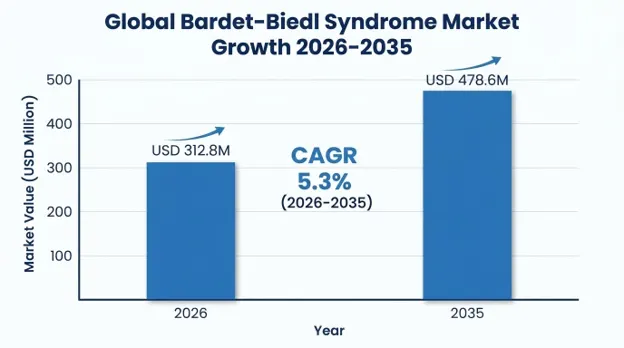
Bardet-Biedl syndrome is a rare, genetically heterogeneous, multisystem non-motile ciliopathy that affects about 5,000 to 8,000 people in the United States alone and is estimated to affect 1 in 100,000 to 1 in 160,000 newborns in North American and European populations, but is significantly more prevalent in certain geographic areas, including the United Kingdom (1 in 100,000) and the island of Newfoundland (1 in 17,000). Dysfunction of the primary cilia due to mutations in at least 26 genes that encode BBSome proteins, intraflagellar transport complex proteins and centriolar proteins results in a complex constellation of organ system dysfunction affecting the retina (photoreceptors), central metabolic regulation, renal structure and function, endocrine systems and cognitive-behavioral development.
The clinical features of Bardet-Biedl syndrome are very pleiotropic and progressive; 94% of patients will develop rod-cone dystrophy, and most of those with the syndrome will experience progressive peripheral vision loss and tunnel vision, reaching legal blindness by the time they are in their late teens or early 20s. Central obesity is seen in 89% of patients, and it starts very early in infancy, as the melanocortin-4 receptor pathway signaling in the hypothalamus malfunctions, resulting in pathological hunger and hyperphagia, with average BMI in affected populations reaching 35.7 kilograms per square meter, and rising with age. Progressive renal disease occurs in 53-82% of affected patients, end stage renal failure in 6-8% of children and 8% of adults, who need dialysis or kidney transplant; cognitive impairment 66% and postaxial polydactyly in 79% of patients.
The Bardet-Biedl syndrome market is a good example of the unique economic profile of rare genetic diseases, despite the relatively low market size in comparison to common diseases, it is characterized by high lifetime treatment costs for individual patients, due to chronic progressive nature of the disease, multidisciplinary care, and new disease-modifying therapies, such as the first targeted therapy approved for metabolic dysfunction, and investigational gene therapies for retinal degeneration. The commercial environment is influenced by the fact that the condition limits patient numbers for single drug classes, the genetic diversity of the patients necessitates treatment tailored to the patient's genotype, high unmet medical needs for disease-modifying treatments that are not supportive care, and complex clinical management that requires specialized skills in pediatric genetics, ophthalmology, nephrology, endocrinology, and behavioral health.
| Report Coverage | Details |
|---|---|
| Base Year | 2025 |
| Base Year Value | USD 293.5 Million |
| Forecast Value | USD 478.6 Million |
| CAGR | 5.3% |
| Forecast Period | 2025-2034 |
| Historical Data | 2022-2025 |
| Largest Market | North America |
| Fastest Growing Market | Asia Pacific |
| Segments Covered | By Disease Manifestation, Treatment Approach, Therapeutic Agent, Patient Demographics, End-User Category |
| Region Covered | North America, Europe, Asia Pacific, Middle East & Africa, Latin America |
| Countries Covered | United States, Canada, Mexico, United Kingdom, Germany, France, Italy, Spain, Netherlands, China, Japan, India, Australia, South Korea, Brazil, Argentina, United Arab Emirates, Saudi Arabia, South Africa |
| Key Market Playes | Rhythm Pharmaceuticals Inc., Axovia Therapeutics, Viralgen, GenSight Biologics, Gensym Therapeutics, Regenexbio, Strimvelis Therapeutics, Therapeutic Innovation Institute |
Get more details on this report - Request Free Sample
The key factor driving the growth of the Bardet-Biedl syndrome market is the approval and growing adoption of IMCIVREE (setmelanotide) – the first drug treatment targeting the biological process of the syndrome via the melanocortin-4 receptor pathway. Instead of symptomatic management, setmelanotide acts on the core of the illness, leading to decreased appetite and effective weight control. The regulatory approvals of setmelanotide by the US, European and UK authorities and expansion of indications for children aged up to 6 have made the early start of therapy possible at crucial moments in patient development. With the arrival of the first disease-specific treatment, genetic testing for the disease has become more frequent, raising physician awareness and the adoption of a precision medicine approach. In addition, setmelanotide has spurred the early diagnosis of the disease, broadened the scope of disease management and drawn more investment into the study of rare genetic diseases.
IMCIVREE Market Performance Metrics:
The Bardet-Biedl syndrome market is being driven by rapid advances in gene therapies in treating inherited retinal dystrophy, which is one of the most debilitating complications of the disease. Vision impairment due to retinal dystrophy continues to be a critical unmet medical need that requires urgent attention, creating opportunities for the innovative approach to treating the condition based on gene substitution.
Among the investigational therapies in development, AXV-101 that aims at introducing a working copy of the BBS1 gene into retinal photoreceptors of the patients having BBS1 mutations with the intention of slowing down or stopping the disease progression. The development of such drug has been stimulated by various regulatory incentives like Orphan Drug and Rare Pediatric Disease designations. Preclinical success and human clinical trials initiated for gene therapies for retinal dystrophy along with central nervous system targeted therapies are expected to open additional treatment options in the future.
Gene Therapy Pipeline Metrics:
The key limitation that is hampering the growth of the Bardet-Biedl syndrome market is the ultra-rare prevalence of the disease, thereby posing challenges in expanding the commercial potential of the condition despite advances in therapies. With fewer than ten thousand individuals being diagnosed within the key geographies, there exists a very small pool of patients for clinical development purposes, which makes the process quite difficult from a financial perspective.
The problem of market expansion is compounded by the high level of genetic diversity as more than 26 genetic abnormalities have been discovered for the disease so far. As a result, genotype-dependent therapies, especially those that are being developed using the gene therapy approach, are relevant only to patients with certain mutations, limiting the size of the targetable market population for such products. The requirement of a complete molecular diagnostic process is another constraint that impedes early diagnosis and initiation of the therapy.
Genetic Heterogeneity Metrics:
Another major growth opportunity is the expansion of gene therapy research and development beyond BBS1 to include in addition to BBS1 that include the other genetically specific types like BBS10, BBS2, and BBS4. The success of the first few clinical programs will enable the validation of these genotype-based approaches and provide an approach for developing multiple therapeutics for different genotypes. BBS10 is especially an interesting area of research as it is the second most prevalent subtype of this disease. Developing gene therapies for multiple genotypes will not only provide diversification but also will improve the market potential for the total number of these products and reduce dependency on one therapeutic molecule. Furthermore, regulatory supports such as orphan designation and rare pediatric disease will help in making commercialization easier. Moreover, the success of these gene therapies in Bardet-Biedl syndrome could pave the way for applications in other ciliopathies in future.
Genotype-Specific Gene Therapy Opportunity Metrics:
The Bardet-Biedl syndrome treatment paradigm has evolved from symptom management to disease-modifying interventions. the utilization of disease-modifying interventions. IMCIVREE (setmelanotide) received FDA approval to become the first ever targeted therapy in the history of treating Bardet-Biedl syndrome, which revolutionized the treatment of hyperphagia and obesity with the modulation of the melanocortin-4 receptor pathway.
The evolving field of gene therapy for the preservation of vision due to the presence of inherited retinal degeneration is growing steadily. Increasing evidence of ciliopathy being the key mechanism of Bardet-Biedl syndrome is fueling research in the area of therapies that can target multiple features of this condition with a single treatment. This progress helps to foster the emergence of multidisciplinary Bardet-Biedl syndrome centers, where genetic testing, endocrinology, ophthalmology, nephrology, and clinical genetics work together to optimize the treatment of individual patients.
Disease-Modifying Therapy Adoption Metrics:
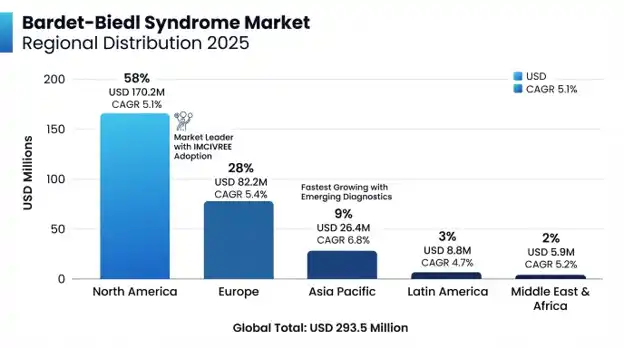
North America dominates the Bardet-Biedl syndrome market due to the presence of efficient genetic testing infrastructure, specialty centers for treating rare diseases, and adoption of targeted drugs. The region holds a majority share of the regional revenue because of extensive availability of molecular diagnostic technologies, approval and reimbursement for approved treatment products such as IMCIVREE (setmelanotide), and extensive experience of multi-disciplinary institutions in handling patients with rare ciliopathies.
High physician awareness, patient registries, and engagement in clinical trials have hastened diagnosis and increased access to investigational gene therapies. Canada continues to contribute positively towards regional market growth with the development of genetic testing capabilities, reimbursement policies for approved drugs, and investment in rare disease care. Positive regulatory environment, high healthcare spending, and ongoing development in the field of precision medicine indicate that North America will continue to dominate the market during the forecast period.
Regional Performance Metrics:
Europe is one of the largest markets for Bardet-Biedl Syndrome, due to robust rare disease networks, enhanced genetic testing facilities and availability of targeted drugs. The United Kingdom has led the way with systematic care pathways through its National Health Service, genetic diagnosis, and reimbursement of approved drugs which has helped provide patient access. Germany and France have made their presence felt owing to metabolic and genetic diseases centers in both the countries, however with different reimbursement schemes in each of the countries. South European countries like Italy and Spain are also making efforts towards expanding the reach through health technology assessments, while Nordic countries have robust diagnostics despite low patient numbers. With growing cooperation between European Reference Networks, early diagnosis and multidisciplinary management of the disorder has improved. Growth in specialized genetic centers, alignment of reimbursement schemes and increased involvement in multinational clinical trials is expected to help in adoption of therapies and drive market growth.
Regional Development Metrics:
Asia Pacific is the fastest-growing regional market for Bardet-Biedl syndrome due to increasing use of genetic diagnostics, development of pediatric specializations, increased investments in healthcare sector, and increasing awareness about inherited conditions. The largest regional opportunity is represented by China due to the large size of the population and an increasing number of molecular diagnostic laboratories in the country that leads to early detection of the Bardet-Biedl syndrome.
Progress in regulation of targeted medicines and increased investments in the management of rare diseases are expected to drive the growth of the market. The Japanese market is highly advanced and is characterized by advanced infrastructure of genetic tests, specialized multidisciplinary treatment, and high adoption rate of innovative medicines after receiving regulatory approval. India becomes a rapidly developing market due to an extensive development of genomic medicine, genetic counseling, increased health insurance of rare diseases, and increased awareness among pediatricians and endocrinologists.
Regional Growth Metrics:
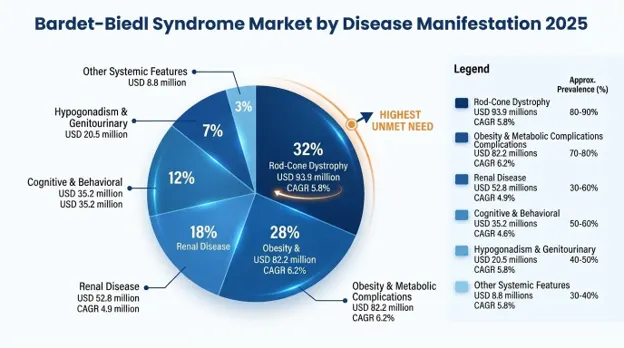
Rod-cone dystrophy is currently the dominant disease manifestation segment within the Bardet-Biedl syndrome market owing to the high prevalence of progressive retinal degeneration. It consists of advanced ophthalmological diagnostics, routine retinal monitoring, low-vision rehabilitation, assistive visual technologies, and innovative gene therapies targeting photoreceptor survival and preventing vision loss. Research activities in retinal gene therapy will further fortify the dominance of the segment over the forecast period.
Obesity and metabolic complications are the second-most prevalent indication segment, backed by increasing use of IMCIVREE (setmelanotide) in the treatment of hyperphagia and severe obesity. Metabolic monitoring, diabetes treatment, and timely intervention in childhood will ensure future growth of the market.
Renal disease management is an important segment that involves routine monitoring and treatments of chronic kidney disease, nephrology, laboratory monitoring and treatment of progressive renal disease, being one of the leading causes of chronic morbidity.
The cognitive and behavioral complications segment is relatively small which includes neurodevelopmental assessments, behavioral treatment, speech-language therapy, psychological care, and education services.
Symptom management and supportive care emerge as the largest segment in the BBS market owing to the multi-systemic presentation of the disorder. Symptom management and supportive care include multidisciplinary specialist care, diagnostic monitoring, nutritional management, vision rehabilitation, renal care, behavioral therapy, and use of assistive devices. Since many disease symptoms do not have a curative therapy available, supportive care forms the backbone of patient management.
Targeted therapies are the fastest-growing segment, mainly driven by the growing adoption of IMCIVREE (setmelanotide) for managing hyperphagia and obesity. Growing number of genetic diagnoses, favorable reimbursement policies, and early initiation of the treatment in children will further boost the growth of the market.
Gene therapy is a promising emerging segment, with continuous development of gene therapies specific to different genotypes and designed to treat various complications such as retinal degeneration.
Emerging therapies, including GLP-1 receptor agonists, neuroprotective drugs, and combination therapy strategies, form the emerging segment with strong growth potential in the coming years.
IMCIVREE (setmelanotide) is the key drug that dominates the Bardet-Biedl syndrome market and continues to drive pharmaceutical sales. The drug's high efficiency in treating hyperphagia and severe obesity sets it apart as the standard targeted drug in genetic cases. Regulatory approval expansion, increased coverage, early onset of therapy in pediatric patients, and improvements in diagnosis will be the factors behind the market growth.
Gene therapy candidates represent the most promising emerging therapeutic area. Current market development is supported by clinical research, manufacturing development, and clinical trials aimed at specific Bardet-Biedl syndrome genotypes. With time, gene therapies will become a significant source of income, especially for retinal degeneration and other genetically defined syndromes.
Supportive care pharmaceuticals will remain a crucial area and include anticonvulsants, metabolic drugs, antihypertensive drugs, and psychotropic agents used to treat the associated conditions. Even though these drugs do not have an impact on the disease course, they are still an important component of the therapy regimen.
The pediatric patient population (2–17 years) comprises 68% of the treatment adoption rate and total market value based on the target focus of the IMCIVREE drug development for childhood obesity prevention and genetic testing in pediatric care clinics. The pediatric category shows a high rate of adoption with IMCIVREE gaining approval as a drug for children 2 years and older, allowing treatment during crucial development stages and generating revenues throughout decades of patient life spans.
The adult population (18+ years) comprises 32% of the total market value with lower opportunities for growth compared to pediatric patient populations due to the rarity of adult diagnoses and presence of complications that reduce the benefits from treatment. The increasing numbers of pediatric populations entering adulthood with a diagnosis will expand adult markets.
Specialty hospitals & medical centers constitute the largest segment of the Bardet-Biedl syndrome market, contributing 52% of market revenue worth USD 152.5 million in 2025. Specialty medical centers deliver comprehensive treatments, which include genetic testing, metabolic management, ophthalmology, nephrology, and patient follow-up.
Genetic counseling & molecular diagnostics centers make up 24% of the market, estimated to be worth USD 70.4 million and expected to grow at a CAGR of 8.2% up to 2035, owing to the increase in the need for genetic validation and precision medicine. The multidisciplinary specialty clinics have a market share of 18%, estimated to be worth USD 52.8 million. This is due to the increased number of multidisciplinary care plans for both pediatrics and adults. Home care and patient assistance services contribute 6% of the overall market revenue.
The global Bardet-Biedl syndrome market is moderately concentrated because the market leaders, which include Rhythm Pharmaceuticals, Axovia Therapeutics, Viralgen, and genetic diagnostics companies, make up around 70–80% of the pharmaceuticals market. The competitive dynamics in the market depend on approvals, clinical benefits, precision medicine, and patient assistance programs. Rhythm Pharmaceuticals leads the market with IMCIVREE due to strong physician relationships, established reimbursement pathways and real-world clinical data.
Axovia Therapeutics is emerging as a key competitor due to its gene therapy AXV-101 aimed at retinal degeneration that can capture a substantial market share in the coming gene therapy market segment once approved. Considering the rareness and multilayered nature of Bardet-Biedl syndrome, competition in the future will be associated with complementary treatments for various manifestations of the disease.
January 2026: Axovia Therapeutics initiated the AXIS trial in children affected by BBS1 mutations through receiving USD 1.1 million grant from Race Against Blindness for their gene therapy drug AXV-101, bringing total funds to USD 3.1 million and allowing for human trials for genotype-specific Bardet-Biedl syndrome gene therapy.
December 2025: Rhythm Pharmaceuticals announced approval of IMCIVREE for children as young as two years old for obesity and excessive hunger associated with Bardet-Biedl syndrome from US FDA and MHRA, UK. This will increase the size of the addressable market substantially.
November 2025: Axovia Therapeutics presented preliminary research results at an ASGCT meeting about the potential for advancing AXV-101 into human trials, showing that there is photoreceptor protection and prevention of light-induced cell death in models of BBS1-induced retinal degeneration.
August 2025: Viralgen and Axovia Therapeutics signed an agreement about the manufacture of AXV-101 gene therapy using codon-optimized BBS1 AAV9 vector, in which Viralgen will be providing clinical and commercial manufacturing services.
June 2025: The Bardet-Biedl Syndrome Foundation announced the extension of the international patient registry to include 2,100 patients and the launch of a new diagnostic initiative aimed at educating general practitioners and pediatricians.
May 2025: Conditional approval was given to IMCIVREE by China National Medical Products Administration with market launch expected in 2026, providing significant market growth opportunity in the Asia Pacific region.
February 2025: Rhythm Pharmaceuticals, disclosed increased evidence from real world data of IMCIVREE usage showing weight loss between 8-15 kg on average in pediatric patients during 52 weeks of therapy, providing basis for cost-effectiveness of the drug in Europe.
You'll get the sample you asked for by email. Remember to check your spam folder as well. If you have any further questions or require additional assistance, feel free to let us know via-
+1 724 648 0810 +91 976 407 9503 sales@intellectualmarketinsights.com
23 Jul 2026
Intellectual Market Insights Research © 2026. All rights reserved.