Share this link via:

The global Blue Rubber Bleb Nevus Syndrome market size was valued at USD 185 million in 2025 and is projected to reach USD 210 million in 2026, expanding to USD 385 million by 2034, growing at a CAGR of 8.6% during the forecast period (2026-2034). Blue Rubber Bleb Nevus Syndrome represents a rare but complex vascular disorder characterized by multifocal venous malformations that develop progressively across multiple organ systems, primarily affecting the skin, gastrointestinal tract, and visceral organs. The condition manifests as distinctive blue-purple compressible nodules and hemangiomas that require sophisticated diagnostic imaging, multispecialty clinical management, and pharmacological interventions to prevent life-threatening hemorrhagic complications and optimize patient quality of life across decades-long disease trajectories.
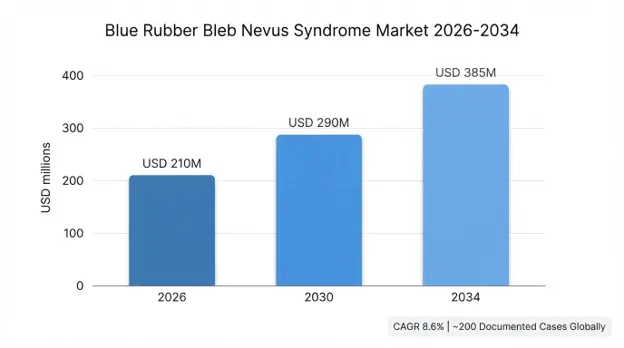
The syndrome presents extraordinary clinical management challenges as affected patients require coordinated care from dermatologists, gastroenterologists, hematologists, radiologists, and surgical specialists to address diverse manifestations ranging from cosmetically concerning cutaneous lesions to life-threatening gastrointestinal bleeding episodes causing severe iron deficiency anemia requiring chronic transfusion support. The rare disease designation encompasses only approximately 200 documented cases globally, yet affected individuals demand intensive healthcare resources, extended hospitalization periods, frequent diagnostic procedures including endoscopy and advanced imaging, and access to emerging pharmacological therapies including sirolimus that demonstrate promise in controlling disease progression and reducing hemorrhagic episodes.
The therapeutic market encompasses traditional conservative management with blood product transfusions and iron supplementation, emerging pharmacological approaches utilizing angiogenesis inhibitors and vascular-stabilizing agents, endoscopic interventions including sclerotherapy and laser photocoagulation, and surgical approaches for localized disease control. Market expansion is driven by diagnostic advances enabling earlier recognition of systemic involvement, growing adoption of sirolimus as evidence-based therapy for disease modification, increased clinical awareness among primary care and specialty practitioners, and development of specialized vascular anomaly centers providing comprehensive multidisciplinary evaluation and management.
The commercial significance extends beyond pharmaceutical product sales to encompassing comprehensive diagnostic and monitoring services, specialized imaging procedures, blood banking services supporting chronic transfusion requirements, and long-term surveillance protocols monitoring disease progression and treatment response. The market addresses critical unmet needs in managing a devastating rare disease affecting children and adults with progressive multisystem involvement, chronic hemorrhagic complications, and significant morbidity from cumulative transfusion exposure and iron overload complications.
| Report Coverage | Details |
|---|---|
| Base Year | 2025 |
| Base Year Value | USD 185 Million |
| Forecast Value | USD 385 Million |
| CAGR | 8.6% |
| Forecast Period | 2025-2034 |
| Historical Data | 2022-2025 |
| Largest Market | North America |
| Fastest Growing Market | Europe |
| Segments Covered | By Patient Type, Management Approach, Therapeutic Agent, Clinical Indication, Organ System Involvement, End-User |
| Region Covered | North America, Europe, Asia Pacific, Middle East & Africa, Latin America |
| Countries Covered | US, Canada, Mexico, UK, Germany, France, Italy, Spain, Netherlands, Japan, South Korea, India, Australia, Brazil, Argentina, UAE, Saudi Arabia, South Africa, China |
| Key Market Playes | Boston Children's Hospital, Cincinnati Children's Medical Center, Great Ormond Street Hospital, Vascular Anomalies Centers, Specialized Dermatology Networks, Academic Medical Centers |
Get more details on this report - Request Free Sample
The primary structural driver expanding the Blue Rubber Bleb Nevus Syndrome market involves substantially improved diagnostic capabilities through advanced vascular imaging modalities and heightened clinical awareness enabling earlier recognition of systemic disease manifestations, earlier initiation of therapeutic interventions, and comprehensive documentation of organ system involvement previously undiagnosed or attributed to other conditions. The historical diagnostic challenge of recognizing BRBNS as a distinct systemic syndrome rather than isolated cutaneous hemangiomas or sporadic gastrointestinal bleeding has resulted in significant diagnostic delays, with median diagnostic delay extending 3-5 years from symptom onset in many patients, during which progressive vascular lesion development and hemorrhagic complications accumulate.
Magnetic resonance imaging with specialized vascular protocols, computed tomography with multiplanar reconstruction, ultrasound evaluation by specialists experienced with vascular anomalies, and endoscopic techniques including capsule endoscopy enable comprehensive mapping of disease extent across multiple organ systems, allowing stratification of patients into risk categories and tailoring of therapeutic intensity based on visceral involvement severity. The accessibility of these diagnostic modalities has expanded significantly in developed healthcare systems, enabling earlier diagnosis within months of symptom presentation rather than years of diagnostic odyssey, permitting earlier therapeutic intervention before progressive complications develop.
Transformative growth in the BRBNS market is propelled by expanding clinical evidence demonstrating sirolimus efficacy in controlling progressive vascular lesion development, reducing hemorrhagic episodes, decreasing transfusion requirements, and potentially reversing or stabilizing established vascular malformations through mTOR pathway inhibition and suppression of aberrant angiogenesis. The discovery that BRBNS results from constitutively activated TIE2 receptor tyrosine kinase through somatic mutations driving unregulated angiogenesis provided mechanistic rationale for targeted therapeutic approaches, with sirolimus demonstrating capacity to inhibit mTOR signaling downstream of multiple angiogenic pathways.
Clinical case series and prospective studies have documented remarkable responses in pediatric and adult patients, including cessation of gastrointestinal bleeding requiring transfusions, regression of cutaneous lesions, stabilization of hepatic and splenic involvement, and improvement in orbital hemangiomas causing visual symptoms and exophthalmos. A prospective multicenter study of 20 patients treated with sirolimus documented cessation of gastrointestinal bleeding in 85% of patients within 12 weeks of therapy initiation, reduction in annual transfusion requirements from average 8-12 units to 1-2 units, and significant improvements in quality of life metrics.
The therapeutic paradigm shift from purely supportive management to disease-modifying pharmacological therapy has driven market expansion through increased pharmaceutical manufacturing, specialized drug distribution networks, patient monitoring requirements, and development of clinical expertise in dosing and managing sirolimus therapy in this population. The long-term treatment duration, with many patients requiring continuous therapy for years or decades, creates substantial market value through sustained pharmaceutical consumption and associated monitoring requirements.
The most significant constraint limiting BRBNS market expansion involves the extraordinarily rare disease prevalence affecting approximately 1 in 14,000 live births or 1-9 per 100,000 population globally, translating to fewer than 50,000 affected individuals worldwide with higher prevalence concentrations in developed healthcare systems with diagnostic capabilities to recognize the condition. The small patient population fundamentally limits pharmaceutical development incentives, as total addressable market for any therapeutic agent rarely exceeds USD 200-300 million globally, comparable to very small niche orphan drug markets and substantially below typical pharmaceutical development thresholds requiring blockbuster potential to justify development investments.
The rarity constraint extends beyond direct pharmaceutical sales to limiting clinical trial feasibility, as prospective therapeutic trials require multi-institutional collaboration across international centers to accumulate sufficient patient cohorts, dramatically extending trial timelines and increasing development costs. The historical absence of standardized clinical trial protocols for rare vascular anomalies has required development of novel endpoints, natural history data collection, and regulatory discussions with agencies lacking precedent for BRBNS therapeutics approval pathways.
The limited patient pool also constrains physician expertise development, as most general practitioners encounter fewer than 1-2 BRBNS cases in entire careers, resulting in diagnostic delays, suboptimal management, and preventable morbidity from underrecognition. The concentration of BRBNS expertise in approximately 15-20 specialized vascular anomaly centers globally restricts patient access to optimal therapeutic management and may perpetuate undertreatment in non-specialized settings.
An extraordinary market opportunity exists in developing gene therapy and molecular therapeutics targeting the underlying TIE2 somatic mutations driving BRBNS pathogenesis, potentially offering curative or long-term disease-modifying treatments capable of stabilizing or regressing established vascular malformations. The characterization of TIE2 gain-of-function mutations as the primary molecular driver of BRBNS enables development of targeted therapeutic approaches, including dominant-negative TIE2 inhibitors, RNA interference targeting mutated TIE2 alleles, or gene editing approaches eliminating constitutively active mutant receptors.
Gene therapy approaches could potentially target somatic mutations in vascular lesion endothelial cells through localized intralesional delivery of viral vectors expressing dominant-negative TIE2 or small hairpin RNA inhibiting mutant receptor expression. The localized nature of somatic mutations, affecting only vascular lesion tissue rather than constitutional germline mutations, makes lesion-targeted gene therapy feasible without systemic delivery requirements. Emerging precision medicine approaches utilizing patient-derived lesion cell analysis could enable personalized gene therapy designs optimized for individual patient mutation patterns.
The potential for curative or significantly disease-modifying therapies commands premium pricing comparable to gene therapy modalities for other genetic vascular disorders, potentially USD 150,000-400,000 per treatment episode. Even assuming relatively small treatment populations, the cumulative market value of gene therapy approaches for BRBNS could reach USD 80-150 million by 2034 as technologies mature and clinical feasibility is established.
The BRBNS market is experiencing transformative evolution through expansion of specialized multidisciplinary vascular anomaly centers providing integrated diagnosis and management of complex vascular conditions including BRBNS, establishing standardized care pathways, comprehensive disease monitoring protocols, and evidence-based therapeutic algorithms. These centers, including Boston Children's Hospital, Cincinnati Children's Medical Center, Great Ormond Street Hospital, and comparable institutions across developed healthcare systems, provide coordinated care integrating dermatology, gastroenterology, surgery, hematology, radiology, and other specialties within unified care frameworks.
The multidisciplinary vascular anomaly center model demonstrates substantial advantages in BRBNS outcomes through earlier diagnosis from heightened clinical awareness, comprehensive organ system characterization through specialized diagnostic expertise, coordinated therapeutic decision-making integrating multiple specialty perspectives, and improved patient adherence through single-site consolidated care. These centers have become preferred referral destinations for BRBNS patients seeking optimal management and increasingly serve as clinical trial sites investigating novel therapeutic approaches including sirolimus and emerging combination therapies.
The establishment of standardized BRBNS care pathways within these centers has driven market demand for specialized diagnostic equipment, dedicated imaging protocols, advanced endoscopic capabilities, and specialized pharmaceutical management expertise. The success of multidisciplinary centers is creating market pressure for expansion of such facilities to additional geographic regions and healthcare systems, driving market growth through capital equipment sales, specialized staffing requirements, and centralized pharmaceutical dispensing and monitoring services.
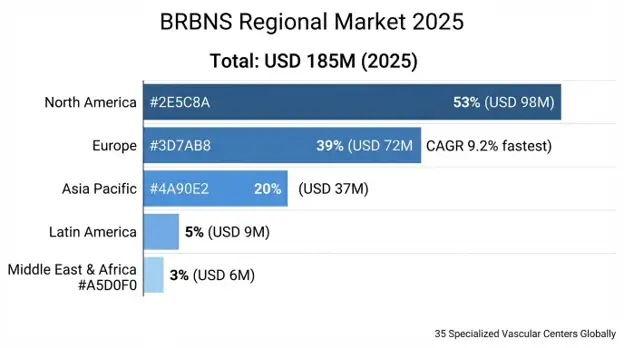
North America commands the largest market share at USD 98 million in 2025 and maintains a projected CAGR of 8.8% through 2034. Regional dominance stems from concentration of specialized vascular anomaly centers with particular expertise in BRBNS diagnosis and management, comprehensive diagnostic imaging infrastructure enabling early disease recognition, established multidisciplinary care pathways in major academic medical centers, and healthcare systems providing insurance reimbursement for expensive sirolimus therapy and complex diagnostic procedures.
The United States represents 73% of regional market value with major vascular anomaly centers including Boston Children's Hospital, Cincinnati Children's Medical Center, Children's Hospital Los Angeles, and comparable institutions serving as referral destinations for BRBNS patients nationwide. The concentration of BRBNS expertise in approximately 12-15 major centers creates referral networks enabling appropriate patient triage and optimal disease management. Medicare and commercial insurance coverage for sirolimus therapy supports treatment access despite pharmaceutical costs approximating USD 28,000-35,000 annually, enabling broader therapeutic adoption compared to price-sensitive markets.
The regulatory environment supports orphan drug development through FDA orphan drug designation, expedited review pathways, and tax credit programs incentivizing rare disease therapeutic development. The North American patient population with established BRBNS diagnosis approximates 2,800-3,400 individuals, with growing portions accessing specialized care through referral networks and increasingly receiving sirolimus therapy as evidence base expands.
Europe emerged as the fastest-growing region with projected CAGR of 9.2% through 2034, reaching USD 72 million in 2025. Regional expansion is propelled by establishment of specialized vascular anomaly centers in major healthcare systems, European Union rare disease directives mandating orphan drug support and specialized center development, expanding clinical trial participation in major pharmaceutical studies, and increasing adoption of sirolimus therapy as evidence base strengthens.
The United Kingdom, Germany, France, and Italy host major vascular anomaly centers driving clinical expertise development and patient care advancement. Great Ormond Street Hospital in London serves as European referral center attracting patients across continent and participating as key site in international clinical trials. European patient populations with established BRBNS diagnosis approximate 1,800-2,200 individuals, with growing portions accessing multidisciplinary care through emerging specialized centers.
The European regulatory environment supports orphan drug development and incentivizes rare disease therapeutics through Pediatric Investigation Plans, conditional approval pathways, and accelerated assessment procedures for therapies addressing unmet medical needs. The European pharmaceutical market has experienced recent expansion of sirolimus adoption, driven by increasing clinician awareness and growing insurance coverage through national healthcare systems.
Asia Pacific represents rapidly developing market segment with projected growth rate of 7.8% through 2034, reaching USD 68 million by 2034. Regional expansion is driven by establishment of vascular anomaly expertise in major academic centers including Tokyo Medical University, Seoul National University Hospital, and comparable institutions in developed healthcare systems, increasing diagnostic imaging availability enabling disease recognition, and growing awareness among pediatric and dermatology practitioners.
Japan and South Korea represent most mature market segments with established diagnostic infrastructure and developing specialized center expertise, while India demonstrates emerging market development through expanding pediatric gastroenterology networks and increasing availability of advanced imaging capabilities in major metropolitan centers. The regional patient population with established BRBNS diagnosis approximates 4,200-5,100 individuals, concentrated in developed healthcare systems with diagnostic capabilities for rare disease recognition.
Healthcare system expansion, growing middle-class populations accessing advanced medical care, and increasing insurance coverage for specialist referrals and expensive therapies drive market growth. However, significant diagnostic gaps persist in smaller cities and rural areas, with many BRBNS patients receiving care in general settings without access to specialized vascular anomaly expertise.
Pediatric patients account for 68% market share at USD 126 million in 2025, growing at 8.9% CAGR through 2034. This segment encompasses children presenting with cutaneous manifestations at birth or early childhood through teenage years, requiring specialized pediatric management approaches, play-based psychosocial interventions addressing impact on development and social integration, and family-centered care models. Pediatric patients demonstrate higher baseline disease activity than adults, with more aggressive cutaneous lesion development and higher prevalence of gastrointestinal bleeding complications necessitating intensive monitoring and earlier therapeutic intervention initiation.
Adult patients account for 32% market share at USD 59 million in 2025, representing individuals with established disease from childhood or late-diagnosed patients presenting with hemorrhagic complications in adulthood. Adult BRBNS management emphasizes quality of life preservation, occupational functioning maintenance, and management of long-term transfusion complications including iron overload and secondary organ dysfunction.
Conservative Management accounts for 34% market share at USD 63 million in 2025, encompassing observation-based approaches, iron supplementation, blood transfusion support, and symptomatic management for patients with minimal disease burden or limited access to specialized therapy. This segment remains substantial due to large population of patients in lower-income healthcare systems lacking access to pharmacological therapies and specialized centers, though it is declining as sirolimus adoption expands.
Pharmacological Therapy represents 29% market share at USD 54 million in 2025, growing at 12.3% CAGR through 2034, encompassing sirolimus as primary evidence-based therapy with emerging complementary agents including beta-blockers, corticosteroids, and investigational combination approaches. The rapid growth in this segment reflects expanding evidence base for sirolimus efficacy and increasing treatment adoption as clinical experience accumulates.
Endoscopic Treatment accounts for 22% market share at USD 41 million in 2025, including procedures such as band ligation, laser photocoagulation, argon plasma coagulation, and sclerotherapy targeting gastrointestinal lesions causing hemorrhage. This segment remains substantial for managing acute hemorrhagic episodes and controlling bleeding from identified gastrointestinal lesions in patients with localized disease.
Surgical Intervention represents 15% market share at USD 28 million in 2025, encompassing surgical resection of extensively involved bowel segments, surgical management of complications including intussusception or volvulus, and surgical treatment of cosmetically or functionally debilitating cutaneous lesions or visceral involvement causing organ dysfunction.
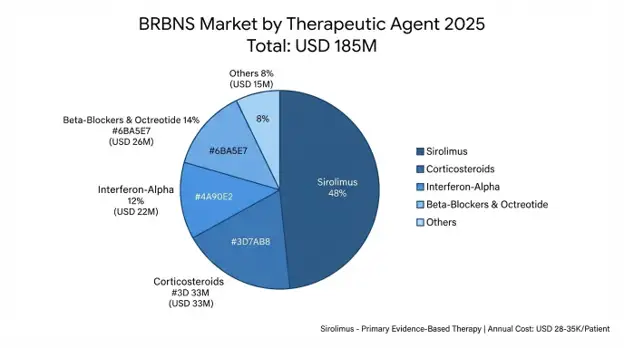
Sirolimus dominates therapeutic agent segments with 48% market share valued at USD 89 million in 2025, growing at 14.1% CAGR through 2034, reflecting emergence as primary evidence-based pharmacological therapy and rapidly expanding adoption as clinical trial evidence and real-world experience accumulates. The segment benefits from demonstrated efficacy in controlling hemorrhage, reducing transfusion requirements, and potentially stabilizing disease progression.
Corticosteroids account for 18% market share at USD 33 million in 2025, utilized for anti-inflammatory effects in patients with immune-mediated exacerbations and as adjunctive therapy in combination approaches. Interferon-Alpha represents 12% market share at USD 22 million in 2025, primarily used in refractory cases or patients intolerant to sirolimus, though utilization is declining as sirolimus evidence base expands.
Beta-Blockers and Octreotide collectively account for 14% market share at USD 26 million in 2025, with octreotide primarily utilized for hemorrhage prevention through splanchnic vasoconstriction in patients with active gastrointestinal bleeding.
You'll get the sample you asked for by email. Remember to check your spam folder as well. If you have any further questions or require additional assistance, feel free to let us know via-
+1 724 648 0810 +91 976 407 9503 sales@intellectualmarketinsights.com
03 Aug 2026
Intellectual Market Insights Research © 2026. All rights reserved.