Share this link via:

Global Brachmann-de Lange Syndrome Market Size
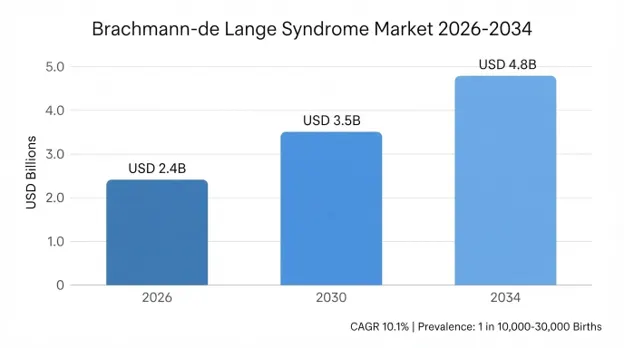
The global Brachmann-de Lange syndrome market size was valued at USD 2.1 billion in 2025 and is projected to reach USD 2.4 billion in 2026, expanding to USD 4.8 billion by 2034, growing at a CAGR of 10.1% during the forecast period (2026-2034).
Brachmann-de Lange syndrome, also known as Cornelia de Lange syndrome, represents a rare multisystem genetic developmental disorder requiring comprehensive, lifelong medical management through specialized therapeutic interventions, assistive technologies, and multidisciplinary clinical care services. The syndrome is characterized by distinctive craniofacial features including synophrys with meeting medial eyebrows, thick eyebrows, short nose with concave ridge and upturned nasal tip, long smooth philtrum, thin upper lip vermilion, and downturned mouth corners, coupled with profound growth deficiency presenting in prenatal and postnatal periods, intellectual disabilities ranging from borderline to profound levels, upper extremity malformations including oligodactyly and adactyly affecting digital development, and systemic complications involving gastrointestinal, cardiac, neurological, auditory, and ophthalmological systems.
The clinical complexity of Brachmann-de Lange syndrome necessitates extensive pharmaceutical interventions targeting gastroesophageal reflux disease affecting 71-82% of affected individuals, seizure disorders present in 26% of cases, behavioral and psychiatric comorbidities impacting quality of life, hearing loss affecting 42-65% of patients requiring auditory rehabilitation and hearing aids, cardiac anomalies present in 25-30% of cases necessitating potential surgical interventions, and profound intellectual disabilities requiring educational and behavioral support systems. The market encompasses diverse therapeutic products including proton pump inhibitors for gastrointestinal disease management at doses of omeprazole 0.7-3.5 mg per kilogram daily, antiepileptic medications managing seizure disorders with amenability to pharmacological treatment, behavioral management pharmaceuticals addressing self-injurious behaviors and autism spectrum disorder features present in 50% of affected individuals, nutritional support products addressing feeding difficulties and oral intake challenges present in the majority of patients, mobility aids and orthotic devices compensating for limb malformations and growth deficiencies, hearing aids and auditory rehabilitation equipment for hearing-impaired individuals, and vision correction devices addressing visual impairment present in 38-50% of affected patients.
The market significance extends beyond pharmaceutical and device sales to encompass comprehensive diagnostic and management ecosystems integrating genetic testing and counseling services, multidisciplinary clinical care coordination, behavioral and psychiatric treatment programs, educational support services, family counseling and psychosocial support systems, and long-term disease management optimizing functional capacity and quality of life throughout the patient lifespan.
Market Overview & Report Scope
| Report Coverage | Details |
|---|---|
| Base Year | 2025 |
| Base Year Value | USD 2.1 Billion |
| Forecast Value | USD 4.8 Billion |
| CAGR | 10.1% |
| Forecast Period | 2025-2034 |
| Historical Data | 2022-2025 |
| Largest Market | North America |
| Fastest Growing Market | Asia Pacific |
| Segments Covered | By Product Type, Disease Management Category, Treatment Modality, Clinical Indication, End-User Facilities |
| Region Covered | North America, Europe, Asia Pacific, Middle East & Africa, Latin America |
| Key Market Playes | Pfizer Inc., AbbVie Inc., Novartis AG, F. Hoffmann-La Roche Ltd., Sanofi S.A., Takeda Pharmaceutical Company Limited, Johnson & Johnson, Merck & Co., Inc., BioMarin Pharmaceutical Inc., Sarepta Therapeutics, Inc., Centogene N.V., Invitae Corporation, GeneDx, LLC, Natus Medical Incorporated, Sonova Holding AG |
Get more details on this report - Request Free Sample
Market Growth Drivers
Increasing Genetic Awareness and Diagnostic Accessibility for Rare Genetic Syndromes
The primary growth driver for the Brachmann-de Lange syndrome market involves expanding diagnostic accessibility through molecular genetic testing technologies, growing awareness among pediatricians and medical geneticists regarding clinical diagnostic criteria, increasing availability of multigene panel testing approaches enabling simultaneous screening across cohesin-related genes, and earlier disease identification facilitating timely multidisciplinary intervention initiation. The prevalence of Brachmann-de Lange syndrome is estimated between 1 in 10,000 to 1 in 30,000 live births based on clinical phenotype recognition, with European data establishing prevalence of 1.24 cases per 100,000 births for classic presentation and overall prevalence reaching 1.6-2.2 cases per 100,000 births when including non-classic and atypical presentations. This substantial patient population, comprising approximately 6,000-8,000 affected individuals in North America alone, creates significant market demand for diagnostic services, therapeutic interventions, and long-term management strategies.
Molecular genetic testing has revolutionized diagnosis through identification of pathogenic variants in seven primary causative genes including NIPBL accounting for 50-60% of cases, SMC1A responsible for approximately 5% of cases, SMC3 causing approximately 1% of cases, RAD21 variants, HDAC8 mutations, BRD4 variants, and emerging genes including ANKRD11, MAU2, and EP300. The discovery that approximately 70% of diagnostic cases demonstrate NIPBL mutations, with genetic heterogeneity across cohesin-related genes, has prompted development of comprehensive molecular testing platforms offering diagnostic confirmation with 84% detection rates when screening for known causative genes and incorporating mosaic variant analysis in alternate tissues including skin and hair follicles.
Diagnostic Infrastructure Growth Metrics:
Escalating Healthcare Costs from Untreated Systemic Complications and Multisystem Management Requirements
Individuals with Brachmann-de Lange syndrome experience profound healthcare burden from untreated or inadequately managed systemic complications, creating substantial economic drivers for market expansion through demand for therapeutic interventions preventing severe morbidity and mortality. Gastroesophageal reflux disease affects 71-82% of affected individuals, representing the most common comorbidity requiring aggressive pharmacological intervention with proton pump inhibitors at high doses, along with potential surgical interventions including fundoplication for refractory cases. The chronic nature of GERD in Brachmann-de Lange syndrome patients, characterized by inadequate response to standard dosing, necessitates escalated pharmaceutical regimens generating substantial pharmacy and clinical service revenues. Respiratory complications including aspiration pneumonia represent a leading cause of mortality, accounting for 31% of deaths, with inadequately treated reflux disease significantly increasing aspiration risk through chronic silent aspiration and compromised airway protective mechanisms.
Seizure disorders occurring in 26% of affected individuals require long-term antiepileptic medication management, with pharmacological amenability to standard medications reducing seizure burden and mortality risk from status epilepticus and sudden unexpected nocturnal death in epilepsy. Behavioral disorders characterized by self-injurious behaviors present in up to 65-85% of individuals with moderate to severe disease phenotypes necessitate behavioral management medications, psychiatric consultations, and specialized behavioral intervention programs generating ongoing service revenues. Hearing loss affects 42-65% of patients, with conductive hearing loss predominating from otitis media with effusion related to eustachian tube dysfunction, necessitating hearing aids, auditory rehabilitation services, and potential otologic interventions. Vision impairment present in 38-50% of affected individuals requires ophthalmologic care, vision correction products, and visual rehabilitation services.
Cardiac anomalies present in 25-30% of patients include atrial septal defects, ventricular septal defects, patent ductus arteriosus, tetralogy of Fallot, and more severe complex lesions requiring surgical repair and long-term cardiology management. Feeding difficulties and poor oral intake affecting the majority of patients necessitate nutritional support products, feeding device technologies, speech-language pathology services, and gastroenterology management. The compounding nature of multiple systemic complications creates cumulative healthcare costs estimated at USD 280,000-450,000 per patient over a 30-year period, substantially exceeding costs for single-system genetic conditions.
Systemic Complication Management Cost Metrics:
Market Restraints
Limited Pharmaceutical Development for Rare Genetic Syndrome Specific Indications
The most significant market constraint involves limited pharmaceutical development targeting specific pathophysiological mechanisms underlying Brachmann-de Lange syndrome, with the vast majority of pharmaceutical interventions representing off-label applications of drugs developed for more prevalent conditions. Current management relies on symptomatic treatment addressing secondary complications including gastroesophageal reflux disease, seizure disorders, behavioral disorders, and psychiatric comorbidities rather than disease-modifying therapies targeting the underlying cohesin complex dysfunction. The rarity of Brachmann-de Lange syndrome, with global patient population estimates of 300,000-500,000 affected individuals, creates limited financial incentives for pharmaceutical manufacturers to invest in specialized drug development due to restricted market size and consequential challenges in achieving adequate return on development investments typically ranging from USD 500 million to USD 2.1 billion for rare disease therapeutics.
The lack of well-characterized disease-modifying therapy targets represents a critical therapeutic gap, as the fundamental pathophysiological mechanisms underlying Brachmann-de Lange syndrome—involving cohesin complex dysfunction, compromised gene expression regulation, chromosome segregation abnormalities, and cellular senescence—remain incompletely understood and lack validated therapeutic intervention points. Research investigations indicate that spontaneous genome instability, increased oxidative stress, and premature senescence occur in cells containing NIPBL, SMC1A, and HDAC8 gene variants, suggesting potential therapeutic targets for oxidative stress reduction or cellular senescence inhibition; however, these remain investigational approaches without clinical translation to approved therapeutics. The absence of disease-modifying therapies limits market expansion to symptom management and complications mitigation, constraining potential revenue growth compared to markets where definitive therapeutic options are available.
Development Challenge Metrics:
Market Opportunities
Gene Therapy and Cohesin Complex Rehabilitation Approaches for Disease Modification
A transformative market opportunity exists in developing gene therapy and targeted molecular approaches addressing the underlying cohesin complex dysfunction in Brachmann-de Lange syndrome, potentially offering disease-modifying or curative intervention approaches distinct from current symptomatic management paradigms. The validation of gene therapy feasibility in other rare genetic disorders and the expanding technical capabilities of gene delivery platforms suggest potential therapeutic applications in Brachmann-de Lange syndrome if robust disease models and validated therapeutic targets can be established. Research advances identifying genome instability, oxidative stress, and cellular senescence as hallmark cellular features in Brachmann-de Lange syndrome provide potential therapeutic intervention points for targeted molecular approaches including oxidative stress reduction strategies, cellular senescence inhibition, or cohesin complex stabilization approaches.
Emerging research investigating lithium therapy as a potential treatment approach, with investigational clinical trials in progress, represents early-stage exploration of therapeutic mechanisms potentially applicable to Brachmann-de Lange syndrome. Lithium demonstrated promising effects in preclinical models and preliminary clinical studies of related neurodevelopmental disorders, with proposed mechanisms including glycogen synthase kinase-3 inhibition, neuroprotection, and cellular signaling modulation potentially relevant to cohesin-related pathophysiology. The potential development of cohesin-stabilizing compounds, cohesin loader enhancement approaches, or oxidative stress reduction therapies could revolutionize treatment paradigms and create substantial market opportunities for breakthrough therapies addressing unmet disease modification needs.
Gene Therapy Opportunity Metrics:
Emerging Trends
Expanded Genetic Testing and Newborn Screening Integration
The field is experiencing expansion of genetic testing capabilities through incorporation of Brachmann-de Lange syndrome genes into multigene panels for developmental disorders, intellectual disability, and autism spectrum disorders, enabling earlier diagnostic identification and intervention initiation. Growing interest in newborn screening programs incorporating rare genetic disorder detection, combined with technological advances in sequencing and reduced testing costs, promises to increase diagnostic rates and earlier multidisciplinary management engagement. Integration of secondary conditions screening through genetic testing, identifying syndromic forms of autism, behavioral disorders, and intellectual disability caused by Brachmann-de Lange syndrome, expands diagnosis across diverse patient populations previously categorized under non-syndromic developmental disorders.
Prenatal diagnostic testing advances enabling detection of Brachmann-de Lange syndrome in utero through non-invasive prenatal testing, cell-free DNA analysis, and prenatal ultrasound detection of characteristic features support prenatal diagnosis and delivery planning. The recognition of variable presentation severity including mild phenotypes, atypical presentations, and non-classic craniofacial features necessitates broader diagnostic suspicion and expanded genetic testing inclusion criteria in diverse pediatric and adult populations.
Regional Insights
North America: Market Leadership Through Specialized Clinical Infrastructure
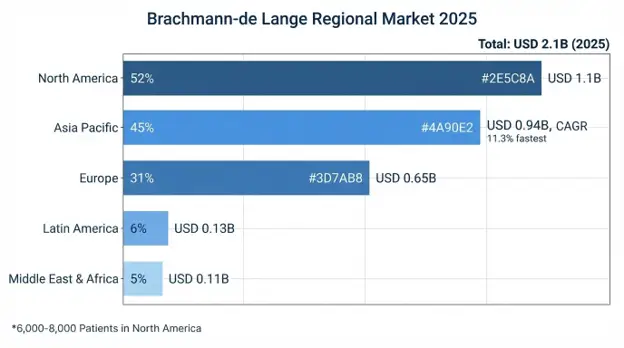
North America commanded the largest market share at USD 1.1 billion in 2025 and maintains a projected CAGR of 9.8% through 2034. Regional dominance stems from concentrated expertise in specialized genetic and developmental medicine, established multidisciplinary care infrastructure, comprehensive insurance coverage supporting rare disease management, and substantial research infrastructure supporting clinical investigation and care innovation. The United States represents 82% of regional market value, driven by Medicare coverage supporting pharmaceutical and clinical service utilization, specialized genetic centers providing comprehensive evaluation and management, and high disease awareness among pediatric practitioners.
Asia Pacific: Rapid Expansion Through Emerging Healthcare Infrastructure
Asia Pacific represents the fastest-growing region with projected CAGR of 11.3% through 2034, reaching USD 0.94 billion in 2025. Regional expansion is propelled by expanding genetic testing accessibility in major urban centers, growing medical education emphasizing rare genetic disorders, emerging specialized pediatric programs, and expanding middle-class populations accessing private healthcare services. China and India represent primary growth markets, with expanding healthcare infrastructure supporting diagnostic and therapeutic services.
Market Segment Analysis
Product Type Insights
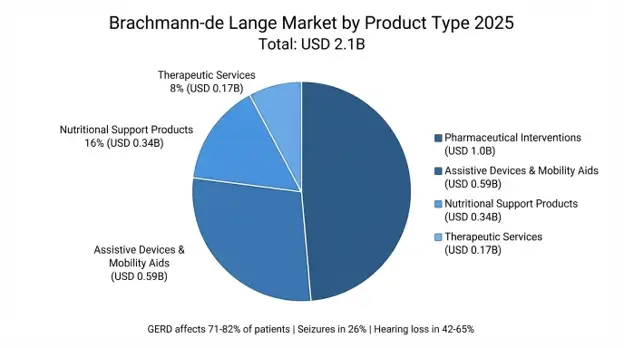
Pharmaceutical interventions represent 48% of market value at USD 1.0 billion in 2025, encompassing proton pump inhibitors, antiepileptic medications, behavioral management pharmaceuticals, and psychiatric medications. Assistive devices and mobility aids account for 28% at USD 0.59 billion, including hearing aids, vision correction products, orthotic devices, and mobility equipment. Nutritional support products represent 16% at USD 0.34 billion, addressing feeding difficulties and oral intake challenges. Therapeutic services comprise 8% at USD 0.17 billion, including speech-language pathology, physical therapy, occupational therapy, and behavioral intervention services.
Disease Management Category Insights
Gastrointestinal management products dominate at 32% market share with USD 0.67 billion in 2025, addressing GERD prevalence of 71-82%. Neurological management comprising seizure disorder and behavioral management products account for 28% at USD 0.59 billion. Hearing and vision correction products represent 22% at USD 0.46 billion. Cardiac management and behavioral health services account for 18% at USD 0.38 billion.
End-User Insights
Specialty hospitals and genetic centers represent the largest end-user segment at 45% market share with USD 0.95 billion in 2025. Pediatric centers account for 30% at USD 0.63 billion. Home care services and rehabilitation facilities comprise 25% at USD 0.53 billion combined.
Competitive Landscape
The global Brachmann-de Lange syndrome market exhibits fragmented competition with no dominant single provider, as no specialized therapies exist exclusively for this condition. Market competition spans pharmaceutical manufacturers producing symptomatic management medications, assistive device companies producing hearing aids and mobility equipment, specialized clinical centers providing comprehensive management, genetic testing companies offering diagnostic services, and healthcare service providers delivering multidisciplinary care. Competitive differentiation centers on clinical expertise in rare genetic disorder management, comprehensive care coordination capabilities, specialized knowledge of cohesin-related pathophysiology, and patient advocacy relationships.
Market Forecast Summary
The global Brachmann-de Lange syndrome market will experience substantial growth through 2034, driven by expanding diagnostic accessibility, escalating healthcare costs from untreated complications, emerging multidisciplinary care models, and potential disease-modifying therapeutic development. Market growth will accelerate in Asia Pacific regions as healthcare infrastructure expands, accelerating from current 11.3% CAGR projections. The therapeutic landscape will gradually shift from symptomatic management toward investigational disease-modifying approaches as cohesin complex research advances and therapeutic targeting mechanisms mature. Comprehensive care delivery models will progressively replace fragmented specialty care, supporting expansion of clinical service revenues alongside traditional pharmaceutical and device markets. The global market represents a substantial opportunity for healthcare companies addressing the comprehensive needs of approximately 300,000-500,000 affected individuals worldwide while supporting quality of life improvement and functional capacity optimization throughout the patient lifespan.
You'll get the sample you asked for by email. Remember to check your spam folder as well. If you have any further questions or require additional assistance, feel free to let us know via-
+1 724 648 0810 +91 976 407 9503 sales@intellectualmarketinsights.com
03 Aug 2026
Intellectual Market Insights Research © 2026. All rights reserved.