Share this link via:

The global congenital adrenal hyperplasia market size was valued at USD 0.56 billion in 2025 and is projected to expand to USD 1.08 billion by 2035, growing at a compound annual growth rate of 6.79% during the forecast period (2025-2035). Congenital adrenal hyperplasia represents a rare group of inherited autosomal recessive endocrine disorders affecting adrenal gland function and hormone synthesis, requiring lifelong comprehensive pharmaceutical and clinical management across pediatric and adult populations. The disorder encompasses several enzymatic defects, with 21-hydroxylase deficiency accounting for approximately 95% of all cases, while additional rare forms include 11-beta hydroxylase deficiency, 17-alpha hydroxylase deficiency, and 3-beta hydroxysteroid dehydrogenase deficiency affecting smaller patient populations globally.
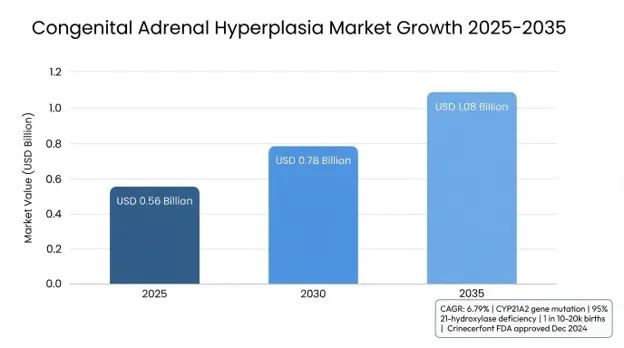
Congenital adrenal hyperplasia disrupts the normal steroidogenic pathway within the adrenal cortex, resulting in impaired cortisol and aldosterone synthesis coupled with pathological accumulation of precursor hormones shunted toward the non-affected androgen synthesis pathway, leading to excessive androgen production that creates distinct clinical phenotypes. Classic congenital adrenal hyperplasia comprises salt-wasting and simple-virilising forms, representing the most severe presentations with manifestations evident at birth or in early infancy, while non-classic congenital adrenal hyperplasia presents with milder enzymatic deficiency, allowing adequate cortisol production in unstressed states but insufficient during physiological stress, with symptom onset typically occurring in late childhood or early adulthood. The disease creates a substantial chronic disease burden spanning multiple organ systems, necessitating multidisciplinary management including endocrinology, pediatrics, obstetrics, psychology, and surgical specialties to address metabolic complications, reproductive dysfunction, psychosocial challenges, and quality of life concerns.
Management of congenital adrenal hyperplasia requires continuous hormone replacement therapy with glucocorticoid and mineralocorticoid formulations to prevent life-threatening adrenal crises, suppress excessive adrenal androgen production, and minimize complications from chronic glucocorticoid exposure, including growth impairment in pediatric patients, metabolic complications, bone loss, and cardiovascular dysfunction. Current treatment paradigms emphasize personalized glucocorticoid dosing, achieving optimal hormonal suppression while minimizing exposure-related toxicity through physiologically appropriate formulations, including sustained-release hydrocortisone preparations that mimic the body's natural circadian cortisol secretion pattern and novel therapeutic agents currently advancing through clinical development that may fundamentally transform disease management through alternative mechanisms independent of high-dose glucocorticoid therapy.
| Report Coverage | Details |
|---|---|
| Base Year | 2025 |
| Base Year Value | USD 0.56 billion |
| Forecast Value | USD 1.08 billion |
| CAGR | 6.79% |
| Forecast Period | 2025-2034 |
| Historical Data | 2022-2025 |
| Largest Market | North America |
| Fastest Growing Market | Asia Pacific |
| Segments Covered | By Disease Type, Treatment Category, Diagnostic Methods, Route of Administration, End-User |
| Region Covered | North America, Europe, Asia Pacific, Middle East & Africa, Latin America |
| Countries Covered | US, Canada, Mexico, UK, Germany, France, Italy, Spain, Netherlands, China, Japan, India, Australia, South Korea, Brazil, Argentina, UAE, Saudi Arabia, South Africa |
| Key Market Playes | Pfizer Inc., Sanofi, AstraZeneca, Novartis AG, Boehringer Ingelheim, Neurocrine Biosciences, Spruce Biosciences, BridgeBio Pharma |
Get more details on this report - Request Free Sample
The primary structural driver propelling global congenital adrenal hyperplasia market expansion is the systematically increasing prevalence of diagnosed cases through widespread implementation of newborn screening programs across developed healthcare systems and progressive expansion into emerging markets. The global prevalence of classic 21-hydroxylase-deficient congenital adrenal hyperplasia ranges from 1 in 10,000 to 1 in 20,000 live births in Western populations, with substantially higher incidence reported in specific ethnic populations, including 1 in 282 among Yupik Eskimos and elevated prevalence in Mediterranean, Hispanic, and certain Asian populations due to genetic founder effects and consanguinity patterns. Recent population-based epidemiological studies from Denmark and other developed nations document a combined congenital adrenal hyperplasia prevalence of 15.1 per 100,000 newborn females and 9.0 per 100,000 newborn males, with continued diagnostic increases attributable to expanded screening, improved diagnostic capabilities, and heightened clinical awareness among healthcare providers worldwide.
Newborn screening programs targeting 21-hydroxylase deficiency through second-tier differential screening algorithms measuring elevated 17-hydroxyprogesterone levels have been progressively adopted globally, with implementations covering populations exceeding 500 million individuals in developed and middle-income countries. Early detection through newborn screening enables initiation of appropriate glucocorticoid and mineralocorticoid replacement therapy before manifestation of life-threatening salt-wasting crises, preventing substantial morbidity and mortality, particularly in the most severe salt-wasting form affecting approximately 75% of classic congenital adrenal hyperplasia patients. The diagnostic confirmation requires comprehensive evaluation, including biochemical assessment with stimulation testing measuring adrenocorticotropic hormone-stimulated 17-hydroxyprogesterone levels as the gold standard confirmatory test, genetic sequencing of CYP21A2 for pathogenic variant identification, and imaging studies to exclude alternative adrenal pathology, driving utilization of specialized diagnostic services and creating market value through testing services, confirmatory procedures, and specialist consultation.
Non-classic congenital adrenal hyperplasia diagnosis has increased substantially during the past two decades, representing 40-50% of total congenital adrenal hyperplasia cases in developed populations compared to a historical prevalence of 15-25%, reflecting enhanced diagnostic awareness, expanded testing in populations presenting with reproductive dysfunction or hirsutism, and biochemical testing increasingly incorporated into routine endocrinology evaluation. Females with non-classic congenital adrenal hyperplasia demonstrate approximately a 3.2-fold higher prevalence compared to males, representing the primary contributor to female predominance in overall congenital adrenal hyperplasia populations, as females present more frequently with noticeable androgen excess manifestations, including hirsutism, acne, male-pattern baldness, and menstrual irregularities prompting clinical evaluation.
Heightened clinical awareness among pediatricians, primary care physicians, endocrinologists, and reproductive medicine specialists regarding congenital adrenal hyperplasia diagnosis and appropriate management creates market expansion through identification of previously undiagnosed patients across multiple age groups and clinical presentations. Professional education initiatives from endocrine societies, including the Endocrine Society and European Society for Paediatric Endocrinology, have promulgated comprehensive clinical practice guidelines establishing diagnosis and management standards that emphasize early recognition of both classic and non-classic presentations; optimization of glucocorticoid dosing strategies, minimizing toxicity while achieving adequate hormonal suppression; and multidisciplinary management addressing reproductive, psychological, and metabolic complications throughout the patient's lifespan. Guidelines specifically addressing transition from pediatric to adult care, management of pregnancy and fertility complications, and optimization of long-term health outcomes have expanded treatment paradigms and driven specialist consultation utilization, creating service demand across multiple healthcare settings.
Rare disease advocacy organizations, including the Congenital Adrenal Hyperplasia Research & Education Support Foundation and the CARES Foundation, have established Comprehensive Care Centers for Adrenal Insufficiency Evaluation and Support, providing specialized multidisciplinary management, establishing treatment standards, and facilitating patient registries, contributing to epidemiological understanding and outcome optimization. These specialized centers drive utilization of advanced diagnostic technologies, specialist consultations, and innovative therapies while establishing networks for clinical trial recruitment and evaluation of emerging treatment modalities.
Technological advancements in the field of formulation along with innovative modes of action have shifted the treatment approach for congenital adrenal hyperplasia from mere glucocorticoid supplementation to physiologic hormone supplementation and even disease modification by tackling the underlying pathophysiology. Hydrocortisone modified release formulations mimicking the circadian rhythm of secretion of cortisol in the body have been developed and marketed in which the drug is secreted in a delayed manner through the intestines, providing a better physiologic mode of hormone replacement with low levels of glucocorticoids.
The pipeline for drugs to treat congenital adrenal hyperplasia has seen tremendous progress as several late-stage drug development projects for new treatments via new pathways independent of glucocorticoids are underway. The corticotropin-releasing factor receptor type 1 antagonists such as crinecerfont and tildacerfont block the pathway of the hypothalamic-pituitary-adrenal axis, lowering the secretion of adrenocorticotropic hormones, which decreases excessive production of adrenal androgens by means other than glucocorticoids, making it possible to reduce the dose of glucocorticoids without compromising metabolic adequacy. Crinecerfont was FDA approved in December 2024 for the treatment of classic congenital adrenal hyperplasia in children and adults as an add-on treatment.
The congenital adrenal hyperplasia (CAH) market is constrained by the highly prohibitive cost of development and regulatory approval of innovative therapeutic agents, especially gene therapy and other sophisticated modes of treatment. Innovative treatment modalities need to undergo elaborate preclinical tests, prolonged safety evaluations, biodistribution testing, and long clinical trials to ensure long-lasting efficacy and any adverse effects. This translates to development periods of 8 to 12 years, with total development cost estimated at USD 300-500 million. In the case of a rare disease like CAH, these costs are prohibitive and make it difficult to invest. Although there are various incentives offered under the auspices of orphan drug policy, including market exclusivity and an accelerated regulatory review process, they still are not enough to cushion companies against financial losses.
The gene therapy approach appears to be a very promising opportunity in the market for congenital adrenal hyperplasia (CAH) because it focuses on the root cause of the disease rather than treating the symptoms via hormone replacement therapy throughout the patient’s life. Modern advanced adeno-associated virus (AAV) therapies aim at delivery of functional CYP21A2 genes into the adrenal glands of the patients to restore their ability to produce endogenous cortisol and aldosterone. Preclinical data show that these gene therapies can provide durable gene expression and enzyme activity, while the early clinical data from trials such as BBP-631 are promising in terms of safety and efficacy after a single administration. Commercial success of gene therapy for CAH, which is expected in the later years of the decade, may greatly decrease reliance on glucocorticoid treatment and the associated risks. The market opportunity is very promising, as gene therapies are expected to attract premium prices due to the potential cure for the condition. Increased investment in biotech companies and venture capital funds drives the market forward.
Modifications to hydrocortisone release offer promising potential within the CAH market segment through enhancing the glucocorticoid replacement therapy by approximating a more physiologic pattern of glucocorticoid hormone release throughout the day. Contrary to the immediate-release formulation of hydrocortisone, which is associated with fluctuations in the levels of hormone concentration in blood resulting in over- and under-replacement, the modified-release formulas allow for achieving more natural hormone levels due to the drug's delayed release and sustained absorption. Clinical studies conducted on modified-release formulas show reduction in glucocorticoid use up to 15–25% per day, improved androgen suppression, positive impact on growth in children, and reduced risks of adverse consequences from glucocorticoid therapy. The approval of the modified-release hydrocortisone products in Europe has already confirmed their effectiveness and safety, and wider use is expected in other parts of the world in connection with more approvals. Increased favor among physicians for optimized hormone replacement, a simpler regimen of taking medication resulting in improved adherence to treatment, and the awareness of healthcare payers regarding the cost-effectiveness of the drug in the long run will contribute to market growth.
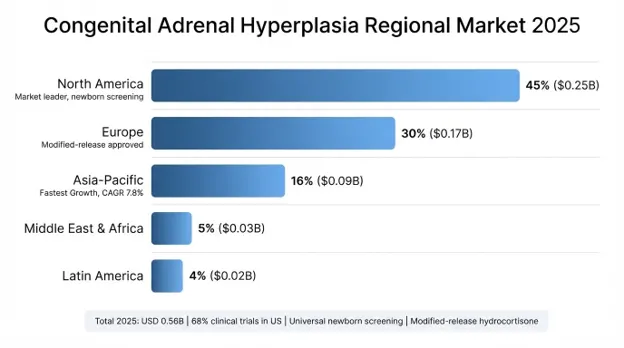
The North American region dominates the global congenital adrenal hyperplasia market with a share of nearly 45% (USD 0.25 billion in 2025). This is due to well-developed health care infrastructure; well-developed diagnostic facilities; concentration of expert professionals of endocrinology; strong insurance coverage from Medicare and commercial insurance companies; high incidence rate that affects around 6,800-12,000 people; and extensive development of pharma companies in the form of clinical trials in which 68% of all clinical trials of congenital adrenal hyperplasia take place. The US accounts for 87% of regional market value owing to a network of specialty endocrinology centers, extensive newborn screening programs through states, and clinical trial programs.
Europe represents around 30% market value (USD 0.17 billion in 2025), growing at a constant rate of 6.2% CAGR till 2035 due to the presence of well-established healthcare systems providing universal access; the acceptance of modified-release glucocorticoid preparations in particular, such as in Germany, France, and the UK; as well as supportive regulations to develop innovative therapies via orphan drug schemes of the European Medicines Agency. Germany and France are key players in the European markets due to high disease awareness and a high presence of endocrinology centers.
Asia Pacific is the fastest-growing region market with a 7.8% CAGR until 2035 ($0.12 Bn in 2025), due to increased healthcare investments in China and India; development of newborn screening programs; growth of middle-class populations with increased demands for healthcare facilities; and advancements within the pharmaceutical industry in providing cost-effective treatment. The major growth in the region comes from China with 140 million diabetes patients who create the awareness for endocrine disorders and the development of healthcare infrastructure, as well as India through high-volume and low-cost delivery mechanisms.
Congenital Adrenal Hyperplasia Classic is the prevalent type with a market share of 58% (USD 0.32 billion by 2025) involving salt-wasting, which accounts for 75% of all the classic cases, and simple-virilizing, which makes up 25%. The latter two must be detected and treated immediately in order not to lead to complications or virilization. Non-classical congenital adrenal hyperplasia is the other one with the market share of 42% (USD 0.24 billion by 2025).
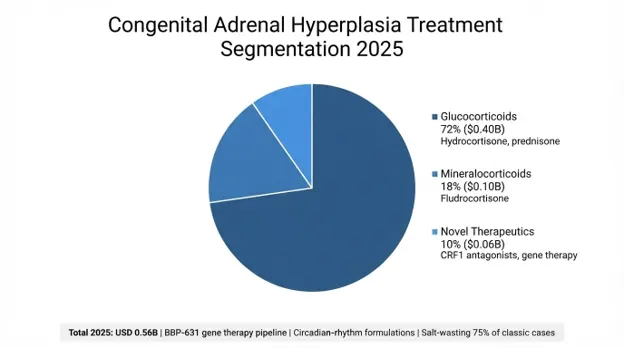
Glucocorticoids such as hydrocortisone, prednisone, and dexamethasone have a market share of 72% (USD 0.40 billion in 2025), despite development of novel agents, and mineralocorticoids like fludrocortisone have a market share of 18% (USD 0.10 billion) and are critical for treatment of the salt-wasting type. The novel agents to be developed comprise a market share of 10% (USD 0.11 billion).
Hospitals and specialty endocrinology clinics will contribute to 68% market share (USD 0.38 billion) via the delivery of comprehensive diagnosis and specialized management, whereas home healthcare and primary care facilities will account for 32% market share (USD 0.18 billion) via the administration of medication between specialist appointments.
Congenital Adrenal Hyperplasia (CAH) has high to moderate market concentration, where the top eight companies have 52-61% of market share due to their broad product portfolio ranging from conventional glucocorticoids to modified release and novel therapies, large clinical pipeline, strong relationship with endocrinologist specialty groups, and capacity for producing consistently good quality products. Competition is based on evidence of better efficacy and safety, delivery technology that simplifies therapy, patient assistance programs, and alliances with healthcare organizations.
You'll get the sample you asked for by email. Remember to check your spam folder as well. If you have any further questions or require additional assistance, feel free to let us know via-
+1 724 648 0810 +91 976 407 9503 sales@intellectualmarketinsights.com
22 Aug 2026
Intellectual Market Insights Research © 2026. All rights reserved.