Share this link via:
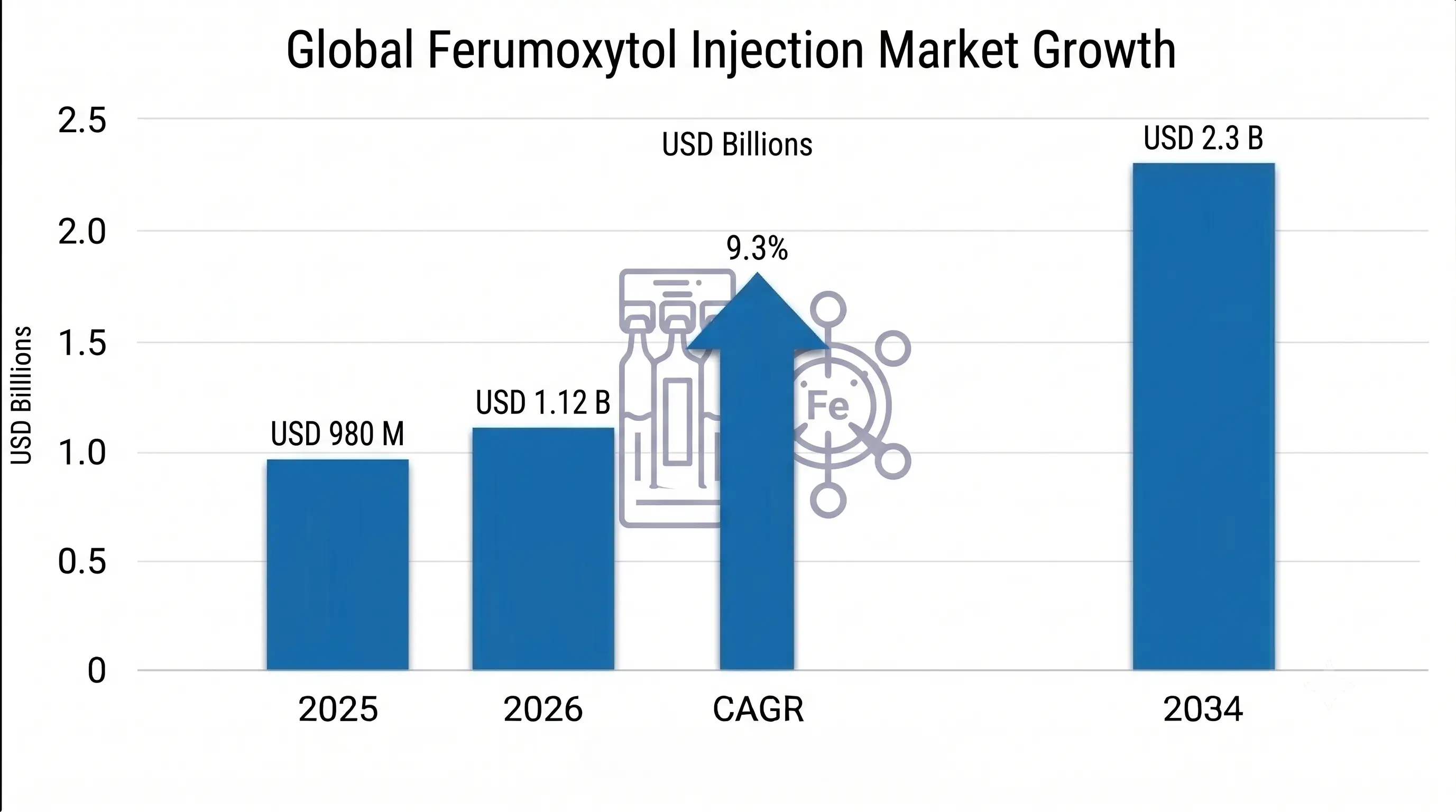
The global ferumoxytol injection market size was valued at USD 980 million in 2025 and is projected to reach USD 1.12 billion in 2026, expanding to USD 2.3 billion by 2034, growing at a CAGR of 9.3% during the forecast period (2026-2034).
Ferumoxytol injection is a revolutionary innovation in IV iron formulations, which consists of super paramagnetic iron oxide particles surrounded by a semi-synthetic carbohydrate coating made of polyglucose sorbitol carboxymethylether. This allows for fast and large amounts of iron infusion while also having unique pharmacological properties that make it different from any other existing IV iron formulations in the market. The novel nanoparticle design results in a colloidal dispersion of slow-release iron due to reticuloendothelial degradation without causing free iron toxicity or oxidative stress as seen with older iron formulations. The drug can be administered at doses of up to 510 mg of elemental iron via an injection in 15 minutes compared to other high dose intravenous iron formulations.
The clinical importance of ferumoxytol is not limited to merely being a substitute for other iron treatments because of the nature of the drug itself which helps overcome the shortcomings of traditional iron treatments in varied types of patients. Iron deficiency anemia afflicts about 1.2 billion people around the world, making it the most common nutritional deficiency disorder in the world and the main cause of anemia in different patient populations. Although oral iron supplementation is the primary treatment modality for milder cases of iron deficiency, many patients must resort to parenteral iron supplementation owing to poor absorption from the mouth or severe intolerance to oral iron.
The distinguishing characteristic of Ferumoxytol is based on the rapid achievement of full treatment dose with an iron repletion of 1,020 mg in two doses given at intervals between three to eight days, while other iron preparations such as ferric carboxymaltose, iron sucrose, and sodium ferric gluconate require repeated administrations. The faster treatment completion allows a reduction of patient health care visits by 60-75%, especially useful for patients suffering from chronic illness where frequent appointments are already being managed, thus maximizing resource use in health facilities providing infusions.
The superparamagnetic iron oxide nanoparticle formulation of ferumoxytol also offers unique imaging potential for use as an unapproved contrast medium in magnetic resonance imaging, especially in patients with contraindications to gadolinium-containing contrast media due to severe chronic renal disease, where gadolinium administration poses the risk of developing nephrogenic systemic fibrosis. These unique characteristics in terms of therapeutic use and diagnostic imaging result in distinct market characteristics that distinguish ferumoxytol from other competing injectable iron therapies.
The global burden of diseases requiring parenteral iron therapy has been increasing, owing to aging demographics, the rising rates of chronic kidney disease, which affects over 850 million people globally, growing numbers of cancers necessitating treatment for anemia secondary to chemotherapy, and evidence that IV iron has a better efficacy than oral supplementation in individuals suffering from chronic inflammatory conditions, such as heart failure, inflammatory bowel diseases, and peri-operative anemia management strategies aiming to decrease allo-genic blood transfusions.
| Report Coverage | Details |
|---|---|
| Base Year | 2026 |
| Base Year Value | USD 980 Million |
| Forecast Value | USD 2.3 Billion |
| CAGR | 9.3% |
| Forecast Period | 2025-2034 |
| Historical Data | 2022-2025 |
| Largest Market | North America |
| Fastest Growing Market | Asia Pacific |
| Segments Covered | By Indication, Patient Population, Distribution Channel, End-User |
| Region Covered | North America, Europe, Asia Pacific, Middle East & Africa, Latin America |
| Countries Covered | US, Canada, Mexico, UK, Germany, France, Italy, Spain, Netherlands, Japan, China, India, Australia, South Korea, Brazil, Argentina, UAE, Saudi Arabia, South Africa |
| Key Market Playes | Covis Pharma, AMAG Pharmaceuticals, Sandoz (Novartis), Fresenius Kabi, CSL Vifor, American Regent |
Get more details on this report - Request Free Sample
The major factor driving growth in the ferumoxytol injection market is the growing burden of chronic kidney disease, both as the leading approval indication for ferumoxytol and because of the very nature of the condition itself, which ensures a continuous need for high-dose intravenous iron treatment. Chronic kidney disease afflicts around 850 million patients worldwide in 2025, comprising 10-13% of adults in the world, at an annual increase rate of 3.1%, with diabetes mellitus, hypertension, and obesity being the primary conditions that cause chronic kidney disease.
Iron-deficiency anemia is almost always seen in patients who suffer from chronic kidney disease because of various physiological processes involved, which include poor production of erythropoietin by the kidneys, poor iron absorption from the intestines due to increased levels of hepcidin from the chronic inflammation of the patient, continuous loss of blood through dialysis and laboratory procedures, and functional iron deficiency where the total iron levels in the body are not able to contribute to erythropoiesis.
Patients on dialysis are the high-intensity group of users of Ferumoxytol. The dialysis patients need to have intravenous iron therapy administered to them on a regular basis to enable their bodies to have enough iron for iron-based erythropoietin stimulation response and for achieving the desired hemoglobin levels. Currently, about 2.6 million people are on dialysis in 2025 all over the world, this number is projected to increase to 5.4 million in 2030.
Modern healthcare economics increasingly favor high-dose intravenous iron agents allowing for total iron correction during minimal visits to clinics due to a number of considerations that demonstrate through thorough calculation of total cost of care that administration of ferumoxytol with two doses results in significantly reduced treatment costs compared to multi-visit treatments needed for low-dose drugs despite the higher cost per dose of ferumoxytol. This is especially important for healthcare economists whose primary goal is efficient healthcare spending reduction.
The efficiency benefits of ferumoxytol are particularly evident in high-volume infusion settings, such as an outpatient infusion center within a hospital, a dialysis facility working under a prospective payment system, or an oncology suite where the capacity of the treatment chairs limits the throughput and revenues of the facility. The ability of ferumoxytol to be administered over 15 minutes as opposed to 15-60 minutes required for alternative treatments, along with its capability of restoring iron levels in two visits as opposed to 3-10 visits for alternatives, make infusion facilities more efficient.
The most critical limitation to ferumoxytol’s market access potential is a black box warning issued by the FDA regarding the risk of serious hypersensitivity reactions and anaphylaxis, based on the post-marketing study data revealing the fatalities caused by ferumoxytol therapy. The black box warning requires that the medication be administered in locations where severe cardiovascular reactions may be assessed and managed, accompanied by monitoring the patients for at least half an hour after each administration and ensuring the availability of necessary resuscitative interventions, thus imposing restrictions regarding the administration of the drug in unsupervised conditions.
This restriction is amplified by the impact of the black box warning itself on prescribing habits, since even when the safety profile of the drug is relatively positive, doctors tend to avoid using a medication associated with the highest risk designation issued by the FDA because of their psychological predisposition to take such precautions. Hypersensitivity reactions have been reported in 0.2% of ferumoxytol patients, which is consistent with other parenteral formulations of iron, although the risk associated with the latter is perceived as higher due to the black box warning.
A key growth opportunity lies in positioning ferumoxytol as the most suitable parenteral iron agent for treating iron deficiency anemia resistant to oral administration in pediatric patients, owing to high medical need for this group caused by a lack of available intravenous iron treatments, problems with adherence to oral iron in children, and distinctive features of iron needs and pharmacokinetics in the pediatric population compared to the adult one. Iron deficiency is prevalent among approximately 40% of children under five years old across the world, with some of them in need of parenteral treatment owing to malabsorption disorders, inflammatory bowel disease, chronic kidney disease, or oral iron resistance.
FDA approval for ferumoxytol in pediatric CKD and iron deficiency anemia patients set a precedent in the labeling for its pediatric use, with several clinical studies ongoing in various pediatric diseases such as IBD and oncology which provide chances to extend the drug’s indications and thus expand the patient base.
Iron management in patients with iron-deficiency anemia is now considered an important part of patient care strategies in leading surgical centers in connection with the realization that preoperative correction of anemia can minimize the need for blood transfusions and shorten hospitalization periods after surgery. The use of ferumoxytol to completely replenish iron in just two doses over one week is best suited to preoperative assessment and surgery because it allows complete iron replenishment prior to surgery without any preoperative consultations.
Evidence based on clinical data collected through patient blood management programs indicates that use of intravenous iron for optimization prior to surgery decreases allogenic blood transfusions by 23-38% in cases of major surgeries such as orthopedic, cardiac, and gastrointestinal surgeries.
North America was the dominant market, accounting for USD 686 million in 2025, or 70% of total worldwide ferumoxytol sales, and retaining a forecasted CAGR of 8.8% until 2034. The United States accounted for 89% of total regional market revenues, because of its long-standing FDA approval status dating back to 2009, its entrenched position as part of nephrology treatment with inclusion in major dialysis network formularies, and full Medicare reimbursement under its end-stage renal disease prospective payment system as well as Part B for non-dialysis applications.
The region is characterized by the presence of well-established commercial infrastructure including nephrology and hematology sales representatives, extensive patient assistance programs, and formulary coverage at major dialysis organizations such as DaVita and Fresenius Medical Care which together cover over 60% of all US dialysis patients. The density of academic medical centers, comprehensive cancer centers, and specialized infusion centers within urban markets facilitates commercial reach and high-volume account management.
The Asia Pacific emerges as the fastest-growing region, recording a CAGR of 12.4% during the forecast period (2026–2034), valued at USD 156 million in 2025, attributed to the world’s greatest prevalence of chronic kidney disease with China alone reporting 132 million patients suffering from the same, burgeoning dialysis centers to meet the increasing needs of ESRD populations, and regulatory approval to commercialize the product in major markets of the region. The advanced nephrology practices, coupled with premium acceptance of drugs in Japan, provide the ideal environment for ferumoxytol usage, whereas, in China, the booming dialysis centers present the largest potential for growth globally.
The emerging market in India, fueled by the expansion in the dialysis center population and increasing efforts by the government towards better management of CKD, offers an attractive growth opportunity for ferumoxytol’s quick-dosing characteristics.
Iron Deficiency Anemia in Chronic Kidney Disease is the largest segment with a market share of 68%, valued at USD 666 million in 2025, covering the indications of both dialysis dependent and non-dialysis dependent chronic kidney disease patients, where continuous intravenous administration of iron is required. Cancer Associated Anemia emerges as the fastest growing segment with a CAGR of 18.7%, boosted by strong scientific studies on the use of intravenous iron for the management of anemia associated with cancer chemotherapy treatments and oncology infusions centers.
Adult patients account for 85% of the market share at USD 833 million in 2025, which is primarily attributed to the commonality of chronic kidney diseases, cancer, and heart diseases among middle-aged and elderly people. The market share by Pediatrics comes in second at 9%, however, the pediatric segment is projected to grow at a CAGR of 21.3%, mainly due to FDA approval and increasing number of studies proving the safety and efficacy of Ferumoxytol for children suffering from chronic kidney diseases and inflammatory bowel diseases.
Hospitals & Nephrology Centers are the leading end-users accounting for 52% market share with revenues estimated to reach USD 510 million in 2025, owing to increasing incorporation of dialysis centers and treatment of iron deficiency through inpatient care. Dialysis Centers hold a 28% market share, valued at USD 274 million in 2025, owing to the regular need for iron replacement therapy in patients with end-stage renal disease. due to frequent need of iron replacement.
Ferumoxytol injection is a moderately concentrated market, where despite the expiration of the product's patents, the originator continues to hold an important market share. Covis Pharma, which acquired the assets of AMAG Pharmaceuticals, has several competitive strengths, including an established sales network, comprehensive data regarding safety and effectiveness, and close connections with major organizations providing dialysis services and academic medical centers.
Price competition from companies such as Sandoz and Fresenius Kabi, has put some pressure on the margins while increasing the availability of the drug, especially in budget-oriented healthcare systems. Competitive advantages will involve reliability in terms of supply chain management, full-scale patient assistance programs, development of evidence of effectiveness for new indications, and contract negotiations with healthcare organizations and GPOs.
Other options that the market provides include high-dose injectable forms of iron, such as ferric carboxymaltose produced by CSL Vifor, and low-dose alternatives including iron sucrose and sodium ferric gluconate.
March 2026: The Covis Pharma reported positive findings for their Phase III trial of Ferumoxytol in patients with iron deficiency anemia related to heart failure, which showed substantial gains in both six-minute walking distances and quality of life scores, leading to an application for label expansion in Q3 2026.
February 2026: FDA granted label revision of ferumoxytol based on real-life safety experience in 2.4 million patient uses, indicating good balance between risks and benefits and facilitating expanded indications.
January 2026: The comprehensive health economic study conducted in a prominent journal in nephrology proved that use of ferumoxytol in a two-dose regimen led to a savings of 31% in the total iron repletion cost compared to the iron sucrose treatment in a five-dose regimen considering all the costs associated with the process in healthcare.
December 2025: Covis Pharma has started the phase III clinical trial on ferumoxytol for use in children who suffer from inflammatory bowel disease with iron deficiency anemia.
November 2025: The marketing authorization application for ferumoxytol was submitted to the European Medicines Agency (EMA) which has accepted the application for review with approval likely in 2026.
You'll get the sample you asked for by email. Remember to check your spam folder as well. If you have any further questions or require additional assistance, feel free to let us know via-
+1 724 648 0810 +91 976 407 9503 sales@intellectualmarketinsights.com
01 Jul 2026
Intellectual Market Insights Research © 2026. All rights reserved.