Share this link via:

The global Friedreich’s ataxia market size was valued at USD 1.12 billion in 2025 and is projected to reach USD 1.58 billion in 2026, expanding to USD 2.86 billion by 2034, growing at a CAGR of 13.04% during the forecast period (2026-2034).
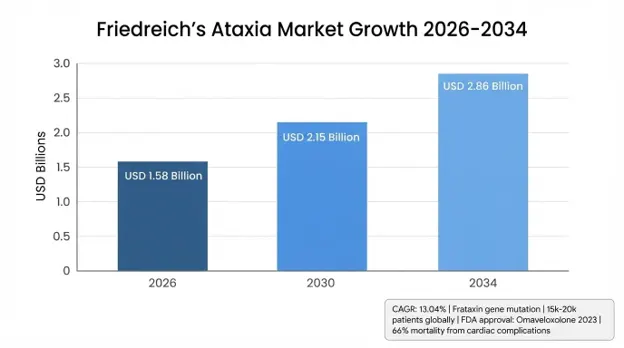
Friedreich's ataxia is a rare, progressive, life-threatening neurodegenerative disease that is caused by mutations in the frataxin gene, which causes mitochondrial dysfunction, oxidative stress, and progressive neurological degeneration of the nervous system, cardiovascular system, and multiple organ systems. The disorder presents as a progressive gait ataxia, dysarthria, sensory loss, skeletal deformities, and life-threatening cardiac complications (such as hypertrophic cardiomyopathy, arrhythmias, and congestive heart failure), which together contribute about two thirds of the early death rate in affected people. The therapeutic market includes disease-modifying medicines based on the underlying mitochondrial pathology and oxidative stress mechanisms; symptomatic management strategies to treat motor dysfunction and its complications; emerging gene therapy products, which try to restore frataxin expression using adeno-associated viral vectors; and all forms of comprehensive, multidisciplinary care using neurology, cardiology, endocrinology, and rehabilitation specialties to optimize clinical outcomes and functional preservation throughout the disease course.
The market offers a significant therapeutic opportunity, as the number of people living with Friedreich's ataxia, some 15,000-20,000 worldwide, including 5,000-7,000 in the U.S., 8,000-10,000 in Europe, and approximately 2,000-4,000 in Asia-Pacific regions, is substantial and has profound unmet medical needs that can be addressed by disease-modifying treatments that can slow neurological decline, limit cardiac complications, and preserve functional independence across multiple stages of the disease. There were no disease-modifying treatments until recently, and clinical management consisted of symptomatic treatment and prevention of complications, leaving a tremendous opportunity in the market for the first FDA-approved disease-modifying treatment and several candidates in clinical development pipelines.
| Report Coverage | Details |
|---|---|
| Base Year | 2025 |
| Base Year Value | USD 1.12 billion |
| Forecast Value | USD 2.86 Billion |
| CAGR | 13.04% |
| Forecast Period | 2025-2034 |
| Historical Data | 2022-2025 |
| Largest Market | North America |
| Fastest Growing Market | Asia Pacific |
| Segments Covered | By Disease Stage, Therapeutic Approach, Drug Type, End-User Category |
| Region Covered | North America, Europe, Asia Pacific, Middle East & Africa, Latin America |
| Countries Covered | US, Canada, UK, Germany, France, Italy, Spain, Netherlands, China, Japan, India, Australia, South Korea, Brazil, Argentina, UAE, Saudi Arabia, South Africa |
| Key Market Playes | Reata Pharmaceuticals (Biogen), PTC Therapeutics, Design Therapeutics, Larimar Therapeutics, Stealth Therapeutics, Minoryx Therapeutics |
Get more details on this report - Request Free Sample
The approval of Skyclarys (omaveloxolone) by the FDA in February 2023 is the most prominent factor influencing the growth of the global Friedreich’s ataxia market. The drug is the first disease-modifying therapy approved for use in the treatment of Friedreich’s ataxia. Before the drug was made available on the market, the only treatments available were symptomatic and aimed at managing the disease. This left a high unmet need for the treatment. Clinical evidence gathered from the MOXIe Phase II trial proved the effectiveness of the disease-modifying approach, showing an improvement in neurological function and slowing down of disease progression.
This milestone has changed treatment perspectives, prompting early detection and physicians’ belief in disease-modifying treatments. In addition, the approval has paved the way for reimbursement in all leading health care markets, raising patient and physician awareness of the condition and stimulating investments in the research into Friedreich’s ataxia. The approval of the drug has also set a foundation for the development of the future pipeline.
The increasing number of studies supporting the prevention and delaying of cardiac complications is one of the key drivers for the worldwide market of Friedreich's ataxia. Cardiomyopathy, congestive heart failure, and potentially fatal arrhythmias cause approximately 66% of fatalities of the disease. Advanced technologies in diagnostics, such as echocardiography and cardiac MRI, allow the timely identification of heart structural abnormalities prior to the appearance of symptoms and the development of therapeutic strategies accordingly. Moreover, recent progress in gene therapy treatment of the deficiency of frataxin in the myocardium, such as LX2006, has demonstrated promising clinical and preclinical results that include the decrease in left ventricular hypertrophy and improvement in heart functionality.
There is a possibility of developing an advanced treatment of both neurological and cardiovascular complications. However, despite the advancements in supportive treatment of the cardiovascular system, the average life expectancy of the disease is only 38-39 years. Thus, the potential for expanding life span and the quality of life opens a wide field of investment for pharmaceutical firms and promotes further research into the treatment of the disease, which offers substantial long-term growth prospects for the market of Friedreich's ataxia.
The potential of gene therapy for delivering therapeutic frataxin genes using adeno-associated viral vectors to target heart and nerve cells is an emerging market opportunity that offers the prospect of a one-off therapy able to prevent the progression of disease manifestations by restoring the level of frataxin. One of the most advanced cardiac-focused gene therapies currently in development is the LX2006 program developed by Lexeo Therapeutics, which employs an AAV vector (AAVrh10) that has heart muscle tropism and is systemically delivered to prevent progressive hypertrophic remodeling and maintain heart function. Positive clinical outcomes have been demonstrated so far in early-phase trials, with patients from the SUNRISE-FA Phase 1/2 study showing left ventricular mass index stabilization and the prevention of the progression of hypertrophic remodeling.
The cardiomyocyte-specific approach holds many benefits over the systemic approaches due to the specific delivery of the therapeutic frataxin into the cardiac muscle cells, where mitochondrial iron deposition and oxidative stress cause dysfunction, thus allowing efficacy at lower doses than systemic delivery requires without increasing exposure to the rest of the organ systems. There is a high unmet medical need in terms of preventing cardiac complications, which, together with the lack of treatment options other than the usual cardiac treatments specifically for the pathological process seen in cardiac Friedreich’s ataxia, makes this area a promising market for highly priced cardiac-targeted gene therapy products (projected sales USD 400-600 M annually until 2034).
The main constraint that the market faces is the ability to conduct reliable clinical trials due to the scattered and rare occurrence of patients suffering from Friedreich’s ataxia. It is estimated that the total number of diagnosed patients worldwide is 15,000-20,000. The disease is rather hard to research, as it is complicated to find enough patients who can participate in a clinical trial. The problem is that patients are scattered across various countries, which means that the clinical trials will require participation of specialized neurological and cardiological clinics on a multinational level and will require significant costs and effort. The heterogeneous nature of the disease and late diagnosis also complicate the process of clinical trials since patients have different symptoms and reactions to the treatment. Lack of information regarding ongoing clinical trials is another constraint. New approaches like adaptive trials, natural history databases, and innovative patient recruitment help with clinical trials but make it more complex than with other common diseases.
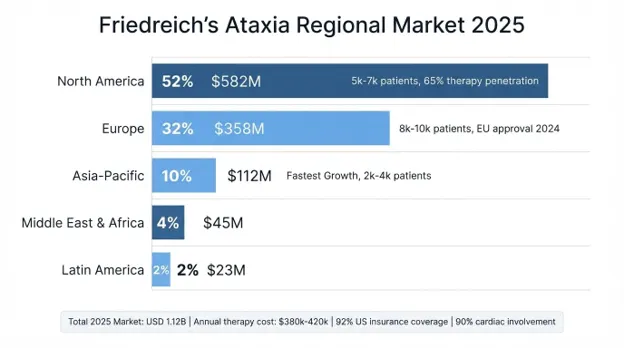
North America emerged as the major market for Friedreich's Ataxia across the world owing to advanced healthcare facilities, better diagnostics, and easy availability of disease-modifying drugs. Specialized neurology hospitals, wide insurance coverage, and active patient advocacy organizations that create awareness about the condition and make treatment accessible are some of the factors that prove beneficial for the region. The United States accounts for the largest share of the regional market due to rapid adoption of Skyclarys (omaveloxolone) post-FDA approval, favorable reimbursement policies, and wide coverage of commercial insurance. Owing to continued clinical trials, the presence of patient registries, and collaboration between academic and pharmaceutical organizations, the dominance of North America is reinforced. During the forecast period, it is expected that continued investments in new medicines would fuel market growth.
Europe comes second in terms of being a market for Friedreich’s ataxia owing to its advanced rare disease research systems, dedicated neurology centers, and efficient healthcare infrastructure. Following the approval of omaveloxolone by the European Commission in 2024, the region has benefited from an increase in disease-modifying drugs and has witnessed a rise in reimbursement in key markets such as the United Kingdom, Germany, France, Italy, and Spain. Participation in global clinical trials, advocacy groups, and greater awareness on the part of medical practitioners improve the chances of diagnosis and treatment. Strong market growth is expected to continue throughout the forecast period owing to consistent regulatory and insurance support and investments in novel medicines even though reimbursement and therapies differ in various European countries.
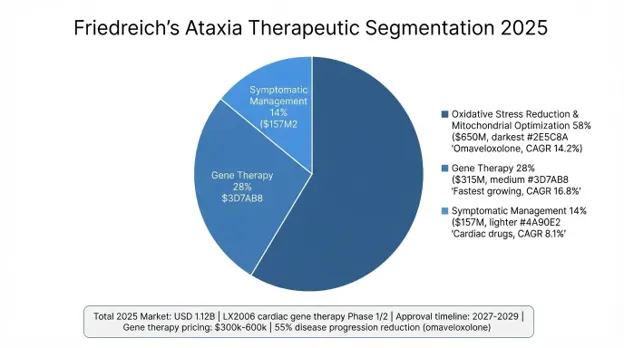
Oxidative Stress Reduction and Mitochondrial Function Optimization is the leading segment with a 58% market share, worth USD 650 million in 2025, recording a 14.2% CAGR during 2034. This segment includes pharmacological treatment options such as omaveloxolone (Nrf2 activator), vatiquinone (15-lipooxygenase inhibitor), antioxidants, and iron chelators to counter the core pathophysiological issue of oxidative stress and mitochondrial dysfunction caused due to the lack of fraxa. The success of this segment is attributed to the availability of the FDA-approved product omaveloxolone, pipeline products, a sound scientific basis backed up by extensive preclinical research, and its applicability in all patient segments.
Gene therapy is estimated to hold 28% market share, valued at USD 315 million in 2025, and is expected to grow to 16.8% CAGR until 2034 and will be the fastest-growing segment among all therapy segments. It includes adeno-associated virus vector-based strategies of delivery of frataxin genes into cardiac and neuronal tissues with the potential of curative or disease-modifying therapies by correction of the underlying genetic flaw. Growth in this segment is driven by initial proof of preventing heart conditions, advancement in the preclinical pipeline, approvals expected from 2027 to 2029, and huge market potential due to premium pricing.
Symptomatic Management & Complication Prevention constitutes 14% market share with a value of USD 157 million in 2025, exhibiting a growth rate of 8.1% during 2026-2034. It is a classic segment and includes cardiac drugs (ACE inhibitors, beta-blockers, and aldosterone antagonists), management of diabetes, rehabilitation techniques, and devices for motor dysfunction.
The Approved Medications category includes Skyclarys (omaveloxolone) as the only FDA/EMA-approved therapy modification drug worth USD 185-220 million in 2025 due to omaveloxolone global sales. Market expansion results from increasing use of therapy and diagnostics campaigns that help identify more patients, label extensions that allow therapy in adolescents (approved in 2023), and additional treatment indications such as other mitochondrial diseases besides Friedreich's ataxia.
Investigational drugs in the clinical development pipeline having a value of USD 895-920 million by 2025 consist of drugs like VATQUINONE (Phase 2), Leriglitazone (Phase 2), Nomlabofusp (Phase 1/2), DT-216 (Phase 1), Elamipretide (Phase 1/2), and LX2006 Gene Therapy (Phase 1/2), along with several preclinical drugs. The growth of this segment is a result of a solid pipeline of drugs that have different ways of approaching pathogenic mechanisms, regulatory approvals expected in 2026-2030, and the
Friedreich’s Ataxia drug development market features a relatively moderate level of concentration, with about 8-12 pharmaceutical/biotechnology firms having ongoing clinical drug development initiatives. Notable firms include Reata Pharmaceuticals (a subsidiary of Biogen) featuring omaveloxolone, a marketed treatment and strong pipeline; PTC Therapeutics with ongoing vatiquinone Phase 2 development initiative; Design Therapeutics with their novel GeneTAC technology tackling gene expression correction; Larimar Therapeutics featuring nomlabofusp, a frataxin replacement protein candidate; Lexeo Therapeutics with their cardiac-specific gene therapy LX2006; Stealth Therapeutics with their mitochondrial function optimization strategy; and Minoryx Therapeutics with their leriglitazone PPAR agonist development. Competitive advantage will be based on the uniqueness of the therapy mechanism, quality of clinical evidence, potential for regulatory approval, and pricing that meets market expectations for rare diseases.
February 2026: Larimar Therapeutics has launched the Phase 1/2 long-term extension study on nomlabofusp (CTI-1601), the frataxin-replacement treatment proving normal levels of frataxin in skin cells at 33% of healthy controls in previous Phase 1 studies. BLA submission planned for the end of 2025 through FDA’s accelerated approval process.
January 2026: Lexeo Therapeutics has released interim imaging data on LX2006 cardiac gene therapy treatment from the SUNRISE-FA Phase 1/2 trial, showing stabilization of left ventricular mass index in treated subjects compared to progressive hypertrophic remodeling in matched natural history controls.
November 2025: Design Therapeutics has developed a new drug candidate named DT-216P2, which is an improved form of the first DT-216 that had concerns about injection site thrombophlebitis in its Phase 1 study; the company plans to complete preliminary good laboratory practice studies by the end of 2024 and start a Phase 1/2 trial in 2025.
August 2025: PTC Therapeutics has issued top-line data of the Phase 2 MOVE-FA study of vatiquinone (PTC-743), which failed to show improvement in the primary endpoint of mFARS score changes but showed some success in secondary endpoints of fatigue and upright stability.
You'll get the sample you asked for by email. Remember to check your spam folder as well. If you have any further questions or require additional assistance, feel free to let us know via-
+1 724 648 0810 +91 976 407 9503 sales@intellectualmarketinsights.com
22 Aug 2026
Intellectual Market Insights Research © 2026. All rights reserved.