Share this link via:

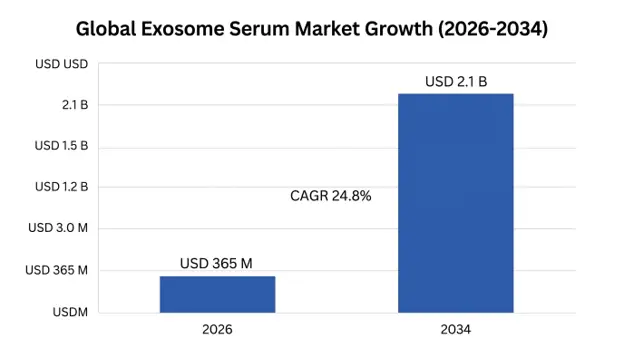
The global exosome serum market size was valued at USD 285 million in 2025 and is projected to reach USD 365 million in 2026, expanding to USD 2.1 billion by 2034, growing at a CAGR of 24.8% during the forecast period (2026-2034).
Exosome serums provide an innovative breakthrough in regenerative aesthetics, as they use naturally produced exosomes to transmit biological signals that help change cellular behavior. The nano-sized exosomes, with their diameters usually being anywhere between 30-150 nanometers, are secreted by nearly all kinds of cells, and act as intercellular messengers that transport biological material such as microRNA, messenger RNA, proteins, growth factors, cytokines, and lipids, helping them regulate gene expression and promote proliferation and functionality in the receiving cells. When applied topically as exosome serums, exosomes act on keratinocytes, fibroblasts, and dermal stem cells, encouraging collagen production and speeding up tissue repair and inflammation reduction, thus promoting cell renewal, using methods which differ from those used by cosmeceuticals.
The difference between exosome serums and regular serums, in scientific terms, is their degree of biological complexity and multiplexed signaling ability. Regular serums apply active molecules in isolation, for example, retinol, peptides, or an isolated growth factor as an isolated signaling molecule, whereas exosomes apply whole vesicles packed with hundreds of signaling molecules at the same time to create the complex signaling landscape found in youthful tissues. This complex biological signaling process results in cellular activity never before possible, which manifests as fast wound healing, increased collagen concentration in the dermis layer, decreased inflammation-induced hyperpigmentation, and improved skin tone and elasticity proven by published clinical studies.
The market consists of various sourcing methods, which range from scientifically optimized to regulation-based considerations. Human stem cell-derived exosomes are mainly derived from mesenchymal stem cells harvested from the Wharton’s jelly of the umbilical cord, adipose tissue, or bone marrow and show the greatest degree of homology to the human skin along with strong regenerative signals to help repair wounds and reverse photoaging. On the other hand, ginger root, centella asiatica, and aloe vera can be considered better due to their anti-inflammatory and antioxidative properties.
The commercial spectrum ranges from highly premium clinical-grade products that are incorporated into post-procedural regimens after laser resurfacing, microneedling, or radiofrequency procedures, to consumer-level luxurious skincare products designed for the prestigious beauty market segment. The application of exosome serums in the immediate post-procedure period is the most clinically supported and fastest-growing application, where the exosome serums applied directly after ablative and non-ablative procedures help repair the skin barrier quickly while minimizing erythema and downtime and enhancing the efficacy of the procedures themselves via improved cellular communication.
| Report Coverage | Details |
|---|---|
| Base Year | 2025 |
| Base Year Value | USD 285 Million |
| Forecast Value | USD 2.1 Billion |
| CAGR | 24.8% |
| Forecast Period | 2025-2034 |
| Historical Data | 2022-2025 |
| Largest Market | North America |
| Fastest Growing Market | Asia Pacific |
| Segments Covered | By Product Type, Application, Source, Distribution Channel, End-User |
| Region Covered | North America, Europe, Asia Pacific, Middle East & Africa, Latin America |
| Countries Covered | US, Canada, Mexico, UK, Germany, France, Italy, Spain, Netherlands, China, Japan, India, Australia, South Korea, Brazil, Argentina, UAE, Saudi Arabia, South Africa |
| Key Market Playes | ExoCoBio Inc., Elevai Labs Inc., BENEV Company Inc., Kimera Labs, Plated Skin Science, AnteAGE, Direct Biologics, Organicell Regenerative Medicine |
Get more details on this report - Request Free Sample
The primary structural factor responsible for driving growth in the exosome serum market is the shift away from inconsistent autologous techniques, especially PRP treatment, to consistent exosome-based solutions that provide improved efficacy and ease of use. The conventional approach based on PRP therapy is certainly sound from a scientific standpoint but comes with its own set of shortcomings such as the inconsistency of results depending on the amount of platelets present and the activity of growth factors, the need for blood collection, expensive centrifugation equipment, and patient discomfort during blood extraction, and dependence on the general health condition and age of the patients.
Exosome serums help overcome these limitations through standardized production methods which ensure the delivery of high concentrations of growth factors and signaling agents irrespective of individual patient characteristics. Clinically viable formulations of exosomes usually feature 10 to 100-fold higher concentrations of signaling compounds than autologous PRP, yet avoid the complications related to the processing of patient blood, as well as in-office procedures of collecting the blood of individual patients.
According to aesthetic practitioners, exosome serums incorporated into procedures like microneedling, laser resurfacing, and radiofrequency have been shown to effectively decrease post-procedure erythema by up to 40%-55%, increase epithelialization rates by 35%-45%, and produce better results for collagen remodeling than traditional treatment plans for the recovery period. Due to the very small size of exosomes, there is much greater penetration into the micro-channels generated through energy-based devices and direct targeting of growth factors to fibroblasts at a highly responsive time frame.
In the global market for skincare, there is a paradigm shift that is taking place towards skincare formulations with a biological basis that result in tangible changes at the cellular level rather than cosmetic changes; thus, a considerable amount of demand has been created for products made from exosomes, which epitomize the best that can be achieved in regenerative skincare technology. This paradigm shift has been influenced by the appearance of well-informed skincare consumers who understand ingredients' mechanism of action and their clinical significance.
Social media education, influencer support, and media attention focused on regenerative medicine have brought about an unprecedented consumer interest in cellular biology communications and the functions of extracellular vesicles as part of the process of healing and tissue maintenance. This is resulting in consumer knowledge about biological terms such as cellular senescence, degradation of collagen, and growth factor communications, opening a market willing to purchase scientific products that can make such claims.
Exosome serums address this need with ingredients that can communicate with recipient cells to cause them to adopt a younger manner of behavior. This is done through processes that stimulate endogenous collagen and elastin formation, cellular turnover optimization, and barrier function improvement. Exosome serums generally command high prices, often starting at USD 180 up to USD 450 for each individual product, due to consumer desire for biologically active products as opposed to cosmetic enhancements.
A major challenge for the exosome serum market is the lack of a harmonized international regulatory approach specifically for exosome-containing topicals, resulting in a complicated regulatory landscape in which the same product could be considered a cosmetic, medical device or biological product, depending on the jurisdiction, source and product claims. When it comes to regulatory oversight, the regulatory requirements for human stem cell-derived exosome serums are particularly stringent in key markets such as the United States and the European Union where human cell or tissue derived products can be subject to regulations on biological products including comprehensive preclinical testing, clinical trial programs, and manufacturing requirements for pharmaceutical products.
Regarding exosomes produced from human tissue, the stance adopted by the FDA is still changing, as the FDA suggests that exosome-based products aimed at therapy may be required to file Investigational New Drugs. On its part, the European Union’s legislation regulating Advanced Therapy Medicinal Products presents similar complications for exosomes made from human tissue, which may need to go through centralized marketing authorization via the European Medicines Agency. This represents excessive development burdens for innovation, considering how such products will have to undergo pharmaceutical development processes.
The lack of a standardized process for manufacture, along with quality criteria and potency testing in the exosomes industry, makes the regulatory landscape even more uncertain because the authorities find it difficult to regulate such diverse products using different isolation processes and different biological activities. This lack of standardization can result in more stringent regulations, which might constrain market growth.
The production of exosomes requires specialized biotechnology infrastructure and expertise which include specialized laboratories for cell culture and advanced purification machinery, among others, that place a high barrier to entry into the market and scalability of manufacturing processes. Exosome purification involves controlling the conditions under which cells are cultured and harvest processes that involve many complex procedures.
The limited availability of specialized manufacturing technology in biotechnology coupled with growing demand for the manufacture of cell therapies and gene therapies has resulted in an inadequate supply of exosome serum and higher production costs. Inadequate availability of ultra-pure starting material and other equipment and skilled labor presents another bottleneck that may hamper growth prospects.
Hair restoration, where exosome therapy is showing promising results for androgenic alopecia, alopecia areata, and chemotherapy-related alopecia through such effects as stimulation of the dermal papilla cells, elongation of anagen phase, and optimization of the follicular environment. The application of exosomes combined with microneedling has been shown to improve hair density of 28-42% and diameter enlargement of 18-25% after a 12–16-week period, which is analogous to existing methods like platelet-rich plasma treatment but with greater consistency because of biological standardization.
Hair restoration market size globally is estimated at USD 8.2 billion by 2025, and the exosomes-based hair restoration methods can be viewed as high-end solutions compared to other methods such as minoxidil, finasteride, and hair transplants. The scalp microenvironment offers optimal conditions for exosome delivery via follicular routes to reach the target cells like dermal papilla cells and follicular stem cells.
Plant-derived exosomes isolated from plants like Camellia sinensis, Centella asiatica, Aloe barbadensis, and Curcuma longa comprise an area of high growth potential that can be leveraged to solve problems with regulation and the growing popularity of natural and sustainable cosmetics ingredients among consumers. The plant-derived exosomes provide favorable regulatory classification as cosmetic ingredients by being categorized outside the strict approval processes for human-based biomaterials while at the same time giving scientific evidence for the anti-inflammatory, antioxidant, and barrier repairing properties of the ingredient.
The preparation of stable, concentrated formulations of exosomes from plants allows the industry to capitalize on the prestige and reputation associated with exosomes while allaying consumer fears regarding ingredients derived from humans or animals as well as regulatory hurdles facing human stem cell technology.
Innovative change is being brought about in the field of exosome serum by the application of advanced techniques in the process of lyophilization where liquid formulations of exosomes are turned into a dry form that can be stored for up to 24-36 months at room temperature. Exosomes that exist in liquid form must be kept under very cold conditions of -80°C to keep them intact, hence posing high logistics expenses.
Lyophilized exosome products are typically reconstituted using specialized diluent serums just before administration, which guarantees maximum biological activity and at the same time makes it possible for these substances to be stored easily and shipped globally without refrigeration requirements. This breakthrough has resulted in a reduction in transportation expenses by about 65-75 %.
Personalized preparation of exosomes is already available at high-end aesthetic clinics through point-of-care services using patient’s own biological material such as platelet rich plasma and adipose tissues to provide personalized exosome preparations that theoretically have the benefits of being immune compatible with the patients while meeting consumer demand for personalized medical treatments. The cost of these point-of-care services is relatively high, ranging from USD 1,200–2,800 per treatment.
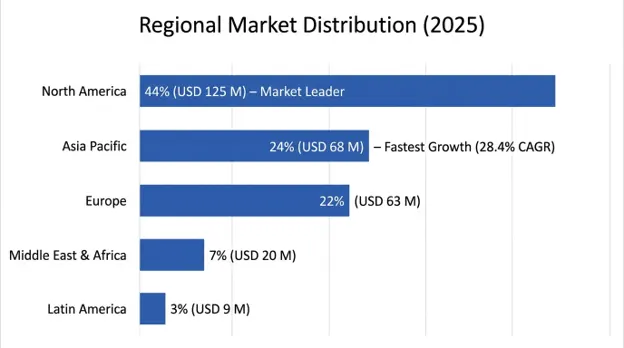
Market share for North America is estimated at USD 125 million in 2025 and will remain consistent in terms of expected CAGR of 23.2% until 2034 due to the presence of most regenerative medicine biotech companies, advanced infrastructure in the field of aesthetic medicine, as well as consumers with disposable incomes that can afford expensive skin care products. In terms of market value, the US comprises 86% of the total, aided by its pool of 2,800 board-certified dermatologists, 8,900 medical spas, and reimbursement mechanisms for aesthetic treatments.
Though the regulatory framework poses some difficulties for products derived from humans, it has been favorable towards those of plants and known origin, allowing their entry into the market within the cosmetics category, while regulatory guidelines evolve. The presence of prominent biotech firms like Elevai Labs, Kimera Labs, and Plated Skin Science in North American markets facilitates innovations that keep up the dominance of the region’s market.
The Asia Pacific region is the fastest-growing market segment with CAGR of 28.4% to 2034 and revenue of USD 68 million by 2025. South Korea is the center of innovations related to exosomes in the world, as there are companies like ExoCoBio that have pioneered global innovation in this sector using cutting-edge research on exosomes combined with their beauty industry. South Korea’s relatively supportive regulatory environment for exosome-based cosmetics has facilitated commercialization and the emergence of Korean brands in this field.
China provides the biggest volume potential in the area due to its beauty market of USD 68 billion and booming field of medical aesthetics that require highly scientifically developed skin care products. In Japan, there is an innovative cosmeceuticals consumer segment with a history of new product ingredients that makes it easy to introduce expensive exosome serum products in the market. In India, rapid growth of urban population increases market demands.
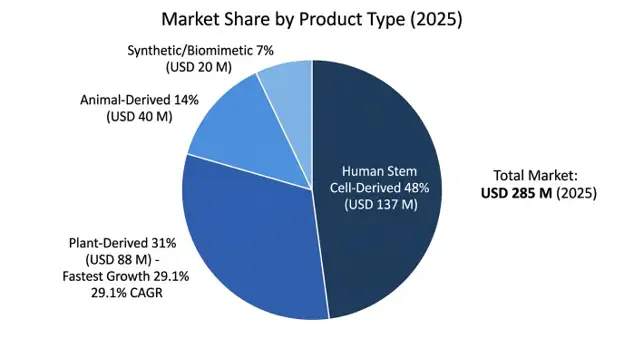
Product Type Insights: Stem cell-derived exosome serums lead in terms of market share, accounting for 48%, valued at USD 137 million in 2025, with a CAGR of 24.2% during the period of 2026-2034 owing to their better clinical evidence and luxury positioning in the professional channel. On the other hand, plant-derived exosome serums contribute 31% market share, worth USD 88 million in 2025, which is expected to be the fastest-growing segment, with a CAGR of 29.1%.
Application Insights: Anti-Aging & Skin Rejuvenation is estimated to be the largest segment with revenues amounting to USD 154 Million by 2025, growing at a CAGR of 23.8%. This is because the anti-aging and skin rejuvenation applications are the major applications that have helped drive professional uptake as well as market growth from consumers. Hair Restoration comes second with estimated revenue of USD 57 Million growing at the highest CAGR of 31.7%, making it the fastest-growing application.
Distribution Channel Insights: The professional channels like dermatology clinics and medical spas constitute a share of 58% which is worth USD 165 million by 2025, considering that the product range in question requires clinical quality, which leads to the adoption of the category. DTC online channels account for 24% of the market, valued at USD 68 million, and are expected to be the fastest-growing distribution channel with a CAGR of 32.1%. due to consumer brand growth.
Competitive Landscape
Characterized by significant fragmentation in which the major players hold approximately 45 to 52% of the value market share owing to their proprietary technology for isolating exotics, clinical evidence for demonstrating efficacy, and positioning themselves effectively in professional distribution networks. The sources of competitive advantage arise from consistent and high-quality production, clinical evidence for efficacy, regulation, and partnerships with medical aesthetics professionals and high-end skin care brands.
Areas for innovation lie in technologies for efficient and effective isolation of exosomes, exosome stabilization techniques to increase shelf life without requiring cold storage, and effective delivery systems to maximize skin penetration and bioavailability. The partnership between biotech companies and well-established cosmetic products manufacturers is driving the growth of the market.
March 2026: Elevai Labs Inc. reported the conclusion of a study involving 180 patients that showed an improvement rate of 34 % in their skin elasticity score after 12 weeks of being treated with their novel umbilical cord-based exosomes serum product.
February 2026: ExoCoBio Inc. recently won approval for its novel exosome platform, ASCE+, for use in different European countries for the commercial availability of its lyophilized exosome products in the EU member countries.
January 2026: Benev Company Inc. introduced an innovative range of plant-based exosomes serum that uses advanced technology to utilize its exclusive grapevine and green tea exosomes and target consumers belonging to the category of clean beauty with 28% clinical evidence on improving skin hydration measurements.
December 2025: Plated Skin Science successfully raised Series C capital amounting to USD 45 million to increase production capacity for its platelet exosome products and advance innovations in exosome-based therapy customization technologies.
November 2025: A leading international group of companies dealing in beauty products purchased a botanical exosome technology company worth $180 million. This purchase was indicative of the entry of plant-based exosome technology into luxury retail beauty product range.
You'll get the sample you asked for by email. Remember to check your spam folder as well. If you have any further questions or require additional assistance, feel free to let us know via-
+1 724 648 0810 +91 976 407 9503 sales@intellectualmarketinsights.com
01 Jun 2026
Intellectual Market Insights Research © 2026. All rights reserved.