Share this link via:

The global functional supplements market size was valued at USD 165.4 billion in 2025 and is projected to reach USD 178.6 billion in 2026, expanding to USD 325.8 billion by 2034, growing at a CAGR of 7.8% during the forecast period (2026-2034).
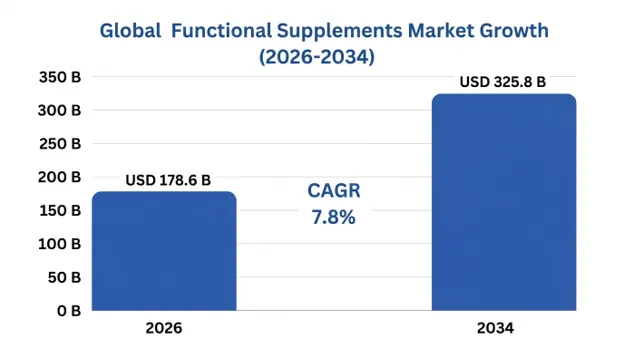
Functional supplements are innovative nutritional products that contain active bio-compounds, standardized herbs, and other ingredients selected for their ability to provide specific health benefits beyond meeting basic nutritional requirements. In contrast to regular multivitamin supplements that only seek to make up for nutritional deficiencies, functional supplements are specifically designed to improve biological and cognitive functions, modulate immune system responses, increase gut micro-biota diversity and provide other targeted benefits to consumers.
There have been notable developments in the scientific research underpinning functional supplements. These scientific advances include the incorporation of clinical studies that establish links between formulation ingredients and their effects on various biological parameters such as immunity, cognitive function, athletic performance, cardiovascular health, and metabolic disorders. Advances in formulation technology which incorporate liposomal delivery, microencapsulation, sustained release delivery systems, and bioenhancers to increase absorption rates have enhanced the efficacy of the clinical application.
The commercial landscape for functional supplements addresses key consumer health needs including prevention of diseases, prevention of risks of chronic diseases, improved performance, and healthy aging due to rising trend of proactivity in health management among the consumers. Key public health factors supporting market growth include rising nutritional deficiencies worldwide, affecting more than 2 billion individuals, rising burden of chronic diseases demanding preventive nutrition interventions, and aging population across the world with approximately 1.1 billion individuals aged 60 and above seeking nutritional solutions.
| Report Coverage | Details |
|---|---|
| Base Year | 2025 |
| Base Year Value | USD 165.4 Billion |
| Forecast Value | USD 325.8 Billion |
| CAGR | 7.8% |
| Forecast Period | 2025-2034 |
| Historical Data | 2022-2025 |
| Largest Market | North America |
| Fastest Growing Market | Asia Pacific |
| Segments Covered | By Product Type, Form, Application, Distribution Channel, End-User |
| Region Covered | North America, Europe, Asia Pacific, Middle East & Africa, Latin America |
| Countries Covered | US, Canada, Mexico, UK, Germany, France, Italy, Spain, China, Japan, India, Australia, South Korea, Brazil, Argentina, UAE, Saudi Arabia, South Africa |
| Key Market Playes | Nestlé Health Science, Abbott Laboratories, Amway Corporation, Herbalife Nutrition, Bayer AG, Haleon plc, GNC Holdings |
Get more details on this report - Request Free Sample
The most significant factor influencing the functional supplements market is heightened consumer health awareness because of the post-COVID pandemic period, where the pandemic itself changed the world’s perception about health management and immunity building through nutritional supplements. The pandemic reinforced the importance of strong metabolic health and immune function for overall well-being., leading consumers to adopt healthier lifestyles even after the initial stages of the pandemic.
Health awareness surveys among consumers performed in 2025 show that the share of consumers in developed countries using functional supplements for preventive health care purposes increased from 41% in 2019 to 68%, reflecting a growing recognition that preventive healthcare is more sustainable and cost-effective than reactive treatment. Immune enhancement was the primary driver of growth in the market, which has held its high market positioning due to the ongoing importance of immunity outside the context of pandemics.
The adoption of wearable devices and biometric monitoring has enabled consumers to assess supplement effectiveness, encouraging long-term usage. When individuals have access to metrics such as heart rate variability, sleep quality, and glucose levels, they can easily relate functions of their supplements to positive physiological changes, encouraging them to consume the supplements habitually.
Ongoing demographic transitions are creating substantial demand for functional supplements among aging populations. The population aged 60 years and above reached 1.1 billion in 2025 and is expected to reach 2.1 billion by 2050. Annual spending on health supplements among this age group averages USD 485, compared with USD 215 among consumers below 45 years of age.
Healthy aging has changed in its focus from being reactive and only managing diseases to actively improving quality of life by maintaining energy levels, mental clarity, physical fitness, and social interaction. This shift has resulted in increasingly sophisticated consumer demand for supplements that can help target aging based on mechanisms such as cellular senescence, mitochondrial dysfunction, oxidative stress buildup, and inflammatory pathways. New categories of longevity supplements are emerging such as NAD+ boosting, senolytics, telomere protection, and mitochondrial optimization.
One of the greatest challenges facing the market is regulatory complexity, as health claim requirements, ingredient approvals, manufacturing standards, and marketing regulations vary significantly across countries. The great difference between the FDA in the US which has a more liberal approach and the European Food Safety Authority’s strict health claim regulations causes immense complexity for multinational corporations when they seek to establish their products globally.
Low barriers to entry in less regulated markets have resulted in the emergence of lower-quality products, ingredient mislabeling, and formulations containing insufficient active ingredient concentrations, and overpromising by marketers, all of which sometimes provoke consumer mistrust and media criticism.
A major market opportunity lies in personalized supplement programs based on genetics, microbiome profiles, blood biomarkers, and nutritional assessments, with artificial intelligence enabling the formulation of supplements tailored to individual biological needs and health goals. This innovation combines consumer diagnostic testing with advanced digital health solutions to overcome the limitations of population-based supplementation recommendations.
The supplements industry is experiencing significant convergence with the beauty and cosmetics sector in terms of nutricosmetics aimed at addressing issues such as cellular aging, skin hydration, and hair follicles. Formulations containing hydrolyzed collagen peptides, hyaluronic acid, ceramides, and specialized antioxidants are increasingly marketed through premium branding and distributed through beauty retail channels.
Rapid advancements in formulations designed for various stages of women’s health are expanding the market beyond traditional prenatal supplements to formulations that regulate PCOS, PMS, fertility, and peri-menopause issues. These formulations include compounds such as myo-inositol, maca root, and probiotics.
North America accounted for the largest functional supplements market, valued at USD 58.4 billion in 2025. The compound annual growth rate of the North American region is expected to be 6.8% up to 2034. This leadership is supported by strong health and wellness awareness, high disposable incomes, and the presence of leading nutraceutical innovators. Almost 85% of the market value in North America is attributed to the US, owing to a favorable regulatory environment and strong consumer adoption.
Asia Pacific is the fastest-growing regional market, projected to expand at a CAGR of 9.7% through 2034. The primary growth drivers include the rapid expansion of the middle-class population, increasing urbanization, and the love of preventive health care supported by long-standing traditions of preventive healthcare and natural medicine. Leading regional revenue share belongs to China and Japan.
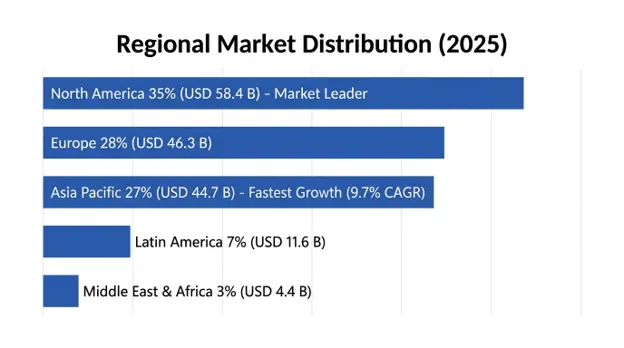
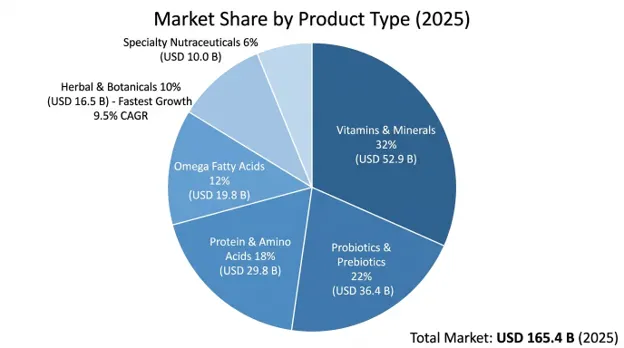
The leading product category is Vitamins & Minerals, which hold 32% market share and have a market value of USD 52.9 billion in 2025, and these ingredients have developed into bio-available and co-factored functional complexes from mere isolates. Next are Probiotics & Prebiotics that have grown very quickly due to the developments made in science related to microbiome. This category accounts for 22% of the global market share. Herbs and Botanicals have the highest compound annual growth rate of 9.5%.
Capsules & Tablets have 41% market share, capturing the major portions of clinical and practitioner-dispensed channels. Gummies & Chewables have 24% market share with CAGR of 12.6%, effectively tapping into adult population segments. Powders account for 20% of market share and are particularly dominant within the sports nutrition and superfoods segments. with larger dosage requirements.
The Immunity Support category achieved market stability at 21% market share post-pandemic spike owing to consistent usage of supplements for basic protection. The Gut Health segment accounts for 18% of market share, reflecting a shift from basic digestive support toward comprehensive microbiome health management. Cognitive and mental health is the fastest-growing category with a CAGR of 15.2%.
In terms of market fragmentation, the global functional supplements industry can be considered moderately fragmented, with the top ten competitors accounting for around 35-42% of the total value of the industry. The competition is based on the quality of clinical proof, innovation of ingredients, brand reputation, power of channels, and most recently, personalized services and sustainability efforts. Pharmaceutical companies maintain a competitive advantage through science-based research, while specialized nutrition companies do well in their direct-to-consumer strategies.
April 2026: Nestlé Health Science unveiled its new AI-based personalized nutrition system based on blood biomarker analysis and genetic screening, with the aim to reach 2 million customers in North America and Europe.
March 2026: Abbott Laboratories got clearance for a new cognitive health supplement derived from lion’s mane mushrooms. The product was validated through multiple randomized controlled trials.
February 2026: Herbalife Nutrition made a strategic alliance with a leading company in microbiome research to create clinically proven personalized probiotics, committing an investment of USD 180 million over three years.
January 2026: Amway Corporation developed the next generation of plant-based protein products by using fermentation amino acids profiles that are highly bioavailable at 95%, equivalent to whey protein.
You'll get the sample you asked for by email. Remember to check your spam folder as well. If you have any further questions or require additional assistance, feel free to let us know via-
+1 724 648 0810 +91 976 407 9503 sales@intellectualmarketinsights.com
01 Jun 2026
Intellectual Market Insights Research © 2026. All rights reserved.