Share this link via:

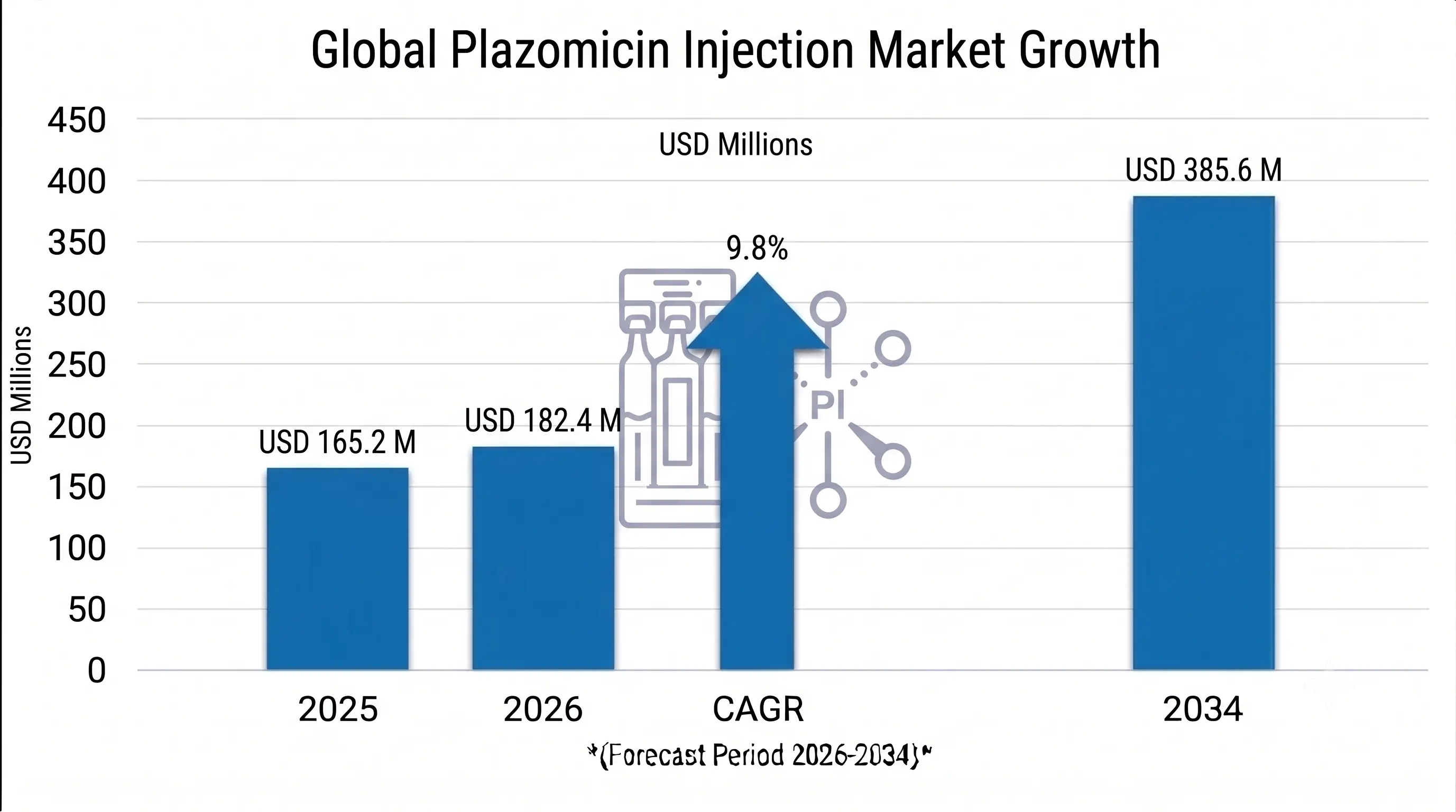
The global plazomicin injection market size was valued at USD 165.2 million in 2025 and is projected to reach USD 182.4 million in 2026, expanding to USD 385.6 million by 2034, growing at a CAGR of 9.8% during the forecast period (2026-2034).
Plazomicin, sold under the brand name Zemdri, is an advanced second-generation aminoglycoside antibiotic which has been rationally developed using medicinal chemistry techniques that aim at overcoming the key resistance factors against which existing aminoglycosides have become inactive when used against multidrug resistant gram-negative bacteria. Initially developed by Achaogen Inc., plazomicin was later acquired by Cipla USA following the acquisition of Achaogen’s assets. Plazomicin has been developed based on modifications of the sisomicin molecule by introducing specific chemical groups to prevent enzyme access to the aminoglycoside molecules.
The unique pharmacological advance behind the clinical importance of plazomicin is its development as an aminoglycoside that has been altered to be resistant to the three major types of aminoglycoside modifying enzymes such as acetyltransferases, nucleotidyltransferases, and phosphotransferases. This is important because the three types of aminoglycoside modifying enzymes are the primary cause of resistance in carbapenem-resistant Enterobacteriaceae and extended-spectrum beta-lactamase producing pathogens which are the topmost urgent antimicrobial resistance priorities as per the WHO priority pathogen list. The bactericidal activity of plazomicin even against strains with these resistance determinants makes it crucial in the treatment of various infections.
The approval of plazomicin in June 2018 by the FDA for the treatment of complicated urinary tract infections including pyelonephritis in adults with few or no other treatment options heralded a new era in personalized antimicrobial therapy, with evidence from two pivotal studies proving the effectiveness of this drug EPIC proved it was not inferior to meropenem, while the CARE study found that there were substantial benefits among patients who could not be helped by conventional methods to treat infections caused by carbapenem-resistant Enterobacteriaceae.
Plazomicin commercialization occurs in the context of the highly intricate world of antimicrobial stewardship programs that control usage for continued effectiveness and consider the critical need for new treatment options to fight multidrug resistant pathogens. Unlike the traditional use of most antibiotics, plazomicin is used as a strategic antibiotic under antimicrobial stewardship protocols that ensure that microbiology confirms the susceptibility of multidrug resistant bacteria to the drug. As such, the commercialization model of the drug makes value creation different in that value comes from clinical success and resistance prevention rather than sales volume.
| Report Coverage | Details |
|---|---|
| Base Year | 2025 |
| Base Year Value | USD 165.2 Million |
| Forecast Value | USD 385.6 Million |
| CAGR | 9.8% |
| Forecast Period | 2025-2034 |
| Historical Data | 2022-2025 |
| Largest Market | North America |
| Fastest Growing Market | Asia Pacific |
| Segments Covered | By Indication, Pathogen Profile, Patient Type, End-User, Distribution Channel |
| Region Covered | North America, Europe, Asia Pacific, Middle East & Africa, Latin America |
| Countries Covered | US, Canada, Mexico, UK, Germany, France, Italy, Spain, Netherlands, China, Japan, India, Australia, South Korea, Brazil, Argentina, UAE, Saudi Arabia, South Africa |
| Key Market Playes | Cipla USA Inc., Melinta Therapeutics, Specialty Infectious Disease Pharmacies, Major Hospital Networks |
Get more details on this report - Request Free Sample
The principal factor driving growth in the plazomicin market is the growing threat of antimicrobial resistance globally, which includes rapid acquisition and dissemination of carbapenem-resistant Enterobacteriaceae (CRE), among other multidrug-resistant gram-negative bacteria, posing the most immediate infectious diseases threat to health care providers globally. In recognition of this threat, the World Health Organization has classified carbapenem-resistant Enterobacteriaceae as a critically important pathogen in need of urgent development of new antibiotics, providing the basis for the use of plazomicin.
The emergence of infections involving carbapenem-resistant Enterobacteriaceae has been observed to be alarmingly spreading epidemiologically in hospitals around the world, with infection incidence in intensive care units reaching 15–25% of gram-negative bacteremia cases in high-endemicity areas such as Southern Europe, Southeast Asia, and Latin America. Such has dire implications, since the mortality rate from carbapenem-resistant Klebsiella pneumoniae blood infections is seen to be 40-70% in case treatment is delayed. As such, there is great need for drugs like plazomicin, which retains effectiveness against these resistant strains.
The global health burden due to antibiotic resistance amounted to 1.27 million deaths per year in 2025, with future estimates showing an increase until 2034 without proper intervention measures like introduction of new antibiotics. Infections caused by multidrug-resistant gram-negative bacteria in healthcare settings have affected an estimated 4.2 million people each year within advanced healthcare facilities, and complicated UTIs being the most common indication for which plazomicin can be used.
A key market driver is the increasing number of government programs and frameworks for legislations that are aimed at tackling the issue of antimicrobial resistance via development, regulation, and commercialization of innovative drugs against multidrug-resistant pathogens. The understanding that the current system does not sufficiently motivate the development of new antibiotics has resulted in government action through direct financing, among other approaches.
GAIN Act provisions ensured that plazomicin qualified as an infectious disease product, resulting in market exclusivity for five more years, priority review status, and fast track status, which facilitated discussions with regulators during development. However, PASTEUR Act provisions represent a new paradigm, as the payment system will now be based on subscriptions; hence, the government authorities will pay access fees annually regardless of how much use the drugs get for their public health purposes.
The funding of research for aminoglycosides optimization was made possible through various initiatives and programs of European regulation such as Innovative Medicines Initiative and ENABLE. The adaptive pathways approach used by the European Medicines Agency also helps in achieving conditional approvals of new antibiotics to treat important health problems. Coordination between different regions through the Global Antimicrobial Resistance and Use Surveillance System also aids in making evidence-based decisions about the position of the drugs.
The most significant constraint affecting the market development of plazomicin is associated with the FDA approval for complicated UTIs and acute pyelonephritis only in patients for whom there are no other therapy options, thus forming a very narrow target audience of patients who can benefit from the drug's properties. Although clinical data support plazomicin’s efficacy in treating bloodstream infections and hospital-acquired/ventilator-associated pneumonia, the drug has not been officially approved by the FDA for these indications.
Antimicrobial stewardship programs promote appropriate use but entails stringent control that mandates the approval of an infectious diseases specialist, positive proof of microbial susceptibility, and evidence of failure of other antibiotics before the use of Plazomicin. The protocols that are crucial for maintaining resistance will necessarily restrict volume growth by making sure that Plazomicin is a conserved drug in the hospital setting.
Therapeutic drug monitoring of such medications, due to the cost and complexity involved, may hinder their adoption especially where there are alternative antibiotics which are more economically and logistically convenient. Formulary committees need to weigh the clinical usefulness of reserve antibiotics with financial limitations and management complexities in deciding whether to include them in a facility’s formulary list.
An interesting potential for growth arises in terms of increasing the use of plazomicin as part of outpatient parenteral antimicrobial programs, whereby the once-daily dose of the drug offers several distinct advantages compared to other IV-based antibiotics that require multiple doses per day. With the healthcare sector focused on lowering hospital lengths of stay without compromising the quality of care, there are strong incentives to move stable patients to an outpatient setting for further antimicrobial therapy.
The pharmacological characteristics of plazomicin enable simpler outpatient treatment with the help of home infusion programs, specialty pharmacies, and ambulatory infusion clinics that may deliver therapeutic drug monitoring and clinical care essential for safe aminoglycoside therapy. Economic advantages of minimizing patients’ length of stay due to outpatient antibiotic therapy represent strong arguments for health systems to introduce outpatient parenteral antimicrobial therapy programs.
Partnerships with organizations in the sphere of home health care, specialty pharmacies, and outpatient infusion may increase marketing potential of the product by bringing revenue from the rapidly developing industry of home care. Formulation of guidelines on outpatient use of plazomicin, including procedures of therapeutic drug monitoring and safety management, may facilitate adoption of plazomicin in various health care settings.
Plazomicin’s clinical usefulness is greatly increased by combining the drug with rapid molecular diagnostic tools which provide information on resistance mechanisms such as aminoglycoside modifying enzyme, carbapenemase production, and efflux pump overproduction on the same day. These molecular diagnostic tools transform antibiotic prescribing to precision-based selection of therapies and thus facilitates efficient use of plazomicin.
Multiplex PCR platforms and next-generation sequencing systems are evolving to include comprehensive resistance gene panels that differentiate between plazomicin-susceptible and plazomicin-resistant pathways. This information can be used to guide prescribers' decisions within hours after specimen receipt with respect to stewardship principles.
The development of artificial intelligence algorithms capable of analyzing resistance patterns and patients' characteristics to facilitate decisions about the choice of the best therapy and, specifically, identify those patients that will benefit the most from plazomicin treatment is being explored to aid clinical decision-making process. These efforts make the concept of precision medicine an important component in the utilization of reserve antibiotics by ensuring its use when there is most clinical benefit and least risk for resistance development.
The North American region holds the leading market share value of Plazomicin at USD 89.4 million in 2025 and is expected to expand further at the CAGR of 9.2% till 2034. This growth is primarily driven by the U.S., which contributes 88% of the regional market revenue owing to the approval from the FDA for its availability, infrastructure for antimicrobial stewardship program, and presence of academic medical centers with infectious disease experts.
The market in the U.S. is supported by extensive surveillance activities such as that provided by the CDC’s Antibiotic Resistance Laboratory Network surveillance for the prevalence of carbapenem-resistant organisms and evidence-based formulary management. Plazomicin coverage is provided under Medicare/Medicaid through inpatient diagnosis related group reimbursement as well as through specialty pharmacies for use in outpatient parenteral antimicrobial therapy.
In academic medical centers and veteran health care systems, there is a concentration of purchasing where formularies are used in an evidence-based manner by infectious disease specialists without regard to purely commercial aspects. There is a solid infrastructure already established for outpatient parenteral antimicrobial therapy to facilitate the transition from inpatient to outpatient therapy with plazomicin.
Asia Pacific is the fastest-growing regional market with a CAGR of 12.4% until 2034, to reach USD 38.2 million in 2025, owing to regulatory approvals gaining momentum in China, India, Japan, and Southeast Asian countries known for having some of the highest cases of infections caused by carbapenem resistant bacteria globally. Resistance levels to antimicrobials are significantly higher than the global average, with carbapenem resistance in Enterobacteriaceae ranging from 35% to 55% in major Indian and Southeast Asian hospitals.
China’s healthcare modernization efforts and investments in infectious disease infrastructure will lead to an increasing receptivity to novel antibiotics targeting the nation’s high incidence of multidrug-resistant infections. Regulatory filings to national health agencies and interactions with regional medical societies are top market development activities for securing business in the Asia Pacific region.
The focus in the region on antimicrobial resistance reduction via government policy measures and international cooperative initiatives favors novel antibiotic availability via improved regulatory approaches and public health procurement procedures. Collaboration with academic medical centers and clinical trial participation can provide avenues into the market as well as data for regulatory filing and formulary listing purposes.
Complicated UTIs, including pyelonephritis, constitute the leading indication segment at 64% market share, worth USD 105.7 million in 2025, and exhibiting 9.1% CAGR through 2034 owing to its FDA approval as the indication that gives the basis for commercial application. The indication receives support from comprehensive molecular tests that detect multidrug-resistant bacteria along with sound clinical practice guidelines that facilitate proper patient selection.
Bloodstream infections caused by carbapenem-resistant Enterobacteriaceae account for a 22% market share worth USD 36.3 million in 2025, which mainly consists of compassionate uses and off-label application based on strong clinical evidence. This indication enjoys an 11.8% CAGR due to the increasing real-world evidence and potential label expansion.
Hospital-acquired pneumonia and ventilator-associated pneumonia account for 10% market share with maximum growth potential of 13.2% CAGR due to their applicability in combination treatment owing to the effectiveness of plazomicin against resistant aminoglycosides. Other multi-drug-resistant gram-negative infections account for 4% market share due to various clinical applications of novel aminoglycosides.
Enterobacteriaceae with Resistance to Carbapenem accounts for the biggest share of pathogens at 56%, given their role as the primary clinical indication that differentiates plazomicin from its competitors through its resistance to aminoglycoside-modifying enzymes. Enterobacteriaceae with Extended Spectrum Beta-Lactamase Production account for 28% of market share, and in which plazomicin provides useful carbapenem-sparing options where necessary.
Aminoglycoside-Resistant Enterobacteriaceae account for 12% market share and are the pathogens in which plazomicin can differentiate itself clinically more than traditional aminoglycosides. Other Multidrug Resistant Gram-Negative Bacteria account for 4% of market share.
Tertiary Care Hospitals make up the highest user type with a market share of 52% worth USD 85.9 million in 2025 due to the presence of complex cases that necessitate the use of reserve antibiotics as well as infectious disease specialists and drug therapy monitoring capability. Academic Medical Centers rank second with a market share of 28% and a CAGR of 10.4% due to studies and clinical trials conducted on plazomicin.
Community Hospitals make up the third highest user type with a market share of 14% since the expansion of stewardship programs enables the use of reserve antibiotics as well as infectious disease specialists. Long-Term Acute Care Facilities hold a market share of 6%.
The global plazomicin injection market is part of the niche antibiotic space where competition revolves around the clinical aspects of plazomicin injections and not conventional pharmaceutical marketing strategies. Cipla USA has taken commercial control of plazomicin after the filing for bankruptcy by Achaogen and uses existing hospital and infectious diseases specialist distribution channels to make the product accessible.
Positioning of plazomicin is based on its unique mechanism of action as an aminoglycoside antibiotic offering bactericidal effects, unlike other beta-lactam antibiotics, its ability to resist modification by the aminoglycoside modifying enzymes, and overall better safety profile when compared to other options such as colistin and polymyxin B. Competition also includes companion diagnostic solutions that support antimicrobial stewardship programs.
June 2026: Cipla USA reported successful real-world studies which showed the efficacy of plazomicin in combination treatment regimens for extensively drug-resistant Enterobacteriaceae infections. This would allow label extension plans to be considered along with combination therapy recommendations.
May 2026: Regulatory submission for marketing approval of plazomicin for complicated urinary tract infections due to multidrug-resistant gram-negative bacteria was filed with the European Medicines Agency, with approval projected in 2027.
April 2026: New treatment guidelines were added to Centers for Disease Control and Prevention’s carbapenem-resistant Enterobacteriaceae guidelines, where plazomicin was included as an active component in combination treatment, thus offering guideline support for inclusion on formularies.
March 2026: The GPO network was extended by Cipla USA to cover 1,800 hospitals, resulting in significant improvement in market access and formulary listing opportunities.
February 2026: Studies in clinical pharmacology showing the optimal dosing strategy for critically ill patients based on changed pharmacokinetics, facilitating therapeutic drug monitoring procedures in the intensive care unit environment.
January 2026: Molecular diagnostic methods that were rapid utilized susceptibility algorithms to plazomicin by determining genes encoding aminoglycoside-modifying enzymes.
You'll get the sample you asked for by email. Remember to check your spam folder as well. If you have any further questions or require additional assistance, feel free to let us know via-
+1 724 648 0810 +91 976 407 9503 sales@intellectualmarketinsights.com
01 Jul 2026
Intellectual Market Insights Research © 2026. All rights reserved.