Share this link via:

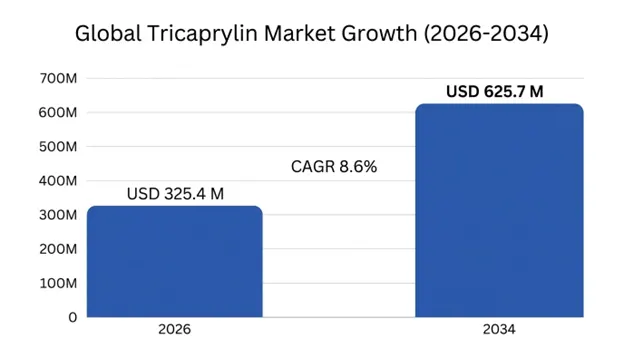
The global tricaprylin market was valued at USD 295.8 million in 2025 and is projected to reach USD 325.4 million in 2026, expanding to USD 625.7 million by 2034, growing at a CAGR of 8.6% during the forecast period (2026-2034).
Tri-caprylin” is incorrect/inconsistent terminology. Standard usage is tricaprylin characterized by three esterified caprylic acid molecules bound to a glycerol backbone. Tricaprylin, also described in scientific literature as glyceryl tricaprylate or trioctanoin, stands out due to its unique metabolic path that involves rapid hepatic conversion to ketone bodies, thereby bypassing the carnitine-dependent transport process required for mitochondrial uptake. The unique metabolic profile of tricaprylin makes it highly valuable in the development of pharmaceuticals, nutraceuticals, cosmetics, and specialized nutrition products characterized by high demand for rapid energy supply, enhanced bioavailability, and improved stability of formulations.
The pharmaceutical relevance of tricaprylin extends beyond its role as an excipient to advanced applications in drug delivery systems. These include, but are not limited to, self-emulsifying drug delivery systems and parenteral nutrition emulsions intended to deliver rapidly metabolized energy sources to critically ill patients. The ability of the product to solubilize many lipophilic compounds combined with its inclusion in major pharmacopeias such as USP, EP, and JP has made pharmaceutical grade tricaprylin a critical component in solving bioavailability problems encountered by approximately 40-70% of drug candidates under development.
Therapeutic applications represent one of the most innovative segments of the tricaprylin market, especially in the treatment of neurodegenerative conditions, given that clinical trials have shown that consumption of oral tricaprylin creates ketone bodies able to provide an alternative source of brain energy for patients with Alzheimer’s disease and mild cognitive impairment associated with hypometabolism of glucose. The FDA’s classification of certain tricaprylin formulations as medical foods has expanded the compound’s therapeutic potential, have prompted significant pharmaceutical investments and formed high-value markets worth far more than industrial uses.
Tricaprylin is used in skin care and cosmetics as a high-end plant-based emollient and carrier oil that resonates well with current clean beauty practices and consumers’ need for natural products. Due to its outstanding spread ability, lack of greasiness, resistance to oxidation, as well as ability to deliver sensitive active ingredients such as peptides, vitamins, and sunscreens without altering their properties, it has become more commonly chosen as a replacement for silicones and synthetic oils in premium skin and color care products.
| Report Coverage | Details |
|---|---|
| Base Year | 2025 |
| Base Year Value | USD 295.8 Million |
| Forecast Value | USD 625.7 Million |
| CAGR | 8.6% |
| Forecast Period | 2025-2034 |
| Historical Data | 2022-2025 |
| Largest Market | Europe |
| Fastest Growing Market | Asia Pacific |
| Segments Covered | By Grade, Source, Application, Purity Level, End-User |
| Region Covered | North America, Europe, Asia Pacific, Middle East & Africa, Latin America |
| Countries Covered | US, Canada, Mexico, UK, Germany, France, Italy, Spain, Netherlands, China, Japan, India, Australia, South Korea, Brazil, Argentina, UAE, Saudi Arabia, South Africa |
| Key Market Playes | Croda International Plc, IOI Oleo GmbH, Stepan Company, KLK OLEO, BASF SE, Oleon NV, Wilmar International |
Get more details on this report - Request Free Sample
Increasing usage of lipid drug delivery technologies by the pharmaceutical industry for overcoming the problem of limited bioavailability of poorly water-soluble drug candidates constitutes the main structural driver of the growth of tricaprylin market. Around 40% of the drugs sold on the market and 70-90% of compounds under development belong to the Biopharmaceuticals Classification System Classes II and IV and therefore possess very limited aqueous solubility. This necessitates usage of advanced lipid excipients, which would allow improving solubility and enhancing absorption as well as ensuring sufficient availability in circulation for providing a therapeutic effect. Tricaprylin shows excellent properties when used in drug delivery systems such as self-emulsification systems, solid lipid nanoparticles, and microemulsions due to its excellent solubilization abilities and digestibility by pancreatic lipases.
Precision medicine and personalization of treatment have increased the demand even more, as formulators seek out drug delivery solutions which will target cancerous conditions, diseases of the CNS, and orphan diseases that cannot be treated with conventional oral medications. In the case of pharmaceutical-grade tricaprylin, it is priced at between USD 12-18 per kilogram, while food-grade costs only between USD 4-7 due to the stringent specifications associated with it.
Key Performance Metrics:
The most revolutionary growth factor affecting the tricaprylin market is the increasing number of clinical findings proving the drug's possible treatment capacity for diseases such as Alzheimer's disease or cognitive impairment with cerebral glucose hypometabolism. In 2025, the number of patients with Alzheimer's disease is estimated to be around 55 million globally; however, according to future projections, by 2050, the figure is expected to rise to 139 million. Therefore, the huge therapeutic demand for Alzheimer's patients needs to be satisfied because of the inefficiency of the pharmacologically approved drugs against the disease. Tricaprylin increases plasma ketones to 0.3-0.5 mM levels when orally administered at a dose range of 20-40 mL daily.
The FDA medical food approval for tricaprylin formulations for the dietary treatment of Alzheimer’s patients has paved a viable path for its usage as a drug. This is because the medical food products can command prices ranging from USD 85-145 as compared to generic supplement prices of USD 15-25.
Therapeutic Development Metrics:
The growing trend among the cosmetic and personal care products manufacturers to move towards cleaner formulations that utilize sustainably sourced ingredients is representing a seventeen-fold increase. such as Tricaprylin from sources like coconut oil and palm kernel oil, which meet the standards established by the Roundtable on Sustainable Palm Oil (RSPO). Consumers are increasingly becoming aware of ingredient labels, as reflected in survey results, which reveal that 67% of the people avoid using products with synthetic silicones, petroleum-derived emollients and ingredients which raise doubts regarding their environmental sustainability.
Emollient properties of tricaprylin, such as fast skin penetration and lack of greasiness, make it a suitable replacement for cyclic silicones and mineral oils in luxury skincare products. Oxidative stability and chemical inertness make Tricaprylin a safe choice when used along with cosmetics actives such as peptides, antioxidants and botanicals.
Clean Beauty Market Metrics:
The major bottleneck restraining the growth prospects of tricaprylin market is its extensive use of coconut oil and palm kernel oil as major sources of caprylic acid. These raw materials pose inherent risks related to the price fluctuations in agriculture commodities and geographical concentration of production in tropical areas exposed to climatic changes. Price fluctuations of coconut oil reached an average level of 40-65% in 2019-2024, because of El Niño effect on production in the Philippines and Indonesia, increasing demands for vegetable oil, and changing export policies. Moreover, the relatively low concentration of C8 caprylic acid in natural oils (5-8% in coconut oil and 3-5% in palm kernel oil) requires substantial raw material input for tricaprylin production, thus exacerbating the effect of feedstock cost on the production process.
Several energy-intensive fractionation and esterification steps that should be performed for caprylic acid isolation and further synthesis of pure tricaprylin contribute to increased sensitivity of producers to energy price changes across the globe. Raw material expenses comprise around 65-70% of production costs; thus, the market remains particularly vulnerable to agricultural indices.
Supply Chain Impact Metrics:
Tricaprylin has tremendous opportunities for its formulation and use as medical food and investigational new drugs for treatment of Alzheimer’s disease and other cognitively impaired conditions associated with low glucose metabolism in the brain. Commercial success lies in utilizing the FDA medical food approval pathway to provide a cost-effective route to develop tricaprylin medical foods for treatment of Alzheimer’s disease in the form of diet under a physician’s prescription with the ability to claim health benefits associated with the disease and justify premium pricing.
The Alzheimer’s disease therapeutic market was valued at USD 8.9 billion in 2025 and is expected to experience remarkable growth due to introduction of disease-modifying treatments that will pave way for metabolic interventions. There are various developments that are being pursued by several pharmaceutical firms regarding combination therapies involving amyloid removal and metabolic support.
Medical Food Opportunity Metrics:
Tricaprylin product development has been revolutionized by the introduction of structured lipids developed from incorporation of tricaprylin-sourced caprylic acid into the glycerol backbone together with longer chain fatty acids for designer triglycerides designed for quick metabolism but still containing essential fatty acids and calories. This is enabled by enzymatic interesterification technologies using immobilized lipases, which allow precise control of the position of fatty acids.
Structured lipid products solve the main disadvantage of the use of tricaprylin in nutrition by supplying the essential fatty acids while retaining the benefits associated with medium chain fatty acids. Development of sn-2 structure of medium chain fatty acid in these structured lipids has demonstrated superior intestinal absorption and metabolism than medium chain fatty acids in random distribution, thereby enabling premium products to command 45-70% price premiums in prices over tricaprylin.
Innovation Metrics:
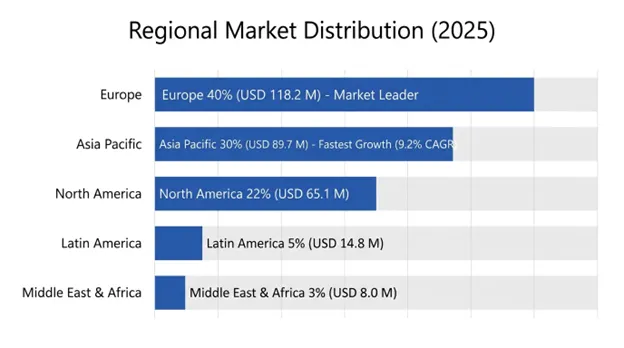
Europe dominated with the largest share worth USD 118.2 million and is forecast to maintain the estimated CAGR of 8.4% till 2034. The key driving factors include regional presence of major cosmetic and pharmaceutical companies, favorable regulations, stringent requirements of sustainability, which promote use of RSPO certified raw materials. Countries like Germany, France and Italy are key epicenters of premium skincare products and pharmaceuticals manufacture; performance and regulatory advantage of tricaprylin make it the most popular choice.
The European regulation regime based on REACH and EU Cosmetics Regulations contributed to fast phase-out of synthetic emollients, which had positive impact on plant-based emollients such as tricaprylin. Sustainability regulations are strictly followed by European manufacturers who dominate in the global sphere, and about 85% of tricaprylin used in Europe in 2025 are certified sustainable.
Key Performance Indicators:
Asia-Pacific turned out to be the fastest-growing region with a CAGR forecast of 9.2% until 2034, reaching USD 89.7 million by 2025. Asia-Pacific market growth is driven by two major factors: the region serves as the key raw material producer and at the same time as the developing consumption market, with Indonesia and Philippines being key global producers of coconut and palm oil and China, South Korea, and Japan having fast-growing demands for premium applications in personal care and pharmaceutics.
The proximity to raw materials ensures that Asia-Pacific manufacturers benefit from cost advantages and rising income levels stimulate the need for premium quality nutritional supplements and cosmetics featuring tricaprylin. Growth in the sector of pharmaceutical manufacturing in India and China ensures increasing demand for high-purity excipients.
Regional Growth Drivers:
Pharmaceutical Grade commands 44% market share, worth USD 130.2 million in 2025, at a CAGR of 10.2% during 2025-2034. This market segment comprises pure tricaprylin that complies with USP, EP, and JP guidelines to be used as a pharmaceutical excipient ingredient and fetches higher prices of USD 12-18 per kilogram against USD 4-7 for food grade tricaprylin due to high purity standards and exhaustive documentation.
The Food Grade segment commands 32% market share worth USD 94.7 million and is majorly driven by its use of ketogenic supplements. The Cosmetics Grade segment commands 18% market share and is projected to be worth USD 53.2 million in 2025. Industrial-grade tricaprylin holds the remaining 6% market share.
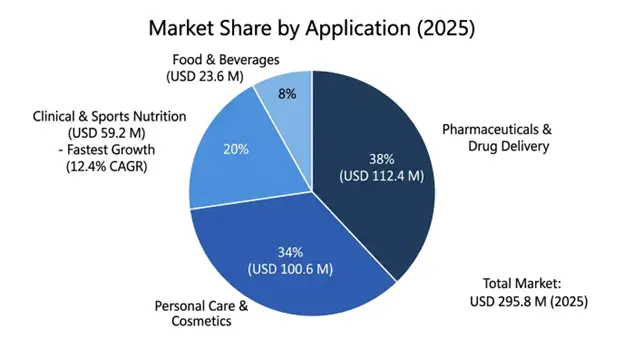
Pharmaceuticals & Drug Delivery is the biggest segment, accounting for 38% of the market share and estimated to grow at a CAGR of 10.8% between 2025-2034 with a value of USD 112.4 million in 2025. The segment includes lipid-based drug delivery system, parenteral nutrition, and emerging applications like medicinal foods for neurodegenerative diseases. Personal Care & Cosmetics account for 34% of the market share worth USD 100.6 million.
Clinical & Sports Nutrition is a significant segment with a 20% share of the market and estimated to grow at a CAGR of 12.4%. The fastest-growing segment is driven by the demand for products formulated under ketogenic diets and sports-related products. Food & Beverages segment is worth 8% of the market share.
Tricaprylin extracted from Coconut Oil takes the lead position with 54% of the market share and is worth USD 159.7 million in 2025, due to the consumer preference towards ingredients obtained from coconut oil. On the other hand, Palm kernel oil-based tricaprylin constitutes 38% of the market share, where it is preferred for cost-efficient use but also needs sustainability certification. Synthetic and other plant oils together constitute the remaining 8% market share.
The market for tricaprylin across the world is moderately concentrated, with the six largest companies collectively accounting for 58-63% of the market share based on their integrated oleochemical processing capacities, excellent quality management systems, and well-established global supply chains supporting their operations in the pharmaceutical, cosmetics, and food industries. Competitive advantages lie in consistency of purity, sustainable sourcing abilities, regulatory documentation, and technical expertise.
April 2026: Croda International Plc revealed increase in manufacturing capabilities of 35% for pharmaceutical-grade tricaprylin at its European plant to satisfy the rising needs of lipid-based drug delivery systems and parenteral nutrition suppliers.
March 2026: IOI Oleo GmbH introduced ultra-high purity grade of tricaprylin, which has less than 0.5 peroxide value meq/kg for parenteral nutrition use, to meet the demands of critical care and neonatal intensive care units.
February 2026: KLK OLEO opened a new enzyme esterification plant in Malaysia with an additional production capacity of 12,000 MT/year for producing MCT of both pharmaceutical and food grades with full RSPO certification.
January 2026: Biotech company revealed successful outcomes of its tricaprylin based medical food in treating Alzheimer’s patients in Phase II clinical trials showing improvement in cognizance among APOE4 negative groups after 6 months.
December 2025: BASF SE got 100% segregated RSPO certification for all its medium chain triglycerides products, meeting the strict standards of Europe cosmetic brands for sustainable sourcing.
You'll get the sample you asked for by email. Remember to check your spam folder as well. If you have any further questions or require additional assistance, feel free to let us know via-
+1 724 648 0810 +91 976 407 9503 sales@intellectualmarketinsights.com
23 May 2026
Intellectual Market Insights Research © 2026. All rights reserved.