Share this link via:

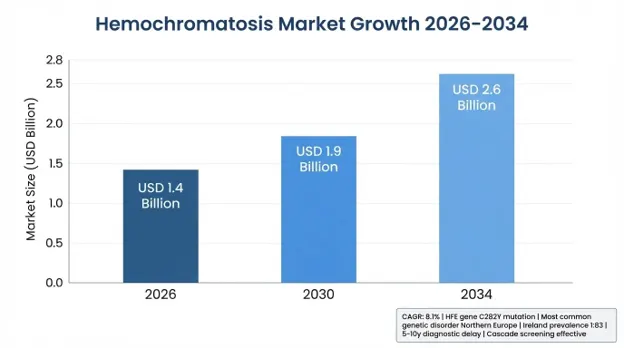
The global hemochromatosis market size was valued at USD 1.3 billion in 2025 and is projected to reach USD 1.4 billion in 2026, expanding to USD 2.6 billion by 2034, growing at a CAGR of 8.1% during the forecast period (2026-2034).
Hemochromatosis is a metabolic disease where the absorption of iron from the intestine is inappropriately increased and excess iron accumulates in the organs of the body, particularly in the liver, heart, pancreas, joints, and pituitary gland. Excess iron deposited in the human body occurs over decades, causing fibrosis and tissue remodeling, lipid peroxidation and oxidative stress, diabetes mellitus, hypogonadism, arrhythmias, restrictive cardiomyopathy, disabling arthropathy, and hepatic cirrhosis, all without a person's awareness. There are two types of disorder: hereditary (primary) hemochromatosis, which is caused by inherited mutations in proteins that regulate iron absorption, and secondary hemochromatosis, which occurs as the consequence of repeated blood transfusions, chronic liver disease, or excessive iron intake.
Hereditary hemochromatosis is one of the most prevalent auto-recessive inherited diseases in Northern European and Celtic populations, most often caused by mutations in the HFE gene on chromosome 6, of which C282Y homozygosity is the most common. The frequency of carriers and homozygotes varies widely from a population of approximately 1 in 200 individuals in wider Northern European populations to as high as 1 in 83 in Ireland, the highest prevalence of the C282Y mutation worldwide. However, there is marked clinical penetrance, with many homozygous persons never developing clinically significant iron overload, and males tend to develop clinical disease earlier than females, as the iron loss during menstruation and pregnancy provides some protection against the disease. Less common non-HFE hereditary forms of hemochromatosis are related to mutations in other genes, such as hemojuvelin, transferrin receptor 2, and ferroportin, and have different clinical courses and are usually detected using expanded genetic panels where classical HFE testing is negative.
Secondary hemochromatosis is a growing, important source of market value and is seen mainly in patients with transfusion-dependent hematological disorders like thalassemia major, sickle cell disease, myelodysplastic syndromes, and aplastic anemia, who receive multiple red blood cell transfusions at rates that are disproportionately high compared with normal physiological turnover. Chronic liver diseases (e.g., alcohol-related liver disease, non-alcoholic fatty liver disease, and viral hepatitis) can also cause dysmetabolic iron overload syndromes that also need to be monitored and, in some instances, treated with iron chelation therapy.
The hemochromatosis diagnostic and therapeutic environment involves the use of serum ferritin and transferrin saturation as the screening tests of choice, HFE genetic testing as confirmation, non-invasive magnetic resonance imaging for quantification of hepatic and cardiac iron, and liver biopsy with iron staining for selected cases of ambiguous presentations. Therapeutically, the market is supported by the decades-old gold standard therapeutic phlebotomy, scheduled removal of whole blood to remove iron stores, and the use of deferasirox, deferiprone, and deferoxamine, which are pharmacological iron chelators, for patients with secondary iron overload or contraindications to blood removal (including anemia or poor venous access).
This hemochromatosis market is not only relatively small in absolute terms, but its importance is compounded by the chronic, lifetime nature of disease management and the significant economic impact of underdiagnosis it can have. In the past, population studies have shown that the time from onset of symptoms to diagnosis ranges between 5 and 10 years, and during this time, organ damage is continuing to increase, causing irreversible damage. Patients with early diagnosis and regular iron depletion can have survival and quality of life like that of the general population, while late presentation (cirrhosis, hepatocellular carcinoma, or advanced cardiomyopathy) results in significant downstream health care costs such as hospitalization, oncologic therapy, and liver transplant. This economic imbalance persists and continues to fuel growing research funding for cascade genetic screening, diagnostic facility development, and emerging pharmacologic treatments of the hepcidin-ferroportin axis controlling systemic iron homeostasis.
| Report Coverage | Details |
|---|---|
| Base Year | 2025 |
| Base Year Value | USD 1.3 billion |
| Forecast Value | USD 2.6 Billion |
| CAGR | 8.1% |
| Forecast Period | 2025-2034 |
| Historical Data | 2022-2025 |
| Largest Market | North America |
| Fastest Growing Market | Asia Pacific |
| Segments Covered | By Type, Treatment, Diagnosis, End-User, Region |
| Region Covered | North America, Europe, Asia Pacific, Middle East & Africa, Latin America |
| Countries Covered | US, Canada, Mexico, UK, Germany, France, Ireland, Italy, Spain, China, Japan, India, Australia, South Korea, Brazil, UAE, Saudi Arabia, South Africa |
| Key Market Playes | Novartis AG, Chiesi Farmaceutici, Vifor Pharma (CSL Vifor), Protagonist Therapeutics, Silence Therapeutics, Sun Pharmaceutical Industries, Roche Diagnostics |
Get more details on this report - Request Free Sample
Rising Genetic Screening and Cascade Testing Improving Diagnosis Rates
The growing recognition of hereditary hemochromatosis among clinicians, increased use of serum ferritin and transferring saturation measurements in the general practice setting, and HFE genotyping have all played an important role in closing the historical diagnostic gap in this field. Screening programs in Ireland, Australia, and some European countries have shown that testing the first-degree relatives of a patient diagnosed with hemochromatosis, all having a 25% chance of being homozygous for the gene, is a highly effective approach to identifying those at risk before severe organ damage can take place. The addition of the HFE mutation analysis to the expanding carrier testing panels and direct-to-consumer genetic testing services is another factor facilitating the incidence of diagnosis.
Expanding Burden of Transfusion-Dependent Secondary Iron Overload
Survival rates for patients suffering from thalassemia major, sickle cell disease, myelodysplastic syndrome, and various other conditions requiring frequent blood transfusions have contributed to the increase in the number of patients worldwide suffering from secondary iron overload and requiring lifelong chelation therapy. Since every unit of transfused blood contains iron that cannot be eliminated by the body, patients receiving frequent blood transfusions acquire iron at such a rapid rate that it surpasses the safety limit, thereby requiring frequent chelation along with assessment of the iron load through the serum ferritin test and magnetic resonance imaging of the liver and heart iron levels. The challenge is most severe in thalassemia-prevalent areas of South Asia, Southeast Asia, and the Mediterranean region.
Despite increased recognition, there is still significant underdiagnosis of hemochromatosis in various parts of the world because of non-specific initial symptoms like fatigue and joint pain that are common in many other diseases, leading to the misdiagnosis of the disease and delayed referral to specialists. The prevalence of treatment with phlebotomy, which is cheap and very effective for most hereditary types of the condition, in turn restricts the growth of the pharmaceutical market for its expensive treatments in this population group.
The possibility for developing therapeutic interventions aimed at the hepcidin-ferroprotein regulation axis in systemic iron absorption holds great promise in pharmacological management of iron overload without regular bloodletting for those intolerant or ineligible for phlebotomy. In addition to this promising area of development, there is potential in innovative approaches in non-invasive diagnostics, such as MRI relaxometry that would allow estimating the iron burden in the liver and heart without a biopsy, and in clinical decision support systems using artificial intelligence to identify undetected patients based on standard laboratory results.
The North America hemochromatosis market is expected to be the largest due to the presence of a high prevalence of HFE mutations in people with Northern European ancestry, high genetic testing rates, and the presence of well-developed health care coverage for genetic testing, follow-up, and treatment with phlebotomy or chelators. The U.S. contributes most of the revenue in the region, thanks to a large network of hepatology and hematology specialists, increasing uptake of direct-to-consumer genetic testing, and planned surveillance for cirrhosis and HCC in advanced cases.
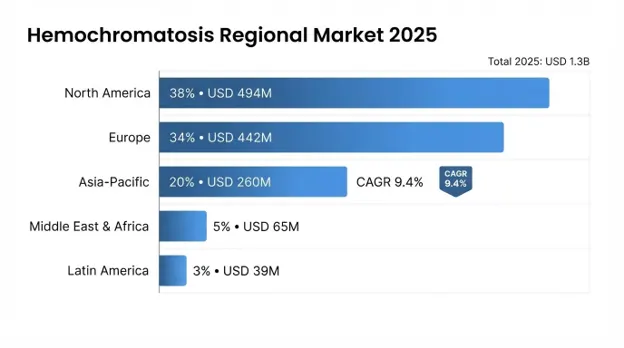
Europe is a well-described region with a mature and well-known distribution of HFE carriers due to very high frequencies found in populations of Celtic and Northern European origin, including Ireland, the United Kingdom, and Scandinavia. Countries have established national screening programs and cascade testing programs, along with established patient registries, which provide a stable and predictable demand for iron studies, genetic testing, and services for lifelong phlebotomy.
The Asia Pacific is the fastest-growing regional market due to the significant prevalence of secondary hemochromatosis in the region, especially in thalassemia-endemic countries, including India, Thailand, and China, where a rising number of transfusion services and the increasing survival of patients with thalassemia and sickle cell disease are fueling the steady demand for iron chelation therapy and iron-burden monitoring. Physician recognition of hereditary hemochromatosis, as well as increasing genetic testing capacity in the region, drives incremental growth across the more developed healthcare markets of Japan, Australia, and South Korea.
Type Insights: Hereditary hemochromatosis is the leading segment by type, fueled by its position as one of the most prevalent genetic conditions in Western countries, backed up by the growing adoption of cascade testing and incidental diagnosis in consumer genetics. Secondary hemochromatosis is the fastest-growing segment by type, owing to rising numbers of transfusion-dependent patients suffering from hematological cancers and hemoglobinopathies, with this smaller segment contributing disproportionately high revenues for drugs due to mandatory long-term chelation.
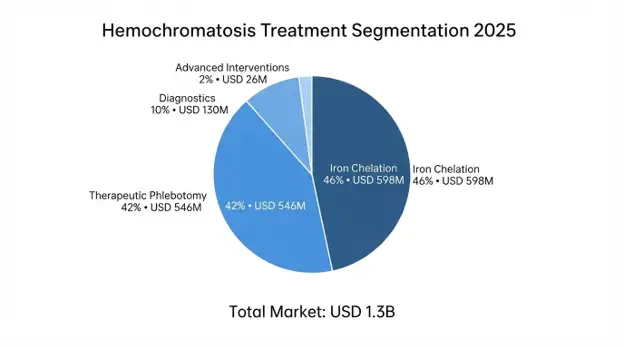
Treatment Insights: Therapeutic phlebotomy continues to be the largest mode of therapy in terms of volume owing to its use as a first-line therapy for most hereditary hemochromatosis cases, although its contribution to revenue is skewed towards the cost of procedures and monitoring rather than sales of drugs. Iron chelation therapy is the fastest-growing therapy category owing to the growing number of indications of secondary hemochromatosis, development of more efficacious oral therapies, and emerging pipeline of agents targeting the hepcidin pathway.
Diagnosis Insights: Serum iron tests, comprising tests on ferritin and transferrin saturation, continue to be the most popular tests due to their cheapness and importance in screening as well as monitoring. Genetic tests constitute the most rapidly growing test category owing to their application in cascade tests, multigenic tests, and consumer genomics tests, whereas imaging tests, specifically MRI iron quantification tests, are gradually replacing invasive liver biopsy and histology in staging and monitoring the iron load.
End-User Insights: Hospitals & clinics form the biggest end-user segment, considering their importance in performing diagnostic work-ups, administering phlebotomies, and managing complicated cases that require a multidisciplinary approach by specialists. The Specialty Clinics & Hematology/Hepatology Centers, as well as Diagnostic Laboratories, form considerable end-user segments due to the rise in number of specialized clinics for iron disorders along with rapid growth in genetic and biochemical testing facilities.
A relatively fragmented competitive environment is seen in the global market for hemochromatosis, involving both existing drug companies dealing with iron chelation drugs and biotech firms involved in the development of new hepcidin-pathway and RNA interference approaches, as well as diagnostics players offering genetic tests and iron-quantity imaging tools. The competitive edge in the chelation therapy field is gained through efficacy, tolerability, convenient dosing, and compliance, while generic competition affects the pricing of such existing therapies as deferasirox and deferiprone. Biotech competition is mostly focused on hepcidin mimics, TMPRSS6-targeted oligonucleotides, and ferroportin inhibitors.
July 2026: Clinical trials of vamifeport were performed on individuals with HFE hereditary hemochromatosis as a potential oral treatment for reducing iron, rather than the conventional phlebotomy.
June 2026: Studies on the role of the hepcidin-ferroportin axis were enhanced, where blocking the function of ferroportin was identified as an essential way of dealing with the excess iron absorption problem.
April 2026: Development of treatments for hepcidin occurred due to advancements in the clinical research area, which included creating approaches that imitate the role of hepcidin.
February 2026: The increasing use of MRI for the measurement of liver iron concentration and genetic tests helped improve the estimation of the presence of iron overload and genetic disorders.
November 2025: An increasing interest was shown in non-phlebotomy treatments as the pharmaceutical industry developed therapies that aimed at controlling iron levels.
You'll get the sample you asked for by email. Remember to check your spam folder as well. If you have any further questions or require additional assistance, feel free to let us know via-
+1 724 648 0810 +91 976 407 9503 sales@intellectualmarketinsights.com
26 Aug 2026
Intellectual Market Insights Research © 2026. All rights reserved.