Share this link via:

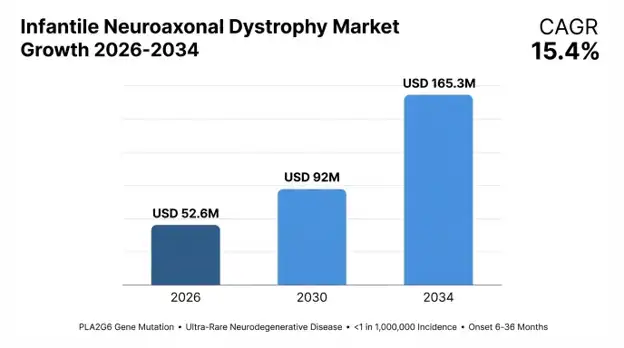
The global infantile neuroaxonal dystrophy (INAD) market size was valued at USD 46.8 million in 2025 and is projected to reach USD 52.6 million in 2026, expanding to USD 165.3 million by 2034, growing at a compound annual growth rate (CAGR) of 15.4% during the forecast period (2026-2034).
Infantile Neuroaxonal Dystrophy is an ultra-rare, autosomal recessive neurodegenerative disease caused by biallelic pathogenic variants of the PLA2G6 gene on the human chromosome 22q13.1. This gene codes for calcium-independent phospholipase A2 (group VI), which plays a pivotal part in the remodeling of membrane phospholipids, maintaining the integrity of mitochondrial membranes and normal axonal transport. As the functional enzyme activity is lost, progressive lipid peroxidation, abnormal iron accumulation in the basal ganglia, and abnormal swelling of degenerating axonal terminals (spheroid bodies) occur throughout the central and peripheral nervous systems, thereby creating the pathological signature of the disease. INAD is the most severe and earliest onset phenotype of the broader spectrum of PLA2G7-associated neurodegeneration (PLAN) and atypical neuroaxonal dystrophy (NAD) that presents later in childhood, as well as PLA2G6-related dystonia-parkinsonism (also known as PARK14), which occurs in early adulthood. This common molecular background for the entire phenotypic spectrum has emerged as a relevant factor in the design of therapeutic targets in modern therapy and has become a subject of investigation for both the restorative actions of PLA2G6 and its downstream effects in all three clinical presentations.
In clinical terms, INAD occurs from 6-36 months of age, usually after a history of normal or slightly retarded development. Children affected by the disease experience progressive deterioration of earlier acquired motor and cognitive skills, truncal hypotonia, which evolves into spastic tetraparesis, optic atrophy with nystagmus, cerebral atrophy detected by magnetic resonance imaging (MRI), secondary generalized seizures, and bulbar dysfunction, which often results in feeding deficits necessitating the use of gastrostomy. Due to its striking rarity (epidemiological estimates published in the literature place its incidence below one in 1 million live births) and the fact that its early features overlap significantly with other infantile encephalopathies such as cerebral palsy, mitochondrial disorders, and other subtypes of neurodegeneration with brain iron accumulation, a significant proportion of cases are either undiagnosed or diagnosed only at the end of a prolonged diagnostic process.
Up to now, treatment of INAD has been almost exclusively limited to symptomatic and supportive measures administered in specialized pediatric neurology and metabolic disease centers, such as antiepileptic drugs, antispasmodic drugs (baclofen), nutritional and gastrostomy care, respiratory care, and multidisciplinary rehabilitative care. This produces a relatively steady income stream of mostly non-proprietary products such as general medicines and other care services. This landscape is now starting to change, with access to next-generation sequencing gene panels with genes involved in neurodegeneration-with-brain-iron-accumulation reducing the diagnostic delay; with international natural history registries and biospecimen repositories bringing together the longitudinal clinical and biomarker data that are vital for the design of viable interventional trials; and with biotechnology developers working on approaches to replace the defective gene, to intervene on the RNA level, and to target small molecules for antioxidant activity, which target the underlying PLA2G6 defect and its downstream lipid peroxidation and mitochondrial consequences. It is noteworthy that one of the few documented cases of a mechanism-targeted intervention that has been evaluated in INAD patients is a polyunsaturated fatty acid (PUFA) therapy developed by Retrotope Inc. that is designed to reverse the effects of lipid peroxidation.
Commercial relevance in this market is based not on the number of treatments but on high per-patient costs of treatment, orphan drug pricing strategies, and significant lifetime cost savings for any therapy with any meaningful effect on the otherwise uniformly progressive disease course. The market for INAD is projected to move from a relatively small supportive-care category into a more lucrative innovative ultra-rare disease category as diagnostic capacity expands and natural history and biomarker infrastructure grows and as early-stage gene and RNA therapy programs enter the clinical testing phase during the forecast period.
| Report Coverage | Details |
|---|---|
| Base Year | 2025 |
| Base Year Value | USD 46.8 Million |
| Forecast Value | USD 165.3 Million |
| CAGR | 15.4% |
| Forecast Period | 2025-2034 |
| Historical Data | 2022-2025 |
| Largest Market | North America |
| Fastest Growing Market | Europe |
| Segments Covered | By Treatment Type, Diagnostic Modality, Route of Administration, End-User, Region |
| Region Covered | North America, Europe, Asia Pacific, Middle East & Africa, Latin America |
| Countries Covered | US, Canada, UK, Germany, France, Italy, Spain, Netherlands, Turkey, China, Japan, India, Australia, South Korea, Brazil, UAE, Saudi Arabia |
| Key Market Playes | Retrotope Inc., Taysha Gene Therapies, Encoded Therapeutics, Passage Bio, Ionis Pharmaceuticals, Ultragenyx Pharmaceutical, PTC Therapeutics, uniQure N.V. |
Get more details on this report - Request Free Sample
According to the report, the INAD market can be segmented based on the type of treatment into symptomatic and supportive treatment versus new disease-modifying treatments targeting genes, RNA, and small molecules; according to the diagnostic method, as genetic tests, neuroimaging tests, and electrophysiological evaluation play an important part in the diagnosis of this disease; according to the route of administration, because the development of intrathecal or intracerebroventricular drug administration is needed for the central nervous system targeting drugs; and based on end-users, as there are only a few centers treating INAD around the world. Geographical analysis reveals the great difference between high-income areas with well-developed genomic testing facilities and orphan drugs and poorer areas with underdiagnosis and lack of treatment.
INAD market expansion is largely driven by the slow development of gene replacement and RNA-based methods aimed at restoring normal PLA2G6 function or mitigating its metabolic effects. INAD, being a monogenic condition due to the loss-of-function mutation in one defined gene and affected neurons remaining structurally intact in the early disease stage prior to axonal degeneration, makes this condition an interesting scientific case for adeno-associated viral vector gene delivery therapy or antisense and lipid peroxidation modulation strategies. The precedence set by the approved gene treatments for similar early-onset pediatric neurodegenerative conditions demonstrates that one-time treatments can provide long-lasting neurological effects and justify premium orphan drug prices despite the small number of patients, which stimulates further work on PLA2G6- and pathway-targeted drugs.
INAD has had its diagnosis significantly delayed due to overlap of clinical symptoms with other infantile neurodegenerative diseases and unavailability of comprehensive genetic screening tests. The rapid development of next-generation sequencing (NGS) panels for the analysis of neurodegeneration with brain iron accumulation-related genes such as PLA2G6, along with increasing clinical experience with diagnostic patterns of imaging and clinical characteristics, has greatly reduced the period from the development of the first symptoms to molecular diagnosis in healthcare settings with appropriate resources. This will facilitate identification of additional patients eligible for possible future treatment of this condition prior to significant neurodegeneration and inclusion in natural history and clinical studies.
The most fundamental constraint on INAD market development is the extraordinarily small global patient population, which is dispersed across numerous countries rather than concentrated in any single region. This creates severe challenges for clinical trial recruitment, statistical power, and generation of robust efficacy evidence required for regulatory approval and payer reimbursement. The rapidly progressive nature of the disease further narrows the therapeutic intervention window and complicates the use of placebo-controlled designs on ethical grounds, pushing developers toward single-arm trials supported by natural history comparators, which regulators evaluate with additional scrutiny.
The development of a successful therapy targeting PLA2G6 or the pathways involved in INAD can serve as an approach to validate the administration, dosage, and monitoring of safety for such a therapy that can also be applied to atypical neuroaxonal dystrophy and PLA2G6 dystonia-parkinsonism, as well as other neurodegenerative diseases characterized by brain iron accumulation that involve the same underlying pathology. This gives the opportunity to distribute R&D expenses over more patients.
A trend that has characterized the development of INAD is the construction of natural history and registry infrastructure using international networks collaborating, having been built based on previous European consortia dealing with NBIA disorders and sponsored by patient advocacy groups facilitating the international gathering of data. The registries are increasingly incorporating genomics, imaging, and biomarker information to accurately describe the phenotype and to facilitate the designing of clinical trials, which would be impossible due to the small number of patients scattered globally.
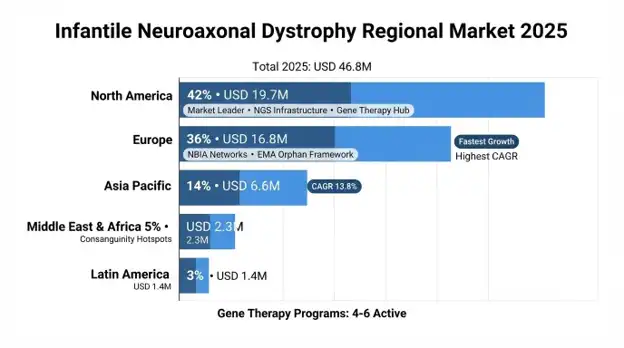
North America is the biggest region driving the global INAD market, with a high concentration of pediatric neurology and neurogenetics expertise, relatively robust access to next-generation genomic diagnostics, and active academic research programs on PLA2G6-associated neurodegeneration. There is a strong commercial climate for future INAD-directed therapies, as the region has a precedent for advanced reimbursement for other high-cost gene therapeutics in pediatric neurological conditions.
Coordinated rare-disease research infrastructure, incentives for orphan medicinal products, and well-established academic centers with long-standing experience in studying NBIA and PLAN are expected to propel Europe as the fastest-growing region over the forecast period. Regional research capacity is enhanced by the contribution of well-defined cohorts of patients that are disproportionately large and well characterized compared to the size of the population in some regions such as parts of Turkey and the rest of the Middle East, with elevated consanguinity rates.
Asia Pacific, Latin America, and the Middle East & Africa make up a smaller portion of the market today due to the low availability of full genetic testing options, as well as limited budgets for future treatment options that will be much higher than the cost of current therapies. The capacity to conduct genomic testing is expected to increase, and the investment of governments in rare disease policy will increase in the coming years so that the diagnostic reach and future treatment access will slowly improve in selected upper-middle-income countries.
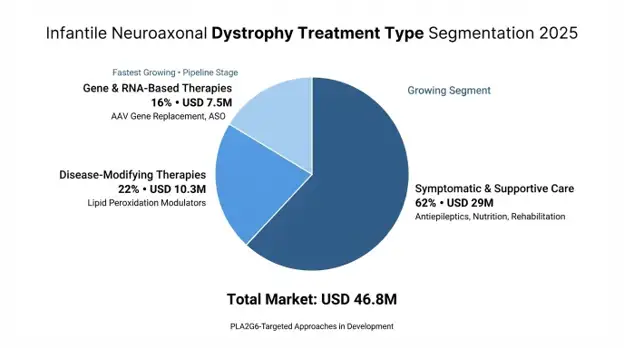
The symptomatic and supportive treatment segment holds current dominance in terms of revenue generation, which is made up of anti-seizure medicines, anti-spasmodics, nutrition and breathing support, and multi-modal rehabilitation. Even if the revenue generated from each patient under this segment is smaller compared to that generated from disease-modifying therapy, it still makes up the universal standard of care for all the patients diagnosed and will continue to be a source of stable market revenue in spite of the emergence of disease-modifying therapy because supportive therapy is expected to supplement and not substitute targeted therapy. The disease-modifying and RNA- or gene-based treatment segments constitute the fastest-growing segments in the forecast period, considering advancements in PLA2G6 and lipid peroxidation target programs.
By end-user, hospital settings and pediatric neurology centers represent the greatest proportion of care delivery due to the nature of where diagnosis, treatment, and research occur, being in academic medical centers with neurology, genetics, neuroimaging, and rehabilitation capabilities. Academic and research institutes take on a disproportionate share of work compared to the number of patients they see because they serve as locations for natural history studies and clinical trials in the future.
The INAD market on a global level can be in its infancy stages with respect to competition, with no disease-modifying treatments having been approved and with most developments being carried out during preclinical and early clinical research phases. There are a limited number of biotech firms, academic consortia for gene therapy, and research projects funded by patient organizations that have PLA2G6-targeting and pathway-based approaches in development, working on common infrastructure for natural history and biomarkers while developing their own therapeutic approach.
June 2026: Research programs developing gene therapies for infantile neuroaxonal dystrophy continued to advance, with emphasis on restoring functional PLA2G6 activity and improving delivery across the central nervous system.
March 2026: Preclinical development of AAV-based gene therapy approaches gained further momentum, focusing on optimizing therapeutic gene distribution to neurons and other affected brain tissues.
November 2025: Natural-history studies and biomarker research continued to expand, supporting improved understanding of disease progression and the development of clinically meaningful endpoints for future INAD trials.
August 2025: Research into the underlying molecular mechanisms of PLA2G6-associated neurodegeneration advanced, with greater focus on lipid dysregulation, mitochondrial dysfunction, oxidative stress, and neuroinflammation as potential therapeutic targets.
May 2025: Development activities involving disease-modifying therapeutic candidates, including deuterated fatty-acid approaches such as RT001, continued to generate clinical and research interest for INAD and related PLA2G6-associated neurodegeneration disorders.
February 2025: Improved genetic testing and molecular diagnostic approaches supported earlier identification of PLA2G6 mutations, enabling more timely diagnosis of INAD and potentially improving patient access to specialized disease management and future clinical trials.
By Treatment Type:
By Diagnostic Modality:
By Route of Administration:
By End-User:
By Region:
You'll get the sample you asked for by email. Remember to check your spam folder as well. If you have any further questions or require additional assistance, feel free to let us know via-
+1 724 648 0810 +91 976 407 9503 sales@intellectualmarketinsights.com
17 Sep 2026
Intellectual Market Insights Research © 2026. All rights reserved.