Share this link via:

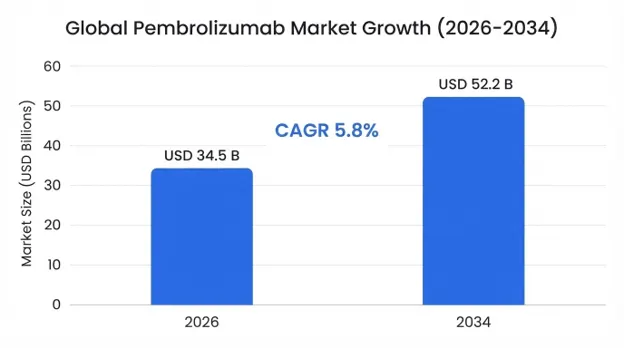
The global pembrolizumab market size was valued at USD 31.3 billion in 2025 and is projected to reach USD 34.5 billion in 2026, expanding to USD 52.2 billion by 2034, growing at a CAGR of 5.8% during the forecast period (2026-2034).
Pembrolizumab (Keytruda, Merck & Co.) has become one of the most commercially successful and one of the most significant clinical breakthroughs in all of oncology medicine history. This is a humanized immunoglobulin G4 monoclonal antibody that binds to the programmed cell death protein 1 (PD-1) receptor on activated T lymphocytes and inhibit interaction between PD-1 and its ligands, PD-L1 and PD-L2, which the tumor cells exploit to escape immune surveillance. When pembrolizumab blocks this immune checkpoint pathway, it reawakens the immune system's ability to kill tumor cells, allowing cytotoxic T lymphocytes to recognize, penetrate and destroy tumor cells that had hitherto eluded the host's immune system through this complex evasion mechanism.
Pembrolizumab's clinical implications go beyond its specific uses and therapies signifying a paradigm shift in oncology treatment philosophy. Compared to traditional cytotoxic chemotherapy, which indiscriminately kills rapidly multiplying cells, pembrolizumab works by leveraging and expanding the patient's own immune system to selectively target and destroy their tumor with the promise of long-lasting effects that can prolong response and survival for years or even decades in certain individuals. So far, this mechanism has worked for an unprecedented range of solid and hematologic malignancies, making pembrolizumab the cornerstone immunotherapy drug in the field of contemporary oncology.
The commercial landscape around pembrolizumab includes the broadest indication line-up in history, with more than 40 regulatory approvals covering more than 20 cancer types, multiple lines of therapy, various patient populations defined by biomarkers, and both monotherapy and combination programs with other types of chemotherapy, targeted therapies, and other immunotherapies. This extraordinary clinical breadth means that Merck & Co. has a commercial presence in almost every aspect of oncology care, ranging from early stage ‘adjuvant' therapy that can prevent recurrence, to advanced ‘metastatic' disease where sometimes months or years of survival mean all the difference in pembrolizumab.
The competitive landscape is dramatically changing with biosimilar development programs, subcutaneous formulation innovations, and bold indications broadening into earlier disease states and new combination therapy approaches and combinations that will shape the next decade of pembrolizumab's market evolution as the market reaches a critical inflection point where key composition-of-matter patents expire between 2028-2036 in key jurisdictions.
| Report Coverage | Details |
|---|---|
| Base Year | 2025 |
| Base Year Value | USD 31.3 Billion |
| Forecast Value | USD 52.2 Billion |
| CAGR | 5.8% |
| Forecast Period | 2025-2034 |
| Historical Data | 2022-2025 |
| Largest Market | North America |
| Fastest Growing Market | Asia Pacific |
| Segments Covered | By Indication, Line of Therapy, Therapy Type, Formulation, Route of Administration, Distribution Channel, Region |
| Region Covered | North America, Europe, Asia Pacific, Middle East & Africa, Latin America |
| Countries Covered | US, Canada, Mexico, UK, Germany, France, Italy, Spain, Netherlands, China, Japan, India, Australia, South Korea, Brazil, Argentina, UAE, Saudi Arabia, South Africa |
| Key Market Playes | Merck & Co. Inc., Samsung Bioepis, Celltrion, Fresenius Kabi, Sandoz, Henlius Biotech, Bio-Thera Solutions, Amgen |
Get more details on this report - Request Free Sample
The key structural factor behind the market growth of pembrolizumab lies in its gradual expansion from late-stage cancers to early stages of malignancies that can be cured by therapy with longer duration and better outcomes. Initially approved for the treatment of metastatic melanoma and non-small cell lung cancer in highly pre-treated patients, pembrolizumab has demonstrated its efficacy in early-stage metastatic cancers, as well as in adjuvant therapy after surgery, neoadjuvant therapy prior to surgery, and perioperative strategy involving both pre- and post-surgery administration.
Early-stage migration fundamentally changes both the target patient population and the market opportunity. Whereas metastatic cancer patients are only a minority in the group of newly diagnosed patients in most cancers, early resectable disease comprise most cancer cases, thus patient populations many times bigger than advanced diseases groups. Perioperative pembrolizumab treatment in stage III resected melanoma treats roughly 45,000 patients annually in the US compared to 8,000 patients with advanced disease, and early-stage non-small cell lung cancer consists of over 180,000 patients annually compared to 85,000 advanced cases that need systemic treatment.
The medical rationale for using pembrolizumab in early-stage disease is convincing because the immune system works better in low burden patients and therefore the anti-tumor efficacy is better. The 5 years disease-free survival rate of more than 75% in high-risk resected melanoma and 89% in early-stage triple negative breast cancer prove this.
The safety profile of pembrolizumab, along with its proven synergy, has made it an optimal platform for combining it with the latest oncology platforms such as ADCs, TKIs, PARP inhibitors, and personalized cancer vaccines. These combination therapies have been designed to counter some of the basic shortcomings of the PD-1 treatment by overcoming primary resistance in immunologically cold tumors and improving immune infiltration by using tumor antigen release induced by targeted therapy.
The commercial potential of combination therapy is not only additive efficacy but also involves market penetration among patients who were earlier not eligible for pembrolizumab alone treatment. Combining it with platinum chemotherapy allows treating all PD-L1 expressing individuals suffering from non-small cell lung cancer irrespective of their PD-L1 level, thus increasing the treatable population base from 30-40% to almost 100%. All-comer strategies in head and neck squamous cell carcinoma, triple-negative breast cancer, and gastric cancer increase the number of eligible patients by tens of thousands each year.
The most important limitation to affect the market of pembrolizumab during the forecast period will be that of the expiry of the composition-of-matter patents in key global regions, with patents in the United States set to expire by 2028 and in Europe within the range of 2028-2031, according to jurisdiction and patent cluster. The expiry of these patents will present an unparalleled challenge for the company, with pembrolizumab being the most lucrative pharmaceutical product ever, making biosimilars a very attractive prospect for generics companies.
The expected competitive environment is markedly different from that of small molecules generic competition because of the intricacies involved in manufacturing, analysis, and clinical development needed to establish bio similarity. However, from previous history of biosimilar competition for adalimumab and trastuzumab, it can be expected that pembrolizumab will suffer price erosion of 25-45% in three years from first biosimilar approval and share erosion of 30-50% in five years based on the number of competitors and payer formularies.
The market presents a significant opportunity in the shift from conventional IV infusion to the groundbreaking subcutaneous administration of pembrolizumab with its new subcutaneous formulation in conjunction with hyaluronidase enzyme. This revolutionary drug delivery system shrinks administration time from 30-60 minutes in IV infusion that needs dedicated infusion suite facility to 2-3 minutes in subcutaneous injections that may even be delivered at home, revolutionizing the whole treatment protocol of pembrolizumab.
These commercial implications go well beyond patient convenience to involve important strategies in lifecycle management for maintaining market share in the face of upcoming biosimilar threats. The subcutaneous delivery form will receive separate patent protection through well into the 2030s, thereby providing a differentiated product platform which cannot be replicated immediately by competing biosimilars. Early adoption experience has shown a strong preference for the subcutaneous route with over 60% conversion rates amongst eligible patients within six months of availability in early launch countries.
System-related advantages involve huge expansion of capabilities in infusion suites, resulting in 40-60% higher patient capacity through existing facilities. Such efficiency enhancements translate into lower healthcare cost even in the face of expensive premium pricing of the subcutaneous formulation.
Innovation in the market of pembrolizumab is taking place in a revolutionary way by combining it with personalized mRNA cancer vaccines that generate personalized neoantigen-based immune response for every patient’s mutation profile. It involves the combination of pembrolizumab with the investigational personalized cancer vaccine called mRNA-4157, which consists of up to 34 patient neoantigens identified through sequencing of tumors and AI-enabled epitope prediction technology. It works synergistically to stimulate the immune system by inhibiting PD-1 checkpoints while generating personalized antigen targets for T-cells.
Clinical phase II data in high-risk resected melanoma showed a 44% risk reduction for recurrence or death compared to pembrolizumab alone, proving the concept of personalized immunotherapies that could change the way cancer is treated not only in melanoma but other tumor types as well. Manufacturing requires sophisticated bioinformatics processing, personal mRNA production, and liposomal nanoparticles packaging within 8-10 weeks from the moment the tumor tissue arrives.
The commercial opportunities include premium pricing based on value proposition of personalized medicine, larger addressable market via increased effectiveness in patients without biomarker selection and wide applicability to virtually any type of solid tumor having adequate mutations to produce neo-antigens.
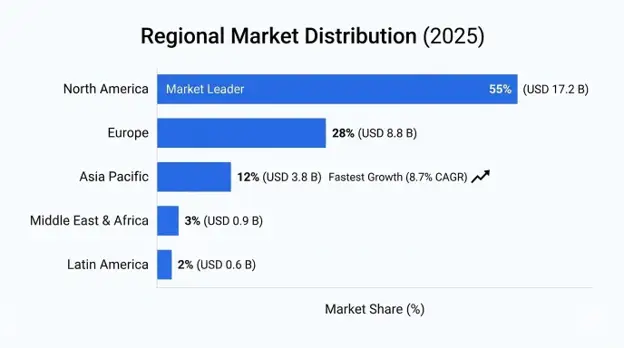
The North American region captured the highest market share of USD 17.2 billion in 2025 and is expected to sustain the same with a CAGR of 5.4% up until 2034, considering the distinctive features of the region such as the most favorable drug pricing landscape in oncology drugs in the world, complete insurance coverage via Medicare and commercial insurers, advanced oncology setup with specialization expertise, and the quick uptake of new therapies. The United States captures around 55% of total revenue generated by pembrolizumab globally although it has less than 15% share of cancer cases globally.
Medicare Part B payment of pembrolizumab by physicians is covered by a consistent payment process under average sales price (ASP) + 4.3%, and Medicare Part D coverage for any future oral formulation is covered through a wide reach within the aging demographic that constitutes the highest prevalence of cancer incidence demographics. The commercial payers' coverage usually follows FDA indications with certain combinations requiring prior authorizations however, total reimbursement exceeds 85% for FDA indications.
The regional market is aided by having the most cutting-edge biomarker testing facilities that can conduct comprehensive genomic profiling for 72% of academic centers and 51% of community settings by 2025. This will ensure the greatest possible number of eligible patients to be identified, making it possible to choose the best therapy for maximum results at premium pricing levels.
The Asia Pacific region grew to become the fastest growing region with CAGR forecasted at 8.7% till 2034 and valuation at USD 5.9 billion by 2025. The growth in the region can be attributed to large population size of 4.7 billion with high incidences of gastric, esophageal, and lung cancer where pembrolizumab exhibits high efficacy, rapid development in healthcare infrastructure and insurance cover, and increased number of middle classes with growing healthcare expenditure capabilities.
China heads the growth in the region, accounting for 42% of the market, with the National Healthcare Security Administration (NHSCA) adding pembrolizumab to the national reimbursement drug list (NRDL) for several indications, paving the way for a significant increase in patients with access (8% to 61% of diagnosed patients) over the forecast period (2020-2025). The market benefits from aggressive price negotiations to realize 60-70% price reductions relative to the US market, while still making the product viable on the commercial market due to volume expansion and manufacturing cost optimization.
The Universal Health Insurance Program in Japan ensures "full insurance" for approved pembrolizumab indications, with minimal patient cost-sharing, and advanced oncology infrastructure and high rates of biomarker testing enable optimal patient selection and clinical outcomes. The National Health Insurance Service in South Korea has gradually increased the amount of reimbursement based on the results of HTEs for several indications, showing that the technology is cost-effective.
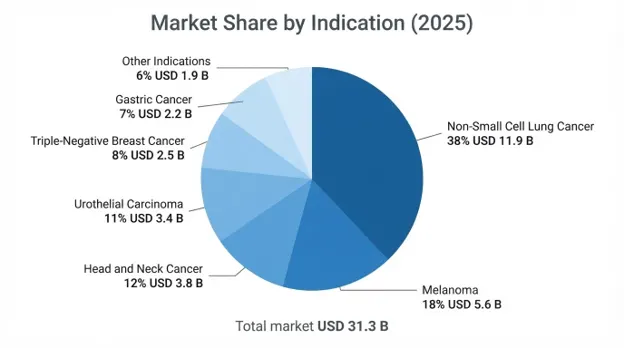
The largest indication market share for pembrolizumab is attributed to NSCLC owing to its use in different lines of therapy as well as for adjuvant and combination treatment. The agent has become a standard treatment option for patients with PD-L1-positive tumors and is extensively utilized in combination with platinum chemotherapy irrespective of the expression of PD-L1 in eligible patients. Clinical data indicating marked survival and response benefits have confirmed the position of pembrolizumab as an essential element of NSCLC therapy. Melanoma is the second largest indication area due to the initial success of the drug in immuno-oncology. The treatment has shown long-lasting survival advantages in cases of advanced and metastatic melanoma as well as decreasing the risks of recurrences in high-risk resected melanoma.
The first-line therapy is the top treatment segment for pembrolizumab because of the highest percentage of market penetration owing to its use in various types of cancers like non-small cell lung cancer, melanoma, head and neck squamous cell carcinoma, gastric cancer, cervical cancer, and triple-negative breast cancer. The success of this segment is evidenced by robust Phase III clinical trials that prove high rates of overall survival, progression-free survival, and effectiveness of the drug in comparison with standard therapies.
The long-term use of pembrolizumab, high coverage of reimbursement and its presence in global clinical practice guidelines contribute to its success. The second line and beyond therapy is still a substantial segment of the market, targeting people with the progressing condition after other therapies. Although treatment duration is generally shorter than in first-line therapy, constant regulatory approval and indications add to the stability of this segment.
The Intravenous Formulation segment currently leads the market with 94% market share valued at USD 29.4 billion in 2025, being the benchmark for standard of care practice for all its approved indications. The intravenous formulation needs an infusion duration of 30-60 minutes within special centers and under the nursing care in IV infusion.
The Subcutaneous Formulation is the fastest growing segment with 6% market share worth USD 1.9 billion in 2025 and expected to reach 35% market share in 2034 at a CAGR of 28.7%. The subcutaneous formulation, co-developed with hyaluronidase technology, significantly reduces the infusion time from 30-60 minutes to just 2-3 minutes while retaining the pharmacokinetics and efficacy of the drug.
The global pembrolizumab market is characterized by highly competitive intensity despite the exclusivity enjoyed by Merck & Co. on the pembrolizumab molecule. Other competing products within the market include immune checkpoint inhibitors, specifically the PD-1 and PD-L1 agents, such as nivolumab, atezolizumab, durvalumab, and cemiplimab, competing against pembrolizumab for different indications in cancer treatments. Merck has continued strengthening its market position. through continuous label extensions, wide clinical development initiatives, combination regimens, and subcutaneous formulation, among others. In addition, the company enjoys an established worldwide sales force and patient assistance programs. Future competition will involve the launch of pembrolizumab biosimilars as the drug approaches patent expiration in several territories. Various manufacturers have advanced in the development of late-stage programs.
March 2026: First-line use of pembrolizumab together with enfortumab vedotin for the treatment of locally advanced or metastatic urothelial carcinoma received the Merck received FDA approval and made it possible to develop the first chemotherapy-free treatment option for bladder cancer, increasing its annual revenues by USD 1.8 billion through treatment of 47,000 patients annually.
February 2026: Samsung Bioepis concluded the Phase III clinical study of the SB27 pembrolizumab biosimilar and proved its statistical equivalence to the reference pembrolizumab in advanced non-small cell lung cancer on criteria of efficacy, safety, and immunogenicity.
January 2026: Pembrolizumab with personalized mRNA-based cancer vaccine mRNA-4157 received FDA's accelerated approval due to 44% decrease in recurrence rate for high-risk resected melanoma patients marking first approval of personalized immunotherapy and creating new treatment paradigm in precision oncology.
December 2025: The subcutaneous formulation of pembrolizumab was adopted by 38% of physicians in new patient starts where drug was already launched which is more than expected level of adoption and reflects physician and patient preference of less invasive administration.
November 2025: The European Medicines Agency issued a positive opinion for subcutaneous formulation of pembrolizumab for all solid tumors where pembrolizumab has been approved making it possible for launch in European markets of 28 countries.
You'll get the sample you asked for by email. Remember to check your spam folder as well. If you have any further questions or require additional assistance, feel free to let us know via-
+1 724 648 0810 +91 976 407 9503 sales@intellectualmarketinsights.com
Intellectual Market Insights Research © 2026. All rights reserved.