Share this link via:

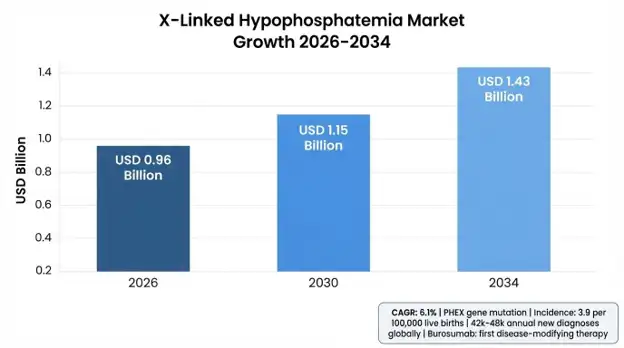
The global X-linked hypophosphatemia market was valued at USD 0.89 billion in 2025 and is projected to reach USD 0.96 billion in 2026, expanding to USD 1.43 billion by 2034, growing at a CAGR of 6.1% during the forecast period (2026-2034).
X-Linked Hypophosphatemia is a rare genetic phosphate-wasting condition caused by mutations in the gene PHEX, which leads to a pathological increase in FGF23, causing progressive renal phosphate wasting, decreased production of active vitamin D, and, over the course of the patient's life, progressive musculoskeletal complications such as rickets, osteomalacia, bone pain, dental abnormalities, and fractures. It is a unique pathophysiologic pathway with mutations in the PHEX gene resulting in the failure of proteolytic processing of FGF23, leading to high circulating levels of FGF23 that inhibit expression of sodium-phosphate cotransporters in renal proximal tubules, thereby decreasing phosphate reabsorption and increasing urinary phosphate excretion, while simultaneously decreasing 1-alpha-hydroxylase activity and causing the conversion of 25-hydroxyvitamin D to active 1,25-dihydroxyvitamin D, resulting in relatively low levels of active vitamin D despite high parathyroid hormone responses.
Oral phosphate replacement and use of active vitamin D metabolites such as calcitriol or alfacalcidol provide, at best, partial control of the symptoms but do not correct the underlying FGF23-mediated pathophysiology, leading to poor control of the disease despite decades of standard treatment and continuing progression of skeletal complications. Revolutionary therapeutic innovation with the FGF23-targeted monoclonal antibody burosumab is a paradigm-shifting step forward in directly targeting pathological exuberation of FGF23 to normalize phosphate handling, restore active vitamin D production, and halt disease progression, while at the same time significantly reducing treatment burden relative to multiple daily oral medications that require strict adherence to dosing and frequent monitoring protocols.
Besides its ability to generate pharmaceutical revenues, the market significance will be felt in a wide field of integrated disease management ecosystems, such as specialized disease monitoring platforms for early diagnosis of diseases, skeletal imaging systems to assess the progression of deformity or mineralization defects, dental rehabilitation programs for enamel hypoplasia and dental complications that result in poorer eating and quality of life in affected individuals, orthopedic surgical interventions to correct severe bowing of the lower limbs and functional impairment, hearing rehabilitation services to address progressive conductive deafness (PCD) that impacts educational development and social integration in affected children, and multi-disciplinary care coordination networks that optimize outcomes across a variety of age-related disease manifestations and co-morbidities.
| Report Coverage | Details |
|---|---|
| Base Year | 2025 |
| Base Year Value | USD 0.89 billion |
| Forecast Value | USD 1.43 billion |
| CAGR | 6.1% |
| Forecast Period | 2025-2034 |
| Historical Data | 2022-2025 |
| Largest Market | North America |
| Fastest Growing Market | Europe |
| Segments Covered | By Patient Population, Treatment Type, Route of Administration, Formulation, Disease Severity, End-User |
| Region Covered | North America, Europe, Asia Pacific, Middle East & Africa, Latin America |
| Countries Covered | US, Canada, Mexico, UK, Germany, France, Italy, Spain, Netherlands, China, Japan, India, Australia, South Korea, Brazil, Argentina, UAE, Saudi Arabia, South Africa |
| Key Market Playes | Kyowa Kirin (Burosumab/Crysvita), Ultragenyx Pharmaceuticals, Vitae Pharmaceuticals, Eidos Therapeutics, CTX Pharmaceuticals, Ascendis Pharma |
Get more details on this report - Request Free Sample
The global market for X-linked hypophosphatemia (XLH) is growing owing to increased awareness regarding the disease and enhanced diagnosis procedures that help in early and proper diagnosis. In the past, XLH used to be mistaken for rickets, due to which diagnosis used to take place after many years of onset. With increased awareness among clinicians, genetic testing for PHEX mutations, and identification of distinctive biochemical signs like hypophosphatemia and high FGF23 concentrations, the diagnosis process is now becoming easier and more effective. Early diagnosis helps in administering treatment in time, thereby preventing further progress of the disease. Screening of children who suffer from various skeletal disorders, poor growth, and dental problems, along with knowledge about the complications that arise in adults, like fractures, osteoarthritis, and chronic pain, is helping in expanding the patient pool.
Key Performance Metrics:
Burosumab is the fully human monoclonal antibody that targets FGF23 and has revolutionized the management of X-linked hypophosphatemia by tackling the root cause of phosphate waste instead of just treating the symptoms. Through normalization of phosphate reabsorption and increasing active vitamin D, burosumab has effectively normalized mineral metabolism and increased bone health. Studies have shown that patients on this therapy have shown significant improvement in terms of serum phosphates, severity of rickets, bone fractures, growth, and physical performance. It has proved to be an easy subcutaneous medication with good safety and efficacy, hence establishing itself as the standard drug for treatment of XLH and boosting the market.
Innovation Impact Metrics:
The international XLH market faces numerous barriers because of the extremely high costs involved in burosumab treatment, although this treatment has been scientifically shown to be beneficial to patients. The high premiums make it hard for patients to afford this treatment, especially those whose medical plans lack reimbursement cover for burosumab. Even though the treatment helps reduce the risk of fractures, orthopedic surgery, deafness, and disability, most reimbursement agencies need substantial cost-effectiveness analysis before agreeing to provide cover for the treatment. There is inconsistency of reimbursement strategies even within North America, Europe, and emerging countries, thus affecting the accessibility of the treatment by patients. The budget limitations in some developing nations also hinder the adoption of new treatment methods. Furthermore, competition from other FGF23-targeted products and eventual biosimilar drugs after the expiry of patent protection might lead to downward pressure on the price of the drug.
Development Challenge Metrics:
The global market for X-linked hypophosphatemia (XLH) is highly restrained by the premium prices of burosumab treatment, limiting accessibility for patients even though it has been shown to be effective. High costs present difficulties in terms of accessibility, especially when reimbursement is minimal or unavailable and for individuals that have no insurance or inadequate coverage. Although the drug prevents long-term effects like fractures, orthopedic procedures, deafness, and impairment, most payers demand cost-effectiveness analysis before allowing insurance for the treatment. The reimbursement policies differ widely between North American, European, and other emerging markets, thus making access to the treatment unequally distributed. Limited budgets in developing countries also limit the utilization of treatment. Moreover, future competitive pressure from the introduction of other FGF23-targeted drugs and the emergence of biosimilars after patents expire will likely affect pricing and future revenue growth.
Diagnostic Opportunity Metrics:
An important development in the XLH industry involves the shift from addressing already known skeletal problems to prevention of disease onset by intervention at an earlier stage. There are now several clinical studies that prove the effectiveness of the use of burosumab when used at an earlier age, as it prevents rickets, ensures proper bone formation, and maintains the functionality of the body in the long term. Therefore, medical practitioners have started diagnosing and treating even those patients who suffer from minor diseases at an earlier age. Today, it is widely recognized that XLH is a chronic condition that requires consistent treatment and not just treatment of its symptoms. This patient-focused approach, which is aimed at improving the overall health of the patient in his lifetime, is reflected in new treatment guidelines that recommend early treatment with burosumab.
Prevention-Focused Practice Metrics:
North America dominates the X-Linked Hypophosphatemia (XLH) market owing to its superior rare disease diagnostics, advanced treatment procedures in endocrinology, and availability of burosumab via payment methods of the public as well as the private sector. The largest regional market share belongs to the United States owing to its effective pharmaceutical innovations, well-developed genetic tests, and favorable regulatory framework for orphan diseases. The universal health care system in Canada facilitates early treatment initiation and promotes regional growth. North America will continue dominating the XLH market during the forecast period owing to continuous rare disease research investments and favorable legislation.
Key Performance Indicators:
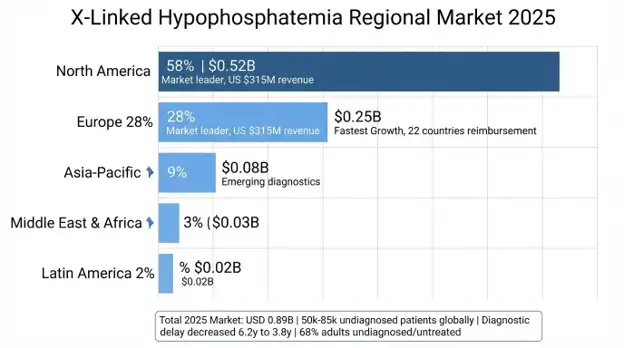
The fastest growing geography market in the case of X-Linked Hypophosphatemia (XLH) is Europe due to the development of rare disease networks, advanced diagnostic facilities, and increased reimbursement of burosumab in the health care systems of various countries. As a result of specialist referral clinics and a multidisciplinary approach to treatment, which makes the diagnosis and treatment more available, the United Kingdom, Germany, and France play leading roles in regional expansion. Patient detection has been made easier across the region owing to the development of clinical pathways, telemedicine, and rare disease programs. The strong market growth in Europe is expected to continue over the forecast period.
Regional Growth Drivers:
Pediatric patients represent the largest proportion of the market for X-Linked Hypophosphatemia (XLH) patients, as early detection, high burosumab uptake, and prevention of the onset of rickets and bone deformations are critical at this age. The adult patient base is also continuously growing as the research confirms that specific treatment can help delay the disease progression, decrease pain levels, and improve mobility and overall quality of life even in long-standing cases.
New biologics such as burosumab are the major market players in XLH owing to their disease-modifying effect, better patient outcomes, and safety. The preference of doctors and reimbursement will further support the uptake of these targeted therapies. The conventional therapies such as phosphate and vitamin D are also an essential part of the XLH market, especially in those regions where cost sensitivity is high, but the market share of these drugs is declining slowly because of the availability of other alternatives.
Subcutaneous injection is the predominant mode of administration in the X-linked hypophosphatemia (XLH) market owing to the wide use of burosumab and the convenience of the dosing regimen, which allows for high patient compliance and outpatient administration. Oral mode of administration still holds importance in the market via the use of traditional phosphate supplements and active vitamin D, especially in those patients who do not have access to biological drugs. The segment is expected to witness growth in the coming years due to the launch of oral FGF23 inhibitors.
X-Linked Hypophosphatemia (XLH) with moderate severity makes up the largest market segment since the majority of patients are diagnosed after exhibiting bone deformities requiring special treatment. A portion of the market consists of severe XLH since specialized multidisciplinary treatment of such cases is required. Mild disease will gain more representation in the future since greater awareness, genetic testing, and early diagnosis lead people to opt for prevention rather than waiting until irreversible damage occurs.
Hospitals and clinics dominate the X-linked hypophosphatemia (XLH) market because of their involvement in diagnosis, commencement of treatment, and overall patient management. Endocrinology centers have become the fastest-growing market sector on account of specialization, treatment protocols, and regular monitoring of patients. Home health care is also witnessing rapid growth owing to the use of subcutaneous biologics, which can be administered at home by the patient himself.
The competitive structure of the global XLH market is that of a highly concentrated one, wherein there are only a few competitors in control of 85-92% of the market value. The dominating presence of the company Kyowa Kirin in the global XLH market is due to the unique commercialization of burosumab, comprehensive clinical trials in various patient groups, and strong relationships with the endocrinologist specialist network, which allows them to enjoy preferential positioning. Competitive differentiators include evidence of clinical effectiveness, which proves the safety and effectiveness of the drug in children and adults; pricing and reimbursement, which allow access within the health care system; and patient support programs providing access to therapy in difficult financial circumstances.
June 2026: Kyowa Kirin presented positive results from Phase III trials of burosumab dosing schedules at extended intervals, allowing for 3 weeks of intervals between injections in comparison with regular 2-week intervals in pediatric and adult patients, and is applying for approval of the new lower frequency dosing scheme.
May 2026: Ultragenyx Pharmaceutical presented positive results from Phase II trials of an oral small molecule inhibitor of the FGF23 receptor, showing effectiveness in lowering serum phosphate and FGF23 levels in a once-a-day oral dose, preparing the drug for Phase III trials with expected applications for approval by 2027-2028.
April 2026: Burosumab was approved by the European Medicines Agency for treating adults with XLH in the European Union member states, thus broadening its approval beyond its previously limited use in the pediatric population.
March 2026: Kyowa Kirin has created a registry of XLH patients in North America and Europe, which has consolidated the treatment outcomes and efficacy data from about 6,800 patients undergoing treatment and reported results showing that the treatment was safe and effective.
February 2026: Ascendis Pharma's program involving the development of an FGF23 inhibitor is advancing through the phase II stage, with plans to start phase III in 2026 with expected entry into the market in 2029-2030.
You'll get the sample you asked for by email. Remember to check your spam folder as well. If you have any further questions or require additional assistance, feel free to let us know via-
+1 724 648 0810 +91 976 407 9503 sales@intellectualmarketinsights.com
24 Aug 2026
Intellectual Market Insights Research © 2026. All rights reserved.