Share this link via:

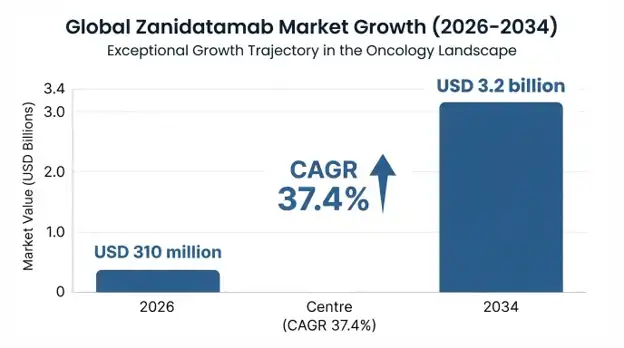
The global zanidatamab market size was valued at USD 185 million in 2025 and is projected to reach USD 310 million in 2026, expanding to USD 3.2 billion by 2034, growing at a CAGR of 37.4% during the forecast period (2026-2034).
Zanidatamab is a bispecific monoclonal antibody developed using proprietary Azymetric™ platform technology, that simultaneously targets two different and non-overlapping epitopes of human epidermal growth
factor receptor 2 (HER2). The innovative biparatopic design allows simultaneous binding to the extracellular domains II and IV of the receptors, inducing superior receptor clustering, internalization and degradation, as well as potent antibody-dependent cellular cytotoxicity (ADCC) compared to conventional anti-HER2 antibodies like trastuzumab and pertuzumab. The dual-epitope targeting mechanism addresses the resistance mechanisms that have been associated with the inefficiency of single-epitope HER2-targeted agents, including incomplete blockade of the HER2 receptor, activation of compensatory signaling pathways and the challenge of tumor heterogeneity that has been a hallmark of the poor results obtained in HER2-expressing cancers.
The therapeutic value of zanidatamab is broad across a range of HER2 positive solid tumor indications, with a pronounced effect in the clinical setting of biliary tract cancer, gastric and gastroesophageal junction adenocarcinoma, breast cancer, and colorectal cancer, all in which overexpression and/or amplification of HER2 is a key oncogenic driver. The molecule has made its mark on the regulatory landscape with accelerated approval in November 2023 by the FDA for the treatment of previously treated, unresectable, locally advanced, or metastatic, HER2-positive biliary tract cancer (BTC) in the brand name Ziihera, a first approval in gastrointestinal oncology and its first clinical validation in a disease area with significant unmet medical needs, where 5-year survival is less than 10% for advanced disease.
The commercial landscape is structured around strategic agreements with Zymeworks, the original developer, Jazz Pharmaceuticals who have commercial rights throughout the United States and Europe and BeiGene who have commercial rights throughout Asia Pacific markets. Is indicative of zanidatamab’s global strategic positioning in both the Western and Asian oncology markets, where the incidence burden of gastrointestinal cancers in the HER2-positive population is disproportionately high, particularly in East Asian populations where liver fluke infection (endemic) is associated with an elevated incidence of cholangiocarcinoma and Helicobacter pylori is associated with an elevated incidence of gastric cancer.
| Report Coverage | Details |
|---|---|
| Base Year | 2025 |
| Base Year Value | USD 185 Million |
| Forecast Value | USD 3.2 Billion |
| CAGR | 37.4% |
| Forecast Period | 2025-2034 |
| Historical Data | 2022-2025 |
| Largest Market | North America |
| Fastest Growing Market | Asia Pacific |
| Segments Covered | By Indication, Line of Therapy, Combination Regimen, Distribution Channel |
| Region Covered | North America, Europe, Asia Pacific, Middle East & Africa, Latin America |
| Countries Covered | US, Canada, Mexico, UK, Germany, France, Italy, Spain, Netherlands, China, Japan, India, Australia, South Korea, Brazil, Argentina, UAE, Saudi Arabia, South Africa |
| Key Market Playes | Jazz Pharmaceuticals plc, Zymeworks Inc., BeiGene Ltd. |
Get more details on this report - Request Free Sample
Market drivers of zanidatamab include an increased demand for targeted treatment modalities to address the unmet need for treatment of HER2-positive biliary tract cancer, an aggressive malignancy which has few available treatment options with poor survival rates. HER2 positive biliary tract cancers, such as gall bladder cancer and extrahepatic cholangiocarcinoma, are prevalent among all other variants of the disease.
Prior to zanidatamab, second-line treatments offered limited improvements in response rates and overall survival for patients who progressed after first-line chemotherapy. The drug provides significantly better objective response rates, disease control, and response durations when compared with historical second line treatment approaches. Further ongoing clinical trials for the use of zanidatamab in combination first line chemotherapy and immunotherapy have great potential to increase the number of patients who will benefit from the drug's use.
One of the major drivers of the zanidatamab market is its mechanism of action, which is a differentiated biparatopic approach to get over resistance to existing HER2-targeted therapies. Zanidatamab simultaneously binds two distinct HER2 epitopes to increase receptor clustering, endocytosis and degradation, while preserving robust levels of antibody-dependent cellular cytotoxicity.
This dual-binding strategy enables therapeutic activity in patients who have progressed after trastuzumab therapy, thus extending the clinical applicability beyond the treatment naïve population. Use of HER2 directed therapies has expanded to a variety of solid tumor indications, and as these therapies become more common, the number of patients who will need effective therapies following progression will continue to rise. In previously treated cancers with HER2, the clinical evidence of durable response makes zanidatamab a promising treatment to overcome established resistance. The unique positioning, along with ongoing research in other HER2-positive tumor types and combination regimens, should greatly increase the commercial potential and long-term market growth of this product.
The biggest hurdle to the near-term commercialisation of zanidatamab is its reliance on accelerated approval pathways that require confirmatory trials of overall survival benefit to sustain commercialisation. The FDA approval was based on response rate as a surrogate endpoint of HER2 positive biliary tract cancer but failed to provide evidence of the magnitude of clinical benefit that would be required for approval to be withdrawn from the product under the FDA's more stringent accelerated approval framework established with the provisions of the Accelerating Clinical Evidence Act.
In addition to the challenge of a confirmatory trial, biliary tract cancer also has some challenges when it comes to implementing the trial, such as: large numbers of individuals must be screened for eligibility in order to enroll the HER2-positive subpopulation, due to the rarity of this population; the disease is fast moving, the time frame of participation is short, and the high mortality rate requires a larger sample size for statistical power when evaluating survival endpoints; and there is a need for HER2 testing infrastructure to be centralized to enroll the proper biomarker defined populations. Operational complexities also add to the length of trials compared to typical oncology development programs and confirmatory trials in rare oncology indications often take 4-6 years to yield mature overall survival data for regulatory review.
The implications of reliance on accelerated approval are not limited to regulatory considerations, they're also financial, because payers are paying more attention to accelerated approval products and are likely to impose coverage restrictions until confirmatory trial results are known. Healthcare systems and pharmacy benefit managers have instituted policies on accelerated approval of oncology products that affect access to these products for patients and physician adoption during the pivotal early commercialization window when market share is being built.
The most compelling commercial opportunity for market expansion in the zanidatamab arm is the acquisition of first-line combination regimen approvals for gastric and biliary tract cancers, both of which have a much larger addressable patient population than the approved second-line indication for biliary tract cancer. First-line therapy decisions are made for all new patients with HER2-positive disease, rather than the subset of patients surviving treatment progressions to receive second- and third-line treatments, which can increase the number of patients by 2.5-3.5-fold and the revenue opportunity with longer duration of first line treatments before progression occurs.
The overall survival results from the HERIZON-GEA-01 Phase III study of zanidatamab in combination with chemotherapy in HER2-positive gastric and gastric-oesophageal junction (GEJ) cancer could open the door for a paradigm shift in the management of this disease, with positive results allowing zanidatamab to compete directly with current first-line HER2-positive gastric cancer treatments based on trastuzumab. Even if one competitor managed to achieve a moderate loss of less than 20% of market share from established trastuzumab-based combinations, the revenues from that loss would more than cover the entire current commercial program in biliary tract cancer, due to the much larger patient population and greater per-patient treatment cost of combination regimens.
The first-line opportunity is not limited to the size of the patient population but also includes premium pricing opportunity since treatment length and reimbursement levels for combination regimens in treatment-naive scenarios tend to be higher than reimbursement levels for salvage monotherapy applications. First line combinations of zanidatamab would be used in combination with other chemotherapy and/or immunotherapy agents, resulting in more comprehensive treatment regimens with total drug acquisition costs of USD 15,000-25,000 per month, versus USD 8,000-12,000 per month for monotherapy applications.
The zanidatamab clinical development program features novel biomarker approaches that go beyond the standard HER2 testing approaches to include quantitative levels of HER2 protein, HER2 gene copy number analysis, HER2 pathway activation signatures, and tumor heterogeneity assessments that may distinguish differences in response to bispecific versus conventional HER2-targeted antibody therapy. This represents a precision medicine evolution and, like many other cancer drugs, the introduction of companion diagnostics as a regulatory need as well as a commercial opportunity to distinguish zanidatamab in the growing HER2+ population.
Advanced diagnostic platforms which enable the use of digital pathology analysis, AI-driven HER2 scoring algorithms, and liquid biopsy-based HER2 amplification detection are opening new possibilities to better identify patients, shorten testing turnaround time and initiate treatment sooner for appropriate patients. The development of companion diagnostics for zanidatamab targeting HER2 may help to maximize clinical benefits through the identification of patient subsets with a high probability of response and thus justify a premium price.
The regulatory climate has shifted to focus more on companion diagnostic validation as a major part of targeted therapy approval, with FDA guidance mandating companion diagnostic biomarker assays for patient selection in pivotal trials to be both analytically and clinically validated. The success of Zanidatamab in the commercial arena will be driven, in part, by the development of a strong companion diagnostics network that allows for easy and broad testing for HER2 in many healthcare settings and geographic locations.
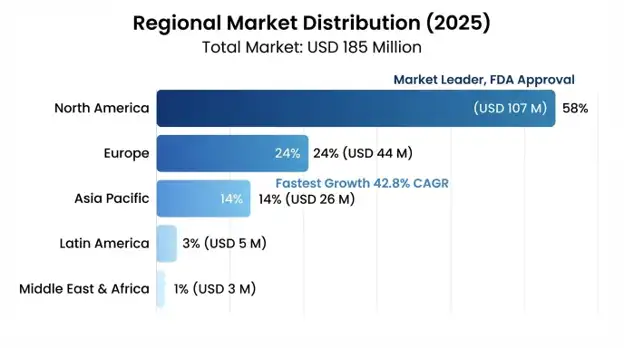
North America emerges as the most significant regional market for zanidatamab, owing to early approvals, robust oncology market infrastructure, and precision medicine adoption. The US market accounts for the majority of regional demand due to the presence of well-established reimbursement models, HER2 biomarker tests, and comprehensive cancer centers that can identify potential candidates for the drug. An extensive oncology commercial ecosystem, including specialists sales force and medical affairs team, along with efficient reimbursement mechanism, is driving the adoption of the drug.
The use of molecular diagnostics in gastrointestinal cancers is supporting market growth as it is enhancing the identification of HER2-positive biliary tract cancer candidates. Future endeavors toward the expansion of HER2 test programs within the community oncology setup, together with heightened awareness amongst healthcare professionals and patient advocacy groups, would boost market adoption and keep North America dominant within the zanidatamab market throughout the forecast period.
The Asia Pacific region is the fastest-growing regional market for zanidatamab on the back of its high prevalence of biliary tract and gastric cancers and precision oncology. Several countries including China, Japan, South Korea and other nations in Southeast Asia contribute to many incidences of the disease worldwide, resulting in a large patient population that can be treated with HER2 targeted drugs.
The increasing availability of molecular diagnostics, improvement in healthcare infrastructure and access to novel oncology treatments will propel market growth in this region. Market growth is set to gain from the commercialization strategy and approvals that are likely to come through. Health care reform by the government, increasing health insurance coverage for the drug and investments in cancer treatment will further aid patient access. With the growing integration of HER2 tests in clinical practices, Asia Pacific is set to remain the fast-growing market for zanidatamab during the forecast period.
HER2-Positive Biliary Tract Cancer is the only indication approved for Zanidatamab and is expected to drive the commercial success of the drug, contributing 100% of the total market size of USD 185 million in 2025. However, HER2-Positive Biliary Tract Cancer still holds much scope for growth through increased adoption among physicians, increased testing rates for HER2 from the current range of 42-55% up to 75-80% levels attained in breast and gastric cancers, and successful completion of confirmatory trials leading to complete regulatory approval. But its market share will drop from 100% in 2025 to 28-35% in 2034 owing to the approval and subsequent commercialization of larger indications such as gastric cancer and breast cancer.
HER2 Positive Gastric & GEJ Cancer is the most promising near-term growth opportunity, with approval anticipated in the 2027-2029 period, contingent on the results from the HERIZON-GEA-01 Phase III trial. The indication addresses a 4-5 times larger patient base than biliary tract cancer and leverages proven HER2 testing and physician experience protocols, which overcome adoption challenges seen for biliary tract cancer, which was the innovative indication. First line combination strategy will allow direct competition against trastuzumab combination therapy at premium prices through clinical differentiation.
Second-Line and Beyond Therapy accounts for 100% of zanidatamab commercial sales at present owing to the approved indication in priorly treated biliary tract cancer. The shift from later-line to first-line therapy represents a major commercial inflection point. since first-line indications will allow access to the entire population of patients with HER2-positive tumors rather than just those who have lived long enough to require further treatments. First-line combinations usually cost more on a per-patient basis because of the costs of combination products and lengthy period until progression but also include a larger number of patients.
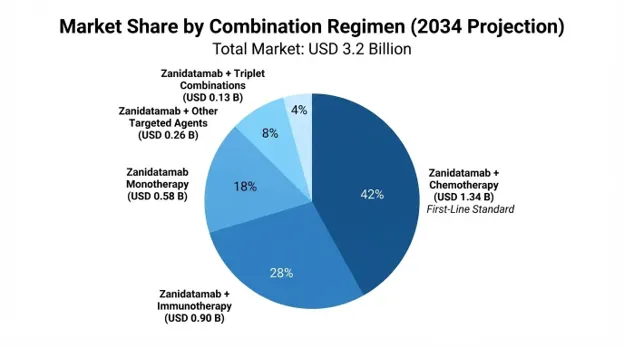
Zanidatamab monotherapy currently represents the commercial reality in the biliary tract cancer indication that is currently approved, where use of a single-agent therapy reduces the complexity involved in the reimbursement process, removes the need for consideration of potential drug-drug interactions in the combination drug, and allows simple safety protocols. Nonetheless, the use of monotherapy is likely to account for a decreasing share of the commercial volume of zanidatamab as combination therapies with chemotherapy, immunotherapy, and other targeted drugs gain approval through clinical trials.
The competitive environment for zanidatamab in the context of tightly focused commercialization, in which the sole companies commercializing zanidatamab itself are Jazz Pharmaceuticals and BeiGene. Meanwhile, it competes in a wider HER2-targeting oncology therapy market comprising therapies such as trastuzumab, pertuzumab, trastuzumab emtansine, trastuzumab deruxtecan, tucatinib, lapatinib, and neratinib in the same patient populations and indications. Include its bispecific mechanism that targets two HER2 epitopes, clinical efficacy in biliary tract cancer among agents that do not have regulatory approval in this indication, and ongoing clinical trials in various indications in which competition is not as well established as in breast cancer.
The main competitive threat is posed by the strong clinical profile of trastuzumab deruxtecan across several HER2 positive and HER2 low tumors, a broad development program covering breast cancer, gastric cancer, lung cancer, and colorectal cancer, and extensive commercial capabilities of the AstraZeneca-Daiichi Sankyo collaboration. Nevertheless, superior response rate of zanidatamab in biliary tract cancer compared to the published data on trastuzumab deruxtecan, along with a fundamentally different mechanism allowing sequential or combination with antibody-drug conjugates, suggests a complementary competitive positioning.
March 2026: Phase III HERIZON-BTC-03 study evaluating the use of zanidatamab along with gemcitabine, cisplatin, and durvalumab in patients with first-line HER2 positive biliary tract cancer has been launched by Jazz Pharmaceuticals to expand its immunotherapy combinations portfolio in addition to second line uses.
February 2026: New drug applications have been filed by BeiGene with regulatory bodies of China and Japan for zanidatamab in HER2 positive biliary tract cancer cases where priority review is expected. due to significant unmet medical needs in these countries with high incidences of biliary tract cancers.
January 2026: The new HERIZON-BTC-01 long-term follow-up results revealed median overall survival of 15.5 months in patients with HER2-positive biliary tract cancer treated with zanidatamab, supporting further confirmatory trials and strengthening the clinical evidence base. for continued regulatory approval and use.
December 2025: Jazz Pharmaceuticals extended its zanidatamab pipeline development in HER2-positive colorectal cancer via a Phase II basket trial approach in response to preliminary data showing increased susceptibility of HER2-amplified colorectal cancer to dual-epitope HER2 blockade than the single-epitope strategy.
You'll get the sample you asked for by email. Remember to check your spam folder as well. If you have any further questions or require additional assistance, feel free to let us know via-
+1 724 648 0810 +91 976 407 9503 sales@intellectualmarketinsights.com
Intellectual Market Insights Research © 2026. All rights reserved.